Lumbini International Monastery Zone Walk
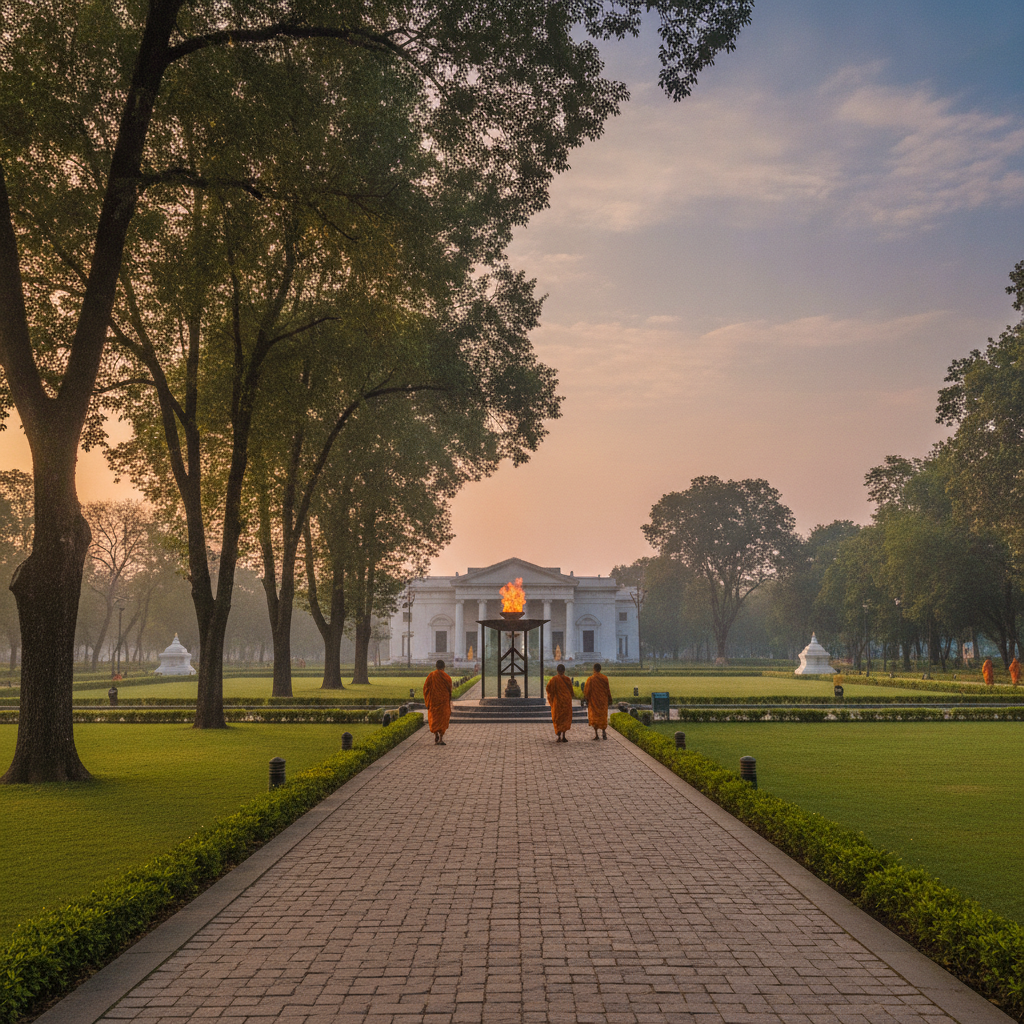
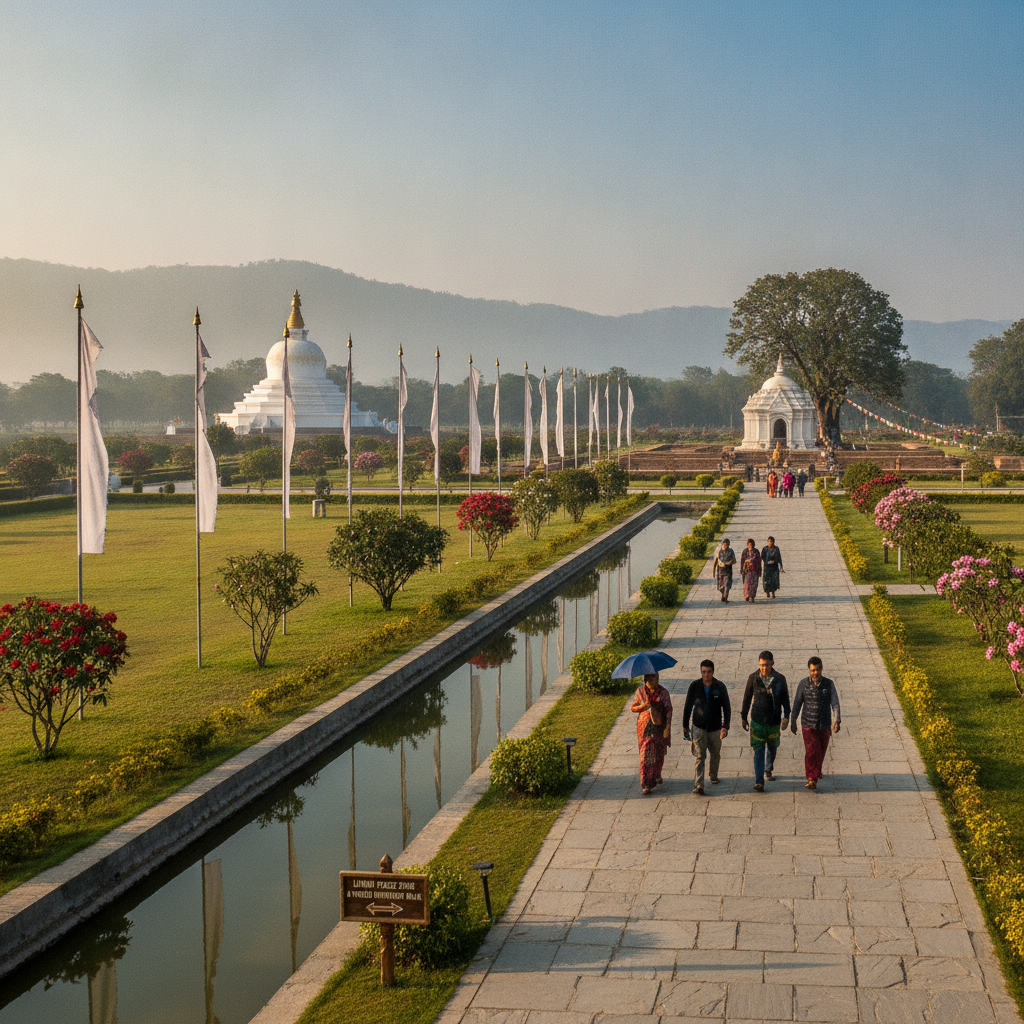
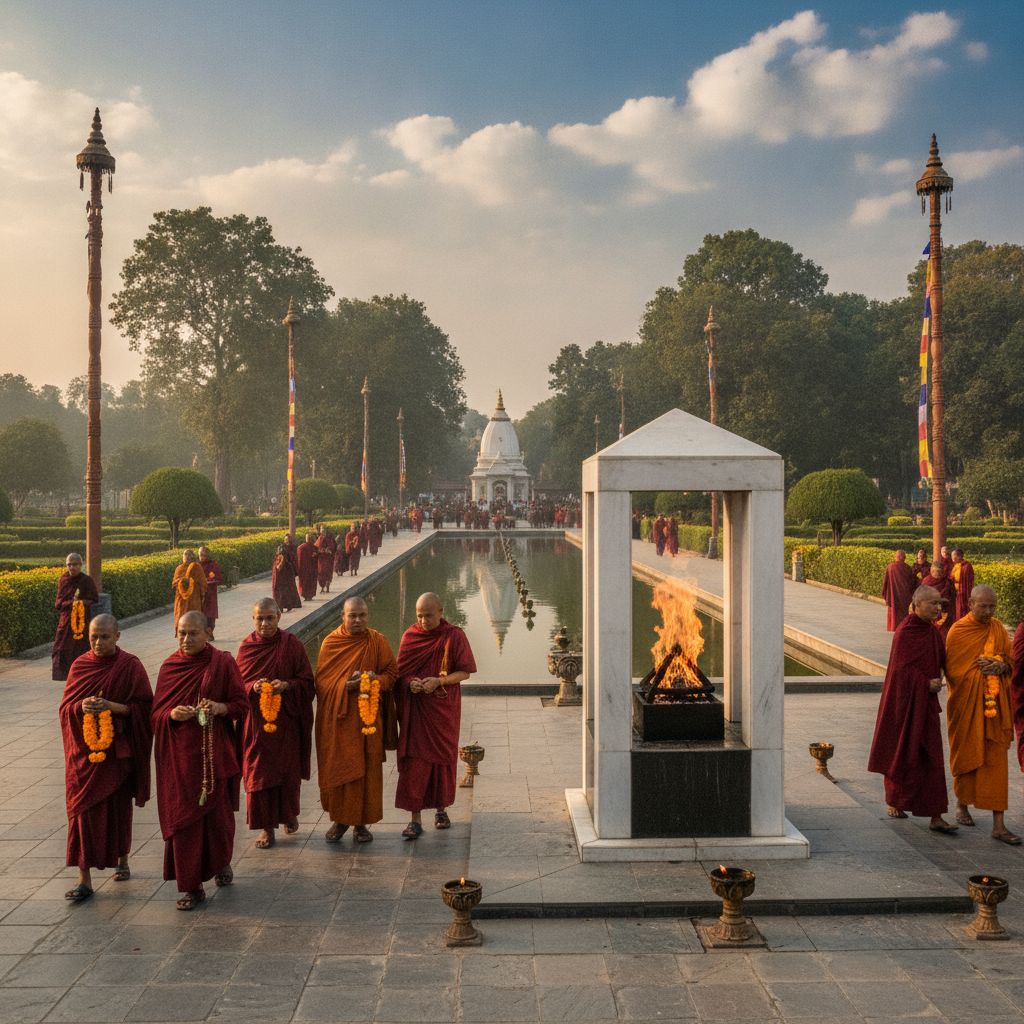
Tour the world's Buddhist nations at Lumbini — the Monastic Zone surrounding the Sacred Garden contains over 30 monasteries built by the Buddhist nations of the world in their own national architectural styles, creating the most architecturally diverse single collection of Buddhist monastery buildings accessible anywhere on earth.
- 1
Myanmar Golden Temple
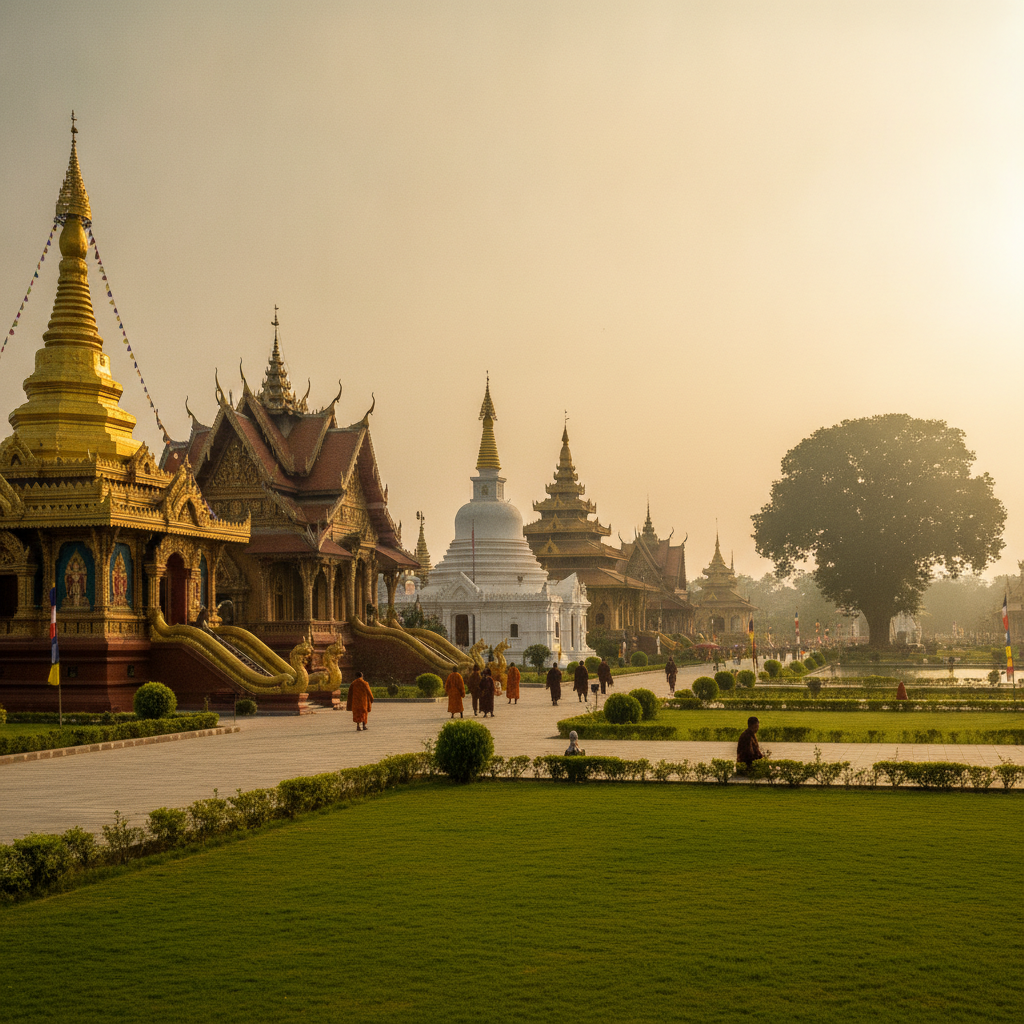
The Myanmar Golden Temple in the Lumbini Monastic Zone (the most visually spectacular single monastery building accessible in the international zone, the characteristic Burmese Buddhist architecture of the multiple-tiered golden spires visible above the surrounding trees, the ornate gilded surface and the white stucco detailing of the exterior creating the most immediately recognisable single Southeast Asian Buddhist architectural form accessible outside Myanmar) is the most architecturally dramatic single monastery accessible in the Lumbini complex — the temple's interior (the principal Buddha image in the Burmese meditation posture, the elaborate gilded throne and the offering flower arrangements maintained by the resident Myanmar monks, and the devotional atmosphere of the active pilgrimage temple) and the monastery's garden (the formal garden with the meditation walking paths and the Bodhi tree varieties accessible for the practising Buddhist visitor) create the most completely Myanmar-Buddhist-culturally representative single built environment accessible outside Southeast Asia. The Myanmar monastery's active community (the monks in the traditional Theravada orange robe, the daily puja schedule audible from the surrounding path, and the pilgrim groups from Myanmar visible in the most nationally homogeneous single cultural grouping accessible in the Lumbini monastic zone) makes this the most living single national monastery accessible in the international complex.
- 2
Chinese Buddhist Temple
The Chinese Buddhist Temple in the Lumbini East Monastic Zone (the large Mahayana Buddhist temple complex built by the Chinese Buddhist Association, the characteristic Chinese temple roof forms — the curved eave tips and the decorative ridge ornaments — translated into the Nepal construction context, creating the most immediately recognisable single East Asian religious architecture accessible in the Lumbini international complex) is the most architecturally East-Asian single building accessible in Nepal — the temple's specific features (the main hall with the three principal Buddha statues in the Chinese Mahayana tradition, the offering altar with the elaborate incense burners and the gold-lacquered devotional objects that are the most visually opulent single interior accessible in the Lumbini monastic zone, and the secondary halls containing the Bodhisattva statues of the Chinese Buddhist pantheon) and the temple's garden design (the formal Chinese garden with the moon gate, the rock garden, and the reflecting pool that together create the most specifically Chinese-classical-landscape single designed garden accessible in Nepal) create the most completely Chinese-culturally representative single Buddhist complex accessible in the country.
- 3
Thai Buddhist Temple
The Thai Buddhist Temple in the Lumbini Monastic Zone (the distinctive Thai royal temple architecture with the characteristic multi-layered roof with the gilded finials, the white and gold exterior detailing, and the Thai Buddhist iconography that distinguish the Thai monastery from all other national temples in the international complex) is the most ornately detailed single monastery exterior accessible in the Lumbini international zone — the temple's Thai-specific architectural elements (the flame-shaped finials at the roof corners, the naga serpent balustrades on the access stairways, and the gilded chedi visible above the roof line of the main hall creating the most vertically complex single religious building accessible in the Lumbini complex) and the temple's interior's Thai devotional character (the elongated Thai-style Buddha image in the gold throne, the layered flower offerings and the incense maintained by the resident monks, and the Thai-language devotional texts audible during the morning and the evening prayers) create the most completely Thai-Buddhist-aesthetically representative single built space accessible outside Southeast Asia.
- 4
Tibetan Buddhist Monastery
The Tibetan Buddhist Monastery in the Lumbini West Monastic Zone (the Vajrayana Buddhist monastery built in the characteristic Tibetan architectural style, the white-and-red painted walls, the elaborate painted door frames, and the prayer flag strings creating the most visually unmistakable single Himalayan Buddhist building accessible in the Lumbini complex) is the most culturally contrasting single monastery accessible within the international zone — the Tibetan monastery's visual character (the red monastery crown above the white wall base, the deep ochre-red of the monks' assembly hall windows, and the string of the prayer flags visible against the Nepal sky above the monastery compound creating the most immediately Himalayan single visual in the lowland Terai setting of Lumbini) and the monastery's active religious programme (the Tibetan monks' twice-daily puja — the rich bass voices of the monks chanting the Tibetan liturgy with the horn accompaniment audible from outside the monastery gate — the most acoustically distinctive single religious sound accessible in the Lumbini monastic zone) create the most dramatically contrasted single cultural encounter accessible between the international monasteries. The monastery's interior (the elaborate Tibetan thangka paintings visible on the assembly hall walls, the butter lamp offerings in the most numerically impressive single candlelight array accessible in Nepal, and the stack of the Tibetan canonical texts stored in the cases around the hall's perimeter) is the most richly decorated single monastery interior accessible in Lumbini.
- 5
Korean Buddhist Temple
The Korean Buddhist Temple in the Lumbini East Monastic Zone (the monastery built in the characteristic Korean Buddhist temple architecture — the curved roof tiles, the dancheong painted decoration on the exposed wooden structural elements, and the specific proportions of the Korean temple form that distinguish it from both the Chinese and the Japanese Buddhist architectural traditions accessible in the same monastic zone) is the most East Asian-architecturally specific single monastery accessible in the Lumbini complex — the Korean temple's dancheong decoration (the elaborate geometric and floral patterns painted in the traditional blue, green, red, and yellow pigments on the exposed wooden beams and brackets, the most labour-intensive single decorative programme accessible in the international monastery zone) and the temple's garden design (the Korean garden with the meditation pavilion, the stepping stone path, and the landscape composition that reflects the most specifically Korean Buddhist garden tradition accessible outside Korea) create the most distinctively Korean-culturally representative single religious building accessible in Nepal. The Korean monastery's bell (the large Korean temple bell struck at the morning and the evening prayer times — the deep resonant tone of the Korean bell the most immediately culturally distinctive single sound accessible in the East Monastic Zone of Lumbini) is the most directly acoustically informative single cultural element accessible at the Korean Buddhist monastery visit.
- 6
Sunset Monastery Circuit
The sunset circuit of the Lumbini Monastic Zone (the walk along the canal path that separates the East and the West Monastic Zones as the day ends, the last light illuminating the rooflines of the international monasteries and the prayer flags of the Tibetan complex creating the most architecturally varied single sunset panorama accessible in Nepal) is the most culturally comprehensive single evening walk available in the country — the circuit's architectural variety (the Chinese curved roof visible over the tree line, the Thai gilded spire catching the last sunlight, the Korean dancheong colours visible in the fading light, and the Tibetan prayer flags silhouetted against the evening sky creating the most internationally varied single visual at any Nepal sunset) and the circuit's active religious atmosphere at sunset (the evening prayers audible from multiple monasteries simultaneously as the various national communities begin their evening liturgy — the Thai chant, the Korean bell, and the Tibetan horn creating the most multi-traditional single acoustic environment accessible in Nepal) make the Lumbini sunset circuit the most simultaneously globally-Buddhist single experience accessible anywhere in the world.
Walk this route with audio
Stories play automatically as you reach each stop — no tapping needed.