Lumbini Peace Zone & World Heritage Walk
Walk the UNESCO master plan — the Kenzo Tange master plan for the Lumbini development zone, with its central canal axis, the carefully separated monastic zones, and the preserved Sacred Garden, represents the most ambitiously conceived single world heritage landscape development accessible in Asia.
- 1
Kenzo Tange Master Plan Axis
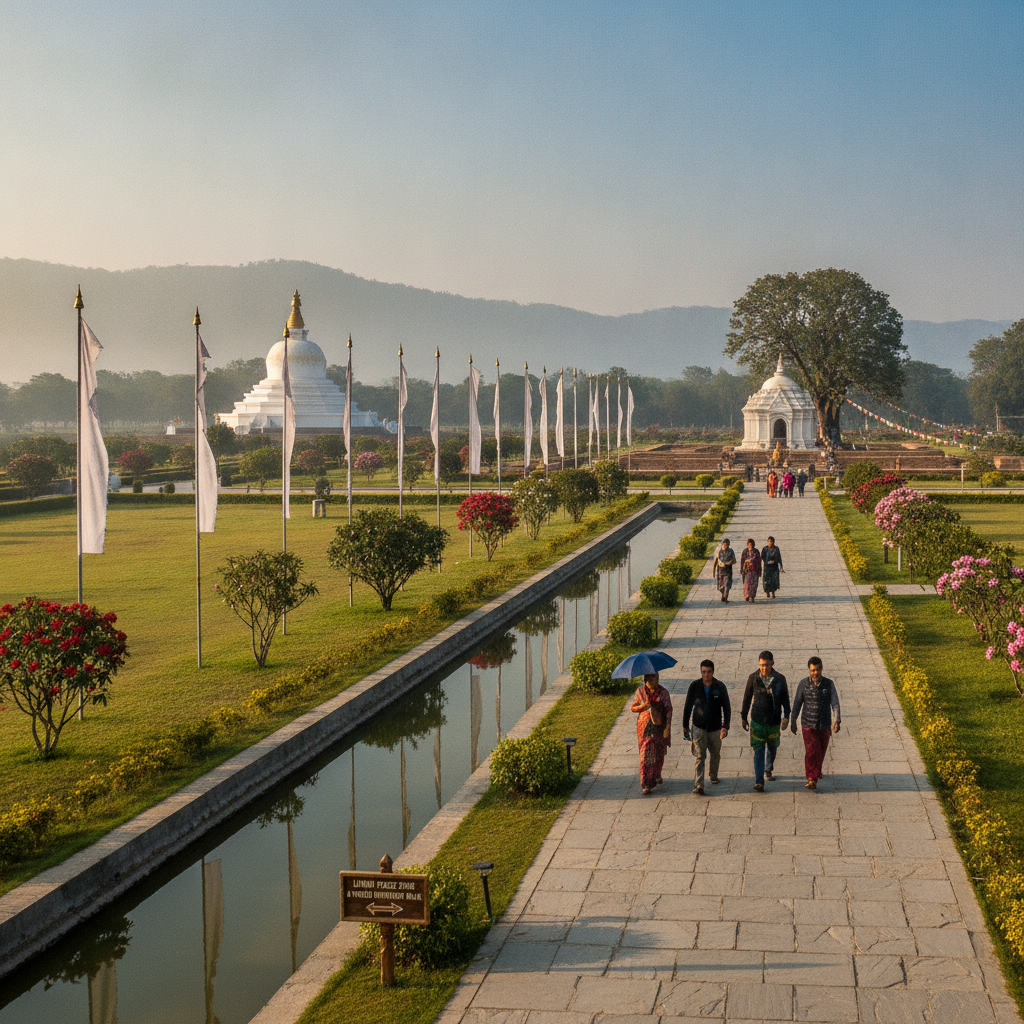
The Kenzo Tange master plan axis at Lumbini (the central canal and the avenue that connects the World Peace Pagoda to the Sacred Garden, the spine of the Japanese architect's visionary 1978 UNESCO master plan for the Lumbini development zone — the most ambitiously designed single religious heritage landscape plan executed in Asia) is the most directly urban-design-historically significant single pathway accessible at any Nepal world heritage site — the plan's specific design philosophy (the axial organisation that reflects the Buddhist concept of the path leading toward the sacred centre, the canal's reflective surface creating a processional way from the modern monument to the ancient birthplace, and the equal separation of the East and West Monastic Zones on each side of the axis creating the most deliberately inclusive single international monastery arrangement accessible in the Buddhist world) and the plan's implementation history (the 40-year development programme from the 1978 plan to the contemporary state of the site, the individual monastery buildings visible as the accumulated expression of the decades of national pilgrimage to the birthplace) create the most architecturally-historically informed single walk accessible in the Lumbini heritage zone. The axis walk's specific meditative quality (the long straight canal visible ahead as the axis is followed from the World Peace Pagoda toward the Sacred Garden, the monastery buildings receding on each side as the canal path is followed, creating the most processionally-designed single approach to a sacred site accessible in Nepal) is the most architecturally intentional single pilgrimage experience accessible in Nepal's heritage destinations.
- 2
World Peace Pagoda Base
The World Peace Pagoda base at Lumbini (the circular platform at the base of the white stupa where the circumambulation path allows the close inspection of the four golden Buddha images in the niches of the pagoda drum and the inscribed peace texts in multiple languages on the plinth walls) is the most architecturally surveying single pagoda encounter accessible at the Lumbini heritage site — the pagoda's specific construction (the reinforced concrete core covered in the white lime plaster that is the most maintenance-requiring single exterior surface accessible in the Terai climate, the Buddhist design intention of the pure white dome representing the Buddha's enlightened mind expressed in the most large-scale single monument accessible in the Lumbini zone) and the pagoda's four Buddha images (each displaying a different mudra — the teaching, the meditation, the earth-touching, and the blessing gestures that together represent the most symbolically complete single iconic programme accessible in the Lumbini monument collection) create the most directly Buddhist-iconographically instructive single monument visit accessible at the Lumbini heritage destination. The pagoda's elevated base (the view from the pagoda terrace looking toward the Sacred Garden along the canal axis providing the most completely master-plan-revealing single viewpoint accessible in the Lumbini zone, the Tange design's full extent visible from this single elevated position) is the most architecturally informative single viewing point accessible in the Lumbini heritage complex.
- 3
East Monastic Zone Survey
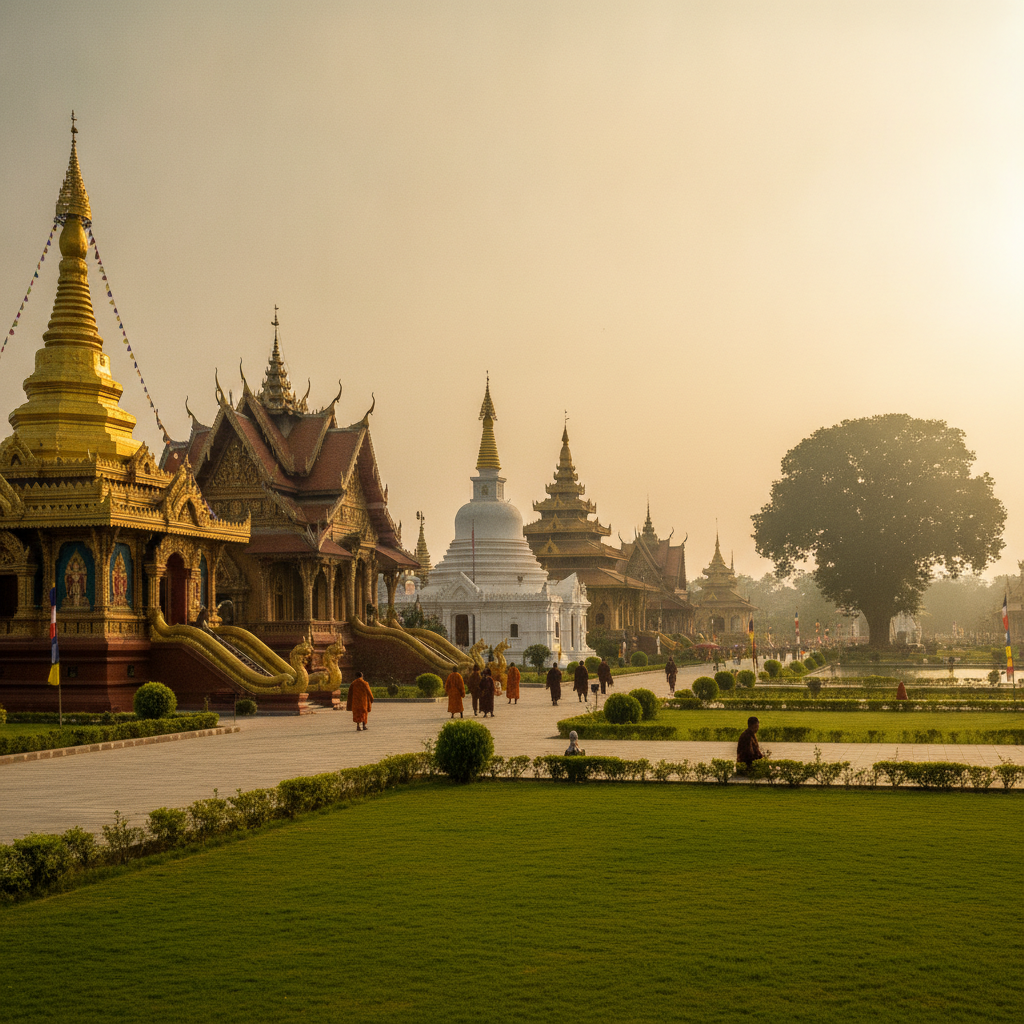
The East Monastic Zone survey walk (the systematic visit to the Theravada Buddhist monasteries of the Southeast Asian nations that line the eastern side of the central canal — the Myanmar, Thai, Sri Lankan, Laotian, and Vietnamese monastery buildings creating the most complete single survey of Theravada Buddhist national architecture accessible in any one location) is the most architecturally comparative single Buddhist building walk accessible anywhere on earth — the zone's architectural variety within the Theravada tradition (the golden spires of the Myanmar complex, the curved Thai eaves, the white stupa dome of the Sri Lankan vihara, and the simpler forms of the Cambodian and Laotian temples visible in the same visual field creating the most direct single comparison of the Southeast Asian Buddhist architectural traditions accessible outside the individual national contexts) and the zone's active religious character (the monks from each national community visible in their national variation of the Theravada robe colour and cut, the individual puja programmes audible from each monastery creating the most multi-nationally Buddhist single acoustic environment accessible in the world) create the most directly comparative Buddhist-nation-culture-surveying single walk accessible anywhere on earth.
- 4
West Monastic Zone Survey
The West Monastic Zone survey walk (the exploration of the Mahayana and the Vajrayana Buddhist monasteries that occupy the western side of the central canal — the Chinese, Korean, Japanese, Tibetan, and Newar Buddhist monastery buildings creating the most complete single survey of the northern Buddhist architectural traditions accessible in any one location) is the most architecturally contrasting single walk accessible in the Lumbini monastic zone — the West Zone's architectural variety within the northern Buddhist traditions (the Chinese temple roof forms, the Korean dancheong-decorated wooden structures, the Japanese Zen garden simplicity, and the Tibetan red-and-white mountain monastery forms all visible within a 10-minute walk creating the most immediately architectural-tradition-diverse single heritage zone walk accessible in Asia) and the zone's cultural contrasts (the East-West philosophical division within Buddhism — the Theravada ideal of the individual liberation accessible through the East Zone and the Mahayana ideal of the universal liberation accessible through the West Zone — rendered in architectural form as the most conceptually architecture-embodied single Buddhist doctrinal comparison accessible in the world) create the most educationally Buddhist-tradition-comprehensive single walk available at the Lumbini heritage destination.
- 5
Heritage Conservation Zone
The Lumbini Heritage Conservation Zone (the UNESCO-managed area that combines the archaeological site management, the visitor experience design, and the international conservation expertise that together constitute the most complex single world heritage site management challenge accessible in Nepal) is the most directly conservation-practice-revealing single heritage zone accessible in the country — the conservation zone's specific challenges (the management of the active pilgrimage traffic in the most archaeologically sensitive single site in Nepal, the conservation of the ancient brick structures exposed to the Terai's monsoon and the dry season temperature extremes, and the coordination of the 30-plus national monastery construction programmes within the coherent master plan framework that Tange's design requires) and the conservation zone's successes (the complete reversal of the site's post-medieval abandonment visible in the transition from the jungle-covered mounds of the 1896 rediscovery to the fully interpreted UNESCO World Heritage Site accessible today) reveal the most directly conservation-programme-demonstrating single heritage management example accessible in Nepal. The conservation zone's specific ongoing work (the continued archaeological excavation, the architectural conservation of the oldest monastery ruins, and the visitor management plan that balances the access with the preservation) provides the most directly active conservation-in-practice single site experience accessible at any Nepal world heritage destination.
- 6
Flame of Peace Memorial
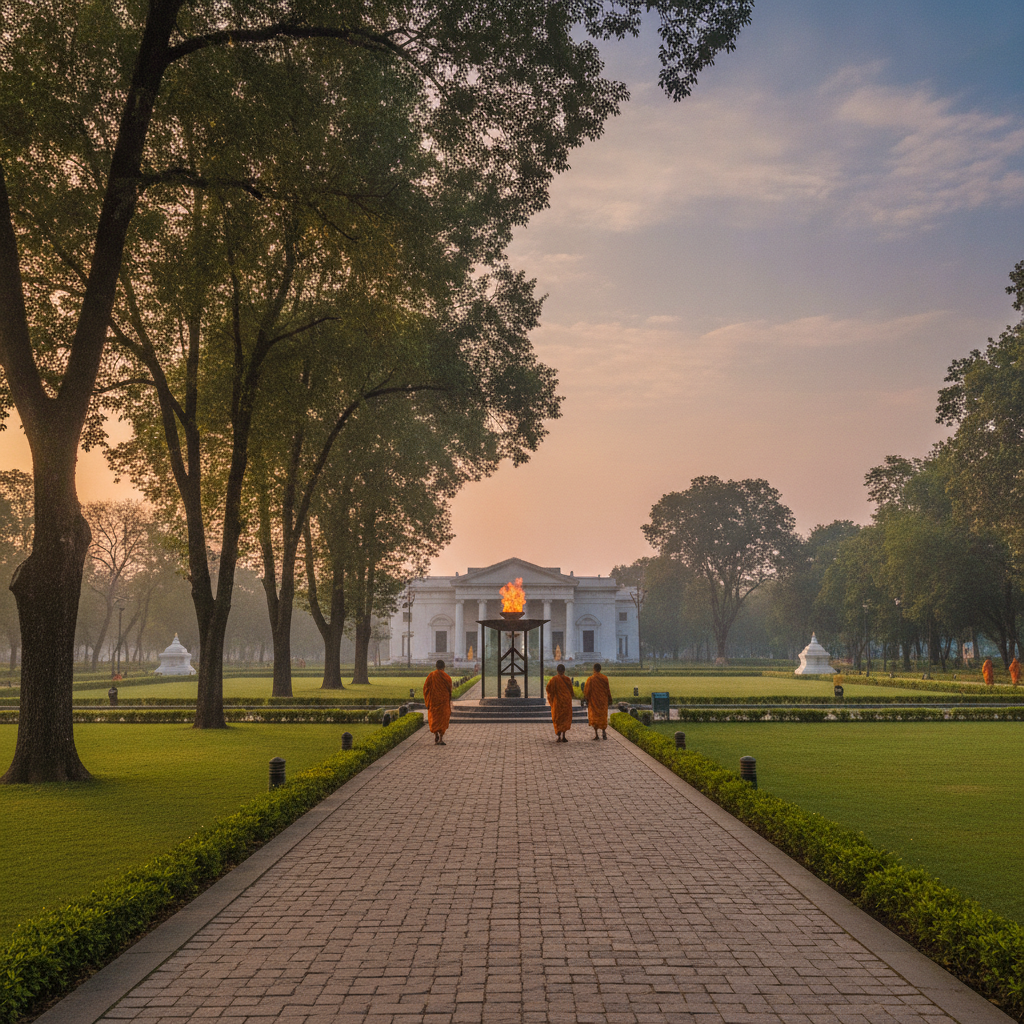
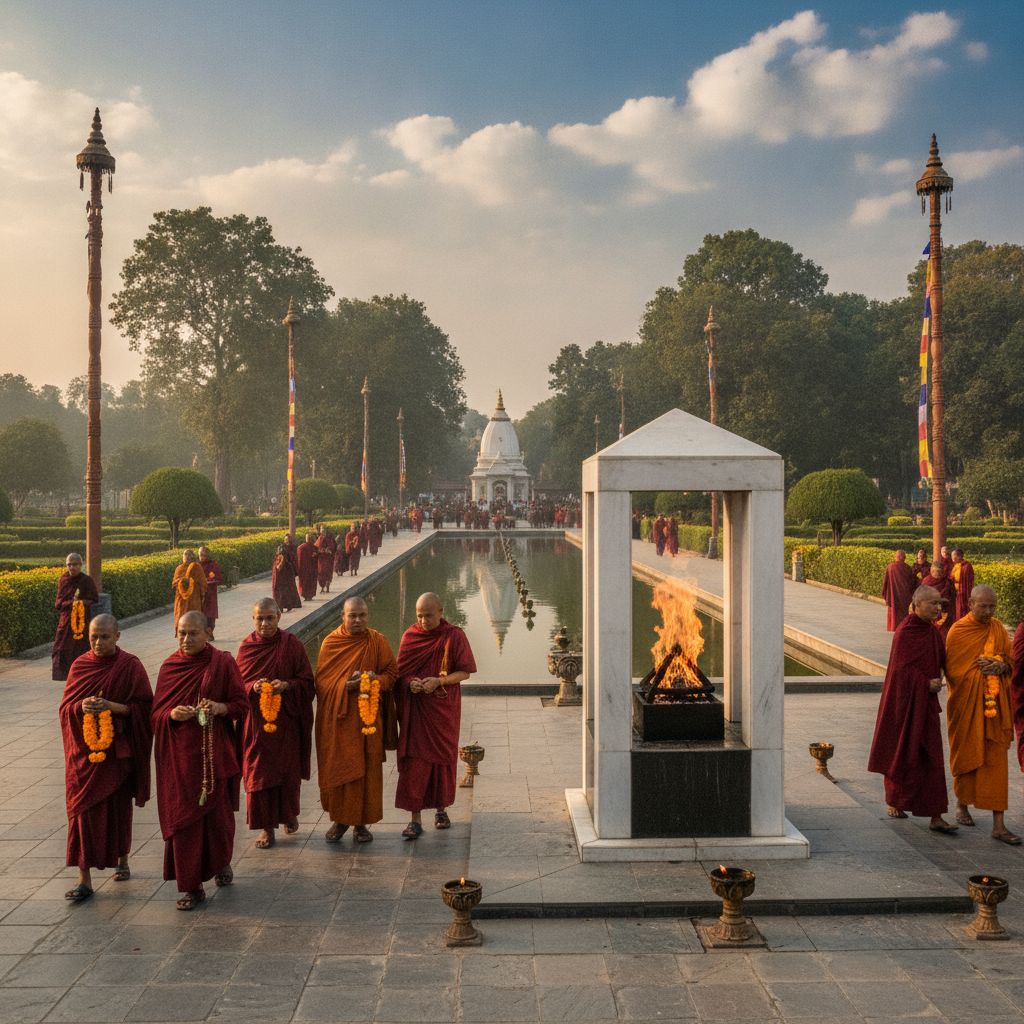
The Flame of Peace Memorial at Lumbini (the permanent installation at the junction between the Monastic Zone and the Sacred Garden, the continuous flame symbolising the aspiration for world peace that the birthplace of the historical Buddha most completely represents in any world religious geography) is the most symbolically concentrated single monument accessible in the Lumbini heritage zone — the flame's specific positioning (at the threshold between the active religious practice of the Monastic Zone and the archaeological heritage of the Sacred Garden, the transition point where the living Buddhist tradition meets the historical evidence of the tradition's founding moment) and the memorial's design (the simple flame holder elevated above the reflective pool, the flame's movement in the breeze the most directly animating single natural element accessible in the otherwise static heritage landscape) create the most contemplatively appropriate single transitional space accessible in the Lumbini heritage zone. The memorial's use (the moment of silence that the visitors naturally adopt at the flame — the most universally cross-cultural single behaviour accessible at any Lumbini monument, observed equally by the Buddhist pilgrims, the secular visitors, and the interfaith groups who all respond to the flame's combination of simplicity and meaning with the same spontaneous stillness) makes the Peace Flame the most individually transformative single monument accessible at the world's most important Buddhist birthplace.
Walk this route with audio
Stories play automatically as you reach each stop — no tapping needed.