Malacca Dutch Square & Colonial Heritage Walk
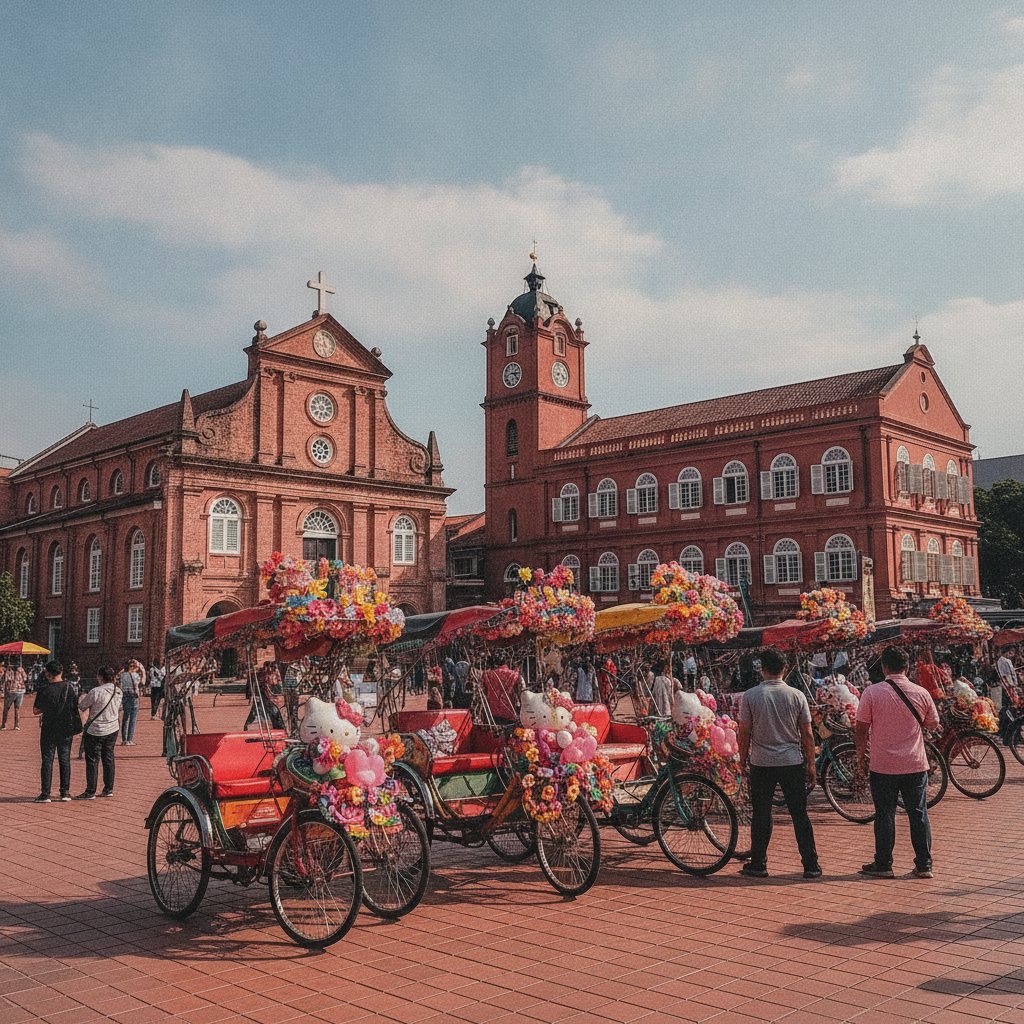
Explore Malacca's Dutch colonial legacy — the red-painted buildings of the Dutch Square (Stadthuys) form the most complete ensemble of Dutch colonial buildings outside the Netherlands, built during the 130-year Dutch occupation (1641-1795) of the city that was the most important port in the spice trade.
- 1
Stadthuys Dutch Square
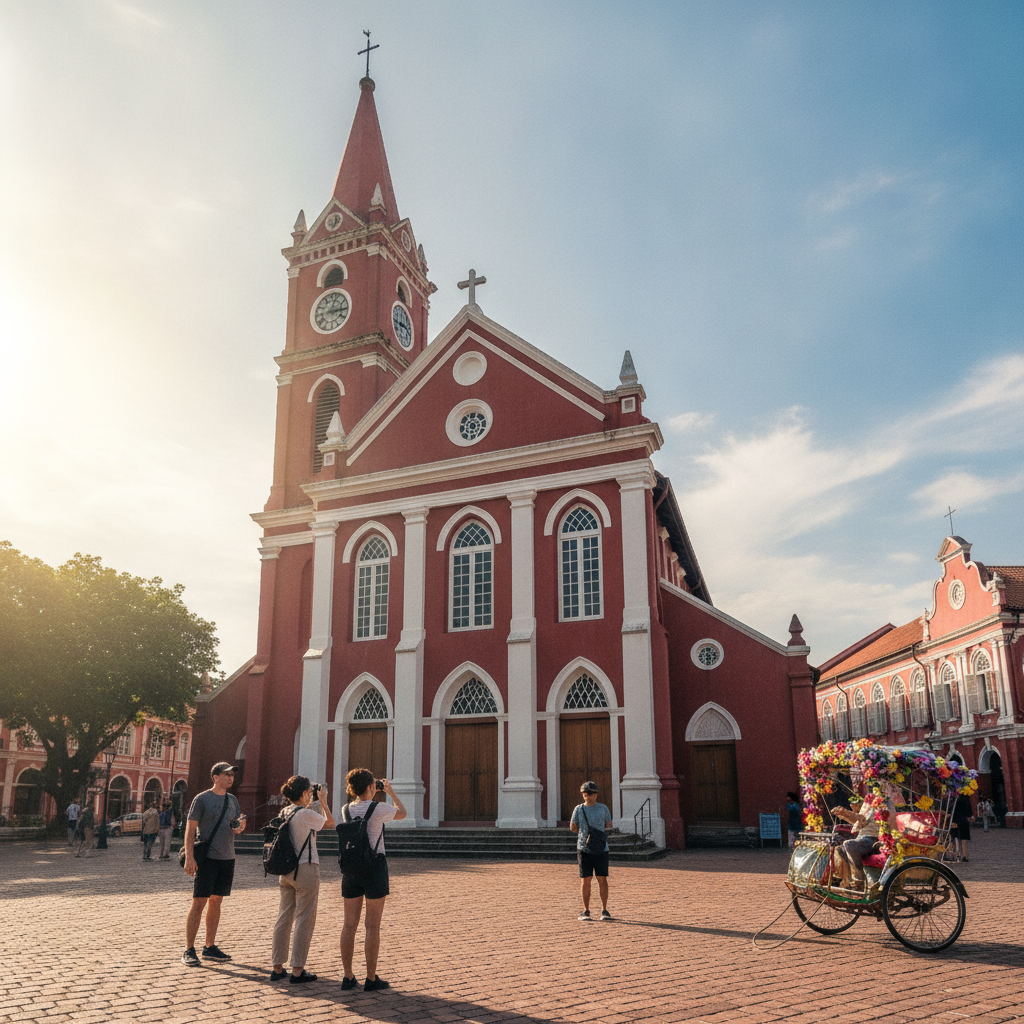
The Stadthuys (Dutch Town Hall) and the surrounding red-painted buildings in Malacca's central square represent the largest surviving group of Dutch colonial buildings in Asia — the massive coral stone structure with its thick walls, heavy wooden shutters, and steep roofs was built between 1641 and 1660 after the Dutch capture of Malacca from the Portuguese and served as the official residence of the Dutch governors and their administrative staff for 150 years. The Stadthuys is now the History and Ethnography Museum documenting Malacca's successive colonial periods, and its distinctive terracotta red exterior (applied in the 1920s, not original to the Dutch period) has made it the most iconic image of Malacca's colonial heritage.
- 2
Christ Church Malacca
Christ Church Malacca (1753) is the oldest Protestant church in Malaysia — the Dutch Reformed Church built from the same coral stone (laterite) as the Stadthuys next door was constructed to mark the centenary of the Dutch capture of Malacca and continued in use as an Anglican church after the British took control of the city in 1795. The church's interior retains the original Dutch pew ends (carved with the VOC monogram), the hand-painted Portuguese azulejo tiles, and the ceiling made from single planks of timber 15 metres long — materials that document the international trade connections that made Malacca the wealthiest port in Southeast Asia during the colonial period.
- 3
A Famosa Portuguese Fortress
A Famosa (The Famous) is the surviving gate tower of the massive Portuguese fortress built by Afonso de Albuquerque after his conquest of Malacca in 1511 — the small remaining Porta de Santiago gatehouse is all that survives of what was once the largest fortress in Southeast Asia, most of which was demolished by the British in 1806 to prevent it falling into the hands of Napoleon's Dutch allies. The fortress ruins on St Paul's Hill mark the site of the most significant act of Portuguese imperialism in Asia, as the capture of Malacca gave Portugal control of the spice trade chokepoint that made Malacca the wealthiest city in Southeast Asia.
- 4
St Paul's Church Ruins
St Paul's Church on the summit of St Paul's Hill is the roofless shell of what was originally the Portuguese Chapel of Our Lady of the Hill (1521), later converted into a Dutch Reformed church and burial ground — the church was the site where Francis Xavier, the Jesuit missionary who brought Christianity to Asia, preached during his visits to Malacca between 1545 and 1552. Xavier's body was temporarily interred at St Paul's before being transferred to Goa, and the marble statue of Francis Xavier at the ruined church commemorates the saint who was canonised in 1622 and whose missionary work in Malacca, India, Japan, and China made him the most influential Christian figure in early modern Asia.
- 5
Malacca River Heritage Zone
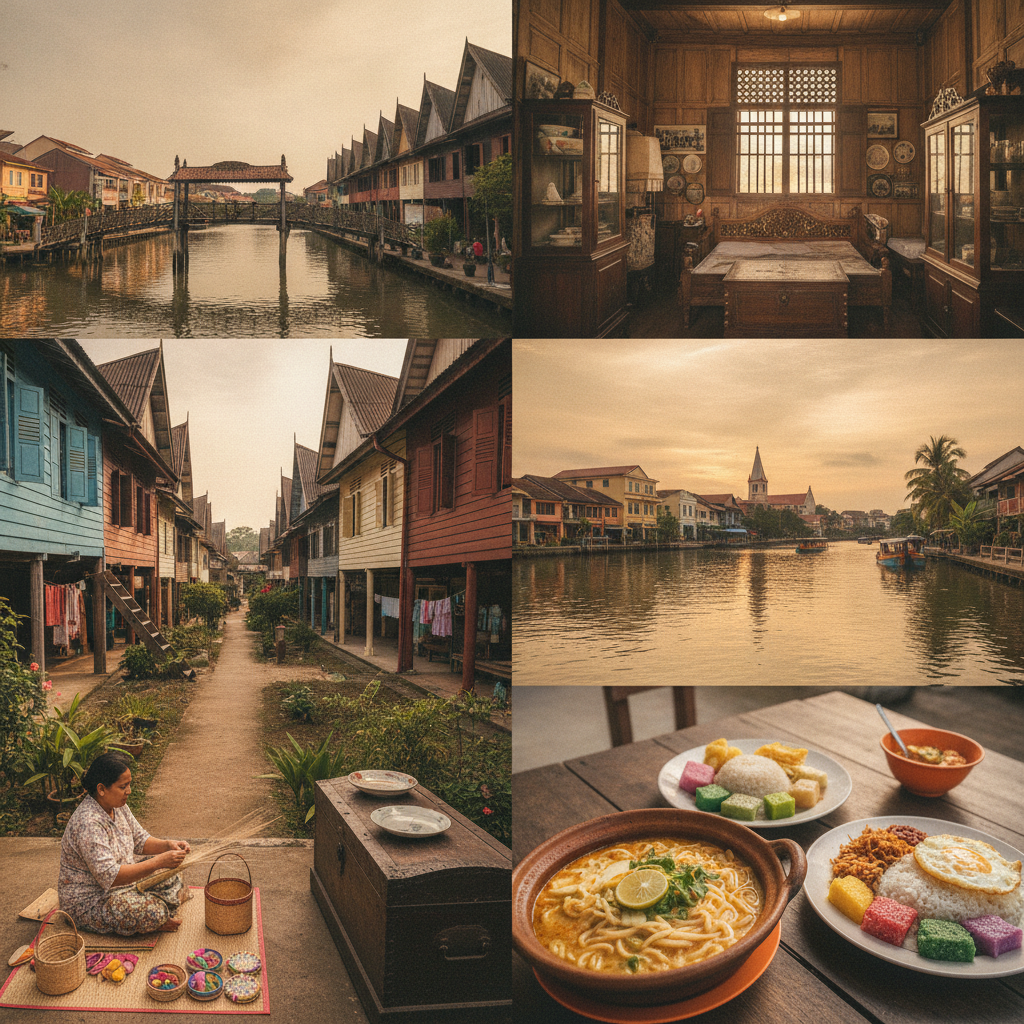
The Malacca River, which winds through the heritage city from the Strait of Malacca to the interior, was the commercial artery of the medieval port city — the godowns (warehouses) and trading houses along the river banks where the spices, silks, ceramics, and other goods of the Indo-Pacific trade were stored, valued, and exchanged have been converted into restaurants, cafes, and boutique hotels in a river heritage zone that uses the colonial architecture as the backdrop for the modern hospitality industry. The river cruise between the heritage buildings and the street art murals created in the contemporary heritage tourism period provides the most visually comprehensive view of Malacca's layered architectural history.
- 6
VOC Dutch East India Company Legacy
Malacca's Dutch colonial period (1641-1795) represents the dominance of the VOC (Vereenigde Oostindische Compagnie, Dutch East India Company) at the height of its global commercial power — the VOC that took Malacca from the Portuguese was at the time the world's most valuable company, with a market capitalisation estimated at over $7 trillion in modern terms, operating its own navy, maintaining its own legal system, and governing colonial territories from Malacca to Batavia (Jakarta) to Ceylon (Sri Lanka). The Dutch colonial buildings of Malacca's red square are the most visible surviving architecture of the VOC's commercial empire in maritime Southeast Asia.
Walk this route with audio
Stories play automatically as you reach each stop — no tapping needed.