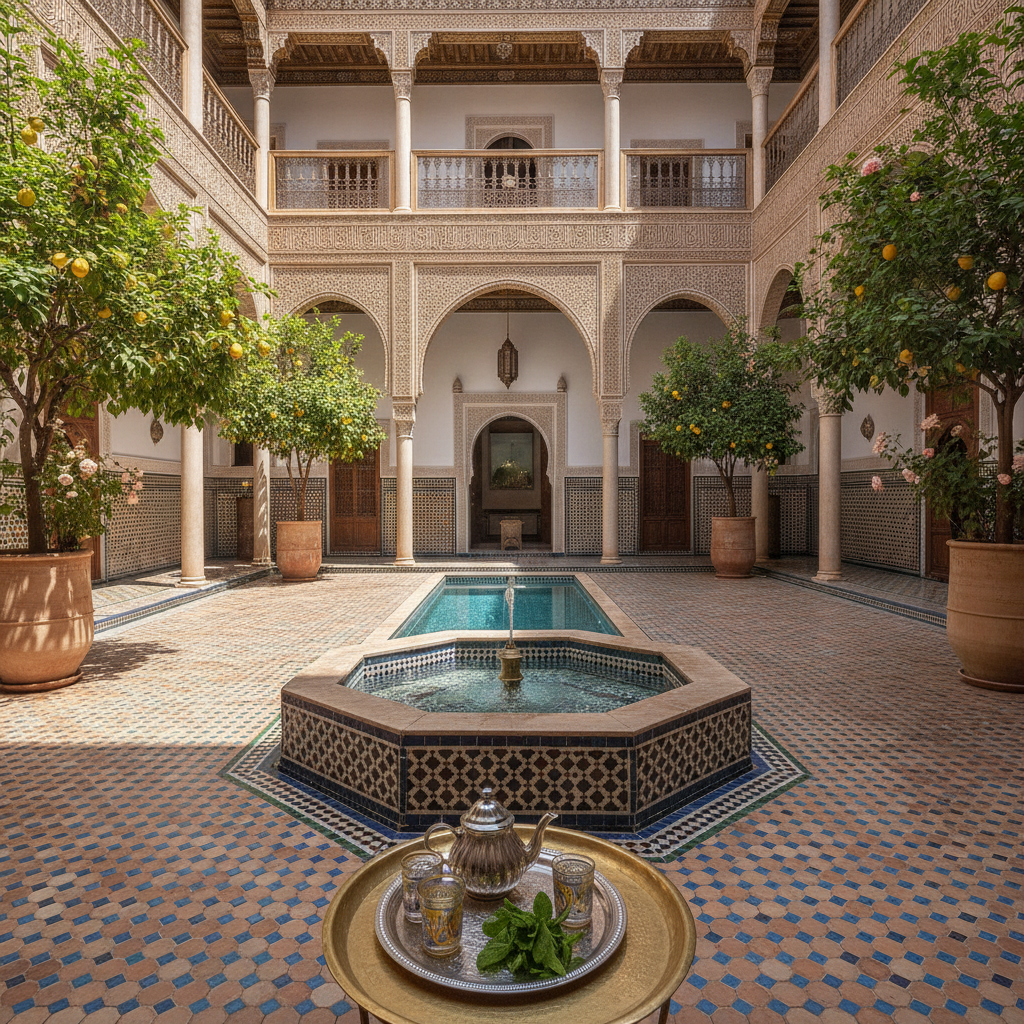
Riad Living — Traditional Moroccan Courtyard Houses
The riad (the traditional Moroccan courtyard house of the medina — from the Arabic riad, meaning garden) is the defining architectural form of Marrakech: the inward-facing design (blank exterior walls, all rooms opening onto a central courtyard garden with a fountain or pool) reflects both the Islamic preference for private domestic space and the need for shade and cooling in the North African climate; the conversion of riads into boutique hotels began in the 1990s and has transformed the Marrakech accommodation industry, with over 1,000 riad guesthouses now operating in the medina.
- 1
Riad — The Introvert Architecture of Islam
A riad (Arabic: riyad, 'garden') is a traditional Moroccan house organized around a central courtyard with a fountain — the exterior presents a blank wall to the street (privacy, security, religious modesty); all rooms face inward toward the courtyard; the courtyard's microclimate (evaporative cooling from the fountain, shade from the central orange or lemon tree) reduces interior temperatures by 10°C relative to the medina street outside.
- 2
Riad Restoration Economy — From Ruins to Boutique Hotels
In the 1990s, European buyers (primarily French, British, and Italian) began purchasing derelict riads in Marrakech's medina for €5,000–30,000 and restoring them as boutique hotels or private residences — by 2010, 700+ riads had been converted; the restoration economy trained a generation of Moroccan craftsmen in traditional techniques (tadelakt plasterwork, zellij tile-cutting, carved plaster moucharabieh screens) that had been declining; average current riad sale price: €500,000–2,000,000.
- 3
Tadelakt — Marrakech's Signature Waterproof Plaster
Tadelakt (from the Arabic for 'smooth, rubbed') is a lime plaster polished with river stones and waterproofed with black soap — it turns surfaces into smooth, slightly reflective expanses that appear almost liquid; the technique is unique to Marrakech and traditionally used for hammam walls and bathtubs; a skilled tadelakt craftsman takes 3–5 years to master the polishing technique; the craft is listed in UNESCO's Intangible Cultural Heritage.
- 4
Riad Kniza — The Museum Riad Experience
Riad Kniza (34 Derb l'Hôtel, medina, 7 suites) is an 18th-century palace turned boutique hotel also functioning as an antique showroom — the owner (Mohammed Bouskri) is one of Morocco's leading antique dealers; the courtyard, hammam, rooftop terrace, and individual rooms are furnished with 18th–19th century Moroccan antiques and textiles not available anywhere else; non-guest visits (by appointment, S/150 DH) include tea and a guided tour of the collection.
- 5
The Hammam Ritual — Traditional Moroccan Bath
The traditional Moroccan hammam follows a sequence of heat exposure, kessa (coarse glove exfoliation), savon beldi (black olive soap scrub), and ghassoul (rhassoul clay hair and skin mask applied in the steam room) — public hammams (10–30 DH) are found in every medina neighbourhood; traditional hammams are not touristic but deeply pragmatic (many older medina houses lack private bathrooms); the tourist hammam (Hammam de la Rose, Maison de la Photographie hammam) costs 200–400 DH.
- 6
Cooking Class Culture — Moroccan Cuisine in a Riad Kitchen
Marrakech's riad cooking classes (La Maison Arabe, Souk Cuisine, Dar Les Cigognes) teach traditional Moroccan cuisine in the riad kitchen context — classes (3–4 hours, 600–800 DH) typically cover: preserving lemons and olives, making ras el hanout spice blend from scratch, preparing a lamb tagine with preserved lemon and green olives, baking msemen (layered semolina flatbread), and preparing bastilla (pigeon or chicken filo pie with almond and cinnamon).
Walk this route with audio
Stories play automatically as you reach each stop — no tapping needed.
More in marrakech
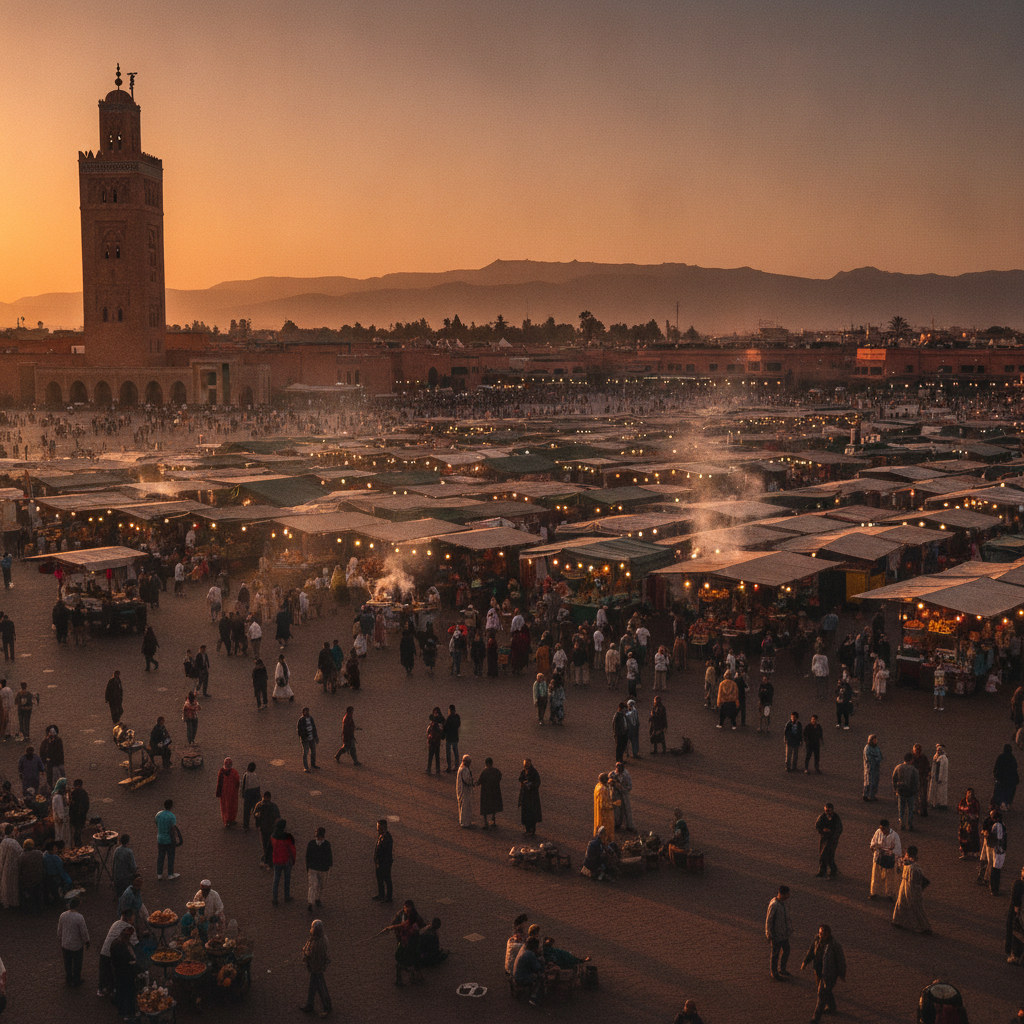
Djemaa el-Fna, the Medina & the Souks — Marrakech's Living UNESCO Heritage
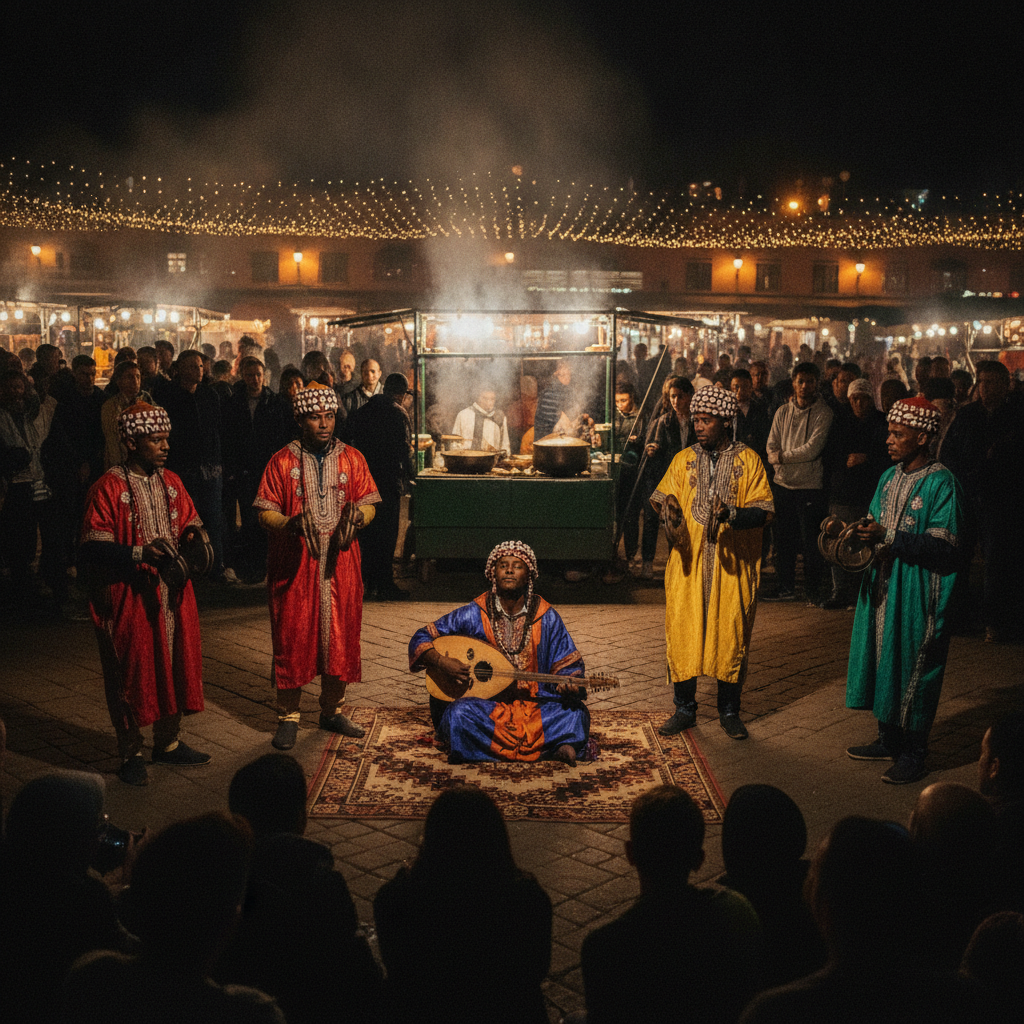
Gnawa Music, Sufi Culture & the Spiritual Heart of Marrakech
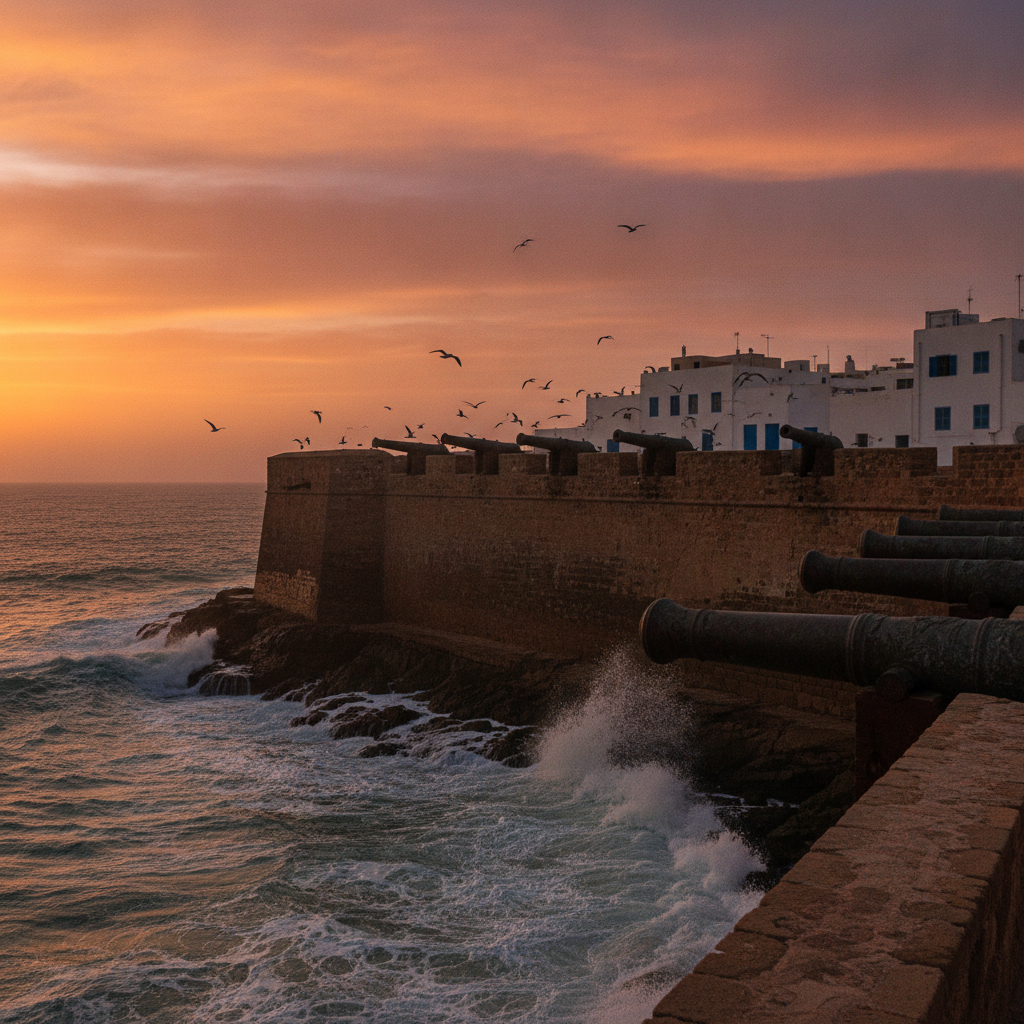
Essaouira — Marrakech's Atlantic Escape
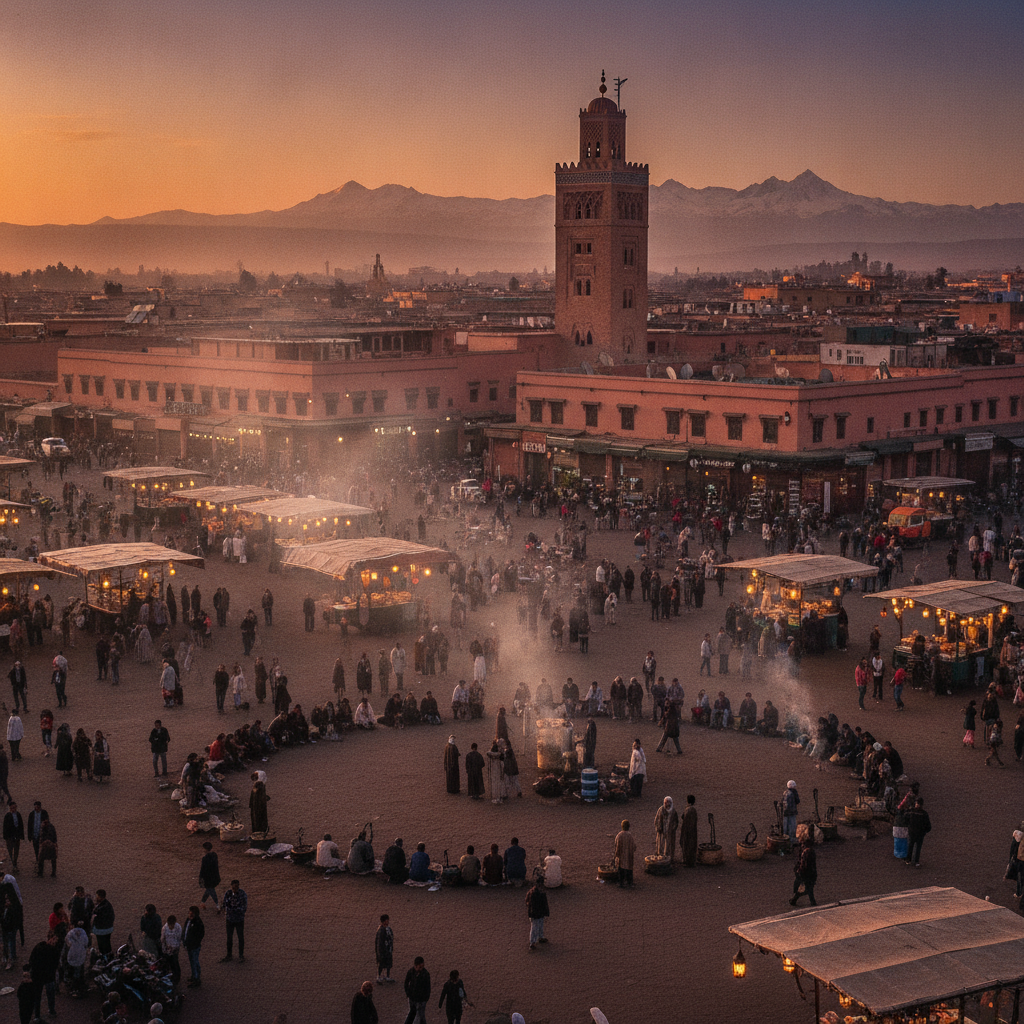
Marrakech Essential: Djemaa el-Fna the Living Square, the Medina Souks, the Koutoubia Mosque, the Bahia Palace, the Saadian Tombs, and the Pink City Character
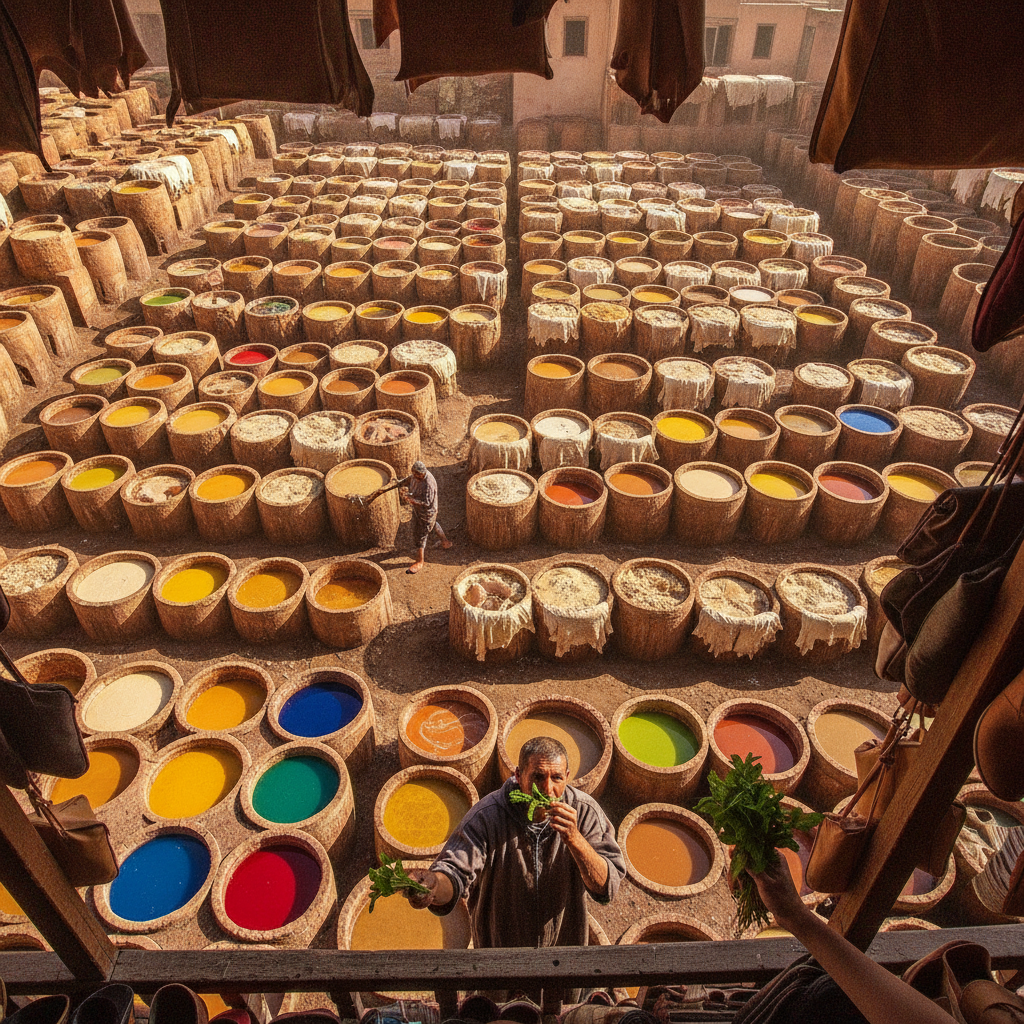
Moroccan Crafts — Leather Tanneries, Pottery & Artisans
