Mawlamyine British Colonial Heritage Walk
Walk Mawlamyine's colonial past — the former capital of British Burma (then known as Moulmein) retains the most complete collection of British colonial-era architecture in Myanmar, from the courthouse and the jail to the churches and the riverside trading houses that made this city the gateway to British Burma.
- 1
Mawlamyine Strand Road
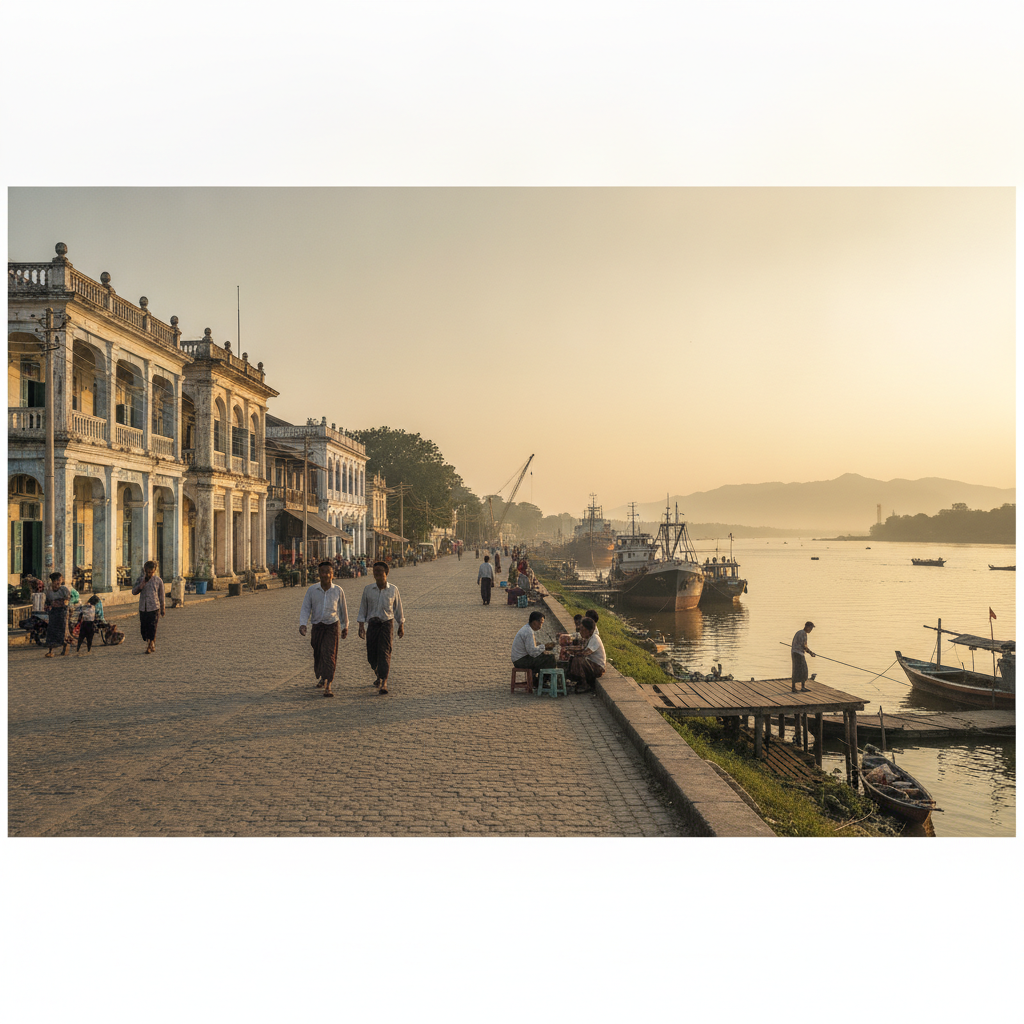
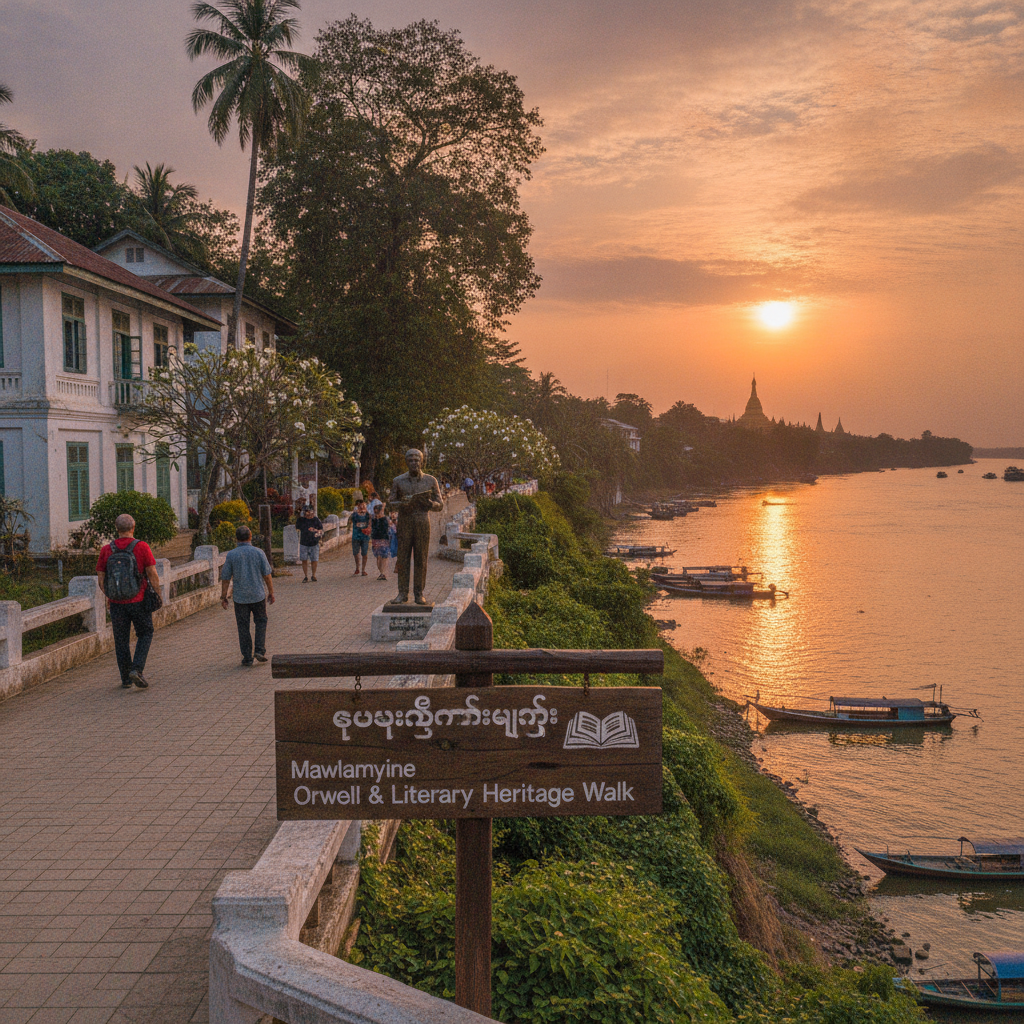
The Strand Road along the Salween River (the main riverside thoroughfare of colonial Moulmein, lined with the crumbling colonial-era trading houses, the old customs buildings, and the riverside jetties that were the commercial heart of the British Burma timber trade) is the most historically layered single street accessible in Mawlamyine — the buildings along the Strand (the two and three-storey commercial structures with the ground-floor covered walkway (verandah) characteristic of the British colonial commercial architecture in hot-climate Burma, their plaster facades faded and partially collapsed but their structural forms still clearly legible) document the trading economy that made Moulmein the most important port in British Burma before the Irrawaddy Delta ports surpassed it in commercial significance. The riverside view from the Strand (the wide Salween River, the islands visible in the channel, and the distant Tenasserim Hills providing the backdrop to the colonial waterfront) is the most evocative single view of the colonial river-trading landscape accessible in Myanmar.
- 2
Mawlamyine Courthouse
The Mawlamyine Courthouse (the grandest surviving British colonial administrative building in the city, the large two-storey structure with the classical columns and the formal entrance portico that housed the colonial judicial administration) is the most architecturally impressive single colonial building accessible in Mawlamyine — the courthouse's design (the Palladian-influenced colonial institutional architecture typical of the British India administrative buildings of the mid-19th century, adapted with the verandahs and the elevated construction that acknowledged the tropical climate) represents the British colonial administration's intention to project the permanence and the authority of the Empire through the monumental building programme. The courthouse's connection to Mawlamyine's literary history (the young Eric Blair, who served as a policeman in Burma under the British administration, based parts of 'Burmese Days' on his experiences in Moulmein, and the courthouse is among the institutions he would have known) makes it the most literary-historically significant single building accessible in the city.
- 3
Colonial Churches
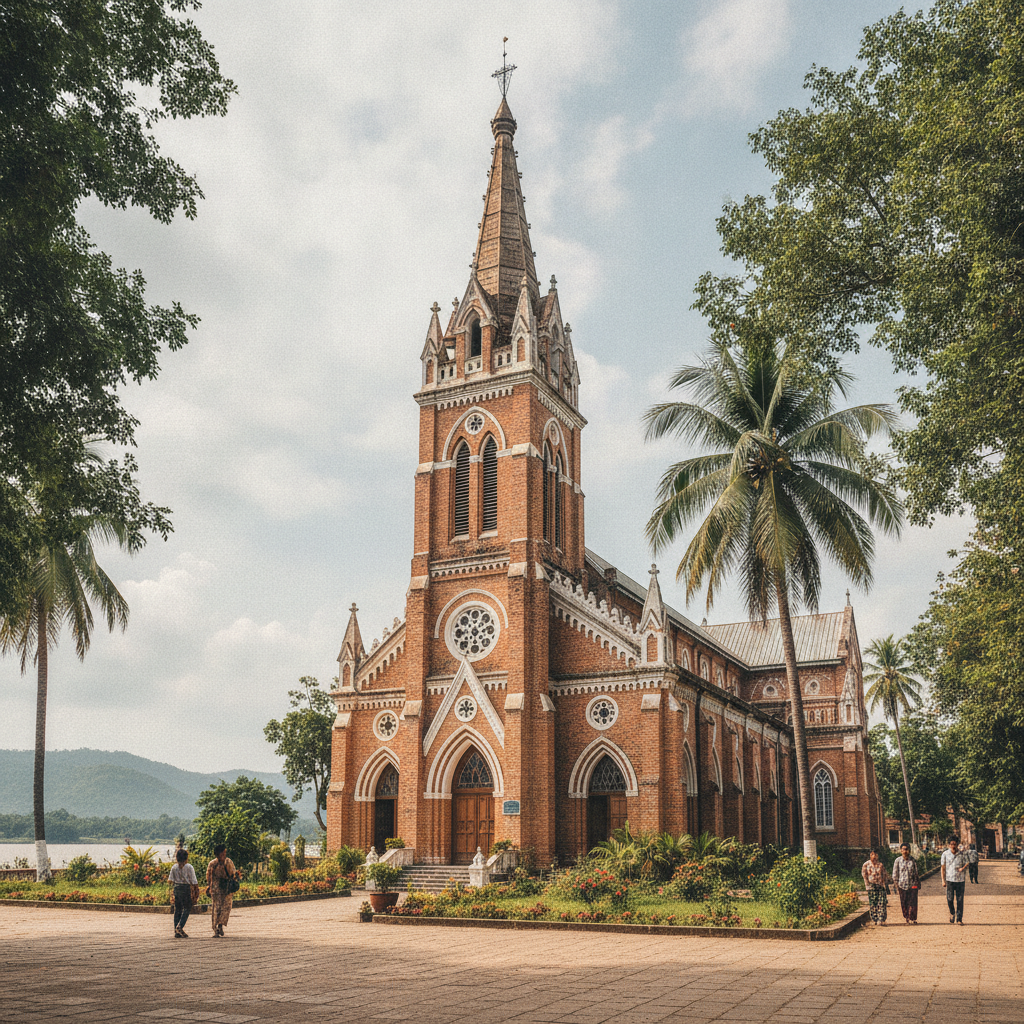
The colonial-era Christian churches of Mawlamyine (the concentration of Baptist, Catholic, Anglican, and other Christian denomination churches that reflects the early missionary activity in Moulmein — the city where Adoniram Judson, the American Baptist missionary, established the most important early Protestant mission in Burma in the 1820s and translated the entire Bible into Burmese) are the most internationally historically significant religious buildings accessible in Myanmar's contemporary Buddhist cultural landscape — the Baptist Church (the direct institutional descendant of Judson's mission, the oldest Christian congregation in Burma, and still an active community in Mawlamyine) and the older church buildings from the colonial period (the simple structures that reflect the practical needs of the early mission rather than the architectural ambitions of the later colonial churches) together document the most significant single chapter of the Christian missionary history in Southeast Asia.
- 4
Judson Memorial
The memorial to Adoniram Judson (the American Baptist missionary who arrived in Burma in 1813, learned the Burmese language, translated the entire Bible into Burmese, and compiled the first Burmese-English dictionary — the most significant single contribution to the Burmese written language made by any Western individual) is the most historically important non-Buddhist religious monument accessible in Myanmar — Judson's work in Mawlamyine (the decades spent in the city completing the Bible translation while also establishing the mission schools that would eventually become the most important secular educational institutions in British Burma) created the linguistic and educational foundation on which the modern Burmese literary tradition has partially built. The memorial's significance extends beyond the religious history to the linguistic history of Myanmar, as the standardised Burmese script and orthography that Judson's translation work established remains the basis of the modern Myanmar written language.
- 5
Old Prison Site
The site of the old Mawlamyine prison (the colonial-era jail that is the setting for George Orwell's essay 'A Hanging', written based on his experiences as an imperial police officer in Burma in the late 1920s — the essay describing the execution of a Hindu prisoner and the young policeman's dawning moral discomfort with the violence of colonial rule is the most significant single literary work connected to Mawlamyine) is the most directly literary historically significant single location accessible in the city — the prison's connection to Orwell's 'Shooting an Elephant' (the essay about the Burmese policeman forced to shoot an elephant to preserve colonial face, also based on Mawlamyine-area experiences) and the formative influence of the Burma posting on the development of Orwell's anti-imperialist politics (expressed later in 'Burmese Days' and ultimately in 'Animal Farm' and '1984') makes the Mawlamyine connection to Orwell the most significant single literary-historical link accessible at any location in Myanmar.
- 6
Riverside Sunset Promenade
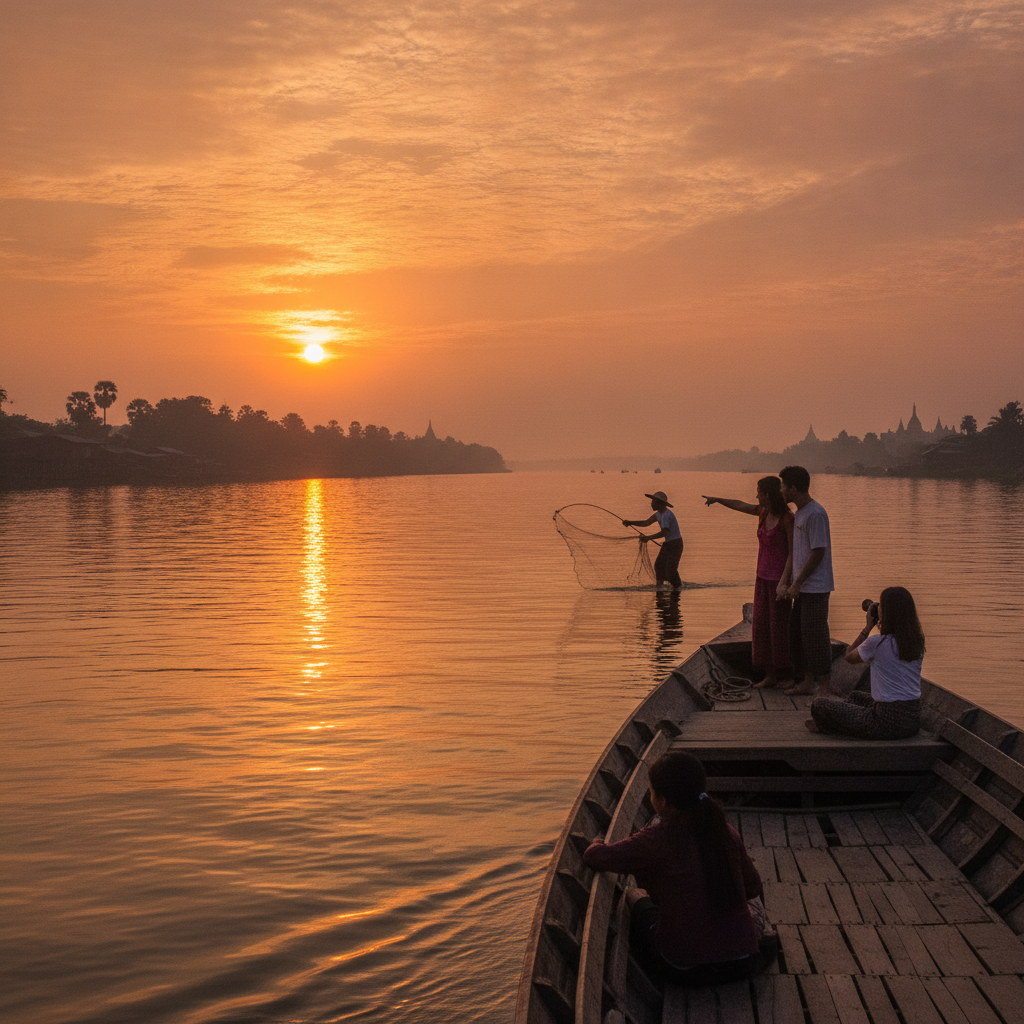
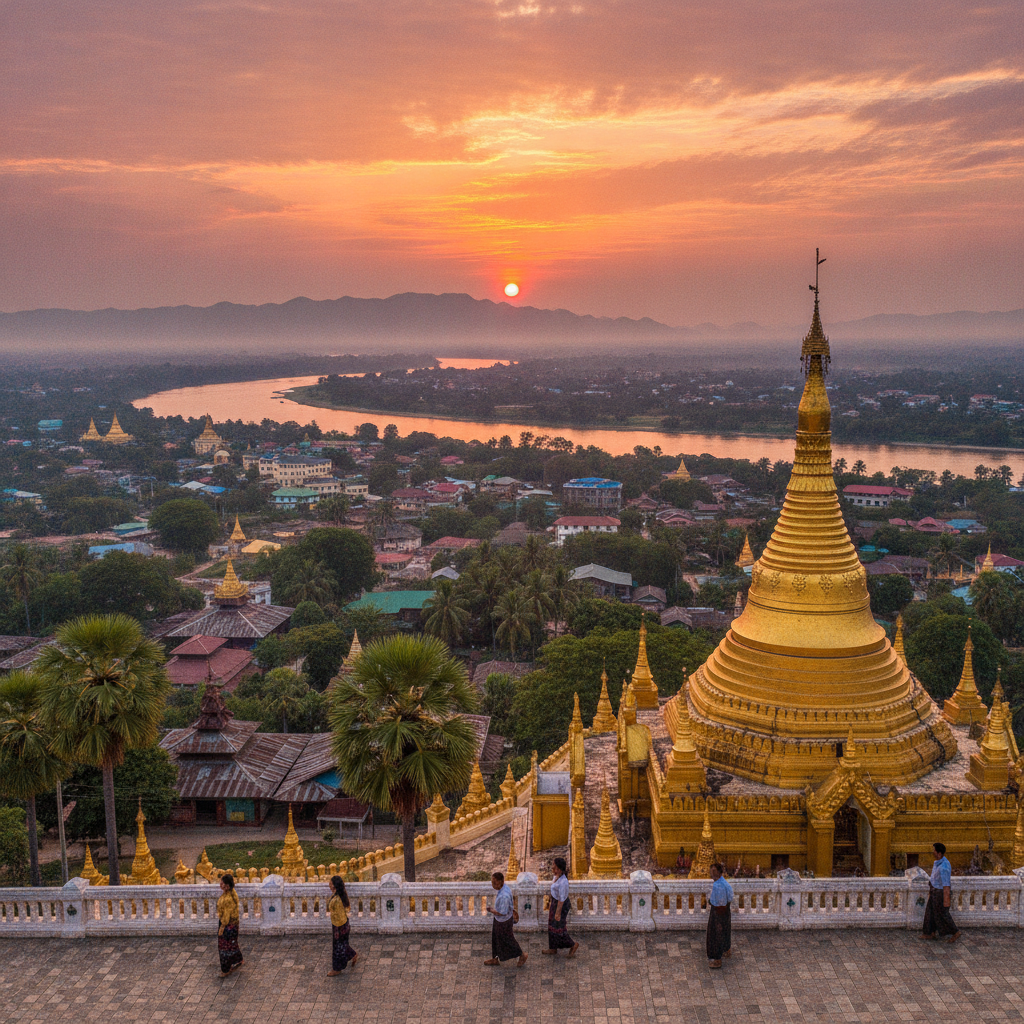
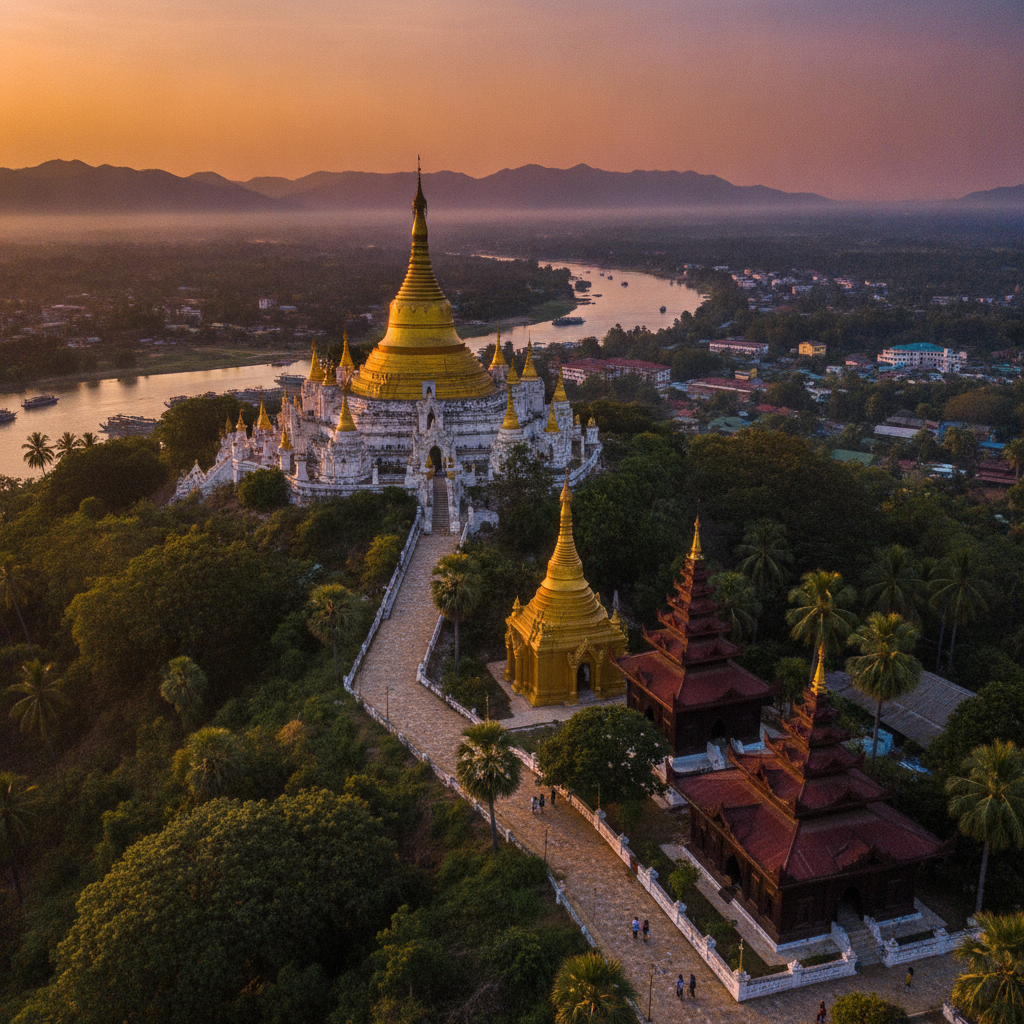
The Salween River sunset view from the Mawlamyine riverside (the wide river at its most impressive in the late afternoon, the golden light catching the water surface and the Salween River islands visible in the channel between the city and the Tenasserim Hills on the far bank) is the most romantically colonial single evening encounter accessible in Mawlamyine — the promenade along the Strand Road in the evening (the local community taking the evening air by the river, the river traffic visible at this hour, and the colonial buildings visible along the riverside in the warm light of the setting sun) is the most directly Kipling-esque evening scene accessible in Myanmar. Kipling's poem 'Mandalay' (which references 'the old Moulmein Pagoda' and the 'road to Mandalay where the flying fishes play' and the Burmese girl making her eyes at him) is the most famous single literary evocation of Mawlamyine accessible in the English language, and the riverside at sunset is the most directly evocative setting for that poem's atmosphere.
Walk this route with audio
Stories play automatically as you reach each stop — no tapping needed.