Nukus Ancient Khorezm Desert Fortress Ruins
Explore the ancient Khorezm ruins accessible from Nukus — the dozens of mud-brick fortresses of the Khorezm civilization scattered across the Karakalpak desert, the remains of a sophisticated irrigation-based civilization that flourished in the Amu Darya delta from the 4th century BCE through the Mongol destruction in the 13th century CE.
- 1
Toprak Kala Ancient Fortress
Toprak Kala — the largest and most impressive of the Khorezm fortresses, the square mud-brick citadel with corner towers and the attached palace complex that was the capital of the Khorezm state from the 1st to the 4th century CE, the excavations revealing a sophisticated urban society with painted murals, clay sculptures, and administrative archives.
- 2
Ayaz Kala Desert Fortress
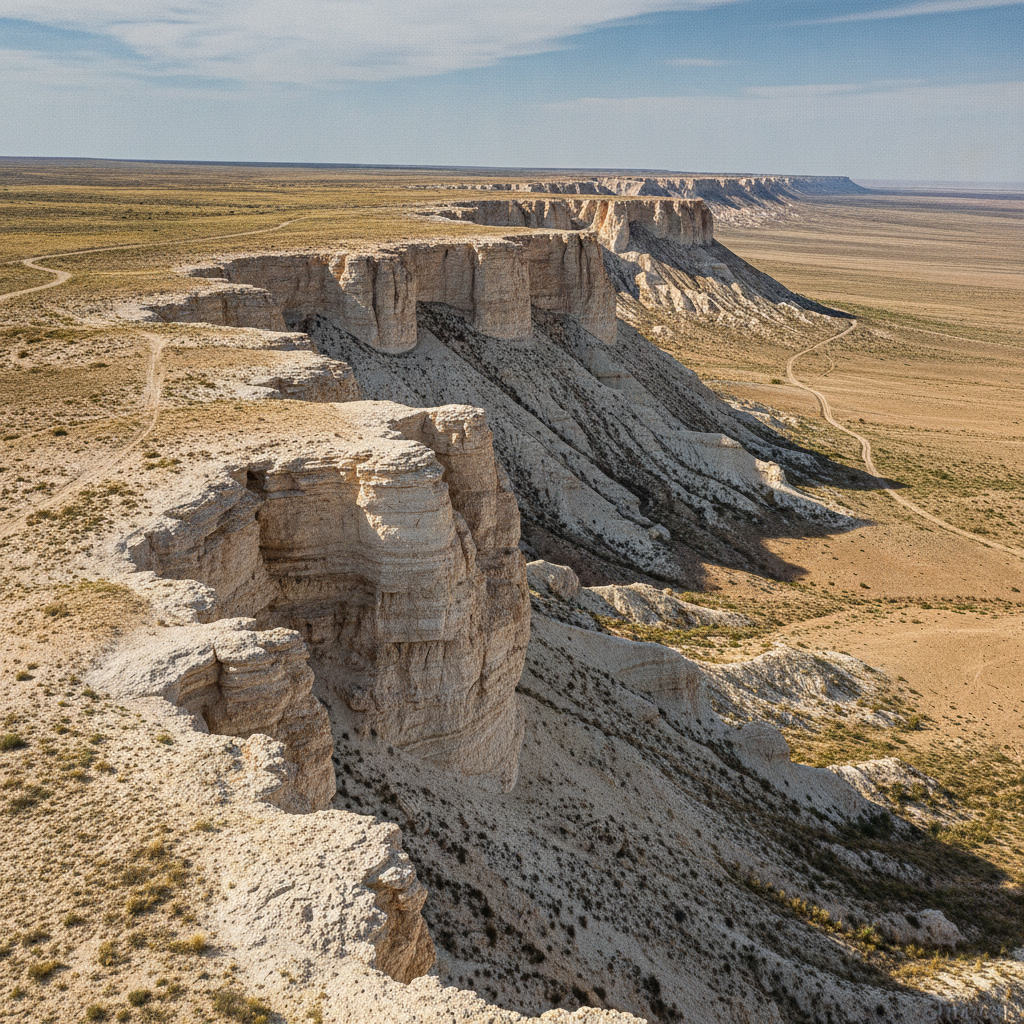
Ayaz Kala — the cluster of three Khorezm fortresses on a ridge overlooking the Kyzylkum desert, the small hillfort of Ayaz Kala 1 (4th-3rd century BCE) paired with the larger Ayaz Kala 2 below, the fortress complex offering the most dramatic desert landscape setting of all the Khorezm sites accessible from Nukus.
- 3
Kyzylkum Desert Landscape
The Kyzylkum desert landscape around the Khorezm ruins — the red sand dunes and rocky plateaus (chinks) of the desert surrounding the fortress sites, the extreme landscape that makes the Khorezm fortresses among the most atmospheric archaeological sites in Central Asia, the silence and the scale of the desert emphasizing the isolation of the ancient citadels.
- 4
Khorezm Civilization History
The Khorezm civilization history displayed at Nukus museum — the agricultural state that developed sophisticated irrigation of the Amu Darya delta from the 6th century BCE, the civilization that developed its own script (Khorezmian), produced elaborate art, and maintained independence through the Achaemenid, Greek, Parthian, Kushan, and Sasanian periods before Islamization in the 8th century.
- 5
Koy Krilgan Kala Observatory
Koy Krilgan Kala — the circular Khorezm fortress from the 4th-3rd century BCE interpreted by archaeologist Sergei Tolstov as a combination of fortress, temple, and astronomical observatory, the unusual circular ground plan and the astronomical alignments of the structure suggesting a society with advanced astronomical knowledge integrated into its religious and civic architecture.
- 6
Desert Camel Trek Route
The desert camel trek route to the Khorezm fortresses from a camp near Nukus — the traditional way to reach the most remote fortress sites across the Kyzylkum desert, the overnight camp in the desert under the brilliant night sky of the remote steppe, the experience connecting the visitor to the ancient nomadic context in which the Khorezm fortresses stood as islands of sedentary civilization.
Walk this route with audio
Stories play automatically as you reach each stop — no tapping needed.