Pamukkale Thermal Heritage: Roman Bathing Medicine, the Sacred Pool Experience, Modern Thermal Hotels, the Spring Chemistry, the Hydrotherapy Tradition, and the UNESCO Conservation Challenge
The Pamukkale thermal heritage route covers Roman medical bathing that built Hierapolis as a resort, the Sacred Pool swim among submerged marble columns, the modern thermal hotel industry in Pamukkale village, the hot spring chemistry and mineral content, the ancient hydrotherapy tradition, and the UNESCO challenge of maintaining the white terrace color.
- 1
Roman Bathing Medicine: The Hierapolis Therapeutic Resort
The Roman development of Hierapolis as a therapeutic bathing resort from the 2nd century BC created the first purpose-built medical spa destination in the ancient world where the sick came specifically for the thermal water treatment of rheumatism, arthritis, skin diseases, and nervous system disorders. The main Hierapolis bath building covered 30,000 square meters and was heated by the thermal spring water directly rather than the underfloor hypocaust heating used in other Roman baths, making the Hierapolis system the most naturally efficient thermal complex in Anatolia. The bath building now houses the archaeological museum in the most impressive adaptive reuse of a Roman building in Turkey.
- 2
Sacred Pool Experience: Thermal Swimming with Roman History
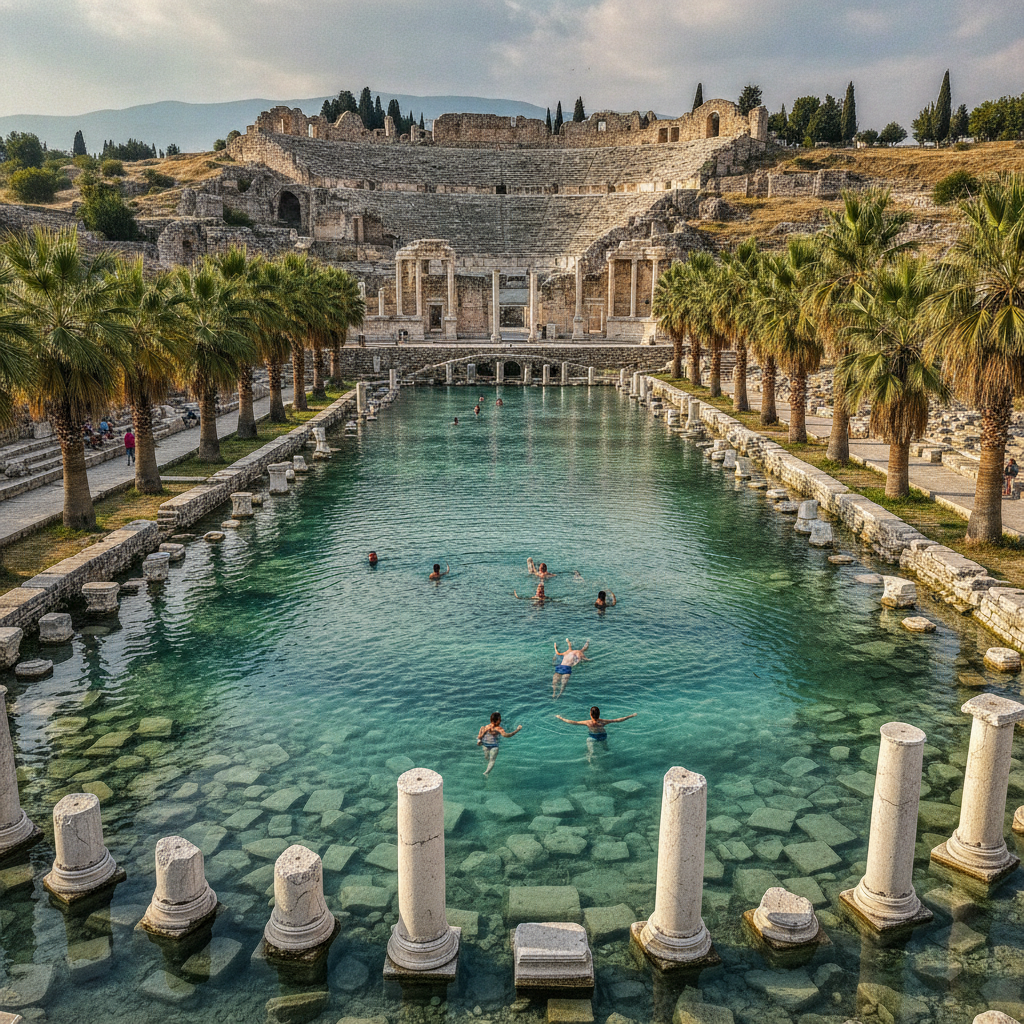
The Cleopatra Sacred Pool experience of swimming in 35-degree thermal water among ancient marble columns, Ionic capitals, and architectural fragments is the single most historically atmospheric bathing experience in Turkey. The pool is 5 meters deep at the center and the clear thermal water allows examination of the marble fragments below. The pool entry requires the ticket for the Pamukkale site and the swimming is most enjoyable from 8am to 10am before the pool reaches maximum occupancy. The combination of therapeutic thermal bathing and direct tactile engagement with Roman architecture is the most unusual single visitor experience in the Turkish archaeological landscape.
- 3
Pamukkale Village Hotels: Thermal Overnight Strategy
The thermal hotels in Pamukkale village at the base of the travertine cliff offer the overnight experience of calcium-rich hot spring pools fed by the same water source as the main terrace, the most accessible thermal bathing destination in Turkey. The overnight village stay provides the critical advantage of 7am access to the travertine terraces before the tour buses arrive at 9am, when the white calcium surface is undisturbed and the morning light catches the pool water without the afternoon crowds. The village hotels range from basic family pensions with garden thermal pools to the Doga Thermal Resort with the most complete spa facility in the Pamukkale area.
- 4
Hot Spring Chemistry: What Makes the Terraces White
The Pamukkale spring water emerges at 35 degrees Celsius with 2,430 milligrams per liter of dissolved calcium carbonate maintained in solution by the underground pressure. At the surface where the pressure drops and the temperature falls, carbon dioxide escapes and the calcium carbonate precipitates from the water to form the white travertine layer. The 1 centimeter per decade formation rate means the visible terraces represent 400,000 years of geological time. The specific spring chemistry at Pamukkale, richer in calcium than any comparable thermal system in the Mediterranean, is the product of the limestone bedrock that the thermal water travels through on its journey from depth to the surface.
- 5
UNESCO Conservation: The White Terrace Management Problem
The UNESCO World Heritage listing of Pamukkale in 1988 required the demolition of the hotels built on the terrace and the road across the calcium surface that had turned the terraces brown from contamination. The restoration program has partially restored the white color by systematically diverting the thermal water across the terrace surface, but 2 million annual visitors create the most challenging conservation management problem in Turkish archaeology. The barefoot rule, the prohibition of shoes and sunscreen on the terrace, and the designated walking channels on the wet calcium surface are all management tools designed to limit damage while maintaining visitor access to the UNESCO site.
- 6
Hydrotherapy Continuity: Ancient Healing to Modern Spa
The hydrotherapy tradition that Hierapolis pioneered in antiquity continues in the modern Pamukkale thermal hotel and spa industry marketing the calcium-rich thermal pools, iron-rich red mineral pools at Karahayit, and the mud bath treatments to domestic Turkish visitors and international wellness tourists. The calcium thermal water is documented to improve circulation and skin conditions by modern dermatology, providing the scientific basis for the ancient Roman therapeutic claim. The Pamukkale thermal spa represents the most continuous single therapeutic bathing tradition in Turkey, linking the ancient Greek medical theory of Hippocrates to the contemporary wellness travel industry.
Walk this route with audio
Stories play automatically as you reach each stop — no tapping needed.
More in Pamukkale

Pamukkale Practical: Transport from Istanbul and Izmir, the Ephesus Circuit, Accommodation Strategy, Optimal Visit Timing, the Day Trip Options, and the Departure Summary
Pamukkale Essential: Cotton Castle Travertine Terraces, Hierapolis Roman Spa City, Cleopatra Sacred Pool, Geological Wonder, Thermal Spring Culture, and the Denizli Gateway
Pamukkale Photography: Sunrise Terrace Walk, Blue Pool Reflections, Hierapolis Theatre Compositions, Aerial Perspectives, Seasonal Changes, and the Ethics of UNESCO Site Photography
Aphrodisias Day Trip: The Roman Sculpture Capital, the World Record Stadium, the Sebasteion Imperial Frieze, the On-Site Museum, the Temple of Aphrodite Conversion, and the Marble Quarry Source
Denizli Province: The Ancient Colossae Site, the Global Textile Industry, the Kaklik Cave Underground Pamukkale, the Lycus Valley Cotton Heritage, and the Modern Denizli City
