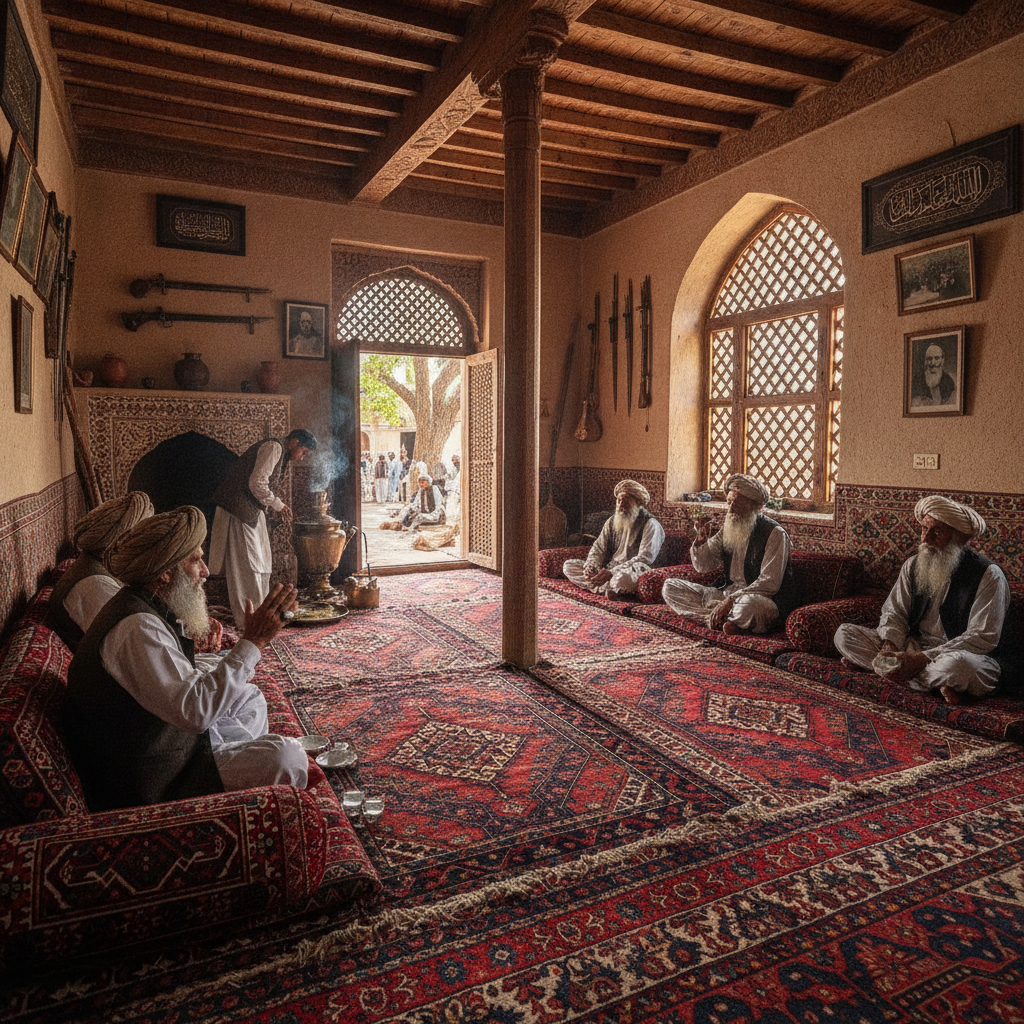
Peshawar Tribal Culture and Pashtun Heritage
Understand the Pashtun tribal culture that defines Peshawar — the Pashtunwali code of hospitality, honor, and revenge that has organized Pashtun society for centuries, visible in the architecture of the tribal hujra (guest house), the jirga (tribal council) tradition, and the warrior culture of the Khyber Pakhtunkhwa frontier region.
- 1
Traditional Hujra Guest House
Visit a traditional hujra — the men's guest house that every Pashtun household of means maintains separately from the family quarters, the space where male guests are received, community decisions made, and the social obligations of Pashtunwali hospitality fulfilled regardless of the host's economic circumstances.
- 2
Pashtun Crafts of Peshawar
The crafts that express Pashtun cultural identity — the decorated camel-leather sandals, the embroidered Pashtun waistcoats, the wooden furniture with geometric inlay patterns, and the distinctive cap styles that identify a man's tribal affiliation to other Pashtuns.
- 3
Old City Mosque Community
The mohalla (neighborhood) mosque in the old city — the center of neighborhood social life as much as religious practice, the space for the informal jirga deliberations that settle disputes according to Pashtunwali rather than the state legal system, the washing area where neighbors meet daily.
- 4
Refugee Camps Cultural Heritage
The Afghan refugee settlements around Peshawar that have existed since the 1979 Soviet invasion — the camps now permanent communities where Afghan tribal culture has been maintained in exile for over four decades, the hybrid Pashtun-Afghan culture of these settlements adding to Peshawar's cultural complexity.
- 5
Pashtun Music and Rabab
A traditional music shop or performance space where the rabab — the ancestor of the guitar brought to Peshawar by Afghan musicians — is played alongside the harmonium and tabla in the distinctive Pashto musical style that blends Central Asian and South Asian traditions.
- 6
Storytelling Tradition Memorial
The cultural center preserving the oral storytelling tradition that gave Qissa Khwani its name — the professional storytellers (qissa khwan) who once memorized and performed hours-long narrative poems at the chai khanas, an oral literary tradition now nearly extinct but being documented by cultural heritage organizations.
Walk this route with audio
Stories play automatically as you reach each stop — no tapping needed.