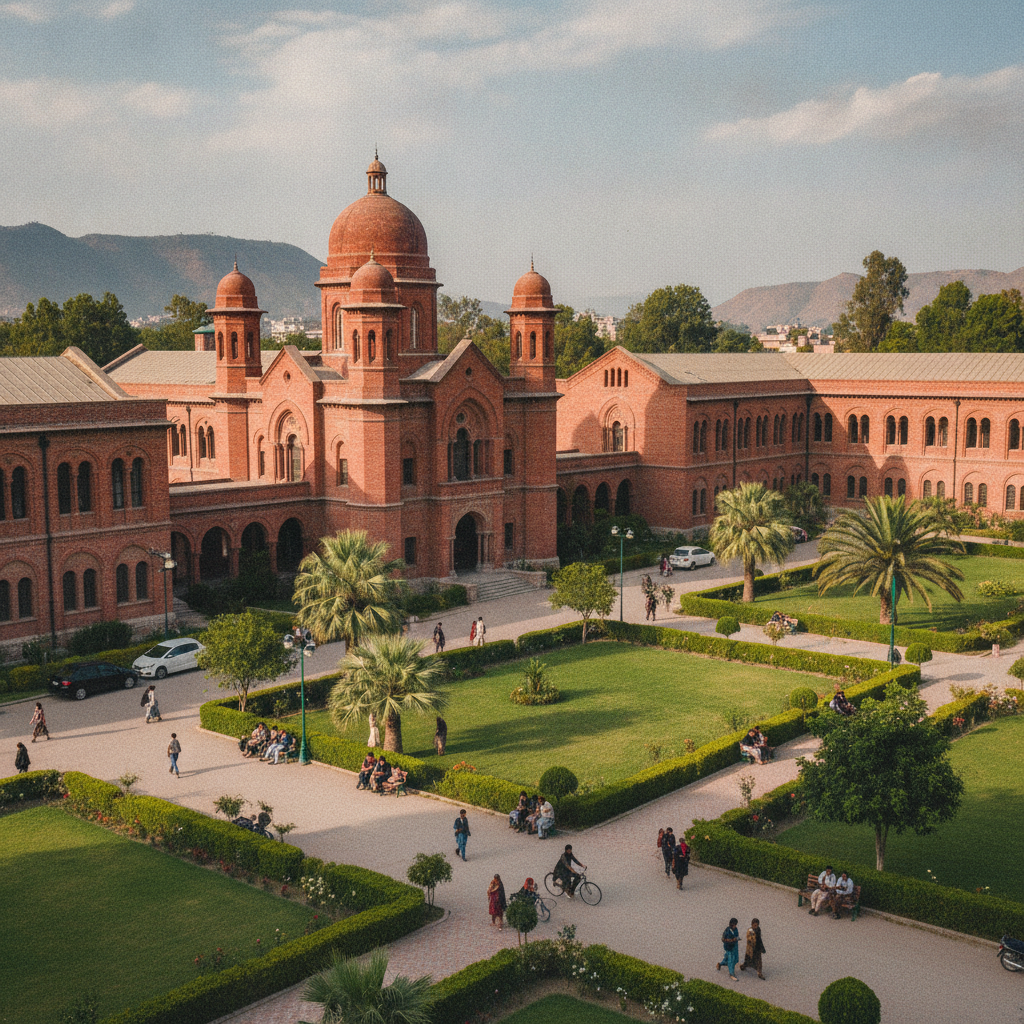
Peshawar University Town and Contemporary Life
See modern Peshawar in the University Town and Hayatabad districts — the planned residential areas where Peshawar's middle class lives away from the density of the old city, the University of Peshawar campus with its colonial buildings, the restaurants and cafés of a city rebuilding after decades of Taliban-era restrictions, and the resilience of the frontier culture.
- 1
University of Peshawar Campus
The colonial-era University of Peshawar campus with its red brick buildings and the Islamia College established in 1913 — the educational institutions that have produced generations of Pashtun scholars, politicians, and professionals, the campus a relatively peaceful enclave amid the frontier city's turbulent recent history.
- 2
Hayatabad Modern District
The planned residential district of Hayatabad built in the 1980s to house Peshawar's expanding population — the wide roads and low-rise housing of the planned suburb now fully built out and commercially active, a different urban form from the dense lanes of the old city but equally Pakistani in character.
- 3
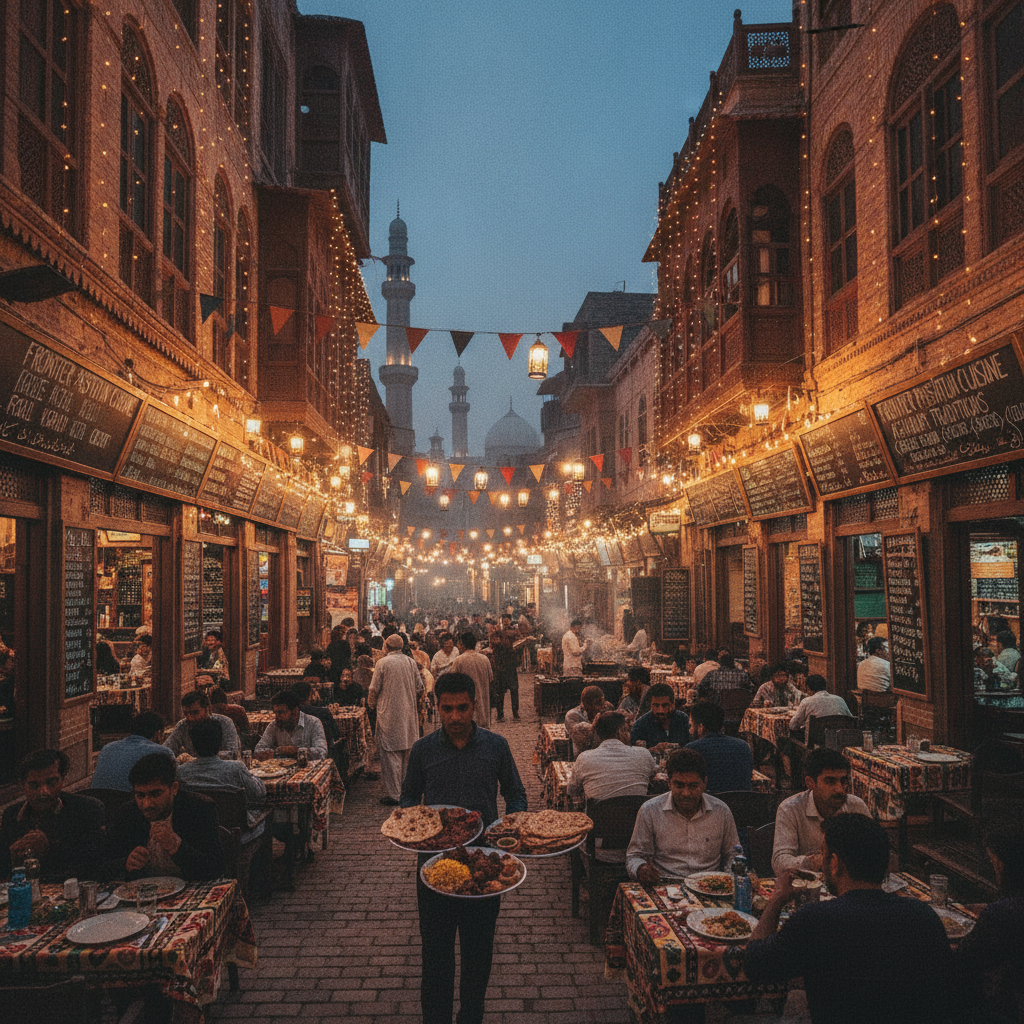
Peshawar University Town Restaurants
The restaurant district in University Town where Peshawar's younger generation goes to eat in cafés and restaurants that would have been impossible during the Taliban-influenced period — the slow normalization of public social life in a city that experienced severe restrictions through the 2000s.
- 4
Pearl Continental Garden
The gardens of the historic Pearl Continental hotel — one of the few major international hotels to operate continuously in Peshawar through its difficult decades, the hotel's garden a rare open space in the city where official events, weddings, and diplomatic gatherings take place.
- 5
Chowk Yadgar Memorial
The central memorial in the heart of Peshawar's commercial district commemorating the Pashtun soldiers who died in the World Wars — the roundabout now surrounded by banks, shops, and the daily commercial life of the frontier city, the memorial connecting the contemporary city to its role in the British Indian Army.
- 6
Peshawar Cantonment
The British-era cantonment with its wide roads, colonial bungalows, and the Mall — the planned military district established by the British that remains the most architecturally distinctive part of modern Peshawar, the tree-lined streets a marked contrast to the dense commercial lanes of the old city.
Walk this route with audio
Stories play automatically as you reach each stop — no tapping needed.