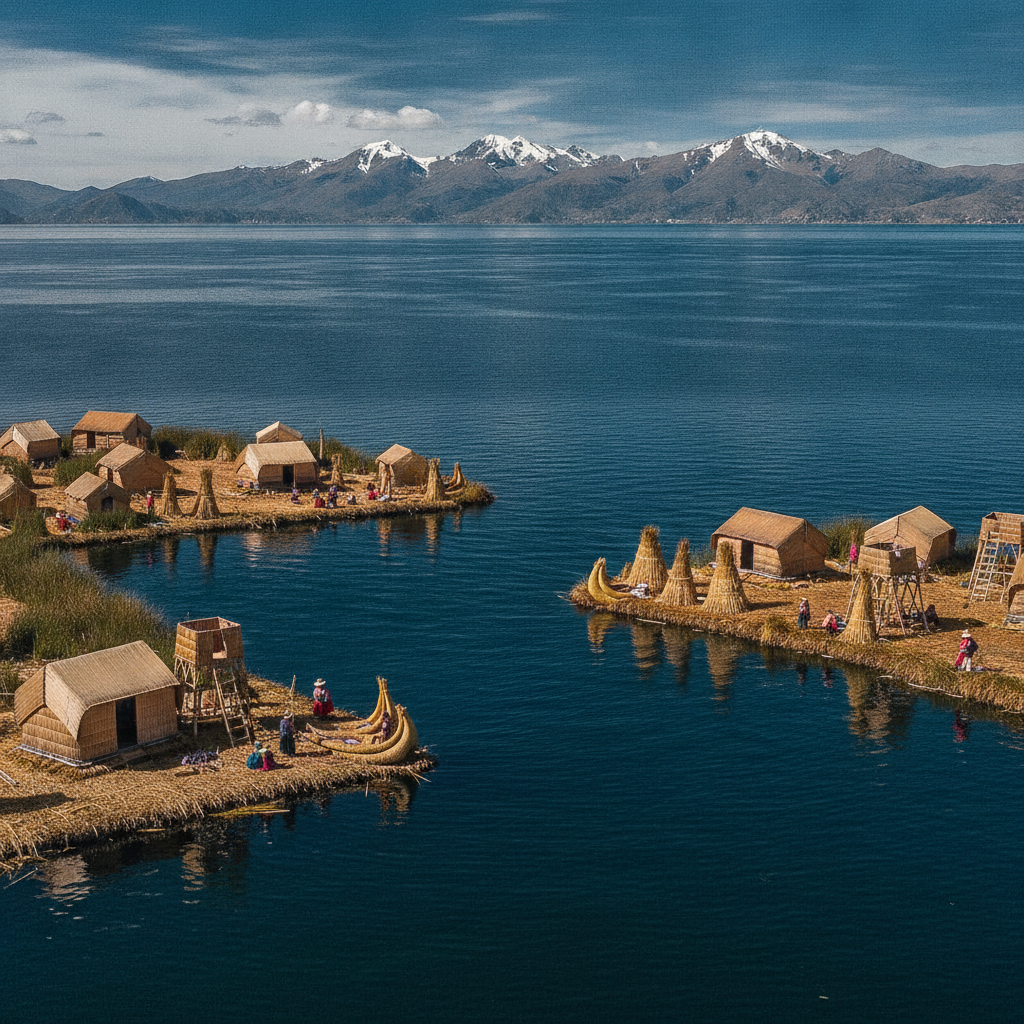
Lake Titicaca: The Sacred Lake of the Andes
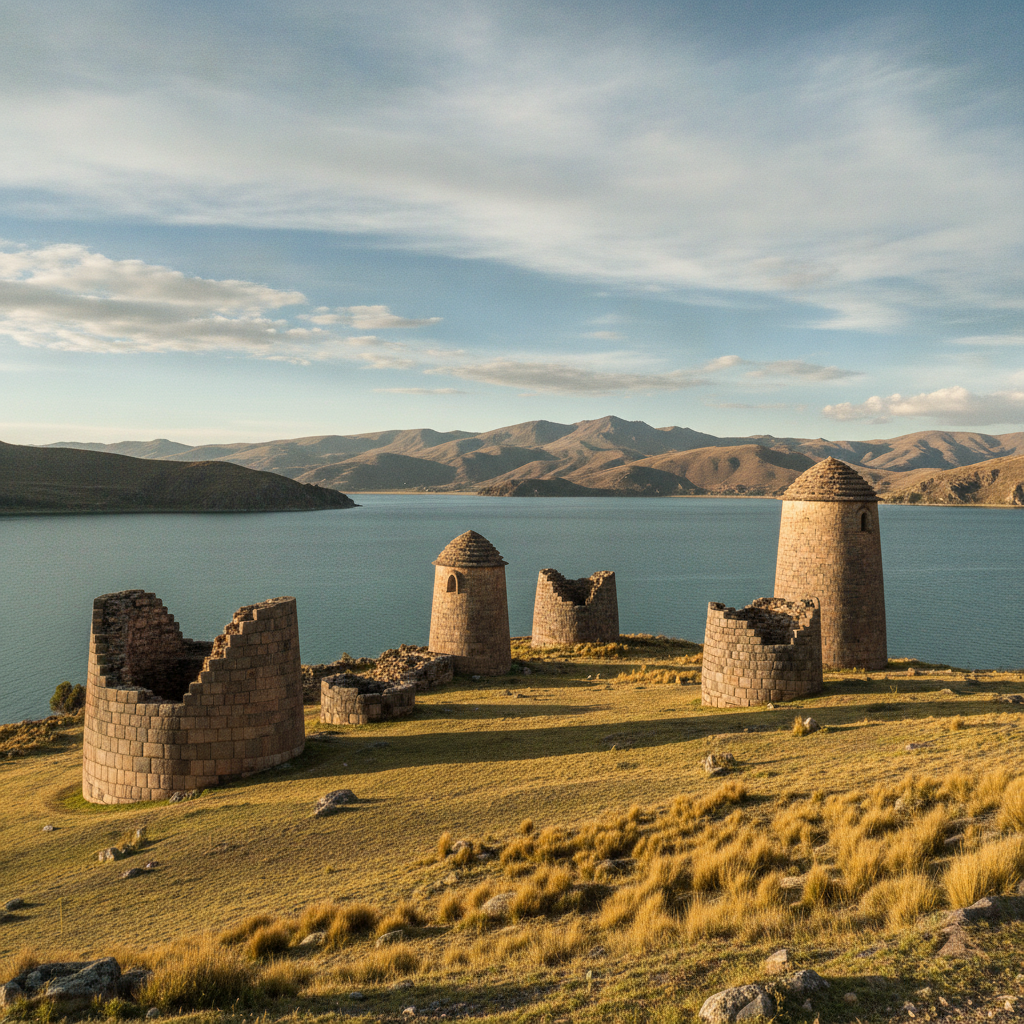
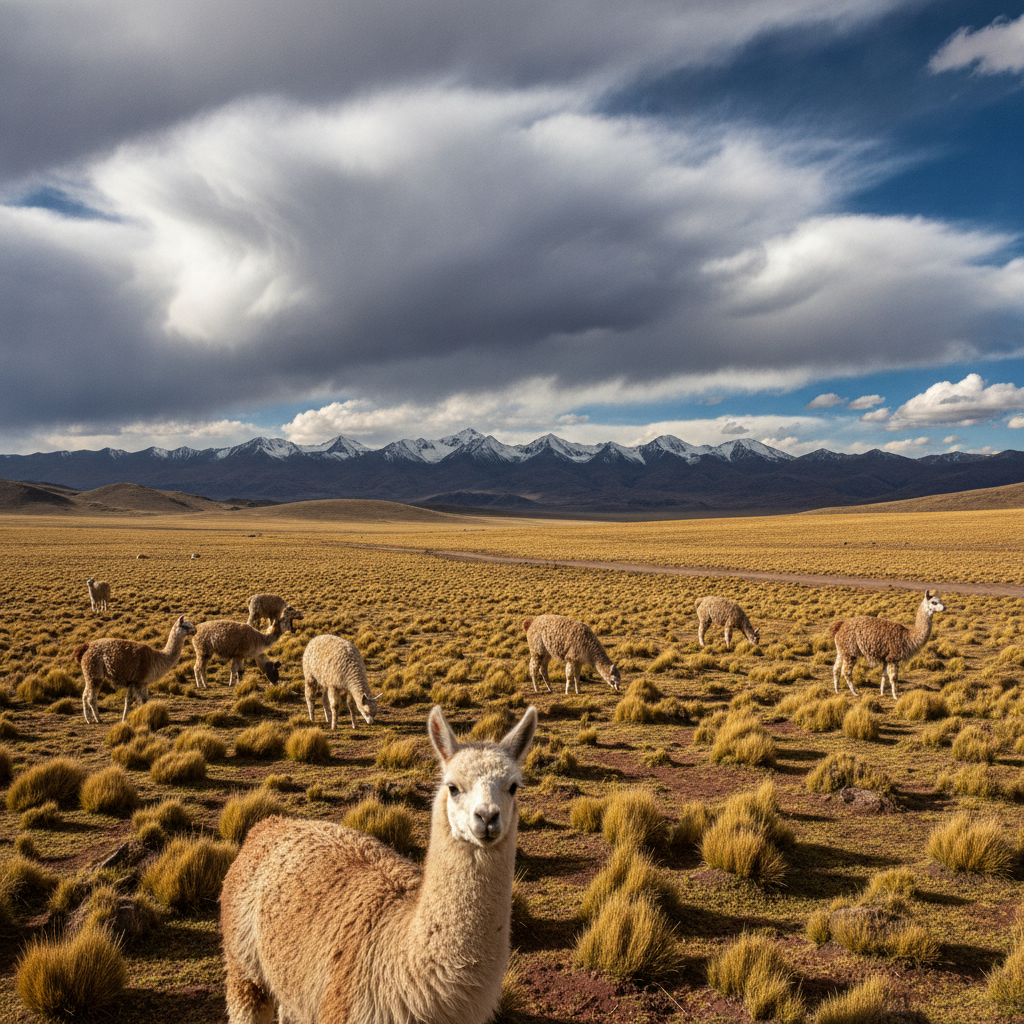
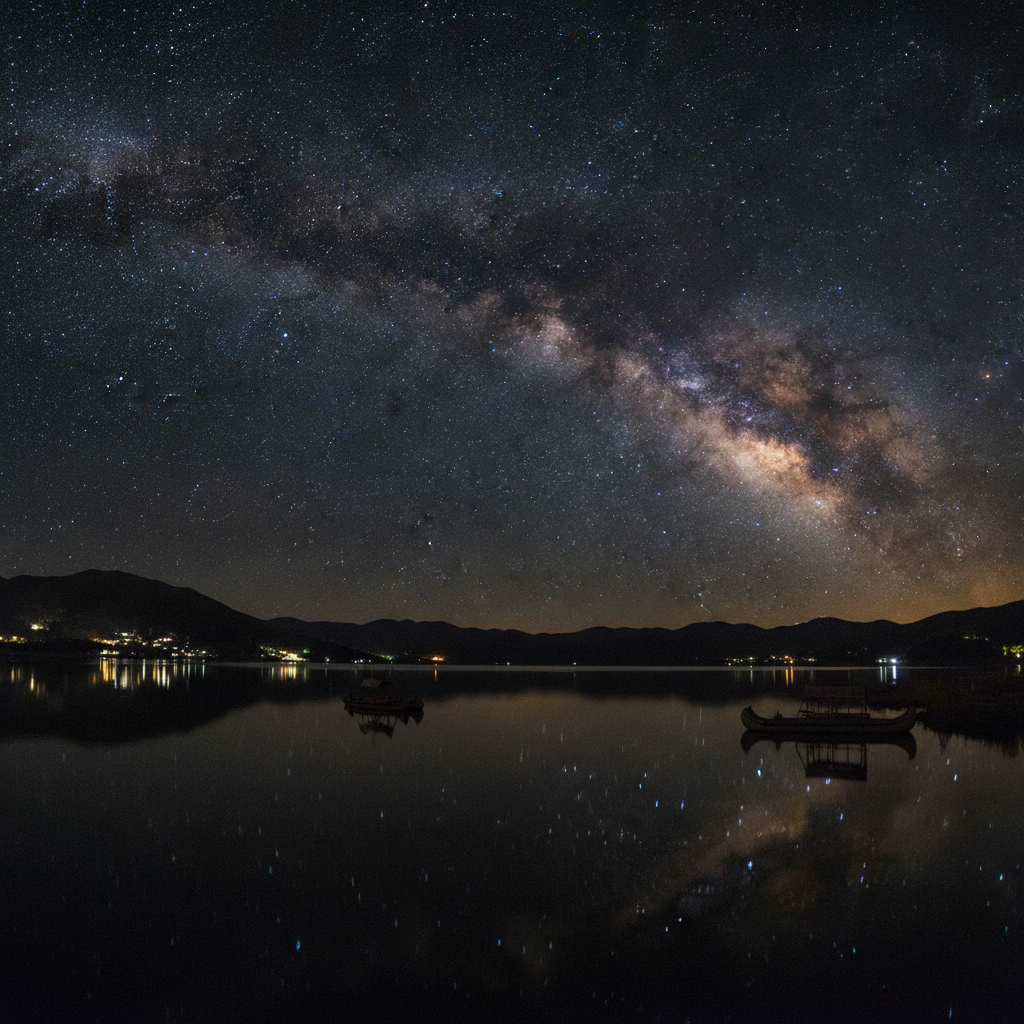
Lake Titicaca — at 3,812m above sea level, the world's highest navigable lake — straddles the Peru-Bolivia border near Puno; the lake's extraordinary blue colour, the floating reed islands of the Uros, and the island of Taquile with its living weaving tradition make it one of the most remarkable destinations in South America
- 1
The world's highest navigable lake
Lake Titicaca — 8,372 km² in surface, up to 281 m deep — is the largest lake in South America by volume and the highest navigable lake in the world; the lake's elevation gives its water a deep saturated blue color; the light at this height has a crystalline quality that makes every view extraordinary
- 2
Floating Islands of Uros
The Uros floating islands – made entirely of toto reeds – are home to the Uros people, who fled to the lake hundreds of years ago to escape the Inca; the islands are constructed of layers upon layers of reeds, requiring constant maintenance; Uros build their homes, boats and furniture from totora; the islands are a UNESCO cultural heritage site
- 3
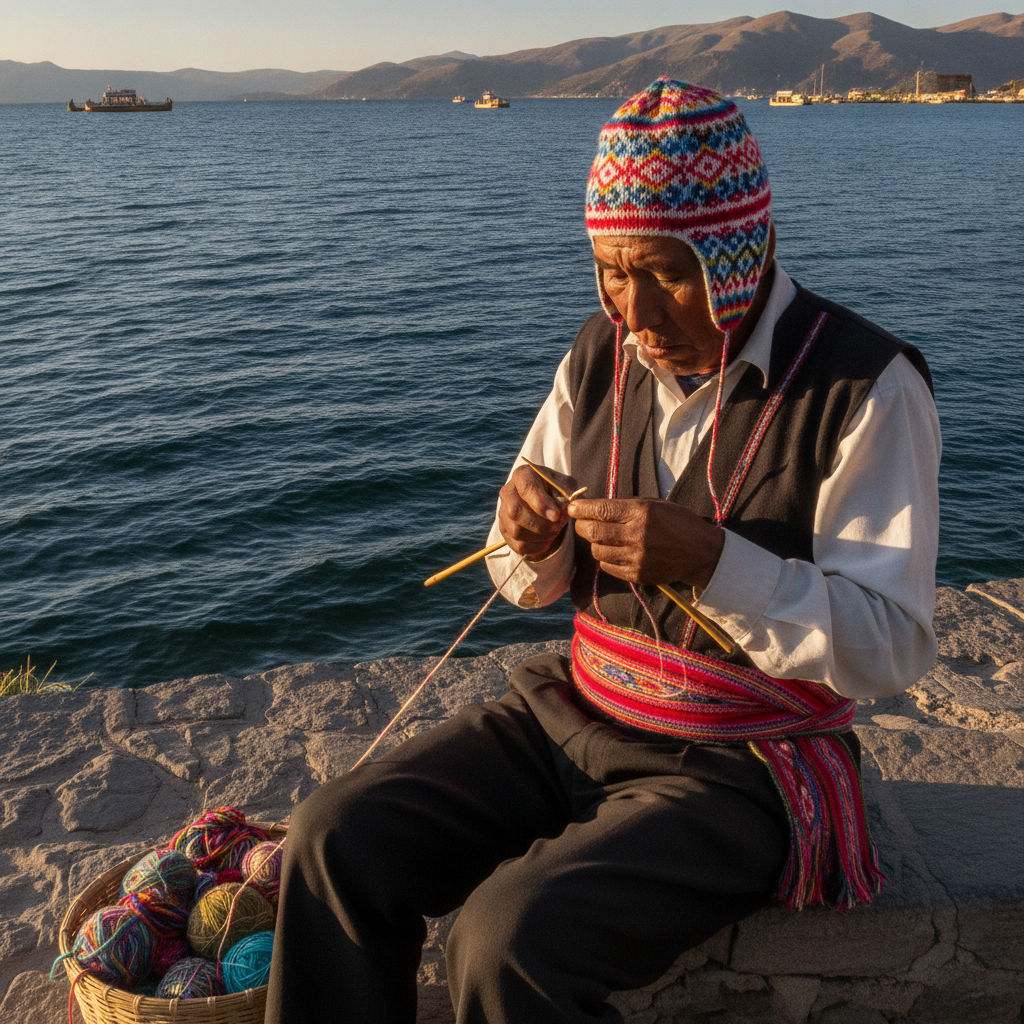
Taquile Island Weaving
Taquile Island - 45 km from Puno - has a vibrant textile tradition so distinctive that it was declared a UNESCO Intangible Cultural Heritage; the island's men (not women, unusually) do all the knitting and weaving; the complex patterns encode the wearer's social and relationship status
- 4
Inca Creation Myth
Lake Titicaca is the site of the Inca creation myth — the sun god Inti sent Manco Cápac and Mama Ocllo from the depths of the lake to found the Inca Empire; the island of the sun (Isla del Sol) on the Bolivian coast is the mythological birthplace of the Inca civilization
- 5
Totora Reed Ecosystem
The Totorava Basin - a bulbus native to the Titicaca Basin - is the foundation of the lake's economy and culture; the reeds are used for island construction, boat building and food (the lower stem is edible); the totora ecosystem supports unique bird species and the giant Titicaca water frog
- 6
Amantaní Island
Amantaní Island—larger and less visited than Taquile—offers a homestay community program where visitors live with Quechua families; the island's two hills (Pachatata and Pachamama) have Inca temples at their summits; the sunset from the hills over the lake is one of the most beautiful in the Andes
Walk this route with audio
Stories play automatically as you reach each stop — no tapping needed.