Rio Branco's Cultural Scene: Museums, Identity & Forest Art
Rio Branco has a cultural scene built around forest identity — the rubber museum, the indigenous art, and the contemporary artists who work with Amazon themes create a distinctly Acrean cultural voice
- 1
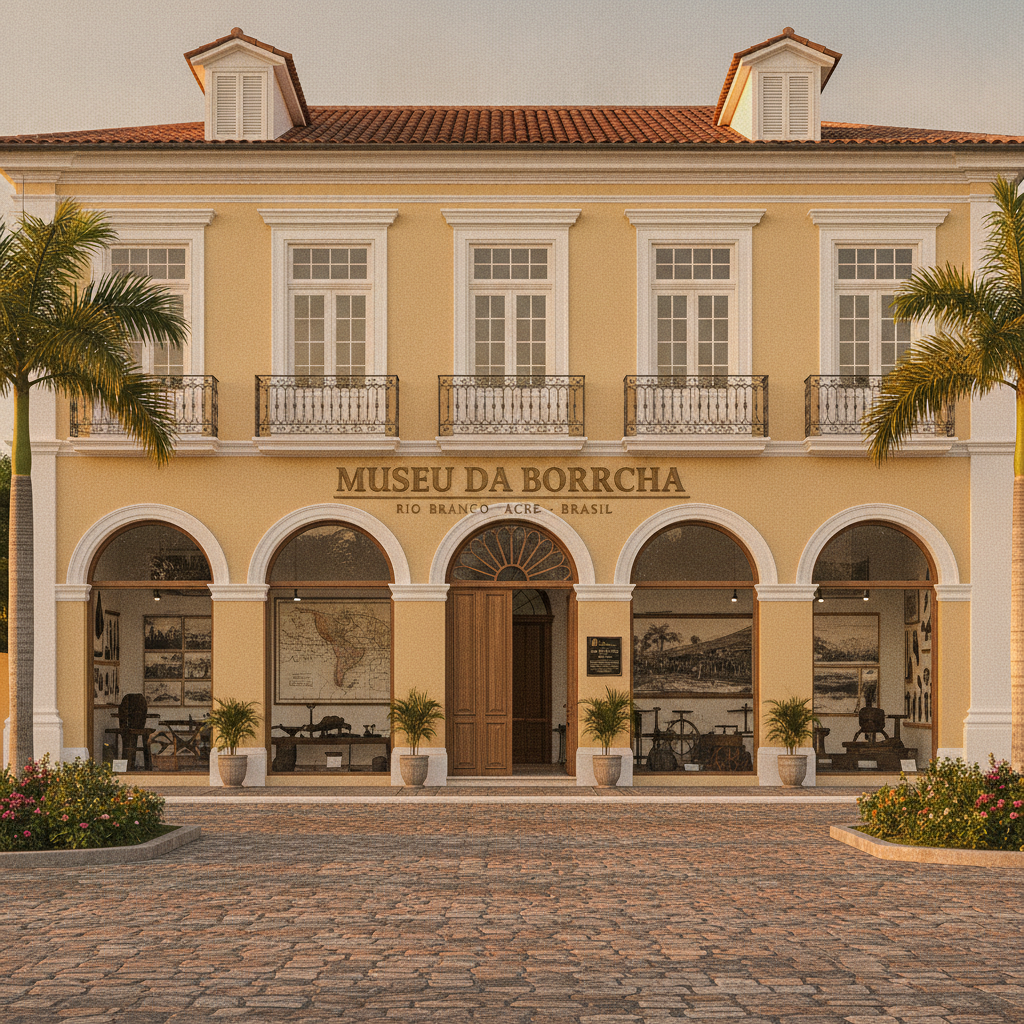
Museu da Borracha
The Rubber Museum in a colonial building near the river documents the history of the Amazon's rubber economy – the seringal social system, rubber tapping technology and the booming history of the forest
- 2
Museu da Floresta
The Forest Museum - a natural history and cultural museum in the Rio Branco coastal area - presents the Amazon forest ecosystem, the indigenous people and the ecological knowledge of forest communities
- 3
Acrean Contemporary Art
Acre's art scene produces artists who work with forest materials — seeds, bark, gum and natural pigments — creating works that are formally contemporary but rooted in the local ecological identity
- 4
Raimundo Irineu Serra and Santo Daime
Rio Branco is the birthplace of Santo Daime - the Amazonian syncretic religion founded in the 1930s that uses ayahuasca (daime) as a sacrament; the religion has spread globally but its origins and headquarters are in Acre
- 5
Ayahuasca Cultural Heritage
Ayahuasca—the visionary brew used by indigenous peoples throughout western Amazonia—is legal in Brazil as a religious sacrament; The Rio Branco area has several centers that welcome researchers and spiritual seekers
- 6
Rubber Tapper Music: Forró Acreano
The music of Acre's rubber tapping communities – forró with Amazonian themes, the memorial songs of isolation and the ritual music of the forest communities – is a distinct tradition within the northeastern forró genre
Walk this route with audio
Stories play automatically as you reach each stop — no tapping needed.
More in Rio Branco

Acre's Amazon: Brazil's Most Intact Western Forest
Amazon Geoglyphs: Pre-Columbian Cities Hidden in Acre's Forest
Juruá River: Acre's Remote Amazon Heartland
Acre's Amazon Table: Forest Foods & Rubber Tapper Cuisine
