Chuquisaca Textiles: The Jalq'a and Yampara Traditions
The Chuquisaca region around Sucre has two of Bolivia's most distinctive textile traditions — the dark, fantastical Jalq'a weavings and the more colourful, geometric Yampara textiles; both represent living artistic traditions of enormous complexity
- 1
Jalq'a Dark Aesthetic
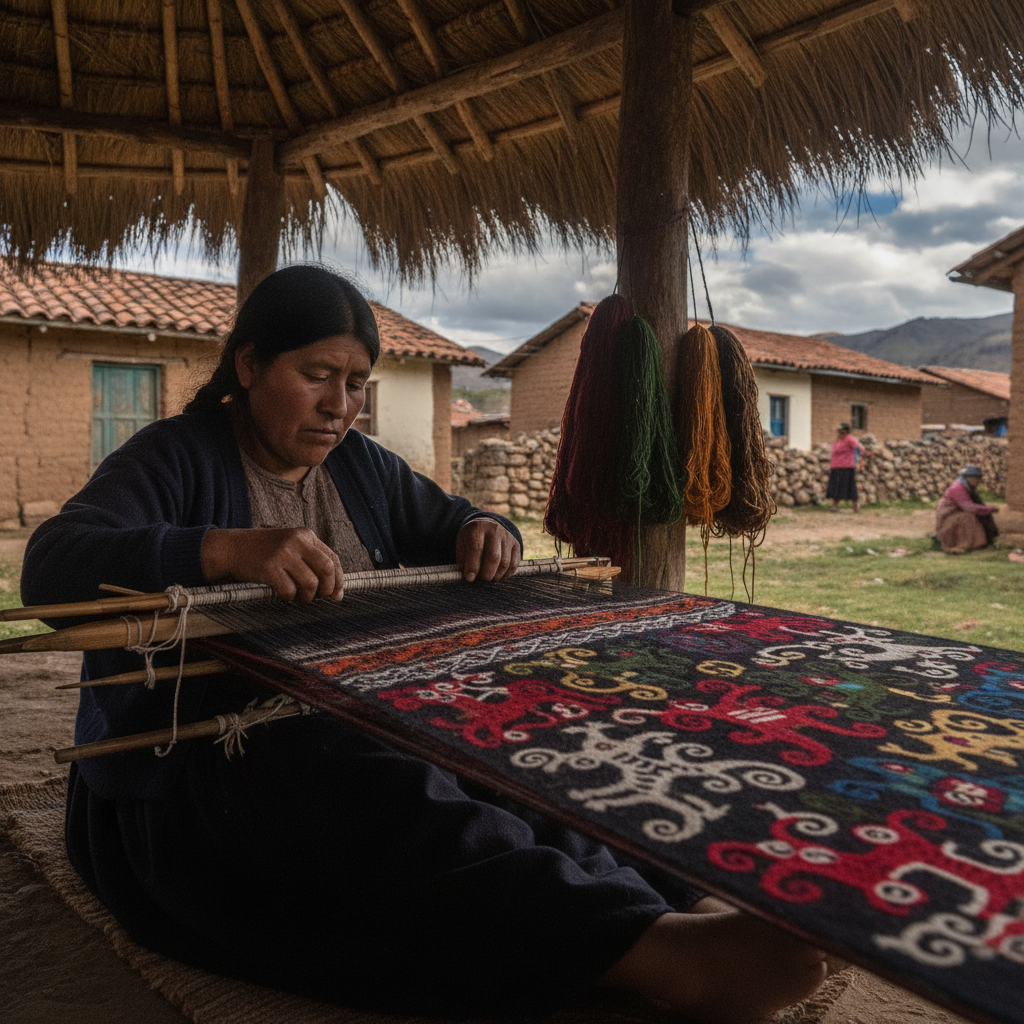
The Jalq'a weavings are immediately recognizable — a deep black or dark red background covered with densely packed supernatural creatures (khurus) in muted colours; the aesthetic is deliberately anti-naturalistic, representing the ukhu pacha (the world below); the Jalq'a weavers say they weave what they see in their dreams
- 2
Yampara Solar Symbolism
The Yampara textiles — from the communities around Tarabuco — have a lighter, more colorful palette with geometric designs incorporating solar symbols, stylized animals, and human figures; the Yampara designs represent the kay pacha (the living world) in contrast to the Jalq'a's underworld aesthetic
- 3
ASUR Foundation
The ASUR (Anthropologists for the Support of Ethnic Identities) foundation — based in Sucre — has worked since 1990 to support the Jalq'a and Yampara textile traditions by connecting weavers directly with international markets at fair prices; the organization's methodology (cultural documentation + market access) has become a model for indigenous craft preservation
- 4
Natural Dye Revival
The ASUR program has supported the revival of natural dyeing among Jalq'a and Yampara weavers — the use of cochineal (for reds), indigo (for blues), and indigenous plant dyes (for yellows and greens) had declined with the availability of synthetic dyes; the revival of natural dyes has improved the quality and value of textiles
- 5
Backstrap Loom Mastery
The Jalq'a and Yampara weavers use the traditional Andean backstrap loom - a simple technique that, in the hands of a skilled weaver, produces textiles of extraordinary intricacy; a single Jalq'a textile can take months to complete; the density of the fabric (up to 200 threads per centimeter) is at the limit of what the human hand can achieve
- 6
Textiles as cultural identity
The Jalq'a and Yampara weaving traditions are not just handicrafts - they are the primary vehicle for cultural identity, historical memory and cosmological knowledge in these societies; the revival of the weaving tradition has been inseparable from the broader revival of indigenous identity in Bolivia's postcolonial political culture
Walk this route with audio
Stories play automatically as you reach each stop — no tapping needed.