Sukhothai Buddha Image Style Walk
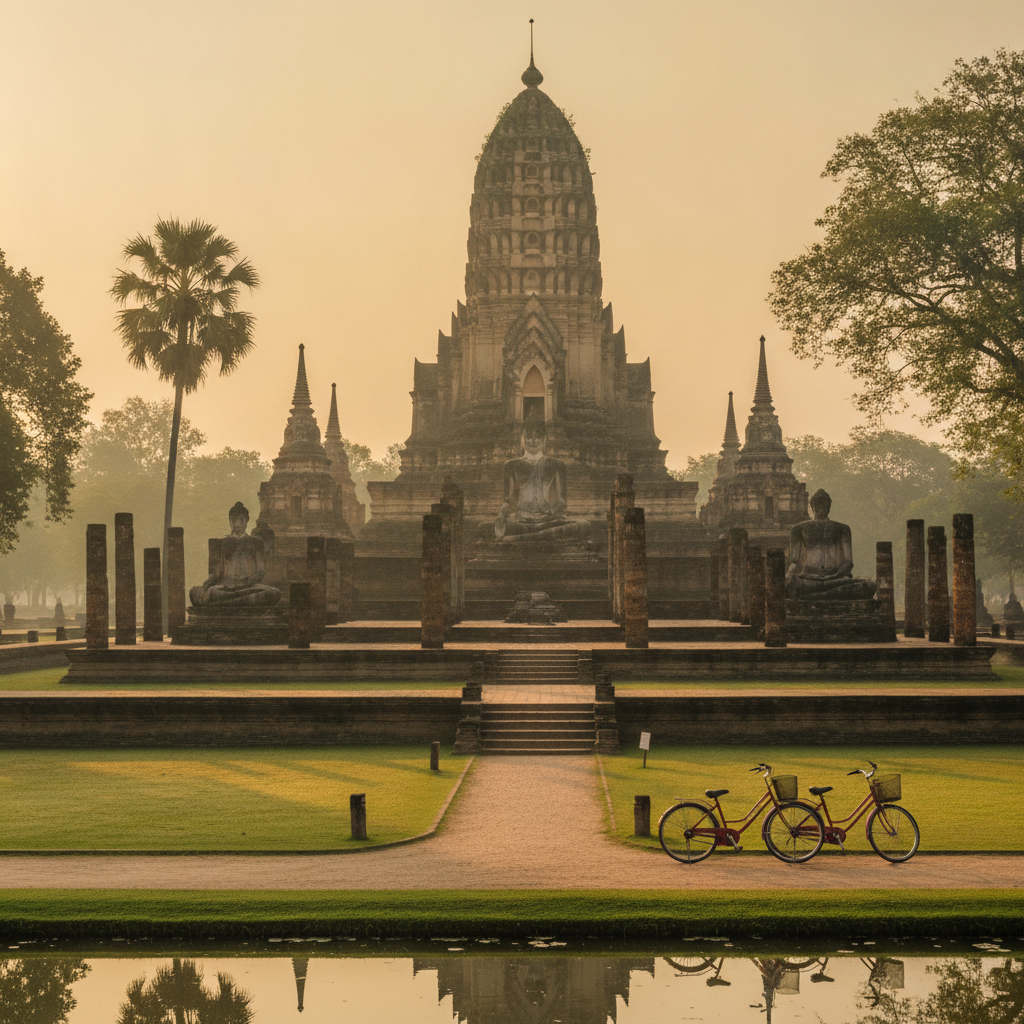
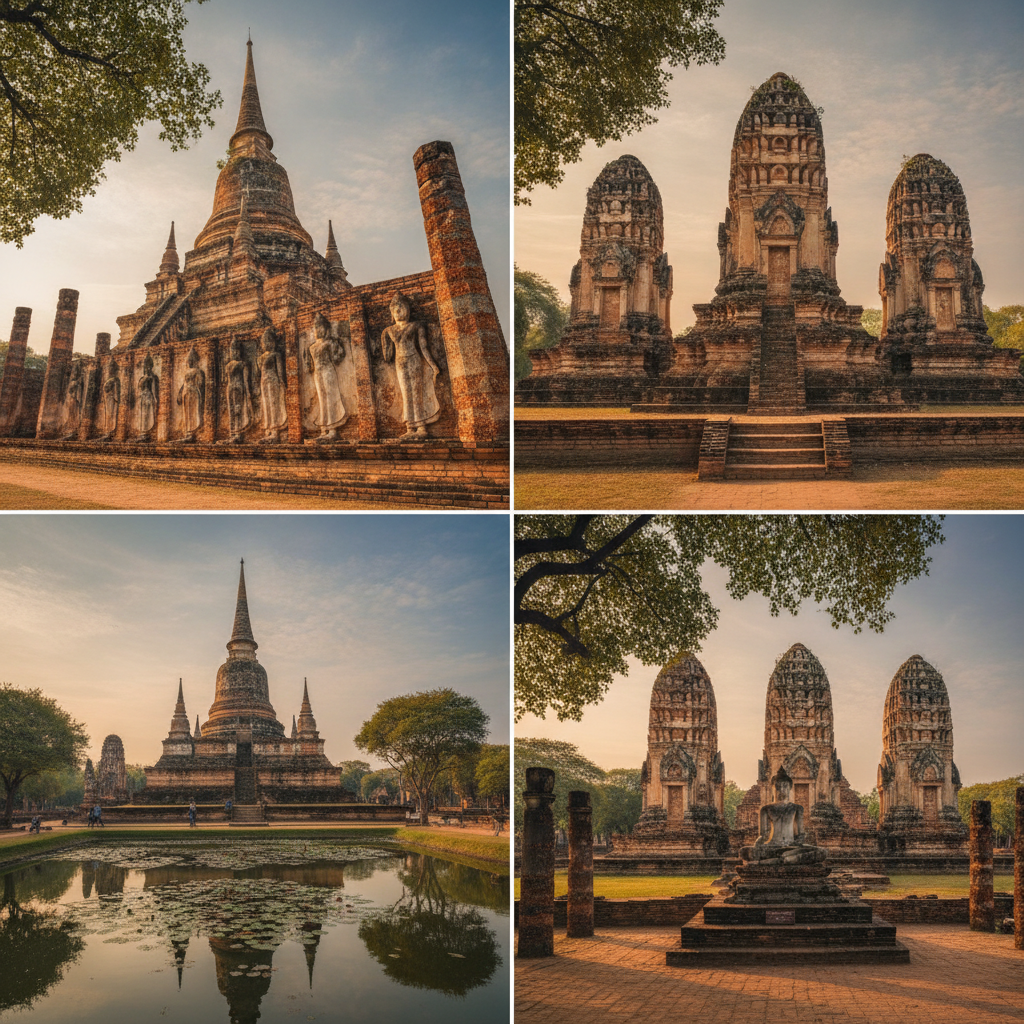
Study the Sukhothai Buddha — the artistic style developed in the Sukhothai kingdom during the 13th and 14th centuries is considered the highest expression of Thai Buddhist art, and the walking Buddha image unique to Sukhothai remains the most distinctive contribution to the Buddhist artistic tradition in Southeast Asia.
- 1
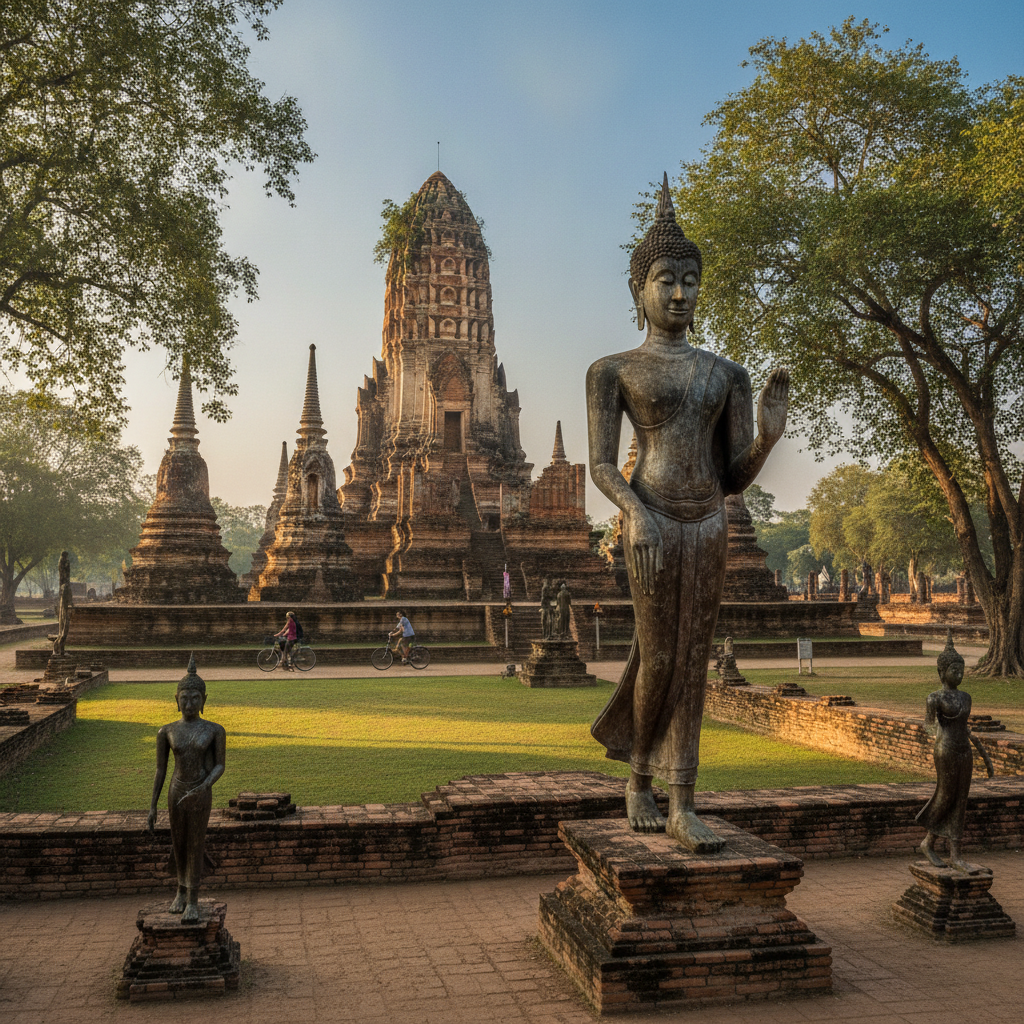
Walking Buddha at Wat Mahathat
The walking Buddha image (phra phut tha jao than yen) developed in the Sukhothai period is the most innovative artistic creation of Thai Buddhist art — the Buddha caught in mid-stride (right foot forward, right arm raised with the palm turned out in the abhaya mudra of protection, the robe flowing behind the forward movement) was an entirely new invention of the Sukhothai sculptors that had no precedent in the Indian, Sri Lankan, or Khmer Buddhist artistic traditions from which Thai Buddhist art derived. The walking Buddha's specific visual characteristics (the flame-topped cranial protrusion, the elongated oval face with the arched eyebrows meeting in a curve, the curved fingers of the raised right hand, and the flowing robe edge described as a leech-like curve) are the identifying signatures of the Sukhothai artistic style recognisable at Wat Mahathat and throughout the museums of Southeast Asia.
- 2
Phra Achana Seated Buddha
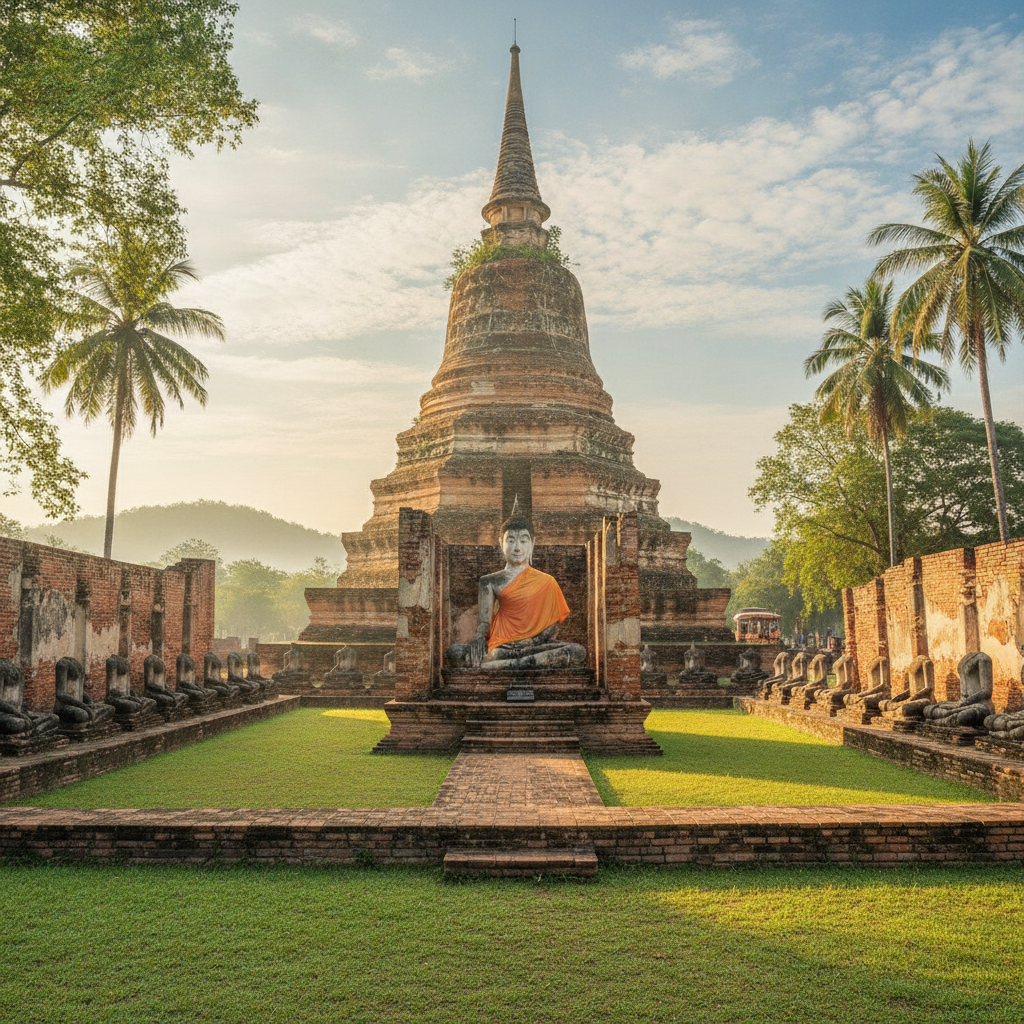
Wat Si Chum in the western zone of the historical park houses Phra Achana (The Undaunted One), one of the largest seated Buddha images in the Sukhothai kingdom and one of the most impressive single Buddha images in Thailand — the massive seated figure (14.7 metres knee-to-knee width, approximately 15 metres high) fills the entire interior of the mandapa that was built specifically to house it, with the face visible through the narrow slot opening in the mandapa's front wall creating the most theatrical Buddha image presentation in the historical park. The Buddha's expression (the downward-looking face in the meditation posture of Earth-touching mudra, peaceful and withdrawn from the world) creates the most moving single encounter with Sukhothai sculptural achievement accessible.
- 3
Bronze Casting Museum
The Ramkhamhaeng National Museum's collection of Sukhothai bronze Buddha images (the small portable images that were cast in the lost-wax process and distributed throughout the kingdom and exported to the regions under Sukhothai's cultural influence) provides the most accessible overview of the full range of the Sukhothai sculptural style. The bronze images' characteristics (the flame-topped ushnisha cast as a separate attachment, the oval face with its characteristically arched eyebrows, the elongated and simplified fingers in the distinctive Sukhothai hand position, and the smooth, flowing robe surface that gives the bronze images their quality of serene detachment from material concerns) are most clearly observed in the small-scale portable bronzes where the sculptural intention is not obscured by the scale demands of the monumental works.
- 4
Wat Traphang Thong Temple
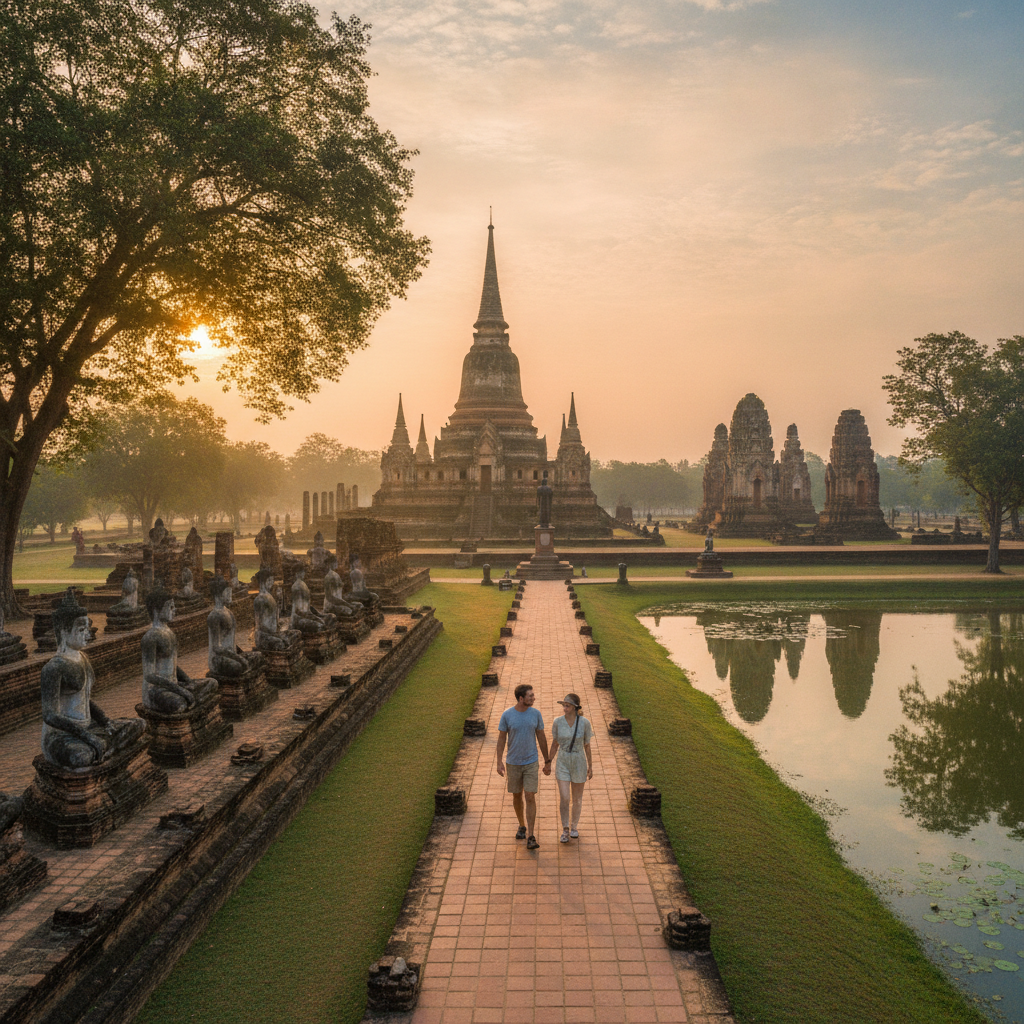
Wat Traphang Thong (Golden Pond Temple) adjacent to the Ramkhamhaeng National Museum sits on an island in the golden pond that gives the temple its name — the modest chedi and vihara of the temple are still actively used for religious ceremonies, making Wat Traphang Thong one of the few sites within the historical park where contemporary Buddhist religious practice continues alongside the archaeological preservation. The temple's active status means that visitors may observe the Buddhist rituals of daily life (monks receiving morning donations, devotees making merit by offering food and flowers, and the evening chanting heard from the museum area at dusk) in an environment that otherwise focuses on historical archaeology.
- 5
Si Satchanalai Walking Buddha
The Si Satchanalai Historical Park 55km north of Sukhothai (the co-capital of the Sukhothai kingdom established to administer the northern section of the kingdom's territory) has equally significant Buddhist art and architecture including the most complete example of the early Sukhothai architectural style at Wat Chang Lom (the bell-shaped chedi on the base supported by elephant buttresses in the Sri Lankan tradition) — the park's less-visited character (significantly fewer visitors than the main Sukhothai site) and its setting on the hilltops above the Yom River meander provides a more contemplative atmosphere for studying the artistic and architectural development of the Sukhothai period.
- 6
Sukhothai Art Influence
The artistic influence of the Sukhothai style on subsequent Thai Buddhist art is visible in the temples of Ayutthaya (which succeeded Sukhothai as the Thai capital after 1438), the temples of the Lan Na kingdom in Chiang Mai, and ultimately in the Bangkok period temple art that continues the Sukhothai stylistic tradition in modified form. The historical park provides the opportunity to study the original stylistic vocabulary that would be transmitted, adapted, and synthesised with new influences over the following seven centuries to produce the contemporary Thai Buddhist art tradition — the walking Buddha and the lotus-bud chedi forms visible among the Sukhothai ruins appear in simplified forms in Thai Buddhist temple decoration worldwide.
Walk this route with audio
Stories play automatically as you reach each stop — no tapping needed.