Si Satchanalai & Ceramic Heritage Walk
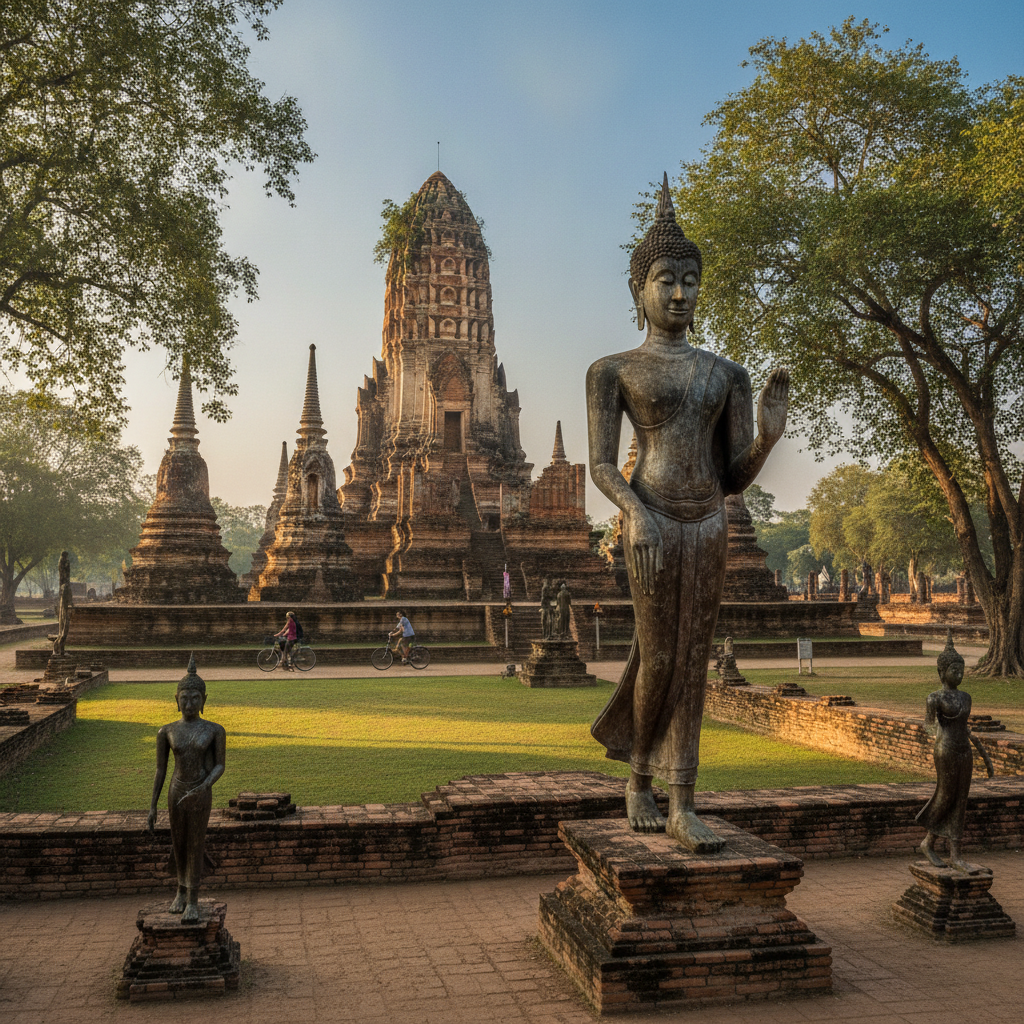
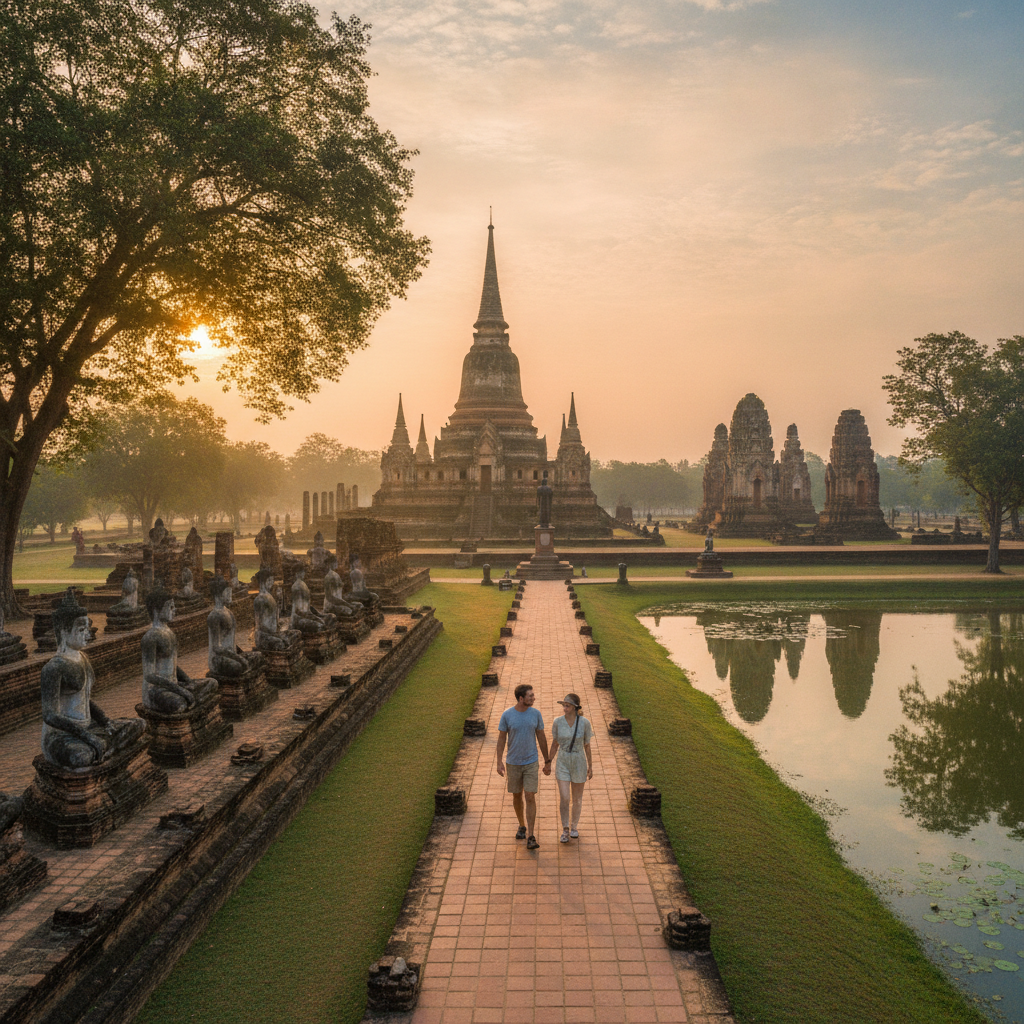
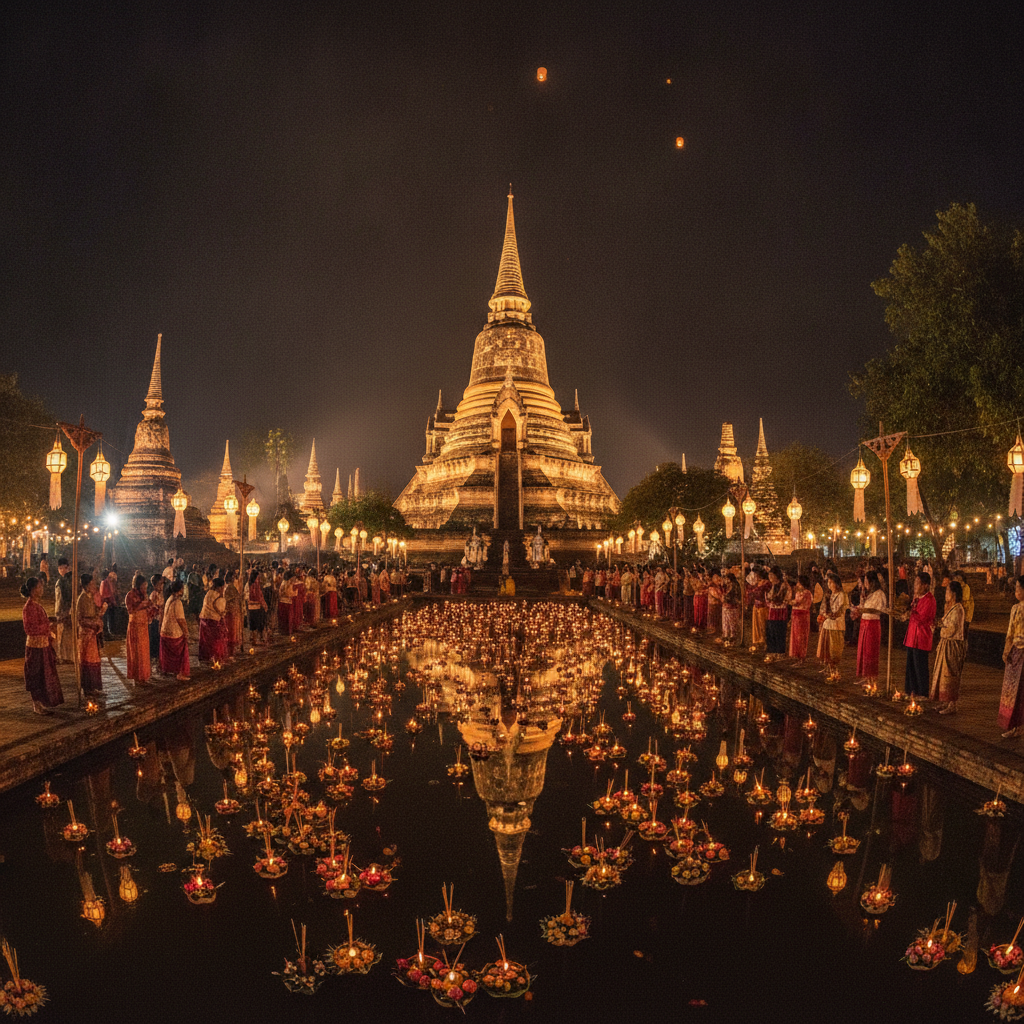
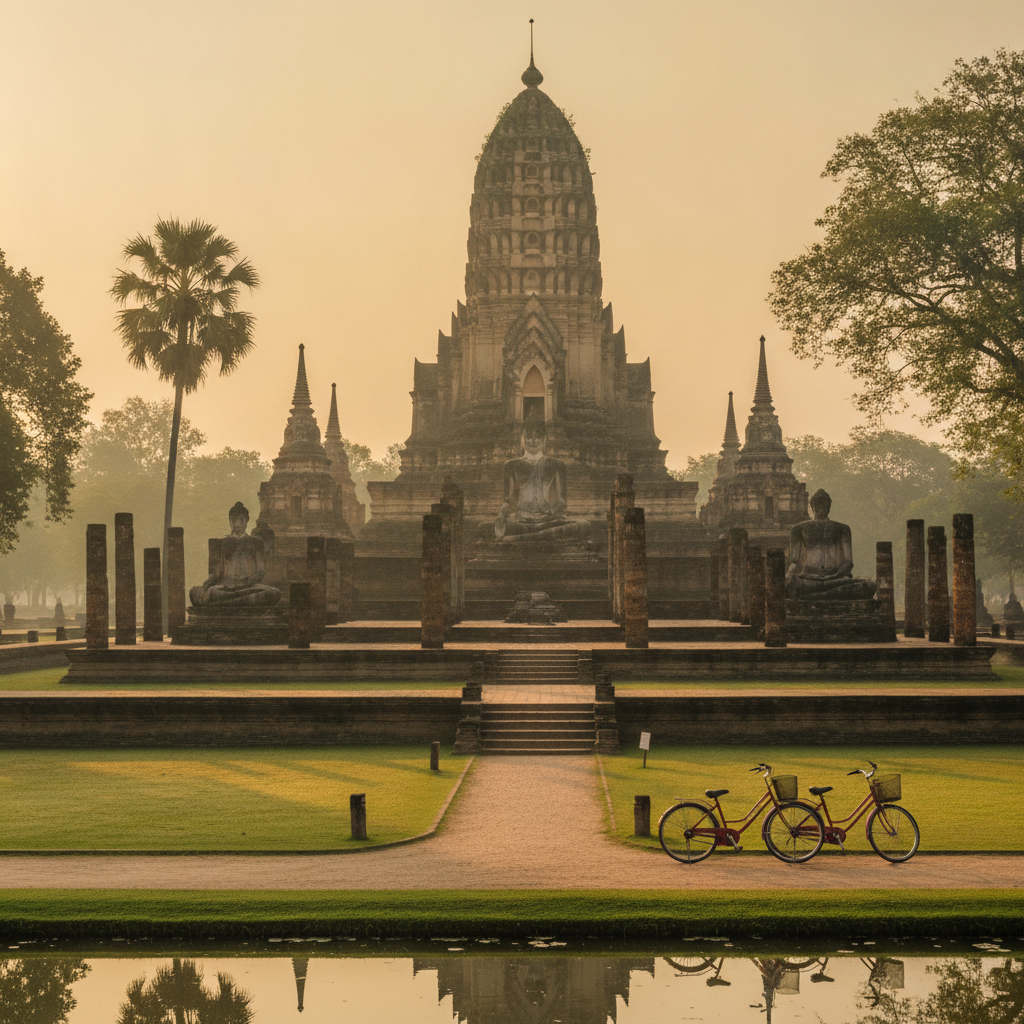
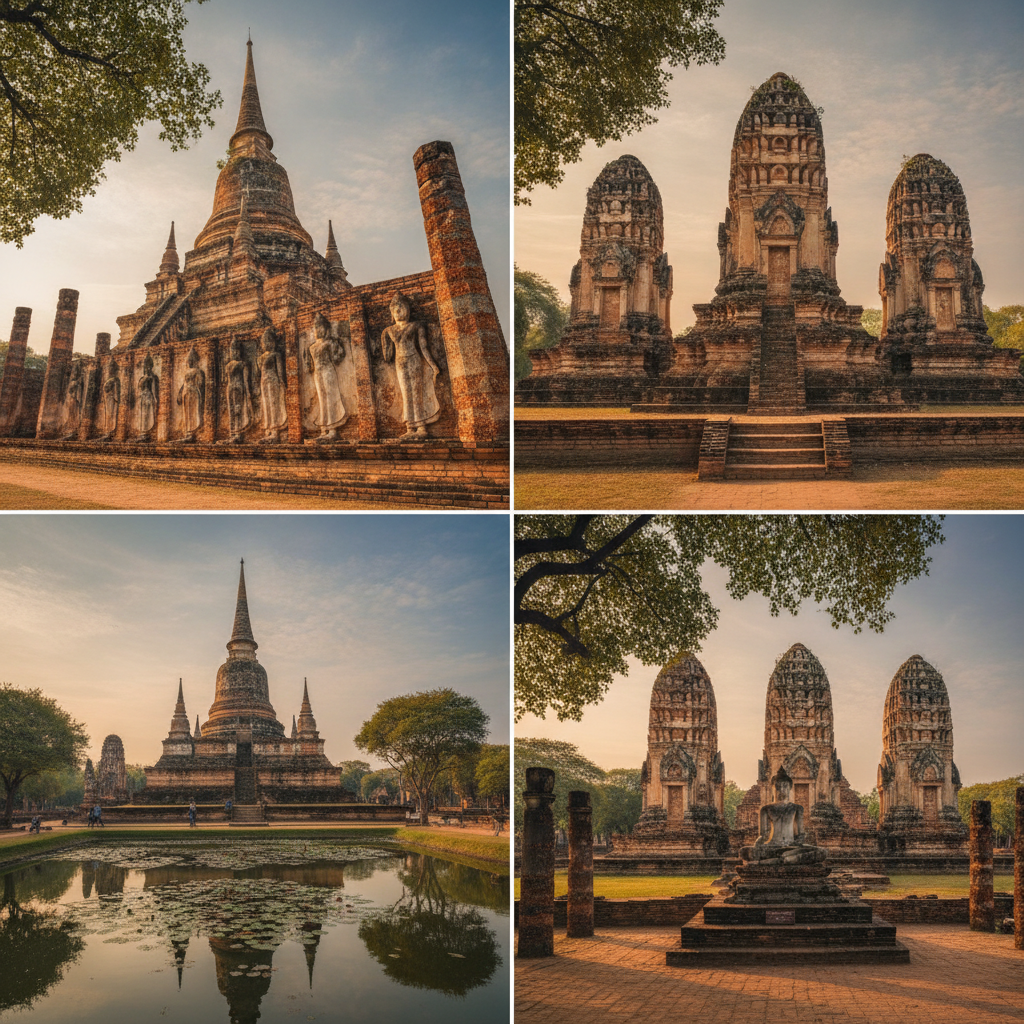
Visit the sister city — Si Satchanalai Historical Park 55km north of Sukhothai is the co-capital of the Sukhothai kingdom and houses both significant temple ruins and the historic kiln sites of the Sawankhalok ceramic tradition that was Southeast Asia's premier export ceramic production.
- 1
Wat Chang Lom Elephant Temple
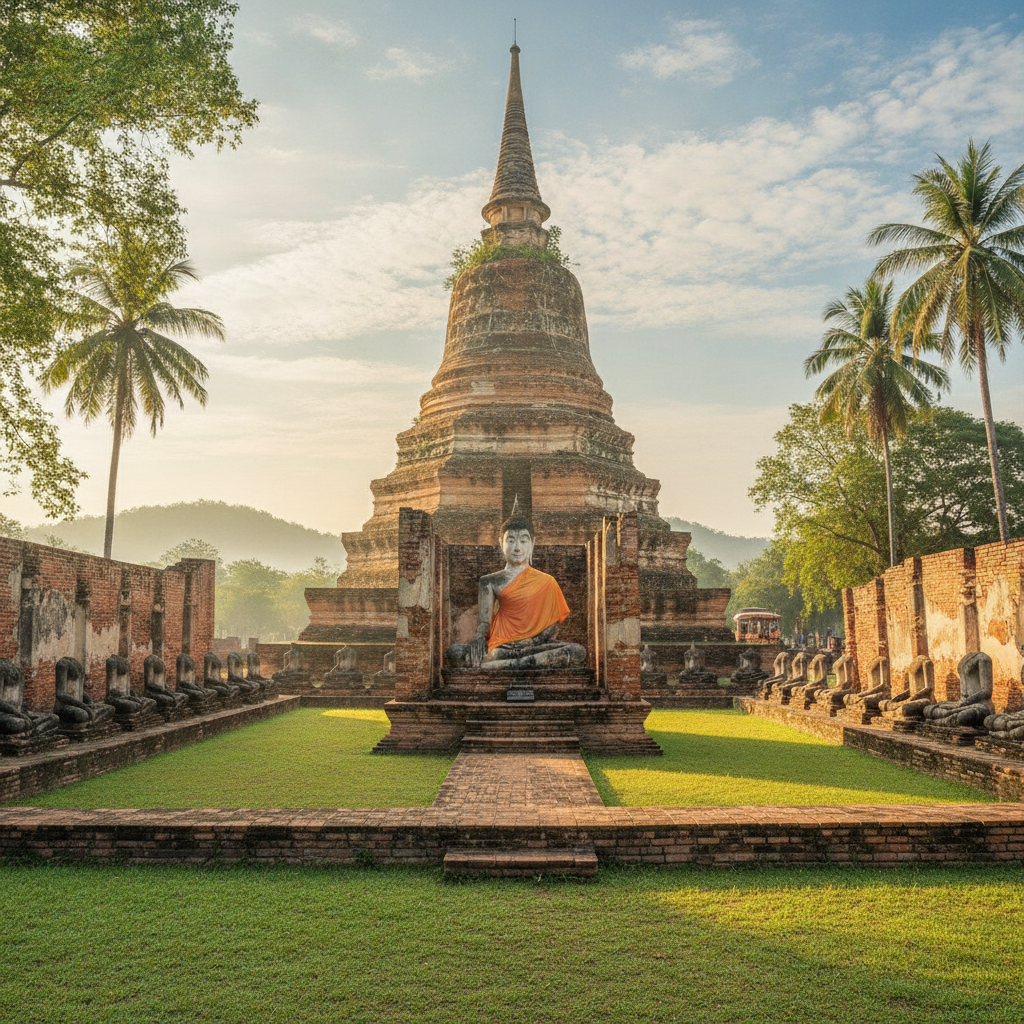
Wat Chang Lom (Temple Surrounded by Elephants) at the centre of the Si Satchanalai Historical Park is one of the finest examples of Sri Lankan-influenced Buddhist architecture in mainland Southeast Asia — the large bell-shaped chedi (stupa) standing on a square base supported by elephant buttresses (32 elephant sculptures in full relief supporting the chedi base, their front legs extended and their trunks partially preserved) demonstrates the Sri Lankan Sinhalese architectural influence that arrived in the Sukhothai kingdom via the Theravada Buddhist reform movement of the 13th century. The elephant (the most revered animal in Thai Buddhist cosmology, associated with the white elephant that announced the birth of the historical Buddha) supports the stupa physically and symbolically, creating the most coherent single expression of the Sukhothai period's synthesis of Sri Lankan architectural form and Thai cultural iconography.
- 2
Sawankhalok Kiln Site
The kiln sites of the Sawankhalok ceramic tradition in the Si Satchanalai area are the most significant archaeological industrial heritage accessible in Thailand — the more than 200 climbing kilns (the sequential chamber kilns built on the hillsides, using the natural gradient to create the temperature differential that allowed the required firing temperatures of 1,200-1,300°C) produced the celadon and underglaze-black painted ware from the 13th to the 17th century that was distributed throughout Southeast Asia as the region's dominant export ceramic. The kiln site museum at the Sangkhalok Kiln Site Museum displays the original kilns (some still intact with the kiln furniture visible inside) and the wasters (rejected ceramic pieces found in the kiln debris) that document the full production range of the Sawankhalok tradition.
- 3
Wat Nang Phaya Temple
Wat Nang Phaya (Temple of the Royal Consort) in the Si Satchanalai Historical Park is notable for its laterite facade decoration — the carved floral and flame patterns on the laterite walls of the vihara represent the most elaborate surface decoration visible at any Sukhothai kingdom period temple and are preserved to a quality unavailable at the more heavily visited Sukhothai sites. The temple's name (associated with the story of a queen who endowed the temple while waiting for her imprisoned husband) documents the role of royal women as temple patrons in the Sukhothai period, a history that the temple's architectural refinement physically embodies.
- 4
Si Satchanalai Old Town
The old town of Si Satchanalai (Chaliang, the area adjacent to the historical park on the Yom River meander) has the ruins of several smaller temples and the remains of the original commercial town that served the administrative capital — the less excavated and less curated character of the Chaliang ruins (accessible by the footpath from the main park or by crossing the river from the park's northern section) provides the most authentic encounter with the everyday urban archaeology of the Sukhothai period available in the Si Satchanalai area. The river views from the Chaliang area (the Yom River visible from the temple ruins, with the forested hills on the opposite bank unchanged from the historical period) provide the most historically evocative landscape encounter in the Sukhothai province.
- 5
Ceramic Museum Collection
The Sawankhalok National Museum in the Si Satchanalai area houses the most comprehensive collection of Sawankhalok period ceramics accessible in a single location — the museum's systematic display of the full range of Sawankhalok production (the plain celadon forms, the underglaze-black painted designs ranging from the geometric to the figurative fish and floral designs, and the sculptural pieces including the ceramic animal figures and the architectural ceramic elements used in the temples) provides the most complete overview of the ceramic tradition's range and quality. The comparison with the Chinese Song and Yuan dynasty celadons that inspired the Sawankhalok tradition (displayed alongside the Thai pieces in the museum's comparative display section) reveals both the Thai potters' technical achievement and the degree of their creative adaptation of the Chinese models.
- 6
Forest Temple Hike
The forest temples in the hills above the Si Satchanalai Historical Park (accessible by the trail from the park's northern boundary into the forested hillside) are the most remote and most atmospherically isolated monuments in the Sukhothai kingdom's archaeological heritage — the temples built by the forest-dwelling monks whose meditation communities provided the spiritual authority for the Sukhothai kingdom's Buddhist legitimacy are partially obscured by the vegetation that has grown back over the ruins in the centuries since the kingdom's collapse. The trail walk through the forest (with the characteristic bird life of the dry dipterocarp forest: the red-headed trogon, the rufous woodpecker, and the green bee-eater visible in the trees above the trail) provides the most immersive natural environment encounter accessible from any historical park in Thailand.
Walk this route with audio
Stories play automatically as you reach each stop — no tapping needed.