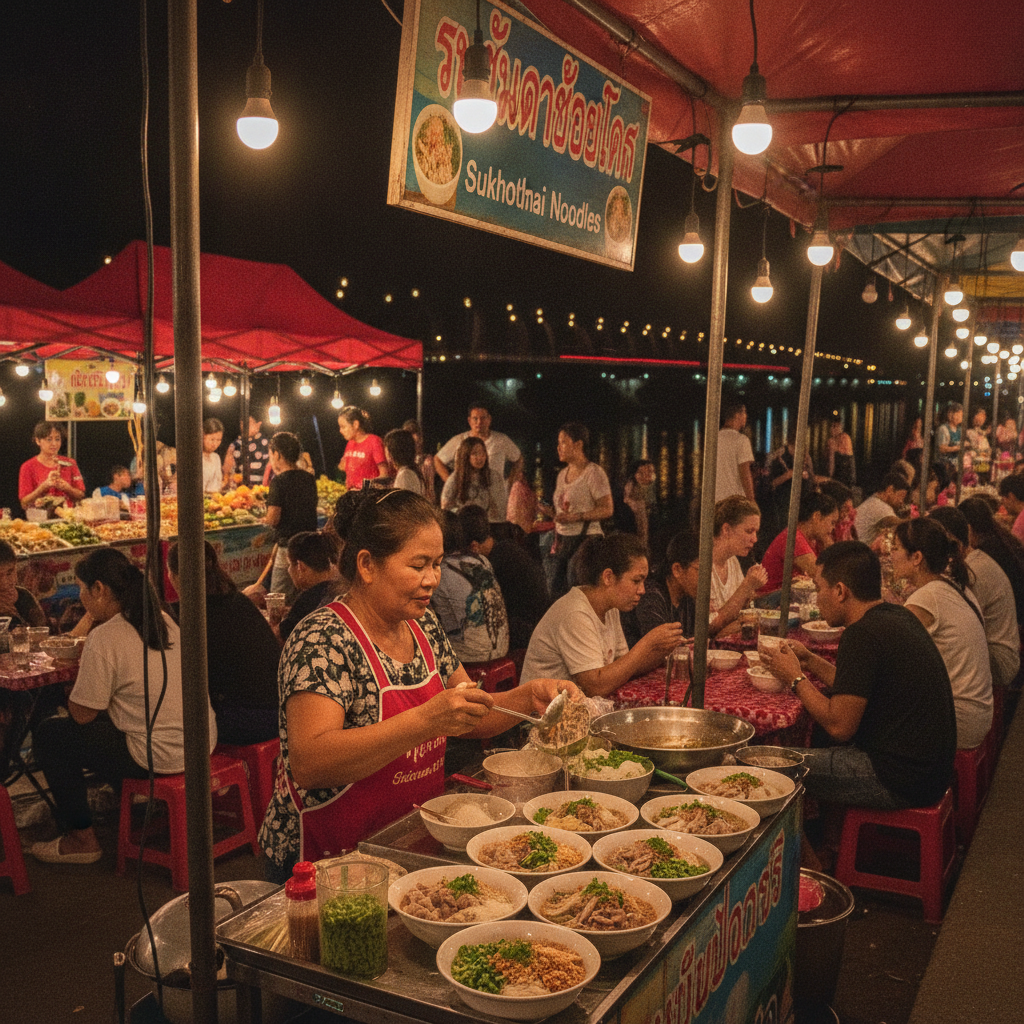
Sukhothai Food & Local Market Walk
Eat through Sukhothai — the provincial capital of Sukhothai has its own distinctive regional food culture, with the famous Sukhothai noodle, the fresh river fish from the Yom River, and the north-central Thai food traditions that blend the northern and central regional culinary styles.
- 1
Sukhothai Noodle Breakfast
The kuay tiew sukhothai (Sukhothai noodle) breakfast is the most important food experience of any Sukhothai visit — the dish of fresh or dried rice noodles in a slightly sweet and mildly spiced clear pork broth, served with the specific accompaniments of fresh snake beans, ground roasted peanuts, and the optional addition of crispy pork rind, is specific to the Sukhothai area and is made by each restaurant according to the family recipe that the establishment has developed over generations. The Sukhothai noodle is distinct from both the northern Thai khao soi (the curry noodle of Chiang Mai) and the central Thai boat noodle (the dark broth noodle of Bangkok), and the town's pride in its distinctive noodle is expressed in the concentration of specialist noodle restaurants that serve the dish exclusively.
- 2
Yom River Fish Market
The Yom River fish market in New Sukhothai serves the freshwater fish catch from the river and the local fish ponds that are a significant part of the provincial agricultural economy — the pla chon (snakehead fish), the pla nil (Nile tilapia), the pla tapien (silver barb), and the various other freshwater species from the Yom River system are sold fresh-caught to the restaurants and home cooks who constitute the fish market's primary customer base. The freshwater fish cooking traditions of the north-central Thai kitchen (the grilled snakehead with the nahm jim dipping sauce, the steamed fish with lime and chilli, and the pla ra fermented fish paste used as the base for the regional curry dishes) represent the most regionally specific food culture accessible in the Sukhothai area.
- 3
Papaya Salad North-Central Style
The papaya salad (tam mak hung or som tum) in the Sukhothai area has its own regional character that bridges the northern Thai and Isan (northeastern Thai) traditions — the central Thai version (som tum Thai, made with dried shrimp and peanuts) and the Isan version (made with pla ra fermented fish paste) both have their expression in Sukhothai restaurants, with the local version often combining elements of both traditions. The papaya salad vendors on the street markets of New Sukhothai (the mortar and pestle pound of the fresh papaya strips with the garlic, chilli, and lime juice visible and audible from street level) are the most accessible and most authentic expression of the regional food culture that crosses the boundaries between northern and Isan Thai cooking.
- 4
Temple Market Produce
The market stalls that set up at the entrance to the Sukhothai Historical Park serve the daily visitors with snacks, fresh fruit, and the regional food products that make practical souvenirs — the dried mushrooms from the highland forests, the preserved Yom River fish products, the tamarind paste from the tamarind orchards visible throughout the province, and the various chilli paste and curry paste preparations that characterise the north-central Thai kitchen are available at the park market stalls as both immediate food purchases and as take-home food souvenirs. The market also sells the krathong materials (banana trunk sections, flowers, and candles) during the Loy Krathong festival period.
- 5
Ceramic Market Souvenir
The contemporary ceramic production inspired by the historical Sawankhalok tradition (the grey-green celadon and the underglaze-black patterns of the 14th-16th century ceramic export industry) is sold in the tourist shops of New Sukhothai and at the Si Satchanalai historical park — the contemporary versions of the historical designs (produced in the ceramic workshops that continue operating near the kiln sites in Si Satchanalai) provide the most historically meaningful souvenir available in the Sukhothai area. The original Sawankhalok ware pieces visible in the National Museum collection and in the private collections documented in the museum displays are the historical benchmark for the quality of the contemporary ceramic reproduction.
- 6
Evening Food Park Area
The evening food park that sets up in New Sukhothai near the night market area provides the most relaxed evening dining environment accessible from the historical park — the tables under the trees, the multiple food stalls serving different dishes (allowing a diversified meal composed of items from several different stalls), and the Thai domestic visitor and resident community that constitutes the primary audience for the food park create a social atmosphere that is more communal and less tourist-service-oriented than the restaurant dining in the historical park's adjacent resort area. The food park is the most accessible single location for tasting the range of north-central Thai food in a single meal.
Walk this route with audio
Stories play automatically as you reach each stop — no tapping needed.