 Mexico
Guadalajara
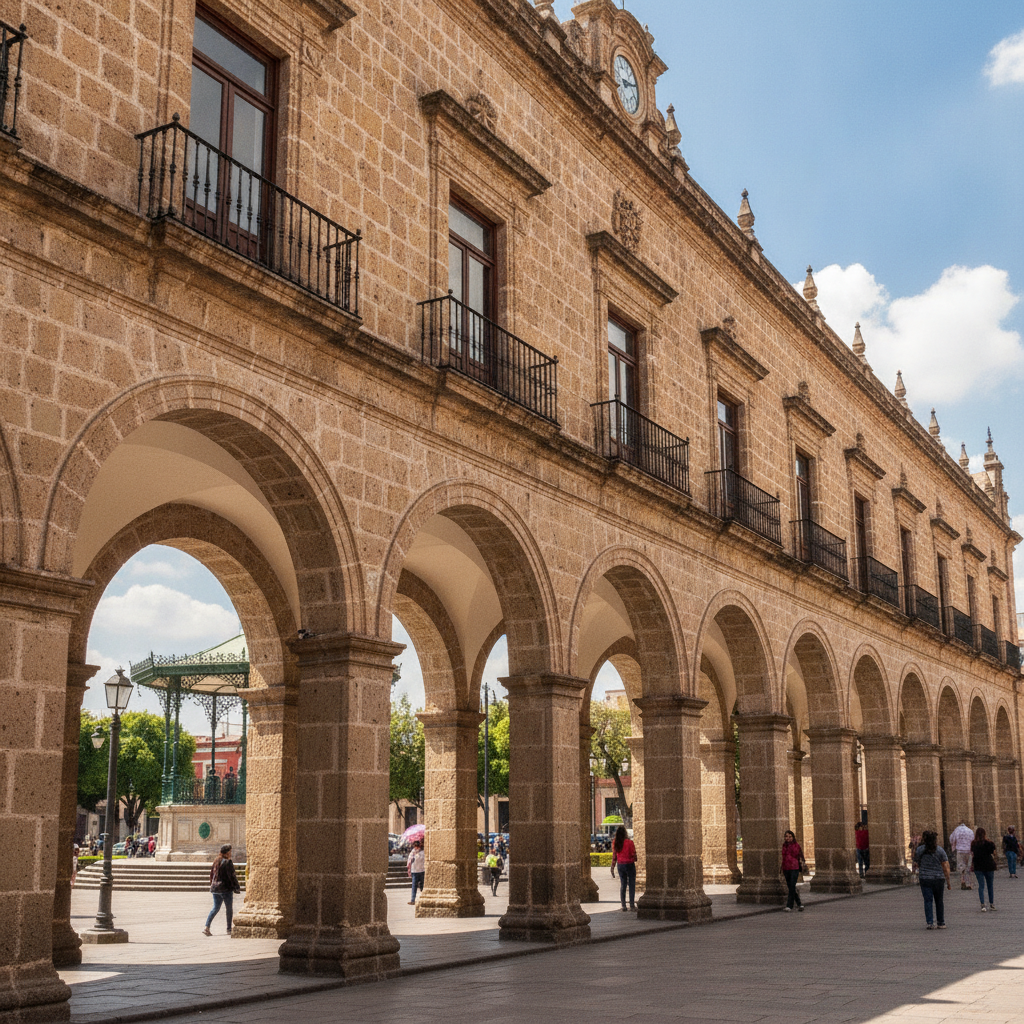
Guadalajara and the Mexican Revolution: How Jalisco Shaped the Cristero War, the Dorados of Pancho Villa and the Ley Fuga Executions That Made the Revolution in the West More Violent Than the History Books Record
Guadalajara was captured and recaptured six times during the Mexican Revolution between 1910 and 1917 as the constitutional armies of Carranza, the forces of Pancho Villa, and the federal army of Victoriano Huerta contested control of the second city of Mexico, each occupation accompanied by executions, forced loans from the merchant class, and the destruction of property that the victors attributed to the preceding occupiers. The Jalisco contribution to the Revolution was ambiguous: the state produced both Plutarco Elias Calles, the president whose anticlerical laws provoked the Cristero War of 1926 to 1929 in which 90,000 people died in Jalisco and adjacent states in a Catholic insurgency against the secular state, and the Dorados, the elite cavalry of Pancho Villa recruited from the horsemen of the Jalisco and Durango highlands whose fighting quality matched the romantic legend Villa cultivated. The Cristero War, the forgotten war that Mexican textbooks minimized for decades because it embarrassed both the Church and the post-revolutionary state, killed more Jalisco civilians than the Revolution itself, with villages in the Los Altos region emptied by violence and the subsequent emigration that reduced the Jalisco highland population for a generation. The legacy of this violence, which reached the United States as the Mexican wave of migration in the 1920s that populated the barrios of Los Angeles, Chicago, and San Antonio with Jalisco refugees, connects Guadalajara history to the Mexican-American diaspora that is the largest immigrant community in the United States.
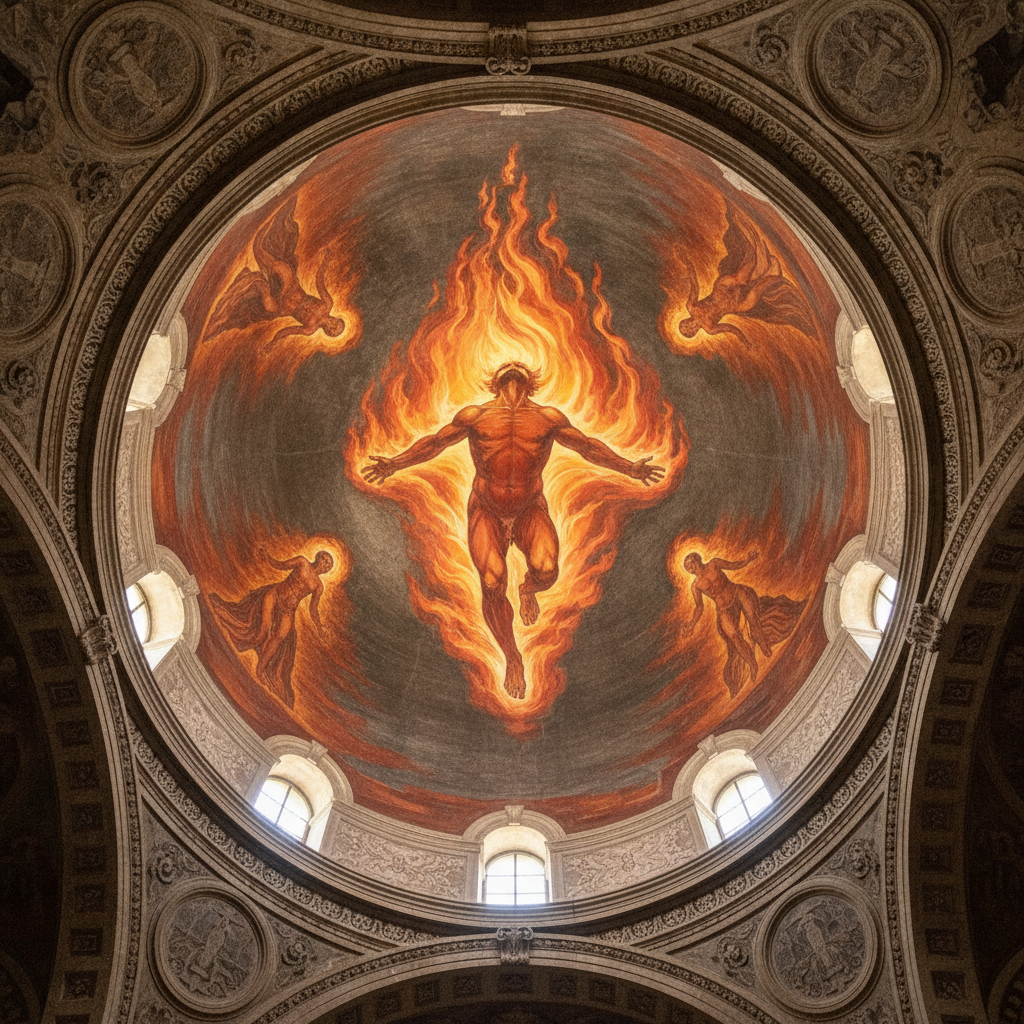
Guadalajara: The City That Gave Mexico Tequila Mariachi and the Charro Horseman, the UNESCO-Listed Murals in a Former Orphanage and the Craft Capital Where Every Artisan in Mexico Eventually Shows Up
Stand inside the Hospicio Cabanas where Jose Clemente Orozco painted the most powerful mural cycle in Mexican history across the walls and dome of a building that was an orphanage for 200 years, drink a glass of tequila from the red volcanic fields of the Jalisco highlands where the blue agave plant has been distilled since the 16th century, watch a mariachi band tune up in the Plaza de los Mariachis where the music form that became the sound of Mexico was born in the state that surrounds this city, browse the craft market of Tlaquepaque where the finest blown glass and hand-painted Talavera and carved wood and papier-mache from every state of Mexico is available in a colonial pedestrian shopping district, understand that Guadalajara is the second largest city in Mexico with 5 million people in a metropolitan area most visitors have not heard of because Mexico City consumes all the international attention, and find the birria taco vendors at the Mercado Libertad who will tell you that Guadalajara invented the dish even though six other places say the same thing.
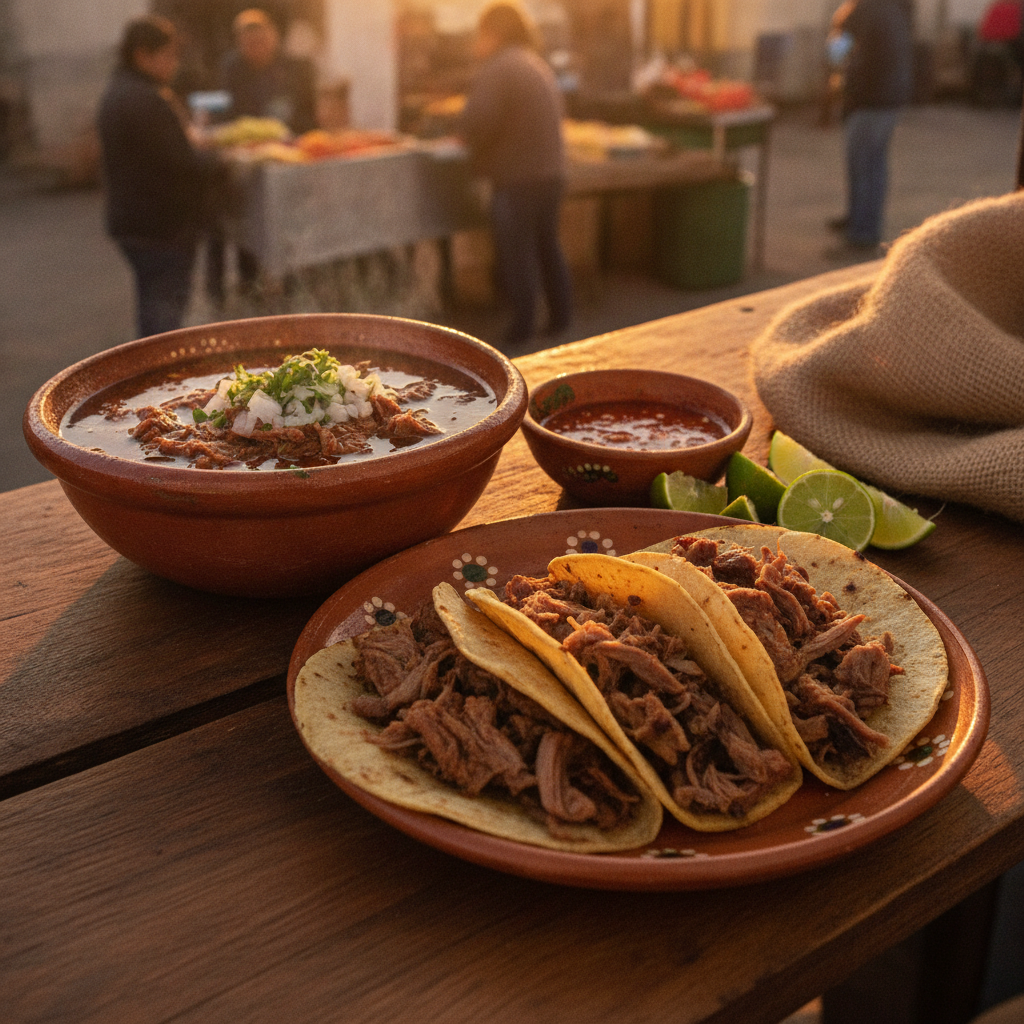
Tapatian Food Culture: Birria Taco Stands at Dawn, Tejuino Cart Vendors, Torta Ahogada Drowned in Chile Sauce and the Tequila Ritual That Defines Jalisco at the Table
The food culture of Guadalajara is entirely distinct from Mexican City cuisine and entirely dismissive of the idea that the capital city has defined what Mexican food means, with birria — slow-cooked spiced goat or beef stew eaten as tacos with consomme broth for dipping — as the dish that Guadalajara claims to have invented and defends against the competing claims of Cocula and other Jalisco towns, with the torta ahogada as the sandwich tradition that no other Mexican city has replicated in the same form, drowned completely in chile de arbol and tomato sauce until the bread softens into something between a sandwich and a stew, and with tejuino as the street drink made from fermented corn masa sweetened with piloncillo and served cold with lime and salt and a scoop of nieve de limon ice cream that no food writer from outside the region has adequately described without resorting to phrases about corn beer that fail to capture its specific cold-sour-sweet-salty character. The markets of Guadalajara operate from 4am when the birria cooks have been simmering their pots since midnight, and the culture of eating standing at a market stall in the early morning with a clay bowl of consomme in one hand and a corn tortilla in the other is the most authentically Tapatian food experience available.
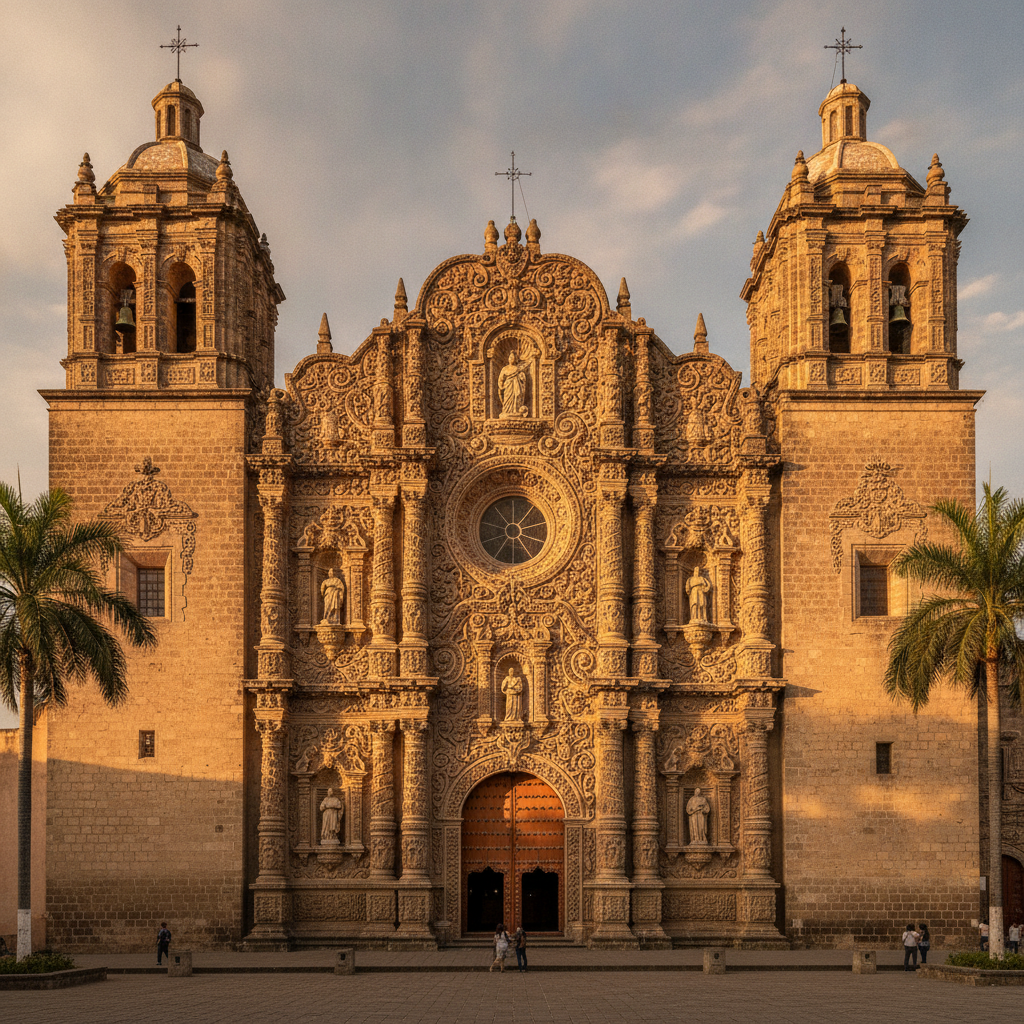
Guadalajara Colonial Churches Convents and the Ecclesiastical Architecture of New Galicia: From the Franciscan Missionaries Who Built the First Permanent Structures to the Baroque Elaboration of the 18th Century
Guadalajara was founded in 1542 as the capital of the Kingdom of New Galicia, the Spanish colonial administrative region covering modern Jalisco, Nayarit, and adjacent states, and the building program of the colonial period over the following 250 years produced an ecclesiastical architecture of accumulated ambition visible across the historic center in the Cathedral, the Convento del Carmen, the Templo de San Francisco, the Templo de Aranzazu, and the dozens of parish churches built by the Franciscan, Dominican, Augustinian, and Jesuit religious orders that competed for converts, land, and influence in the expanding colonial city. The Franciscans arrived first, in 1542, and established the original convents that controlled indigenous labor and land, followed by the Dominicans in 1551, the Augustinians in 1573, and the Jesuits who established the first permanent educational institutions in the city before their expulsion from all Spanish territories in 1767 by King Carlos III, an event that removed the most intellectually sophisticated religious order from Mexican colonial life at a critical moment. The churches that remain from the colonial period in Guadalajara represent the full range of New Spain architectural styles from the austere early Franciscan construction to the exuberant Churrigueresque elaboration of the 18th century, in which facades became three-dimensional fields of stone carving covering every surface with saints, angels, foliage, columns, and symbolic imagery in a density that had no precedent in European architecture.
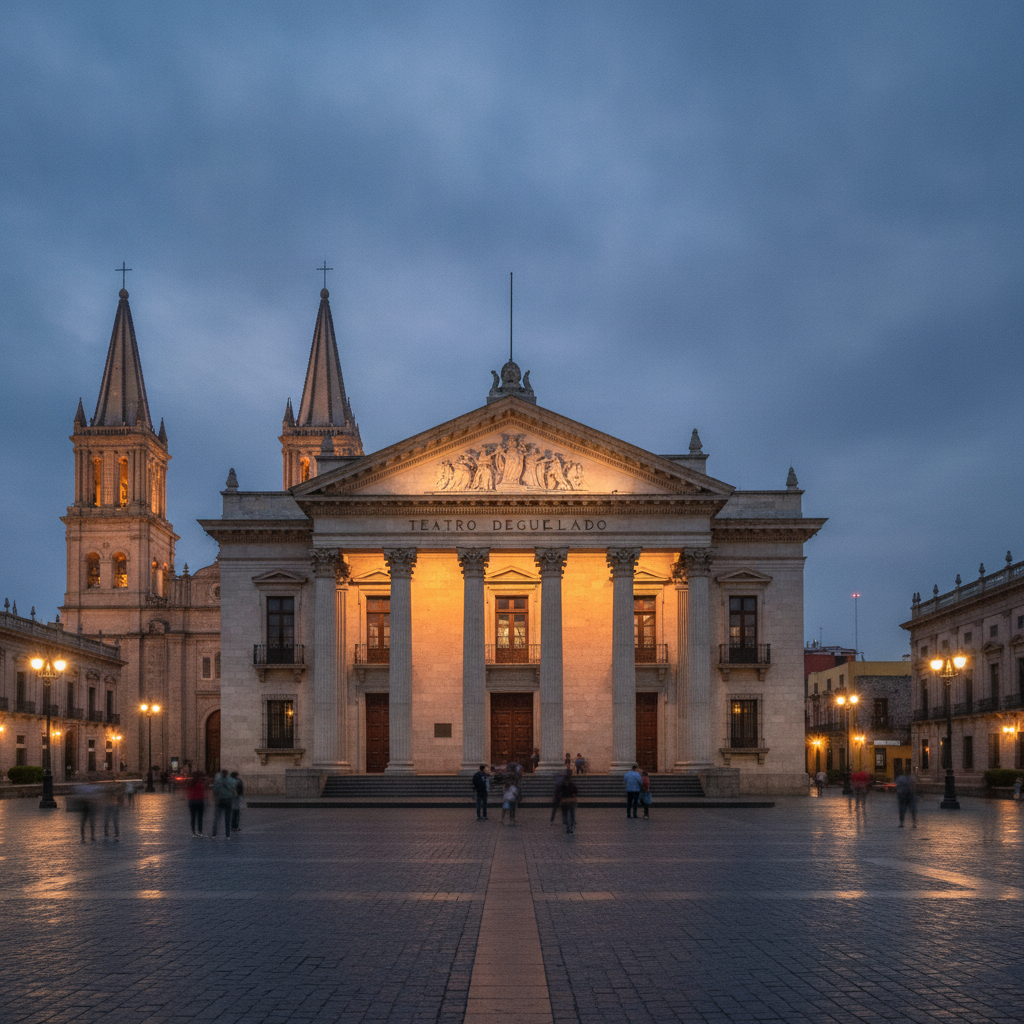
Guadalajara Muralism Art Nouveau and the Orozco Legacy: Walking the City That Produced the Most Searing Political Art in Mexican History While Rivaling Mexico City in Colonial Architecture
Guadalajara produced two of the three great Mexican muralists, Jose Clemente Orozco who was born in Jalisco and Jose Clemente Siqueiros, and the work Orozco left in this city across the Hospicio Cabanas, the Palacio de Gobierno, and the University of Guadalajara chapel constitutes the most significant single-city collection of monumental mural painting in North America. The city itself is a stage for this art, with the 19th-century Teatro Degollado opposite the cathedral, the Instituto Cultural de Cabanas housing the flagship mural cycle, the Palacio Municipal decorated with paintings of city history, and the university auditorium containing Orozco late work painted in 1936 showing a skeleton in academic robes distributing diplomas to other skeletons as a critique of formal education. The architecture of the historic center accumulated from 1541 onward through Spanish colonial building codes that required stone construction, resulting in the ensemble of limestone and volcanic tezontle facades that define the Tapatian streetscape. The city of 1.5 million in the municipality and 5 million in the metropolitan area contains the cultural institutions, universities, technology industry, and fashion scene of western Mexico in a configuration that residents of Guadalajara find entirely sufficient and that visitors from Mexico City condescendingly call the big village.
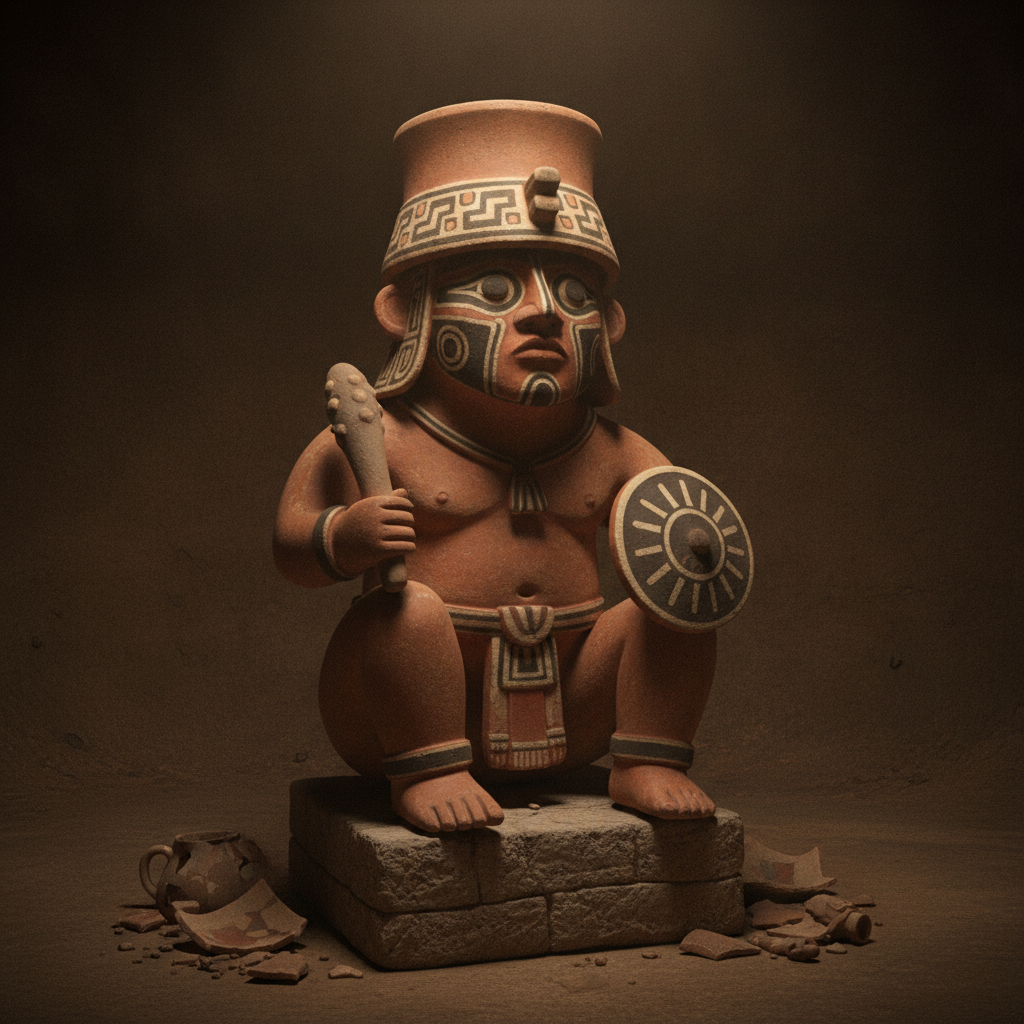
Guadalajara Pre-Hispanic Roots and the Cazcanes: The Indigenous World the Spaniards Found, the Mixton War That Delayed the Conquest of Western Mexico by a Decade, and the Archaeological Sites in the Jalisco Highlands
When Nuno de Guzman and the Spanish conquistadors reached the western Mexican plateau in 1530 they encountered not the large organized states of the Aztec Triple Alliance that had made the conquest of central Mexico a transaction with an existing bureaucracy, but a landscape of dozens of independent indigenous groups speaking different languages in a decentralized political configuration that made conquest more violent and less systematic than what Cortes had experienced in Tenochtitlan. The Cazcanes, the most militarily organized of the Jalisco indigenous groups, resisted the Spanish advance with enough effectiveness to organize the Mixton War of 1541 to 1542, in which a coalition of Cazcane, Zacatec, and Guachichil warriors controlled enough of the highlands to threaten the survival of the Spanish settlements in New Galicia, requiring the personal intervention of the Viceroy Antonio de Mendoza with an army that included 30,000 Nahua allies from central Mexico, whose role in the suppression of the Cazcane rebellion is largely unacknowledged in the standard history that portrays the conquest as a Spanish-indigenous binary. The Mixton War delayed the definitive founding of Guadalajara at its current location until 1542, after three previous attempts to establish the city at different sites had failed due to indigenous resistance. The pre-Hispanic cultures of Jalisco, including the distinctive shaft tomb tradition in which the dead were interred in vertical shafts with lateral chambers containing ceramic figures, jewelry, and grave goods, produced an artistic tradition of hollow ceramic figures of humans and animals that are among the most expressive pre-Columbian art objects in Mesoamerica.
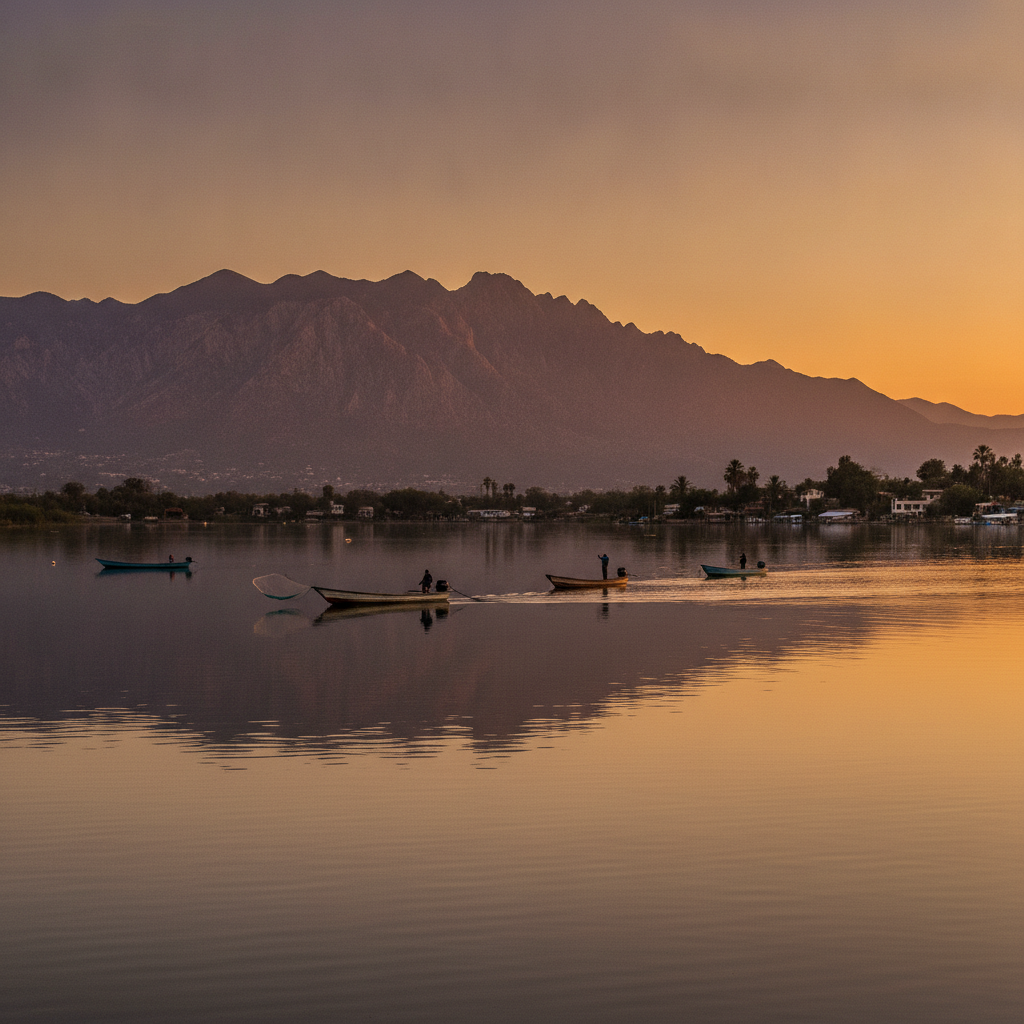
Lake Chapala and the Guadalajara Day Trips: The Largest Lake in Mexico One Hour South, the Highland Town of Mazamitla Two Hours Southeast, and the Barranca de Huentitan Canyon Inside the City
Guadalajara sits at 1,560 metres elevation on the western edge of the central Mexican plateau with the Sierra Madre Occidental mountains visible to the north and west, and the lake-filled basin of Lake Chapala 50 kilometres to the south, making day trips from the city available in every direction through landscapes that shift rapidly from the dense urban metropolitan area into agricultural country, colonial towns, and the dramatic canyon topography of the Barrancas that cut through the volcanic rock of the Jalisco highlands. Lake Chapala, at 1,100 square kilometres the largest lake in Mexico, sits at 1,524 metres elevation on a tectonic plate boundary, has an average depth of only 4.5 metres that has made it vulnerable to water extraction by Guadalajara and agricultural irrigation, and has been the primary retirement destination for North American expatriates in Mexico since the 1960s when artists and writers discovered the mild climate and low cost of the north shore towns of Ajijic and Chapala. The expatriate community in the Chapala-Ajijic corridor, estimated at 20,000 to 30,000 primarily English-speaking residents, is the largest concentration of North American retirees in Mexico and has generated a secondary economy of English-language services, art galleries, yoga studios, and wine bars alongside the traditional fishing and farming economy of the lake shore communities. The Barranca de Huentitan, a canyon 200 metres deep cut by the Rio Santiago through the northern edge of the Guadalajara metropolitan area, is accessible from the city in under 30 minutes and provides hiking and wildlife observation within the urban area.
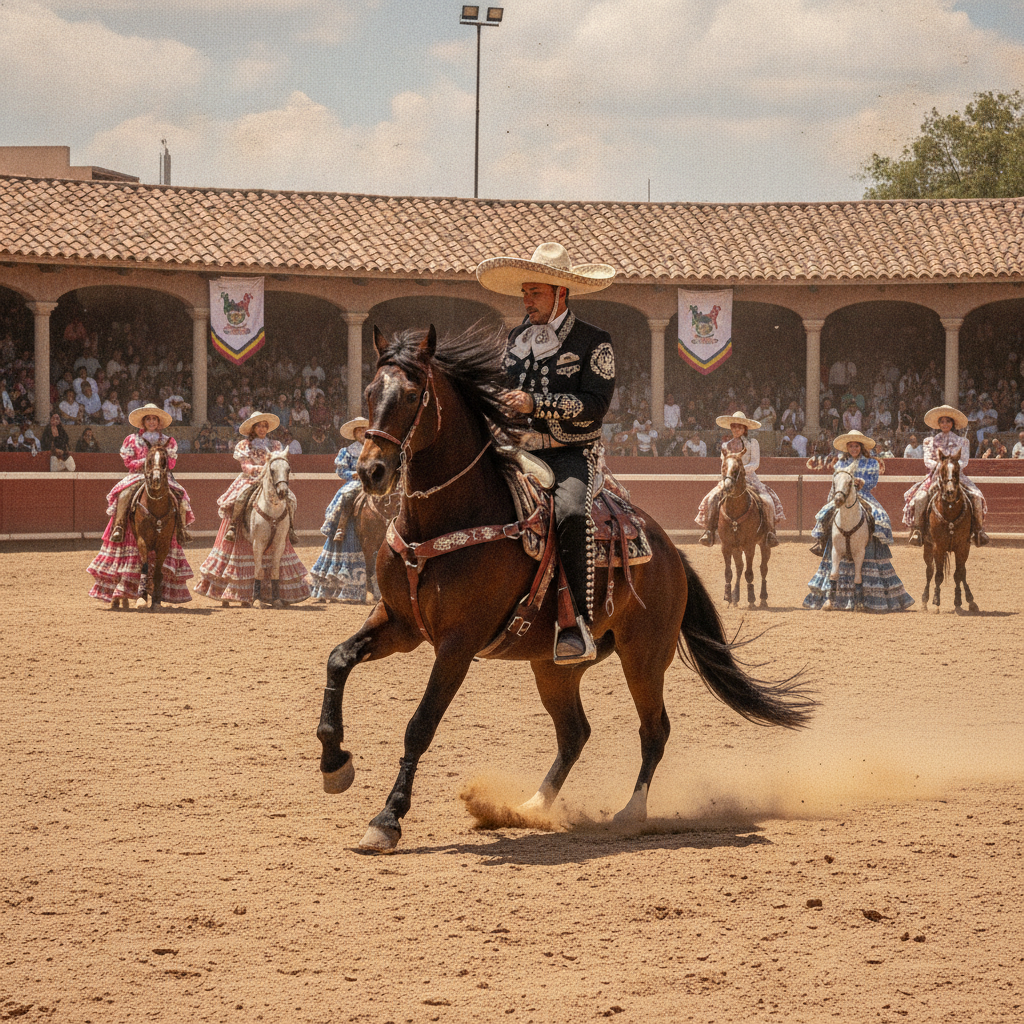
Charro Culture and the Guadalajara Rodeo: The Jalisco Horseman Tradition That Became the Visual Identity of Mexico, the Lienzo Charro Arena and the Federation That Invented the Sport
The charro, the skilled horseman of Jalisco whose elaborately embroidered suit, wide-brimmed sombrero, silver-decorated saddle, and rope-handling technique became the defining visual image of Mexico exported to the rest of the world through cinema, music posters, and tourism promotion, is not a decorative tradition but a competitive sport with a governing federation, regional and national championships, and a technical skill set developed over centuries of cattle ranching culture in the Jalisco highlands. The charreada, the Mexican rodeo competition held at the lienzo charro arena, features nine prescribed events including the cala de caballo, a precise horse stop and spin, the piales en el lienzo, roping a running horse by the hind legs, and the coleadero, toppling a bull by the tail, all judged according to rules codified by the Federacion Nacional de Charreria founded in Guadalajara in 1933. The charreada begins with the escaramuza, the only competitive equestrian event for women, in which teams of eight perform synchronized patterns on sidesaddle horses at full speed in a formation riding that requires years of training. The mariachi and the charro are inseparable in the cultural image of Jalisco because both come from the same ranch culture of the Jalisco highlands and both were formalized as national symbols during the same 1930s period of Mexican nationalism following the revolution.