The Guanche Indigenous Population of the Canary Islands Were Amazigh (Berber) Speakers Linguistically Related to the Tamazight Populations of the Moroccan Atlantic Coast Who Were Progressively Conquered by Spanish Settlers in the 15th Century; The Battle of Alcacer Quibir in 1578 Where the Moroccan Saadians Killed Portuguese King Sebastian I Triggered the Portuguese Succession Crisis Leading to the 60-Year Iberian Union of Portugal and Spain Under Philip II; The Essaouira Pastilla au Fruits de Mer (Shrimp, Crab, and White Fish in Warqa Pastry With Saffron Cream) Was Invented in Essaouira as a Seafood Adaptation of the Classic Fassi Bastilla
The Guanche Canary Islanders as Amazigh (Berber) speakers related to Morocco; the 1578 Alcacer Quibir battle killing King Sebastian I and triggering the Portuguese-Spanish Iberian Union; the Essaouira pastilla au fruits de mer as a local seafood invention; the plaza Moulay Hassan as the primary evening dining and socializing space; thuya workshop photography in the morning light; and the Essaouira complete guide with certified argan oil at 100-300 MAD per 100ml.
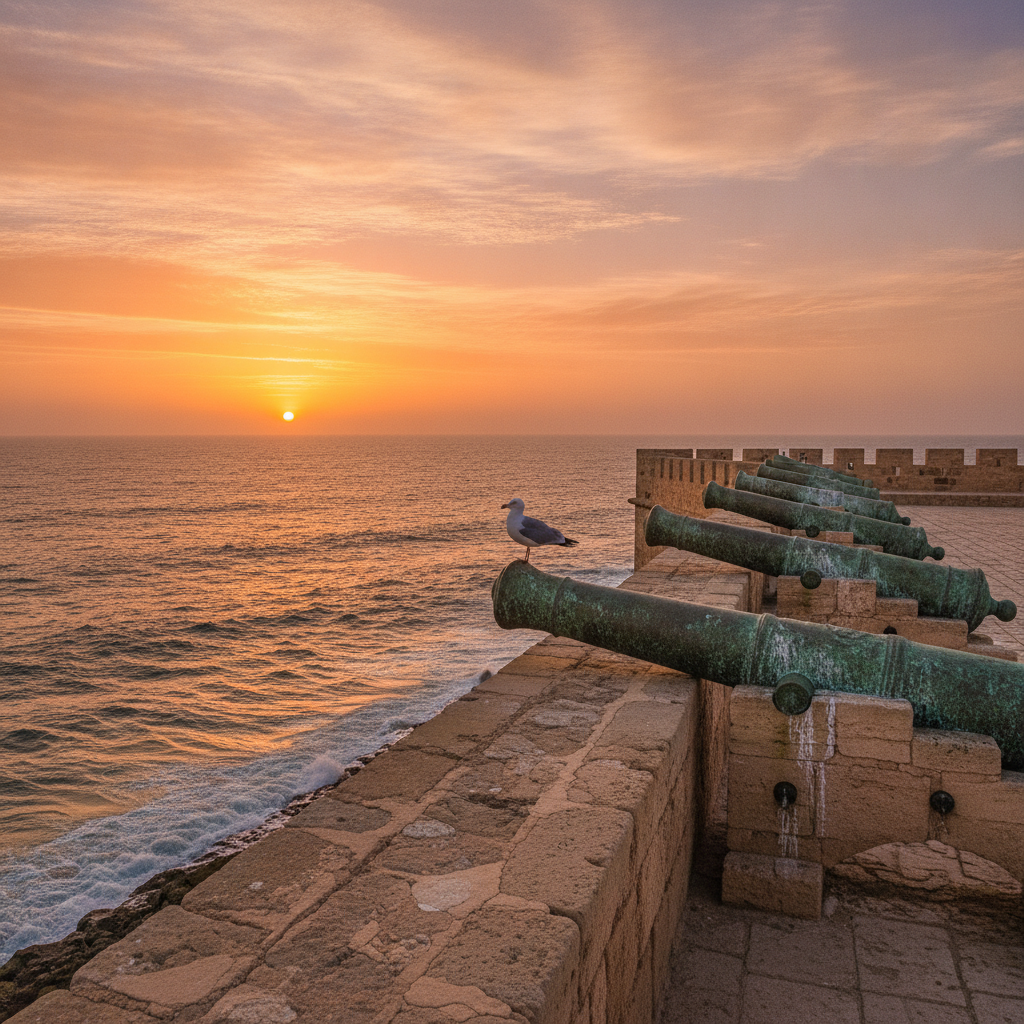
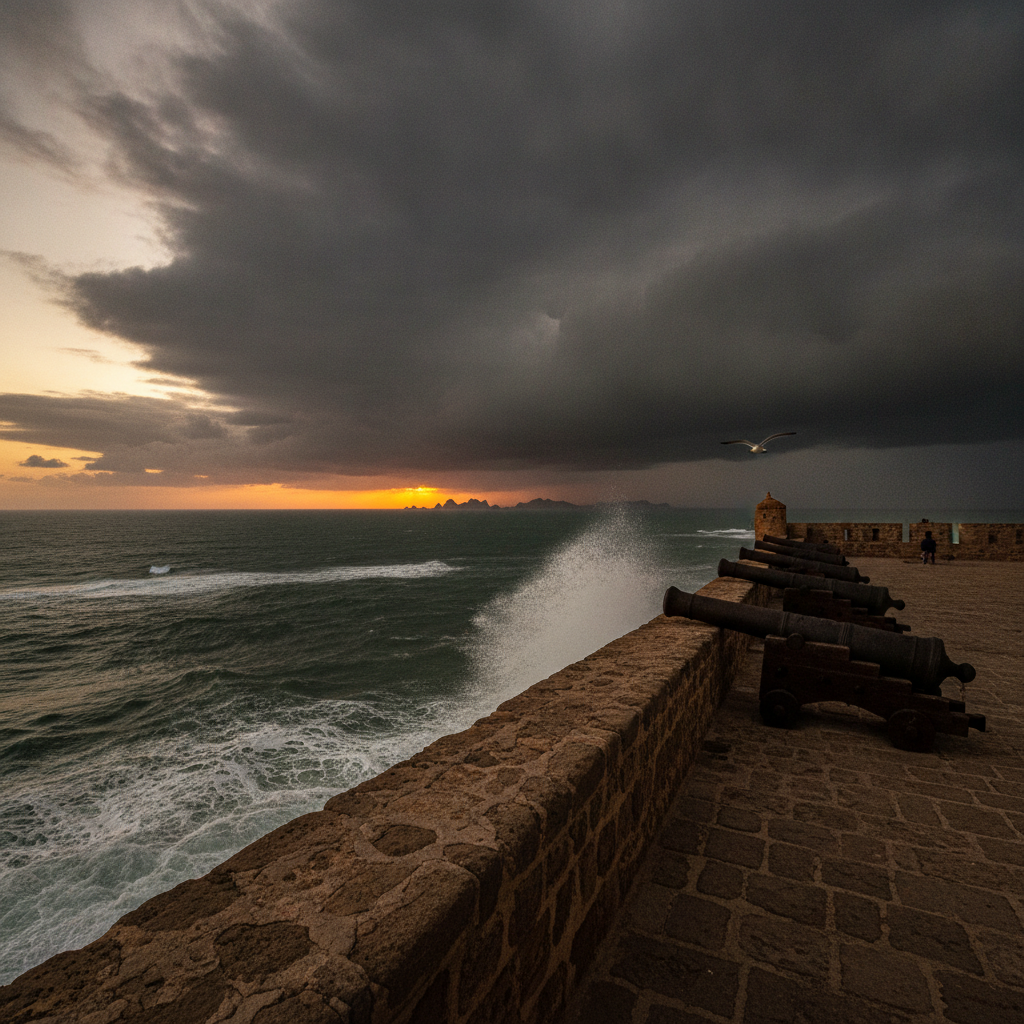
Essaouira's UNESCO-Listed Ramparts Were Designed by French Engineer Theodore Cornut in 1764-1765 Under Sultan Mohammed III and Line the Atlantic With 17th-18th Century Bronze Cannons Seized From European Ships; The Gnawa and World Music Festival of Essaouira Attracts 450,000-500,000 Visitors Over 4 Days in June and Is the World's Largest Gnawa Festival; The Thuya Arborvitae Root Burl Exploitation for the Essaouira Marquetry Craft Is Not Sustainable as Burl Harvesting Kills the Root System Preventing Tree Regeneration
Essaouira's ramparts designed by French engineer Cornut in 1764-1765 with 17th-18th century bronze cannons; the Gnawa Festival attracting 450,000-500,000 visitors over 4 June days; thuya burl harvesting killing the root system and threatening the craft's material sustainability; Essaouira's 300 wind days per year making it a top-5 world windsurfing destination; harbor grill stalls serving grilled sardines for 50-100 MAD; and the Supratours bus from Marrakech in 2.5-3 hours at approximately 90-120 MAD.
Orson Welles Filmed Othello in a Fish Smokehouse in Essaouira When the Costumes Failed to Arrive and Won the Palme d'Or at Cannes 1952; The Iles Purpuraires Offshore From Essaouira Required 12,000 Murex Snails Per 1.4 Grams of Tyrian Purple Making It More Valuable Than Gold; Sultan Mohammed III Deliberately Settled Jewish Merchant Families in Essaouira in 1764-1765 as the Tujjar al-Sultan With Exclusive Rights to Conduct Foreign Trade
Orson Welles winning Cannes Palme d'Or for Othello filmed partly in a fish smokehouse; Iles Purpuraires requiring 12,000 snails per 1.4g of Tyrian purple; Sultan Mohammed III settling Jewish Tujjar al-Sultan merchants with exclusive foreign trade rights; goat-climbing argan trees south of Essaouira; the Sidi Kaouki remote beach 25 km south; and Essaouira complete reference including the UNESCO ramparts, Gnawa Festival, thuya craft, and Supratours bus from Marrakech.
Randy Weston the American Jazz Pianist Was Among the First to Collaborate With Gnawa Musicians in Essaouira in the 1960s and Connected the African Roots of Jazz Blues to the Gnawa Pentatonic Tradition; The Galerie Damgaard Founded by Danish Gallerist Frederiksen Damgaard in 1988 Discovered the Essaouira Naive Painting School That Is Now Internationally Collected; The Essaouira Tujjar al-Sultan Jewish Merchant Community at Its 19th Century Peak Numbered 5,000-8,000 of a Total City Population of 15,000-20,000
Randy Weston connecting Gnawa to jazz-blues African roots in Essaouira from the 1960s; Danish gallerist Damgaard founding Galerie Damgaard in 1988 and discovering the Essaouira naive painting school; the Jewish Tujjar al-Sultan constituting up to a third of the 19th century city population; the Essaouira 3-day itinerary covering ramparts, harbor grill sardines, windsurfing, Sidi Kaouki beach, and argan cooperative; and Essaouira as a more successfully balanced heritage tourism model than over-touristed Chefchaouen or Marrakech.
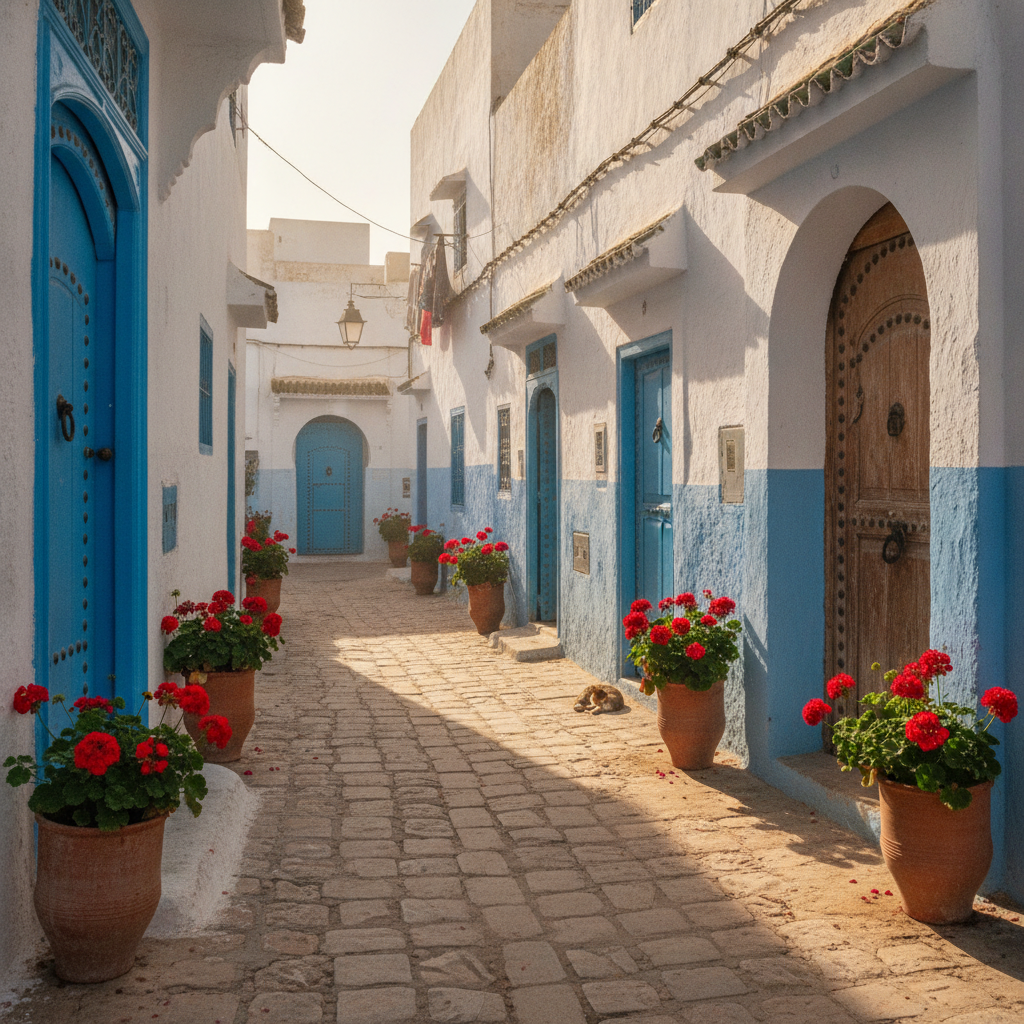
The Essaouira Gnawa and World Music Festival With 450,000-500,000 Free-Entry Visitors Over 4 Days Is the Largest Single Annual Event in Morocco by Attendance; The Bald Ibis (Geronticus eremita) in the Souss Massa National Park Is One of the World's Most Critically Endangered Birds With Morocco Holding One of the Last Wild Populations; The Imessouane Point Break 75 km Northeast of Essaouira Produces Rides of Up to 800m Making It the Longest Point Break in Africa
The Gnawa Festival attracting 450,000-500,000 free-entry visitors annually as Morocco's largest event; Morocco holding one of the last wild bald ibis populations in the Souss Massa National Park; the Imessouane point break producing 800m rides as the longest in Africa; the Sidi Kaouki marabout shrine of the 16th century saint attracting Moroccan pilgrims for healing of blindness and deafness; thuya small boxes priced at 50-150 MAD in the cooperative workshops; and Essaouira's 3,000-year Atlantic heritage from Tyrian purple to the Gnawa World Music Festival.
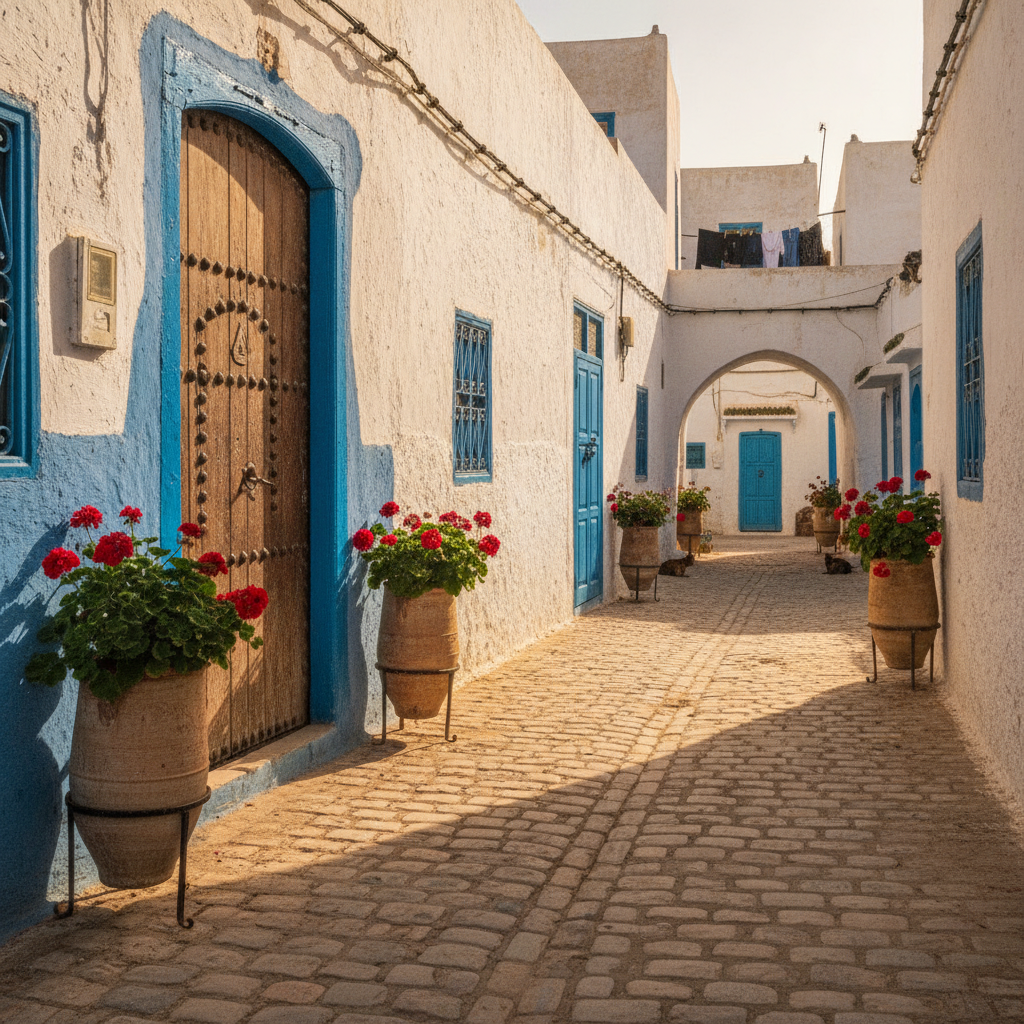
Essaouira Was the Primary Atlantic Terminus of the Western Trans-Saharan Trade Routes With West African Gold Dust, Ivory, and Enslaved People Passing Through Until the Suez Canal Opening in 1869 Diverted the Trade; The 1960 Agadir Earthquake (Magnitude 5.9) Killed 15,000 People in 15 Seconds Destroying the Entire Historic City; The Essaouira Naive Painting School Discovered by Danish Gallerist Damgaard in 1988 Visualizes the Gnawa Spirit World and Is Now Internationally Collected
Essaouira as the primary Atlantic terminus of trans-Saharan gold and ivory trade until 1869; the 1960 Agadir earthquake killing 15,000 in 15 seconds and leaving no historic medina; Damgaard discovering the Essaouira naive painting school in 1988; Gnawa spirit mluk beings rendered as visual figures connecting to West African ritual traditions; the blue fishing boats best photographed from the Skala du Port at golden hour; and Essaouira vs Agadir (culture and wind sports vs package beach resort).