

Monterrey Colonial History and Nuevo Leon Founding: The Crypto-Jewish Settlers of Luis de Carvajal the Younger, the Failed First Settlements and the 1596 Establishment That Finally Survived
Monterrey was founded on its current site in 1596 by Diego de Montemayor, a Spanish conquistador who named the settlement Ciudad Metropolitana de Nuestra Señora de Monterrey after the Viceroy of New Spain Gaspar de Zuñiga y Acevedo, Count of Monterrey, making it one of the last major Spanish colonial cities founded in the 16th century and establishing the permanent settlement after at least two previous failed attempts to colonize the Nuevo Leon valley. The most significant figure in the early colonial history of Nuevo Leon is not Montemayor but Luis de Carvajal the Younger, the nephew of the governor Luis de Carvajal y de la Cueva who governed the Kingdom of Nuevo Leon and who brought with him to the colony a group of Converso Jewish families fleeing the Spanish Inquisition, hoping that the remote northern frontier would provide sufficient distance from the Inquisition's reach. Luis de Carvajal the Younger, who secretly returned to Judaism in New Spain and documented his spiritual struggle in journals that constitute the most extraordinary personal document of crypto-Jewish life in the Americas, was eventually captured by the Inquisition, recanted, was released, returned to Jewish practice, was captured again, and burned at the stake in Mexico City in 1596, the same year Monterrey was permanently founded. The journals of Carvajal the Younger, discovered in the 20th century and published as the sole surviving first-person account of Converso religious experience in colonial New Spain, connect Monterrey history to the global story of Jewish diaspora and religious persecution.

Monterrey Food Culture: Cabrito Roasted Kid Goat, Carne Asada the Northern Mexican Grill Tradition, Pan de Polvo Cookies and the Machaca Dried Beef That Defines the Northern Mexican Ranching Table
The food of Monterrey is the food of the northern Mexican cattle and goat ranching economy translated to an urban industrial context where the Friday carne asada backyard grill is as much a social ritual as a meal, where cabrito al pastor, a whole young milk-fed kid goat roasted on a rotating spit over mesquite wood, is the dish that regiomontanos claim as absolutely theirs and that they insist cannot be replicated outside Nuevo Leon because the kid goats of the state are fed exclusively on milk and the mesquite wood of the local scrublands gives the smoke a character absent in the oak or hickory of other grill traditions. The northern Mexican food culture of Monterrey resists the chile-based sauce complexity of central Mexican cuisine in favor of the directness of grilled meat with no more than salt, lime, and chiltepin chile as accompaniment, with the tortilla de harina, the flour tortilla that is the bread of northern Mexico as the corn tortilla is the bread of the south, as the vehicle for everything. The machaca, dried and shredded beef or venison that was the original preservation technology of the Nuevo Leon ranching economy before refrigeration, and the borrego tatemado, slow-roasted sheep, complete the roster of Monterrey meat traditions that define a food culture whose sophistication is measured in the quality of the animal and the fire rather than in the complexity of the preparation.

Monterrey Mountains and Nature: Grutas de Garcia Limestone Caves, Cola de Caballo Waterfall, Chipinque Ecological Park and the Sierra Madre Canyon System That Makes This the Most Dramatically Situated Industrial City in Mexico
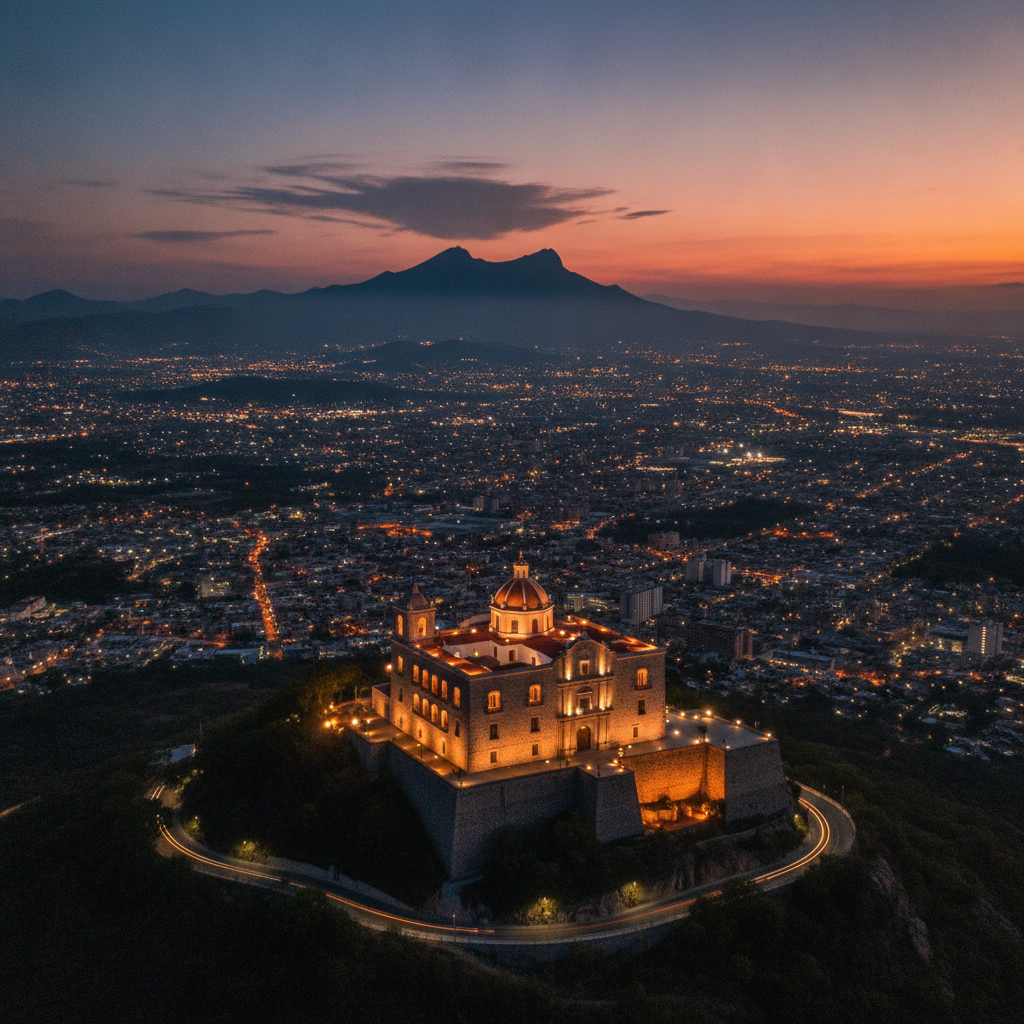
Monterrey sits inside a natural amphitheater formed by the Sierra Madre Oriental mountains that rise abruptly from the Nuevo Leon plain to elevations above 2,500 metres within 30 kilometres of the city center, creating a landscape configuration where a steel mill worker in 1930 could look up from the foundry floor and see mountain peaks, and where a contemporary regiomontano with a car can drive from urban traffic to pine forest hiking in less than an hour. The Parque Nacional Cumbres de Monterrey, established in 1939 as one of the earliest protected natural areas in Mexico, covers 177,000 hectares of the Sierra Madre Oriental ranges surrounding the city, containing old-growth pine and oak forest, wetlands fed by the mountain springs, and a network of hiking trails connecting the Cola de Caballo waterfall, the Grutas de Garcia limestone cave system, and the Cumbres plateau viewpoints. The Chipinque Ecological Park, a 1,800-hectare protected area on the slopes of the Sierra Madre immediately south of the San Pedro Garza Garcia municipality that can be reached from the wealthiest neighborhoods in Mexico in a 15-minute drive, provides hiking and mountain biking trails through oak and pine forest at elevations ranging from 800 to 2,200 metres, serving as the primary outdoor recreation destination for the Monterrey middle and upper class. The Huasteca Canyon, a slot canyon cut through the limestone of the Sierra Madre 25 kilometres west of the city center, is the most dramatic near-urban geological feature in northern Mexico.

Monterrey Water Crisis, Urban Heat and the Environmental Cost of Industrial Growth in the Semi-Arid Nuevo Leon Valley Where Summer Temperatures Hit 45 Celsius and the Metropolitan Area Ran Out of Tap Water in 2022
In the summer of 2022 Monterrey, a metropolitan area of 5.3 million people and the industrial capital of Mexico, ran out of tap water for significant portions of the population for weeks at a time as the reservoirs of the Cerro Prieto and El Cuchillo dams dropped to critical levels after three consecutive years of below-average rainfall in the Sierra Madre Oriental catchment area, exposing the fundamental water vulnerability of a large industrial city built in a semi-arid valley where the annual rainfall averages only 600 millimetres and the industrial and residential water demand has grown faster than the infrastructure to supply it. The 2022 Monterrey water crisis was not a surprise to hydrologists who had documented the combination of population growth, industrial water demand, agricultural irrigation withdrawal, and climate change-driven precipitation reduction that was making the Nuevo Leon water system increasingly fragile, but the political and corporate leadership of the city had consistently prioritized industrial growth over water security investment, leading to the crisis that left middle-class colonias and working-class neighborhoods alike hauling water in trucks while the corporate office parks in San Pedro Garza Garcia maintained supply through priority allocation. The temperature records of Monterrey in recent decades document a sustained warming trend in which the extreme heat events that were previously occasional are becoming routine, with temperatures above 40 Celsius occurring on an increasing number of days per year and the urban heat island effect of the vast concrete and asphalt surface of the metropolitan area adding several degrees to the official temperature measurements.

Monterrey Sport and Stadium Culture: Tigres and Rayados Football Rivalry, the PPG Paints Arena Boxing Tradition and the Regiomontano Sports Identity That Turns Two Football Clubs Into a Proxy for Class Division
Monterrey is the only major Mexican city with two football clubs competing in the top division of Liga MX simultaneously, and the rivalry between Club de Futbol Monterrey, called Rayados, founded in 1945 and associated with the working-class and middle-class northern areas of the metropolitan area, and Club Tigres de la Universidad Autonoma de Nuevo Leon, called Tigres, founded in 1960 and associated with the university community and the eastern industrial municipalities, functions as the defining social division of the city in a way that the Mexico City rivalry between America and Chivas of Guadalajara or the Guadalajara rivalry between Chivas and Atlas does not quite replicate because in Monterrey the two rivals share the same city and the same stadium, the Estadio BBVA and the Estadio Universitario being within 8 kilometres of each other and serving populations that genuinely interpenetrate in workplace, family, and neighborhood. The class dimension of the Monterrey football rivalry, with Rayados associated with the San Pedro Garza Garcia corporate class and Tigres with the student and industrial worker population of the UANL university community, makes the clásico regiomontano a twice-annual restatement of the social geography of the metropolitan area that residents follow with an intensity that briefly displaces the normally dominant subject of work and money from the center of Monterrey conversation. The boxing tradition of Monterrey and the adjacent border region has produced multiple world champions including Erik Morales and Marco Antonio Barrera.

Monterrey Music Identity: Norteño and Grupero Accordion Music from the Nuevo Leon Border Corridor That Became the Soundtrack of the Mexican Diaspora and the Cultural Background of 35 Million Mexican Americans
The accordion music of northern Mexico, called norteño when played in the traditional duet format of a button accordion and a bajo sexto twelve-string guitar, and grupero when arranged for a larger ensemble with bass, drums, and electric instruments, is the dominant popular music form of Nuevo Leon and the border states of Tamaulipas, Coahuila, Chihuahua, and Sonora, with its origin in the German and Czech polka music brought by European immigrants to the Texas-Mexico border region in the mid-19th century. The corrido, the narrative ballad form that norteño music uses to tell stories of outlaws, border crossings, revolutionary heroes, and contemporary drug traffickers, is the most socially embedded musical genre in northern Mexico, functioning as journalism, oral history, and social commentary in communities where the events described often cannot be covered in conventional media. Monterrey is the recording and commercial center of norteño music, with the music industry infrastructure of the city producing the albums and videos that distribute the northern Mexican musical tradition to the 35 million Mexican Americans in the United States whose connection to Mexican culture is maintained partly through the norteño and grupero music of artists including Los Tigres del Norte, Conjunto Primavera, and the late Jenni Rivera. The narcocorrido, the corrido subgenre celebrating drug traffickers that emerged in the 1990s, generated a political controversy around censorship that the norteño music industry of Monterrey navigated with characteristic commercial pragmatism.

Monterrey: The Industrial Capital of Mexico Where the Wealthiest Families in Latin America Built Steel Mills and Beer Factories and Then Funded Museums That Rival the Best in the World
Monterrey, the capital of Nuevo Leon and the industrial and commercial center of northern Mexico with a metropolitan population of 5.3 million, is the city that industrialized Mexico before Mexico City did, that produced the first iron and steel plant in Latin America in 1900, that houses the headquarters of the largest brewing company in Mexico and the largest cement company in the world, and that concentrates more billionaire wealth than any other Mexican city in the family fortunes of the Garza Sada, Zambrano, and Gonzalez families whose ancestors built the industrial empire of the Monterrey Group in the early 20th century. The same families that built the steel mills and beer factories also funded the museums: the MARCO Museum of Contemporary Art designed by Ricardo Legorreta with its 12-metre bronze dove by Juan Soriano, the Museo del Acero Horno3 steel furnace converted to an industrial museum, and the Museo de Historia Mexicana in the Gran Plaza complex are among the finest museum buildings in Latin America, funded by corporate and family philanthropy that built cultural institutions to match the industrial scale of the city. The Gran Plaza or Macroplaza, at 40 hectares one of the largest public plazas in the world, was created in the 1980s by demolishing 40 blocks of the historic center, a decision that the city simultaneously regrets as an architectural loss and celebrates as the creation of the monumental public space that defines Monterrey against every other Mexican city.

Monterrey Business and Wealth: How the Garza Sada Family and the Monterrey Group Built the Most Powerful Private Sector in Mexico and Why the City Thinks Differently About Money Than the Rest of the Country
Monterrey developed a private sector culture so distinct from the rest of Mexico that economists and sociologists have spent decades debating whether the city constitutes a separate economic civilization within the Mexican national economy, with a business culture that emphasizes individual entrepreneurship, minimal government dependence, Protestant-adjacent work ethic (despite universal Catholicism), and an explicit disdain for the patron-client political economy of Mexico City that the regiomontano business class expresses with a directness that Mexico City finds rude and that Monterrey finds honest. The Monterrey Group, the informal name for the network of industrialist families centered on the Garza Sada, Sada, Cantu, and Gonzalez dynasties who built the beer, steel, glass, cement, and banking industries of northern Mexico in the early 20th century, created the most concentrated private industrial wealth in Mexican history in a city that the federal government in Mexico City alternatively subsidized, taxed, and attempted to control without ever succeeding in integrating into the PRI political economy that governed the rest of Mexico from 1929 to 2000. The confrontation between the Monterrey business class and the federal government reached its climax in 1973 when the leftist guerrilla group Liga Comunista 23 de Septiembre kidnapped and murdered Eugenio Garza Sada, the patriarch of the dominant Monterrey industrial family, an event that traumatized the city and aligned the entire regiomontano business class permanently against the left and the PRI government that the business community held indirectly responsible.