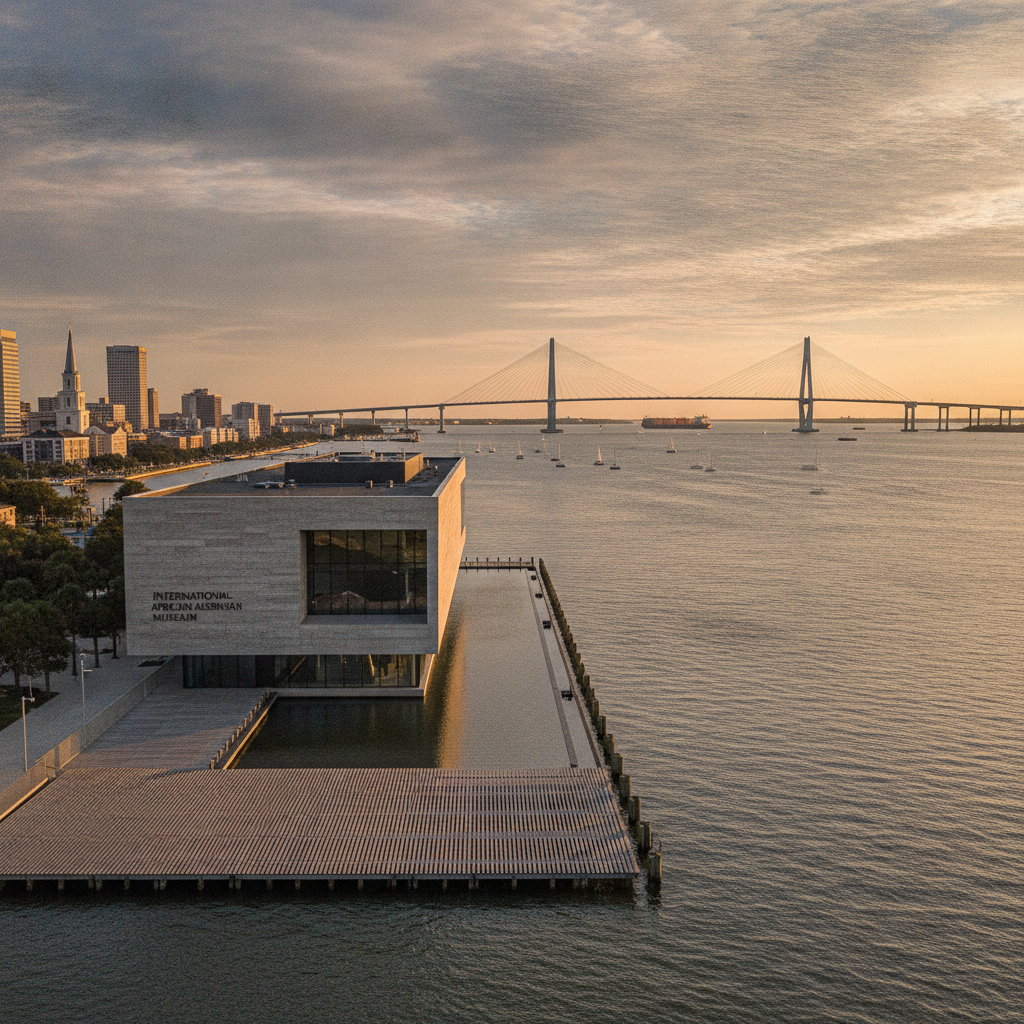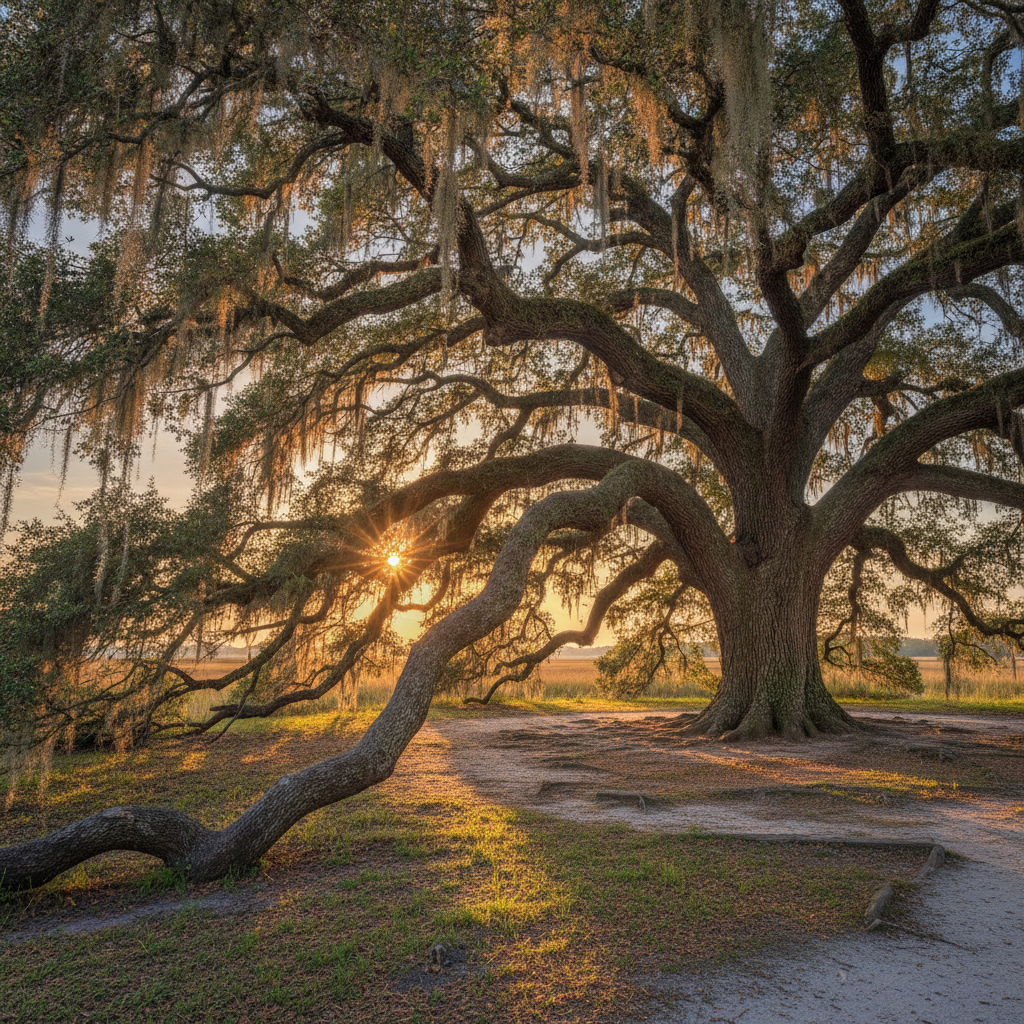
Charleston R4: Angel Oak Johns Island (400-500 years old 8.5m trunk live oak, Spanish moss bromeliad absorbs nutrients from air, Francis Beidler Forest 1000-year-old virgin bald cypress), Sea Islands Gullah heritage (Penn Center St. Helena Island 1862 first school for freed people, MLK SCLC meeting place 1960s, Port Royal Experiment 1861 first test of African American freedom, Hunting Island pristine dark sand beach), Columbia and SC interior (Congaree National Park old-growth bottomland firefly synchronization May-June, SC Aquarium sea turtle rehabilitation, Cowpens Battlefield 1781 Revolutionary War turning point), Francis Marion National Forest (longleaf pine ecosystem 3% remaining, red-cockaded woodpecker, Sewee Visitor Center Cape Romain, Wambaw Creek wilderness canoe trail), New Charleston food (Rodney Scott BBQ 2018 James Beard first Black pitmaster Outstanding SE, whole-hog live oak pits, Leon's Oyster Shop Upper King fried chicken oyster bar, craft cocktail Husk Bar Gin Joint), Ghost tours (most haunted US city top 3, Unitarian churchyard Annabel Lee grave, Old City Jail 1802 Lavinia Fisher first US female serial killer Denmark Vesey 1822 rebellion, Dock Street Theatre ghost Juanita)
Charleston R4: live oak and Angel Oak (400-500-year-old Johns Island 8.5m trunk, Spanish moss bromeliad no roots absorbs from air, Francis Beidler Forest 1000-year virgin bald cypress world largest), Sea Islands (Penn Center St. Helena 1862 first freed-people school MLK SCLC meetings 1960s, Port Royal Experiment 1861 freedom land ownership test, Hunting Island pristine beach), SC interior (Congaree old-growth bottomland champion trees firefly synchronization May-June, SC Aquarium sea turtle rehab, Cowpens 1781 Revolutionary War turning point), Francis Marion National Forest (Swamp Fox Marion irregular warfare inspiration, longleaf pine 3% remaining, red-cockaded woodpecker threatened, Cape Romain 66,000 acres, Wambaw Creek wilderness canoe trail), new Charleston food (Rodney Scott BBQ 2018 James Beard first Black pitmaster whole-hog live oak pits, Leon's Oyster Shop Upper King model for casual fine dining, craft cocktail Husk Bar Gin Joint, restaurant week January September), ghost tours (top 3 most haunted US, Unitarian churchyard Annabel Lee Poe inspiration, Old City Jail 1802 Lavinia Fisher first US female serial killer 1820 Denmark Vesey 34 rebels hanged 1822, Dock Street Juanita ghost).
- 1
Charleston's Live Oak Landscape and Spanish Moss
Charleston's live oak landscape: the Southern Live Oak (Quercus virginiana) draped in Spanish moss (Tillandsia usneoides, an epiphytic bromeliad, not a true moss, that absorbs moisture and nutrients from the air) is the defining visual icon of the South Carolina Lowcountry and the most distinctive natural element of the Charleston landscape. The live oaks of Charleston: the largest and most impressive live oaks in the Charleston area include the Angel Oak (at 3688 Angel Oak Road, Johns Island, approximately 30 km southwest of Charleston): a Southern Live Oak estimated to be 400-500 years old, with a trunk circumference of 8.5 meters and branches spanning 17 meters from the trunk — one of the oldest and largest living things east of the Rocky Mountains. The Angel Oak is listed on the Live Oak Society registry and is protected as a Charleston County park. The Lowcountry Spanish moss: Spanish moss has no roots and absorbs all its moisture and nutrients from the air and rain — it grows prolifically on live oaks throughout the coastal South, creating the distinctive curtain of gray-green tendrils that drapes the trees. Spanish moss was historically harvested and dried for use as furniture padding (Ford Model T seats were padded with Spanish moss from the South Carolina Lowcountry). The Bald Cypress swamps: the freshwater swamps of the ACE Basin and the Francis Beidler Forest (the largest remaining stand of virgin bald cypress and tupelo gum swamp forest in the world, 60 km north of Charleston in the Four Holes Swamp), with bald cypress trees estimated to be 1,000+ years old.
- 2
South Carolina's Coastal Islands - Sea Islands Heritage
The South Carolina Sea Islands (the archipelago of barrier islands and tidal islands extending along the South Carolina coast from the Beaufort area to the Georgia border): the home of the Gullah Geechee people and the most biologically diverse coastal ecosystem in the American Southeast. St. Helena Island (the largest Sea Island in South Carolina by land area, 50 km south of Charleston): the center of Gullah Geechee cultural survival, home to the Penn Center (at 16 Penn Center Circle W, St. Helena Island): the historically Black educational institution established in January 1862 by northern missionaries immediately after Union forces captured Port Royal Sound (one of the first educational institutions for formerly enslaved people in the United States) and a meeting place for Martin Luther King Jr. and SCLC leadership during the 1960s. The Port Royal Experiment (1861-1865): the first major experiment in African American freedom and land ownership in the American South, conducted on the Sea Islands after Union forces captured Port Royal Sound in November 1861 — approximately 10,000 enslaved people were freed, and northern missionaries, teachers, and reformers arrived to establish schools and demonstrate that African Americans could farm and govern themselves effectively (the experiment was partially successful but ultimately ended with the restoration of most land to White former plantation owners after the Civil War). Hunting Island State Park beaches: the most pristine natural beach environment in South Carolina, with the distinctive dark sand and driftwood landscape created by the dynamic erosion of the shoreline.
- 3
Columbia Road Trip and South Carolina Interior
South Carolina interior day trip: the journey from Charleston northwest through the South Carolina interior reveals the full geological and cultural diversity of the state, from the Lowcountry rice plantation belt to the red clay of the Piedmont to the Blue Ridge Mountains in the northwest corner. The South Carolina State Museum in Columbia (at 301 Gervais Street, in the historic Columbia Mills building, the first all-electric textile mill in the United States, 1894): the comprehensive museum of South Carolina natural history, cultural history, science, and art, with the Vince Sheheen Planetarium. The Congaree National Park (at 100 National Park Road, Hopkins, 30 km southeast of Columbia): the largest intact expanse of old-growth bottomland hardwood forest in the United States, with champion trees (the largest known individuals of multiple tree species), the highest canopy in any temperate deciduous forest in North America, firefly synchronization events (May-June, when thousands of fireflies flash in synchronized patterns in one of the most spectacular natural light shows in North America), and a wilderness canoe trail through the blackwater swamp. The South Carolina Aquarium (at 100 Aquarium Wharf, Charleston): the aquarium focused on the Southeast US and South Atlantic coastal ecosystem, with the shark tank, the sea turtle rehabilitation program (one of the most active loggerhead rehabilitation programs on the East Coast), and exhibits on the ACE Basin and Lowcountry ecology. The Cowpens National Battlefield (at 4001 Chesnee Hwy, Gaffney, 300 km from Charleston): the site of the decisive Battle of Cowpens (January 17, 1781), where Brigadier General Daniel Morgan's Continental forces and militia defeated Banastre Tarleton's British cavalry, one of the turning points of the Revolutionary War in the South.
- 4
Francis Marion National Forest and the Lowcountry Outdoors
Francis Marion National Forest (at 2967 Steed Creek Road, Huger, South Carolina, approximately 30 km north of Charleston): the 97,000-hectare national forest named for Francis Marion (the Swamp Fox, the Revolutionary War guerrilla leader who harassed British forces throughout the South Carolina Lowcountry using knowledge of the terrain — Marion was one of the fathers of American irregular warfare and a direct inspiration for Mel Gibson's character in The Patriot). The Francis Marion National Forest ecology: the Lowcountry longleaf pine ecosystem (the fire-adapted pine savanna that once covered 38 million hectares from Virginia to Texas but now covers less than 3% of its original extent), the bottomland hardwood swamps, Carolina bays (the elliptical wetland depressions of unknown origin scattered throughout the Atlantic Coastal Plain), and the red-cockaded woodpecker (a federally threatened species that nests in living longleaf pines and is intensively managed in Francis Marion National Forest). The Sewee Visitor and Environmental Education Center (at 5821 US-17 N, Awendaw): the center for exploring the Francis Marion National Forest and Cape Romain National Wildlife Refuge (the 66,000-acre coastal refuge with nesting loggerhead sea turtles, migratory shorebirds, and the state bird sanctuary on Capes Island). Paddling in the Lowcountry: the blackwater rivers and tidal creeks of the Lowcountry offer some of the most spectacular flatwater paddling in the American East, with the Wambaw Creek Wilderness Canoe Trail (the designated wilderness canoe trail in the Francis Marion National Forest) and the tidal creek networks of the ACE Basin accessible to kayakers.
- 5
Culinary Arts and the New Charleston Food Scene
Charleston's next generation food scene: while the first wave of the Charleston restaurant renaissance (FIG 2003, Husk 2010, The Ordinary 2012) established Charleston's national culinary reputation, a second generation of restaurants has expanded and diversified the scene. The Vault and Vator (at 141 East Bay Street): the cocktail bar and small plates restaurant in a former bank vault, one of the most distinctive dining spaces in Charleston. The Leon's Oyster Shop (at 698 King Street, Upper King): the fried chicken and oyster bar that has become the most copied model of casual fine dining in Charleston — the combination of high-quality sourcing, a relaxed industrial-chic environment, and accessible pricing. Rodney Scott's BBQ (at 1011 King Street, Upper King): the Charleston outpost of the pitmaster Rodney Scott (the first African American pitmaster to win the James Beard Award for Outstanding Chef of the Southeast in 2018, for whole-hog pit barbecue cooked over live oak coals in the South Carolina tradition he learned from his family in Hemingway SC). The craft cocktail scene: the Prohibition-era legal status of Charleston (South Carolina banned liquor sales until 1971, with a complicated history of private clubs and mini-bottles) has given way to one of the most sophisticated craft cocktail cultures in the American South, with Husk Bar, The Gin Joint, and The Cocktail Club among the most nationally recognized craft cocktail bars. The Charleston Restaurant Week (held each January and again in September): the biannual dining promotion offering prix-fixe menus at dozens of Charleston restaurants.
- 6
Ghost Tours and the Supernatural Charleston
Charleston ghost tours and supernatural heritage: Charleston is consistently ranked as one of the most haunted cities in the United States (Fodor's, Travel + Leisure, and multiple paranormal ranking systems place Charleston in the top 3 most haunted American cities), with a heritage of ghost tours that has become one of the most popular nighttime visitor activities in the city. The historical basis for Charleston hauntings: the concentration of historical trauma in Charleston (the slave trade, the devastating 1886 earthquake, the Civil War battles, the yellow fever epidemics of the 18th and 19th centuries, and the general violence of a colonial port city) has created a rich foundation for ghost stories and supernatural legends. The Unitarian Church graveyard (at 4 Archdale Street, downtown Charleston): the oldest and most atmospheric cemetery in Charleston, with the graves of Annabel Lee (the young woman believed to have inspired Edgar Allan Poe's 1849 poem, buried in the Unitarian churchyard) and hundreds of unmarked graves of enslaved people. The Old City Jail (at 21 Magazine Street, downtown Charleston, built 1802): the prison where notorious criminals including Lavinia Fisher (the first female serial killer in United States history, hanged 1820) and Denmark Vesey (the free Black carpenter who organized the largest planned slave rebellion in American history before its discovery in 1822, hanged along with 34 co-conspirators) were held. The Dock Street Theatre ghost: the ghost of Juanita, a woman of ill repute who died in the building when it served as the Planter's Hotel in the early 19th century, is reportedly the most frequently encountered ghost in the most haunted building in Charleston.
Walk this route with audio
Stories play automatically as you reach each stop — no tapping needed.
Plus à charleston
Charleston: Le plus ancien musée d'Amérique, un escalier en colimaçon autoportant et le canal marécageux plus ancien que la nation
Charleston R2 : Plantations de la rivière Ashley (Middleton Place, les plus anciens jardins paysagers des États-Unis de 1741, Drayton Hall 1738, la maison de plantation la plus significative des États-Unis, Palladienne inchangée, Magnolia 1676, les plus anciens jardins des États-Unis, Audubon Swamp Garden, Boone Hall Avenue of Oaks 1743), éthique du tourisme des plantations et visites Gullah (cabanes en briques de Slave Street, Gullah Theater, visites des îles de la mer Johns Wadmalaw Edisto), tremblement de terre de Charleston 1886 (magnitude 7.0-7.3, le plus puissant de l'histoire de la côte est, 100 morts, 2000 bâtiments détruits, ouragan Hugo 1989 Catégorie 4, 7 milliards USD, 27 morts, infrastructure de digues anti-inondation), églises de la Ville Sainte (St. Michael's 1752, plus ancien bâtiment de SC, Circular Congregational 1681, plus ancienne congrégation, tombes jusqu'en 1695, Kahal Kadosh Beth Elohim 1749, plus ancienne congrégation juive réformée active des États-Unis, Mother Emanuel 1816, fusillade AME du 17 juin 2015, 9 morts, drapeau confédéré retiré), kayak en plein air ACE Basin (141 640 hectares, le plus grand estuaire non développé de la côte est, phare de Hunting Island 1875, escalade possible, vieux fonds de Congaree National Park), excursions d'une journée (Columbia USC Gamecocks Dawn Staley, Beaufort Big Chill Prince of Tides Forrest Gump tournage, Port Royal Sound Guerre civile 1861, Hilton Head 24 terrains de golf).
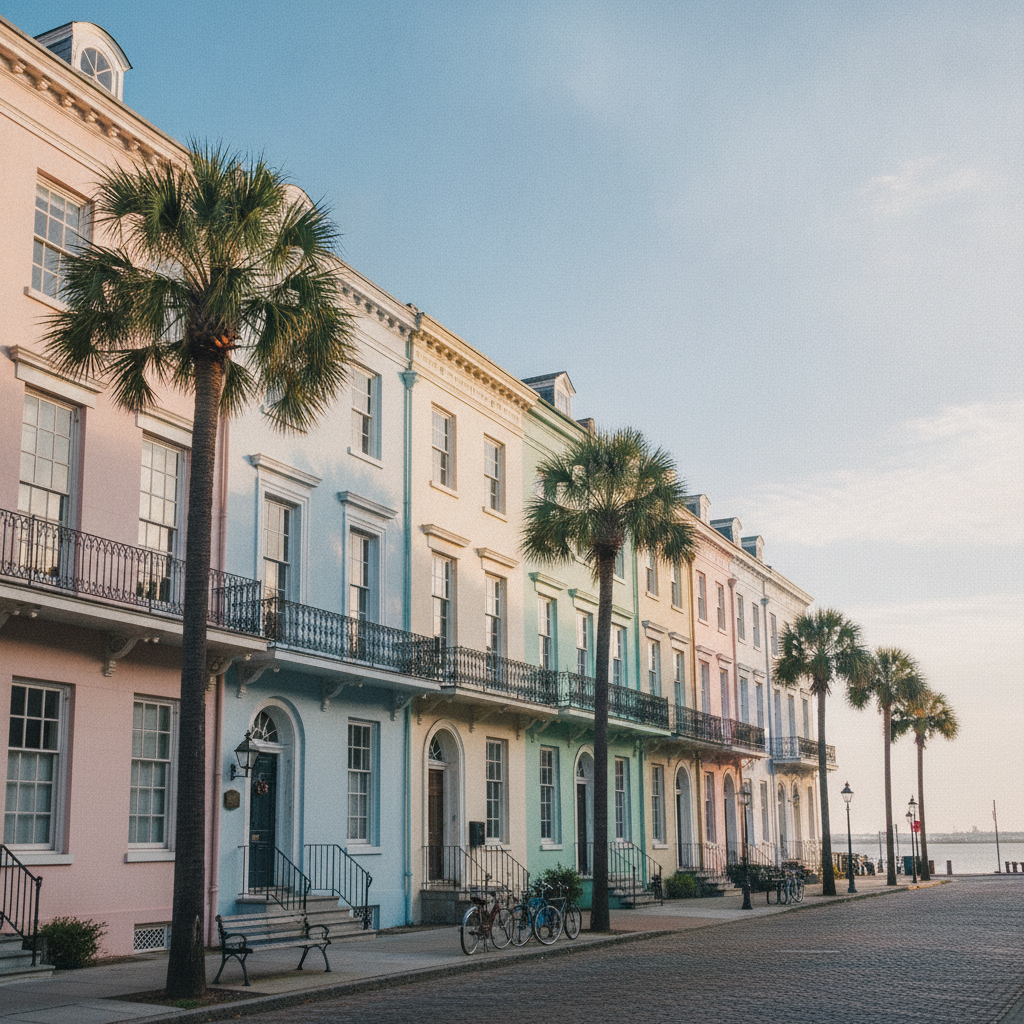
Charleston : premier sous-marin à couler un navire de guerre, langue créole Gullah et la rangée pastel qui a lancé une tendance de design
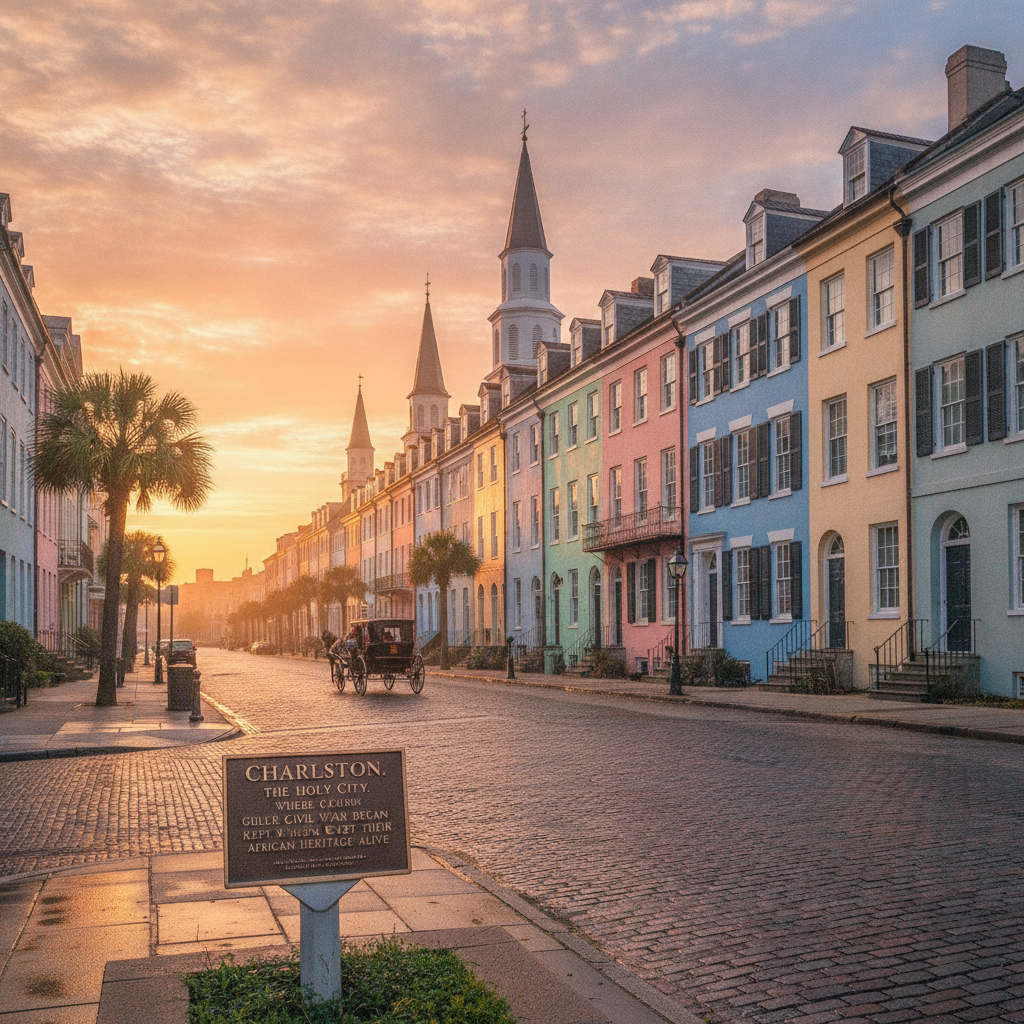
Charleston : architecture d'avant-guerre (400 églises de la ville sainte, 300 maisons individuelles de Charleston conservées, Rainbow Row années 1740, 13 maisons pastel, vues sur Fort Sumter depuis Battery et White Point Garden), Fort Sumter (la guerre de Sécession a commencé le 12 avril 1861, bombardement de 34 heures, 54e régiment d'infanterie du Massachusetts, film Glory, H.L. Hunley, premier sous-marin de combat, a coulé l'USS Housatonic en 1864, récupéré en 2000), culture Gullah Geechee (langue créole, culture du riz, paniers en herbe douce, International African American Museum inauguré en janvier 2023 à Gadsden's Wharf, 40 % de tous les Africains asservis importés, le riz du Lowcountry a fait de Charleston la ville coloniale la plus riche), cuisine du Lowcountry (FIG 2003 Lata James Beard 2009, Husk Sean Brock, menu entièrement d'origine sudiste, crevettes et gruaux, soupe de crabe, Lowcountry boil, Charleston City Market 1804, tisseurs de paniers en herbe douce), Spoleto Festival USA (plus grand festival des arts du spectacle des États-Unis, 17 jours, 150 spectacles, 80 000 participants, première ordonnance de conservation historique des États-Unis en 1931), pratique (Sullivan's Island Folly Beach Isle of Palms Kiawah Ocean Course 1991 Ryder Cup, ACE Basin, plus grand estuaire non aménagé de la côte est, le printemps et l'automne sont les meilleures saisons, aéroport CHS).
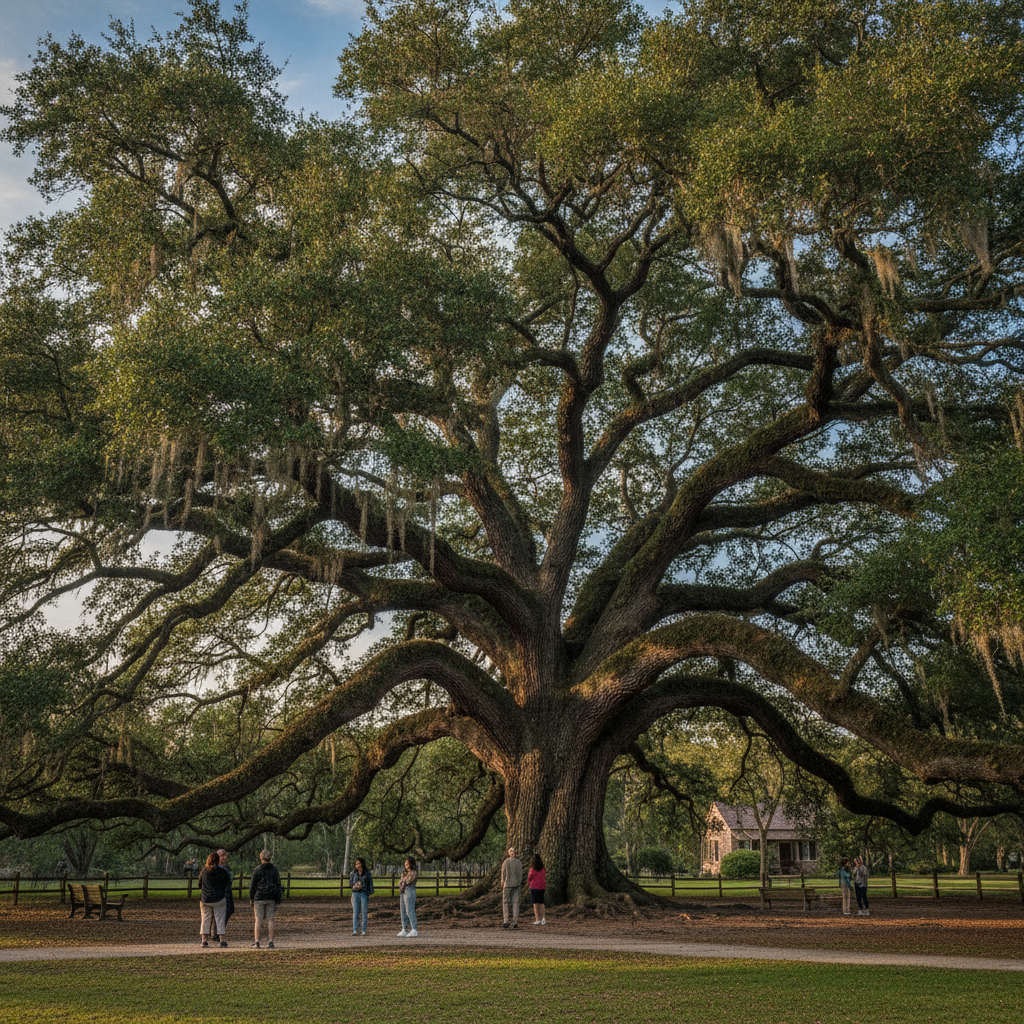
Charleston : arbre de 400 ans, premières mondiales du Spoleto et coton Sea Island cultivé grâce aux connaissances d'Afrique de l'Ouest