Detroit: 11 Stanley Cups, the World Largest Free Jazz Festival and a City Entirely Inside a City
Follow the Winged Wheel through Red Wings hockey history at Little Caesars Arena where the most decorated American NHL franchise plays, understand Detroit blight and revival through the land bank 22000 demolitions and 5000-dollar house auctions, visit Cranbrook in Bloomfield Hills where Eero Saarinen grew up to design the Gateway Arch and Charles Eames studied furniture that changed the world, walk Hamtramck a Polish-turned-Muslim-majority city of 2 square miles entirely surrounded by Detroit, hear 100 free jazz performances over Labor Day at Hart Plaza riverfront, and book flights to Detroit Wayne airport where hotel rates remain some of the lowest among large American cities.
- 1
Detroit Red Wings and Hockey Heritage
The Detroit Red Wings, founded in 1926 and one of the Original Six NHL franchises, have won 11 Stanley Cup championships, the most of any American franchise, with four of those coming in the modern era in 1997, 1998, 2002, and 2008 under coach Scotty Bowman and general manager Ken Holland. The Winged Wheel logo is one of the most iconic in professional sports. The Red Wings Joe Louis Arena on the riverfront, where they played from 1979 to 2017, was considered one of the great hockey buildings for its atmosphere and the intimacy of the seating. Little Caesars Arena, opened in 2017 in the District Detroit development area near Midtown, is a modern multipurpose venue shared with the Pistons. Detroit is considered the most passionate hockey city in the United States and the Red Wings radio broadcasts have been an institution for decades. Steve Yzerman, who spent 22 seasons with the Wings as player and executive, is the face of the franchise.
- 2
Detroit Neighborhoods and Housing
Detroit contains approximately 138,000 abandoned structures and tens of thousands of vacant lots from population loss, representing one of the largest urban blight challenges in American history. The Detroit Land Bank Authority, established to manage and dispose of city-owned vacant properties, has demolished over 22,000 structures since 2014 and sold thousands of houses through auction programs to buyers willing to renovate them. The average price of a Detroit house sold in foreclosure auction in 2015 was under 5,000 dollars. The city has attracted a generation of young artists, entrepreneurs, and urban farming advocates drawn by low real estate costs and the possibility of impact. Eastern Market, Brightmoor, and the North End are neighborhoods where grassroots urban agriculture projects and community development efforts have had particular visibility. The racial geography of metropolitan Detroit remains one of the most segregated in the United States, with the predominantly Black city surrounded by predominantly white suburbs along 8 Mile Road and other boundaries.
- 3
Cranbrook Educational Community
Cranbrook Educational Community in Bloomfield Hills, 22 miles north of Detroit, founded by newspaper publisher George Booth and landscape architect Eliel Saarinen beginning in the 1920s, is one of the most significant concentrations of Arts and Crafts and early modernist architecture, landscape, and education in the United States. Eliel Saarinen, the Finnish architect who moved to America after winning second prize in the Chicago Tribune Tower competition in 1922, served as president of the Cranbrook Academy of Art from 1932 to 1946 and made it one of the most influential design schools in the country. His son Eero Saarinen, who grew up at Cranbrook, became one of the most important American modernist architects, designing the Gateway Arch in St. Louis, the TWA Terminal at JFK Airport, and Dulles International Airport. Charles and Ray Eames, Harry Bertoia, and Florence Knoll all studied at Cranbrook. The grounds and museum are open to visitors.
- 4
Detroit Practical Guide and Access
Detroit Metropolitan Wayne County Airport in Romulus, 18 miles southwest of downtown, is a major Delta Air Lines hub with direct flights to 150 domestic and international destinations. The QLine streetcar line runs 3.3 miles along Woodward Avenue through downtown and Midtown, connecting the riverfront to the New Center district, with fare of one dollar. Rideshare services cover the city well. Driving between neighborhoods is standard as the city is vast and transit limited. Hotels are concentrated downtown and in Midtown, with rates modest by major-city standards. June through August is warm with occasional humidity. Winters are cold with regular snowfall. The Detroit-Windsor Tunnel and Ambassador Bridge provide crossings to Canada. Canadian visitors contribute significantly to the Detroit economy and Windsorites regularly cross for sports, concerts, and dining. Eastern Standard Time. The Detroit region is one of the most economical major American city destinations for budget-conscious travelers.
- 5
Hamtramck and Global Detroit
Hamtramck, a 2.1-square-mile independent city entirely surrounded by the city of Detroit, was historically a Polish American community established around the Dodge Main auto plant, but by the 2010s had become one of the most ethnically diverse small cities in the United States, with significant populations from Yemen, Bangladesh, Bosnia, and other countries. Hamtramck elected a majority Muslim city council in 2021, the first in the United States, and a Muslim mayor. The Polish Village Cafe, open since 1981, serves pierogi and kielbasa as cultural anchors alongside the growing Middle Eastern restaurants on Joseph Campau Avenue. The Hamtramck Music Fest is one of the most eclectic and affordable music festivals in the Midwest, presenting local and regional bands across bar venues over a weekend. Global Detroit is a nonprofit working to attract immigrant talent to revitalize the broader Detroit region, recognizing immigration as a key mechanism for urban renewal.
- 6
Detroit Jazz Festival and Arts Calendar
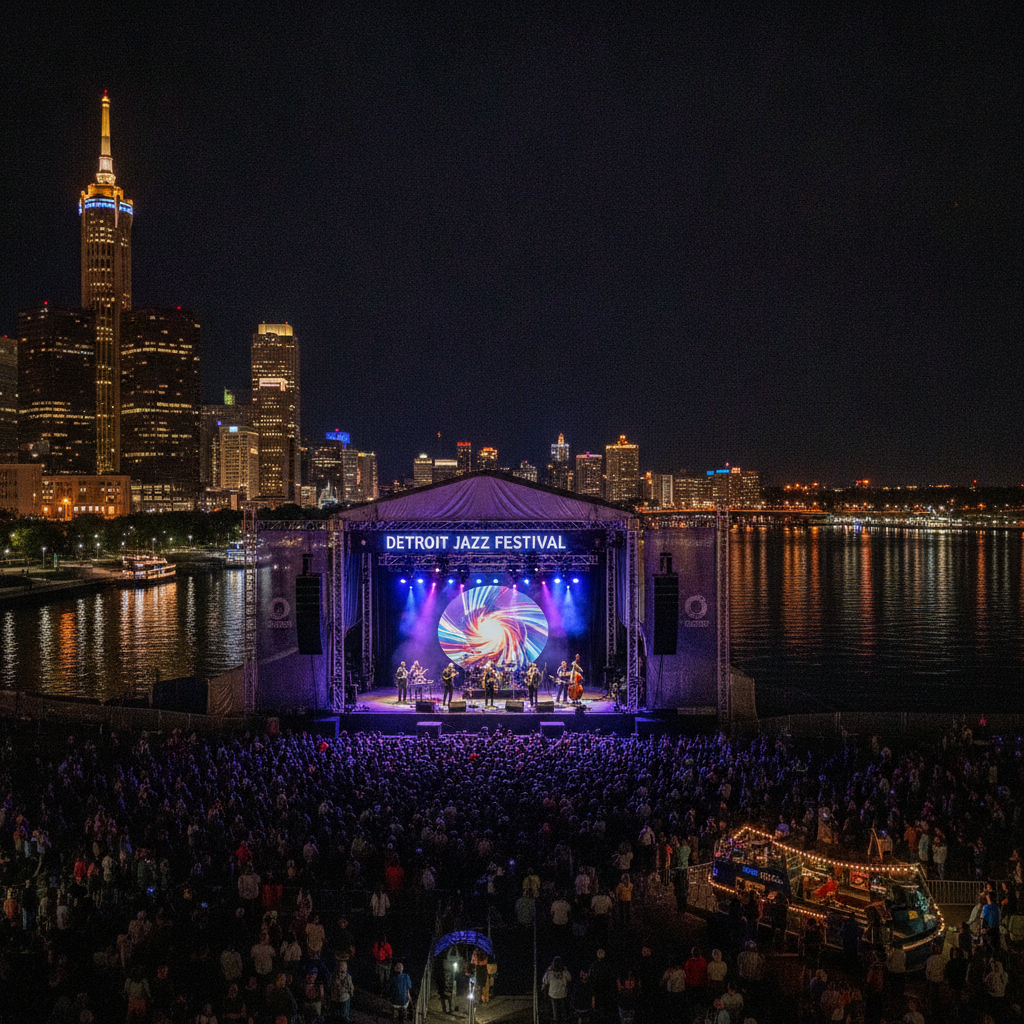
The Detroit Jazz Festival, held annually over Labor Day Weekend in Hart Plaza on the Detroit riverfront since 1980, is the largest free jazz festival in the world, presenting over 100 performances across four stages to approximately 1 million attendees over four days, with all performances entirely free to the public. The festival has presented legends including Herbie Hancock, Sonny Rollins, Wynton Marsalis, Marcus Belgrave, and emerging Detroit jazz talent. The Detroit Symphony Orchestra, based at Orchestra Hall since 1919, is one of the most respected American orchestras and is particularly noted for radio broadcasts and community engagement programs. The DSO was nearly closed by a musicians strike in 2011 but recovered to become one of the financially stronger orchestras in the country. The Detroit Film Theatre at the DIA presents international and independent cinema. ArtX Detroit, the Museum of Contemporary Art, and dozens of galleries in Midtown contribute to a substantive arts calendar.
Walk this route with audio
Stories play automatically as you reach each stop — no tapping needed.
Plus à Detroit
Detroit R4 : Comerica Park Tigers (grande roue, sculptures de tigres, Little Caesars Arena Red Wings Pistons, dernier championnat des Lions en 1957, Detroit City FC Hamtramck), Hamtramck (enclave polonaise de 1901 au premier conseil municipal entièrement musulman en 2021, la plus grande communauté yéménite des États-Unis, diversité bangladaise bosniaque), Ann Arbor et Université du Michigan (meilleure université publique, Big House de 107 601 places, la plus grande de l'hémisphère occidental, anciens élèves Gerald Ford Madonna, Foire d'art d'Ann Arbor 500 000 visiteurs), Chemin de fer clandestin de la rivière Detroit (30 000-100 000 traversées vers le Canada de 1817 à 1865, station de la Second Baptist Church de 1836, Tuskegee Airmen Museum), cuisine de Detroit (pizza Buddy's de 1946 dans un plat automobile rectangulaire, rivalité de hot-dogs American vs Lafayette Coney Island depuis 1914, communauté chaldéenne de 130 000, la plus grande en dehors de l'Irak), Pratique (DTW hub Delta, Q Line People Mover, Ann Arbor Museum Toledo Art Museum, consignes de sécurité)
Detroit : Maisons à pois en ruines, chaise de Lincoln et bus de Rosa Parks dans un même musée
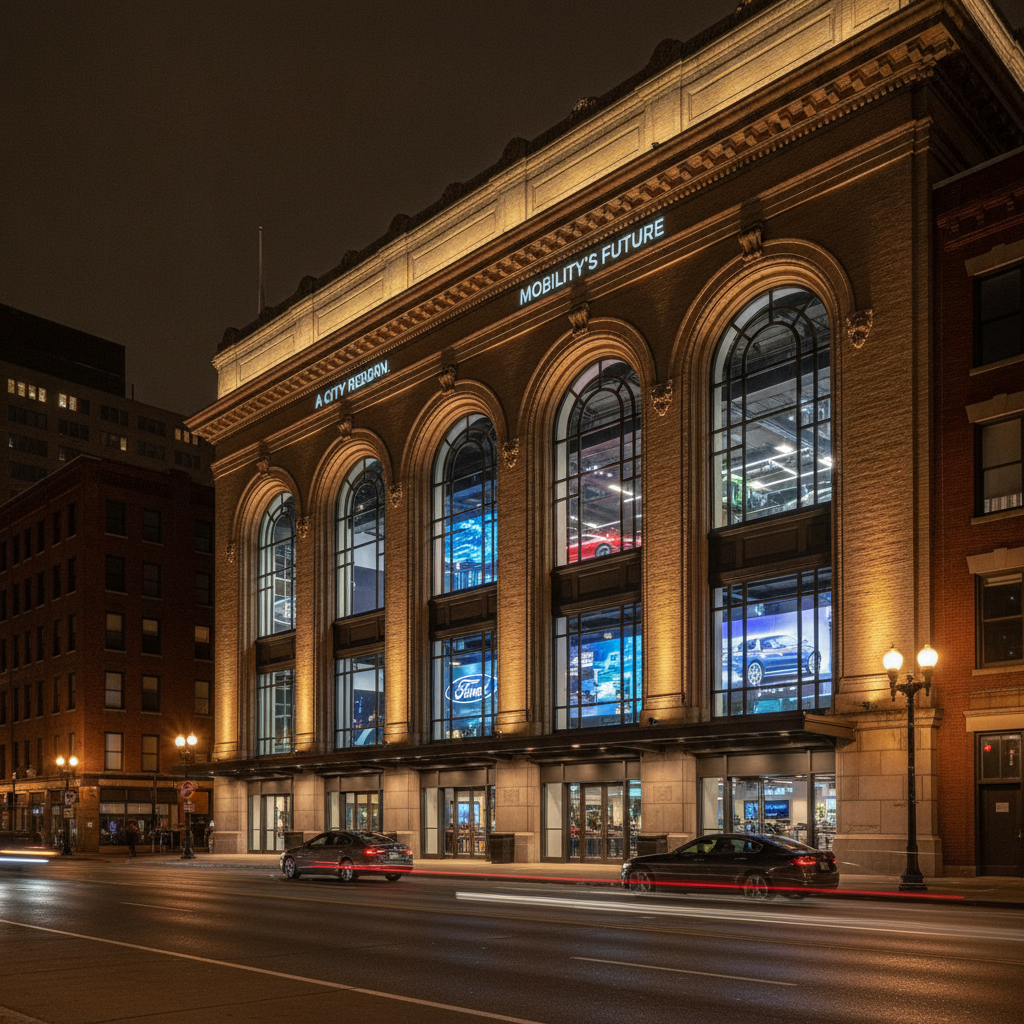
Detroit R3 : Ford Motor Company (fondation en 1903 pour 28 000 USD, 15 millions de Model T construits, chaîne de montage mobile en 1913 à Highland Park, Five Dollar Day en 1914 à 5 USD de salaire minimum), soulèvement de Détroit de 1967 (43 morts, 7 200 arrestations, 2 000 bâtiments incendiés, accélération de la fuite des Blancs, émeute raciale de 1943 34 morts), architecture de Détroit (Guardian Building 1929 Art Déco, Fisher Building le plus beau commercial selon l'AIA, Michigan Central Station 1913 restauration Ford 2023, phénomène de « ruin porn »), patrimoine afro-américain (Grande Migration 6 M, Black Bottom Paradise Valley démolis, Wright Museum le plus grand musée d'histoire afro-américaine au monde), Pratique (quartiers Downtown Midtown Corktown Eastern Market, Festival de Jazz 1 M Hart Plaza, Grand Prix Belle Isle, Pont Ambassador frontière la plus fréquentée d'Amérique du Nord), Futur de Détroit en matière de VE (GM zéro émission 2035, F-150 Lightning, Stellantis 14 marques, American Center for Mobility usine Willow Run B-24).
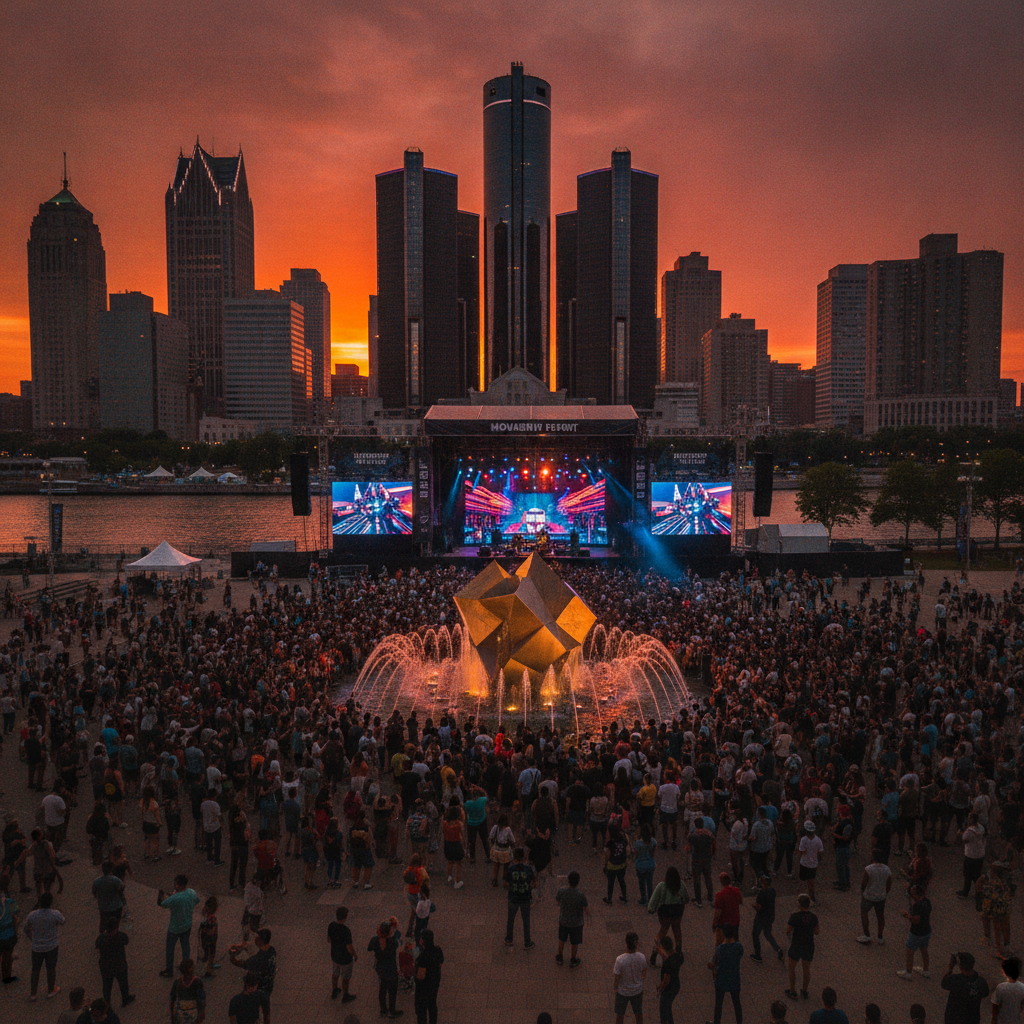
Detroit R2: Detroit techno (Belleville Three Juan Atkins Derrick May Kevin Saunderson, Model 500 No UFOs 1985 premier techno, Strings of Life 1987, Movement Festival 100.000 Hart Plaza), sports de Detroit (Tigers Ty Cobb .367 Hank Greenberg 58 HRs 1938, Red Wings 11 Stanley Cups, Pistons Bad Boys 1989-1990, Comerica Park Little Caesars Arena), Dearborn arabe-américain (490.000 la plus grande communauté arabe des États-Unis, Ford River Rouge 100.000 travailleurs 1929, visite de l'assemblage du F-150), Heidelberg Project (Tyree Guyton 1986, maisons à pois, 275.000 visiteurs, art de la décrépitude de Detroit), Grands Lacs (Michigan 4 Grands Lacs 5.265km de côtes, Sleeping Bear Dunes le plus beau d'Amérique 2011, Mackinac Island pas de voitures depuis 1898), renouveau de Detroit (Dan Gilbert USD 5B Bedrock, Mike Ilitch Little Caesars, Midtown Wayne State, Shinola Where American is Made)
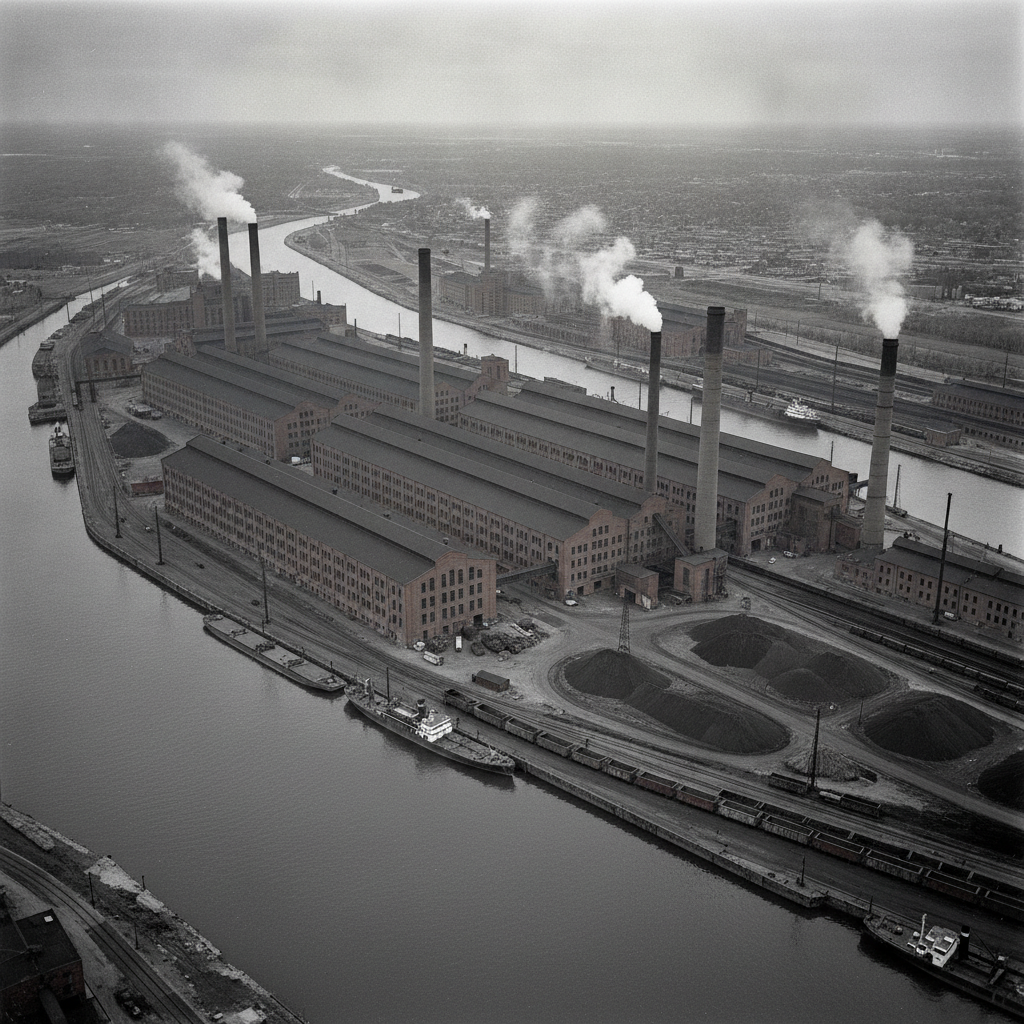
Détroit : le stade Big House de 107 000 places, la plus grande faillite de l'histoire des États-Unis et le berceau du punk