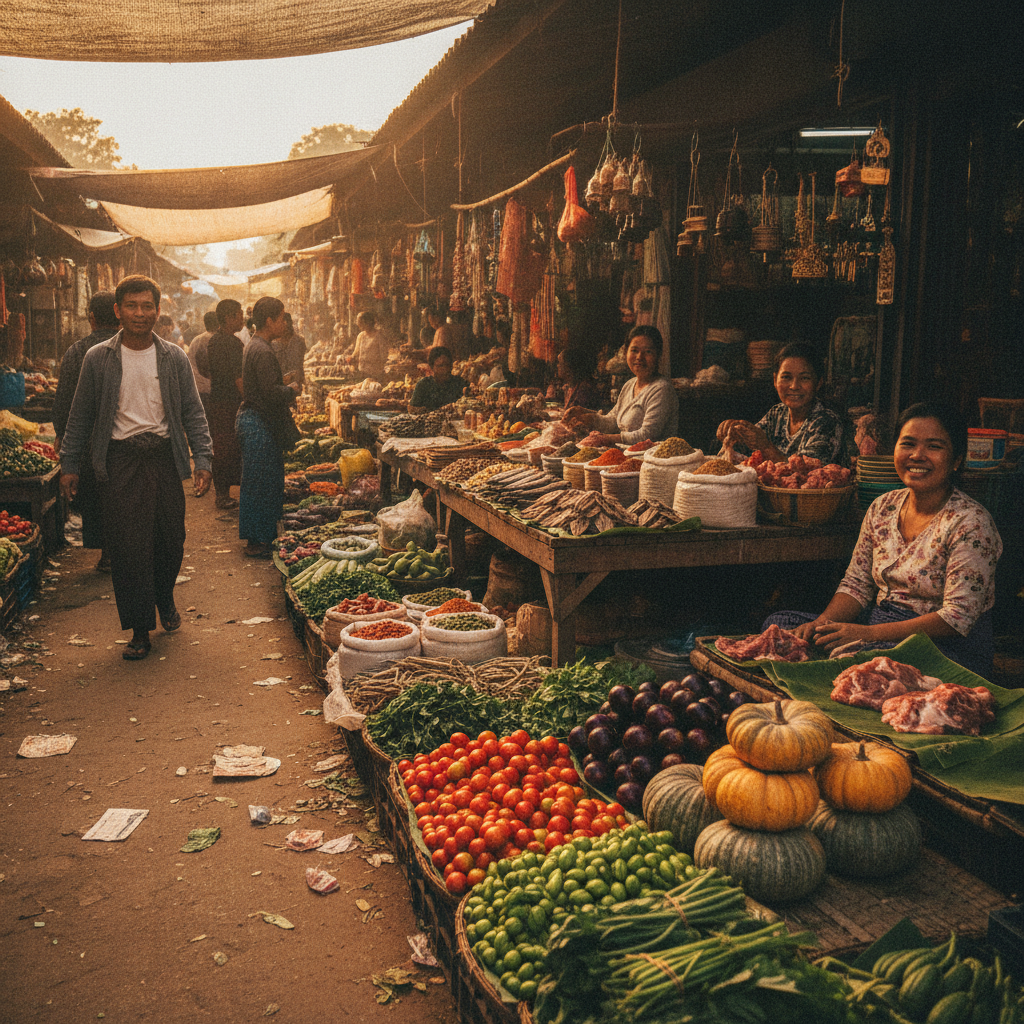
Bagan & Nyaung-U Food & Market Walk
Eat in Bagan — the Nyaung-U market, the Burmese traditional restaurants, and the evening food culture of the Bagan tourist area offer an introduction to the most distinctive national cuisine in Southeast Asia, with mohinga, lahpet, and the palm toddy of the Bagan region.
- 1
Nyaung-U Morning Market Food
The prepared food section of the Nyaung-U morning market (the vendors serving the pre-dawn workers with the Burmese breakfast staples — the mohinga fish noodle soup that is the national breakfast dish of Myanmar, the nan gyi thohk (thick rice noodle salad), and the samosa thohk (salad incorporating the crispy Indian-influenced pastries that are the Burmese street food legacy of the Indian immigrant community) is the most important single food encounter accessible from the Bagan tourist base. The mohinga (the catfish broth noodle soup with the banana trunk, lemongrass, and the crispy split pea fritters, served at the market stalls from 5am to 10am) is the most distinctively Burmese food experience accessible at the Nyaung-U market and is the recommended first food encounter for any visitor arriving in the Bagan area.
- 2
Lahpet Tea Leaf Salad
Lahpet thohk (fermented tea leaf salad — the most distinctively Burmese single dish and the social food most closely associated with the Burmese cultural identity) is available at the traditional Burmese restaurants in the Nyaung-U area — the fermented tea leaf (the pickled young tea leaves, fermented for months before preparation, providing the central sour-bitter-umami flavour of the dish) combined with the fried garlic, the sesame seeds, the peanuts, the dried shrimp, and the fresh tomato creates the most complex single flavour profile accessible in Myanmar cuisine. The lahpet's social significance (the tea leaf salad traditionally served as the gesture of hospitality, the substance offered when important guests arrive, and the dish eaten at all social and ceremonial occasions from weddings to peace negotiations) makes the experience of eating it the most culturally immersive single food encounter accessible in Myanmar.
- 3
Palm Toddy Culture Bagan
The fresh toddy (the unfermented sap of the toddy palm, collected twice daily by the palm climbers visible on the palms throughout the Bagan landscape) is the most distinctively local beverage accessible in the Bagan area — the fresh toddy (served directly from the collection pot, the sweet, slightly frothy sap at its most delicious in the first hours after collection before fermentation begins) is available at the market stalls near the palm-tapping operations in the villages between the temples. The fermented toddy (the sap left to ferment for 4-8 hours in the collection pot, developing the slight alcoholic content and the increasingly sour character of the fermented drink preferred by the Burmese male market clientele) and the palm sugar (the boiled concentrated sap transformed into the brown crystalline blocks used in all Burmese sweet preparations) complete the toddy palm's contribution to the Bagan food economy.
- 4
Shan Noodle Breakfast
The Shan-style noodle breakfast (Shan khao swe, the thin rice noodles served in the light chicken or pork broth with the turmeric-yellow oil, the peanut powder, and the fresh spring onion) available at the Nyaung-U restaurants opened by the Shan community traders who have settled in the central Myanmar commercial centres provides the most direct encounter with the Shan ethnic minority food culture accessible in the Bagan area — the Shan noodles (lighter and more delicately flavoured than the more robustly spiced Burmese national cuisine) are the most universally appreciated food by the international visitor population arriving in Bagan from the higher-spice-level regional cuisines of Thailand or India. The Shan noodle's national popularity (the dish eaten throughout Myanmar regardless of ethnic background) makes it the most consensually beloved food accessible at the Bagan morning market.
- 5
Traditional Myanmar Curry
The traditional Myanmar curry (the restaurant format most accessible to international visitors — the 'set meal' with the main protein curry (chicken, pork, or fish), the accompaniment dishes (the vegetable curry, the soup, the condiments), and the unlimited rice served in the traditional Burmese meal sharing format) at the local Burmese restaurants in the Nyaung-U area provides the most comprehensive single sitting survey of the Burmese culinary tradition accessible. The Myanmar curry's distinctive character (the heavy use of oil — specifically the rendering of the onion and garlic in the large quantity of vegetable oil that is the most characteristic single feature of the Burmese cooking technique — the emphasis on the dried spice rather than the fresh herb of the Thai or Vietnamese traditions, and the preference for the deeply savoury fermented shrimp paste condiment) distinguishes the Burmese culinary tradition from its Southeast Asian neighbours most clearly in the restaurant setting.
- 6
Bagan Sunset Dinner
The evening dinner culture in the Nyaung-U and Old Bagan restaurant areas (the tourist-oriented Burmese and international restaurants that have developed around the Bagan visitor economy, with the most atmospheric outdoor terrace operations providing the sunset view over the distant temple silhouettes) provides the most contextually complete version of the Bagan dining experience — the combination of the traditional Burmese menu (with the lahpet and the mohinga alongside the curry set meals), the outdoor terrace setting (the cooler evening temperature making outdoor dining comfortable from October through April), and the view of the temple plain at dusk (the last light visible on the furthest temple towers as the sky darkens) creates the most complete Bagan evening experience available.
Walk this route with audio
Stories play automatically as you reach each stop — no tapping needed.