Bagan Sunrise Over the Temples Walk
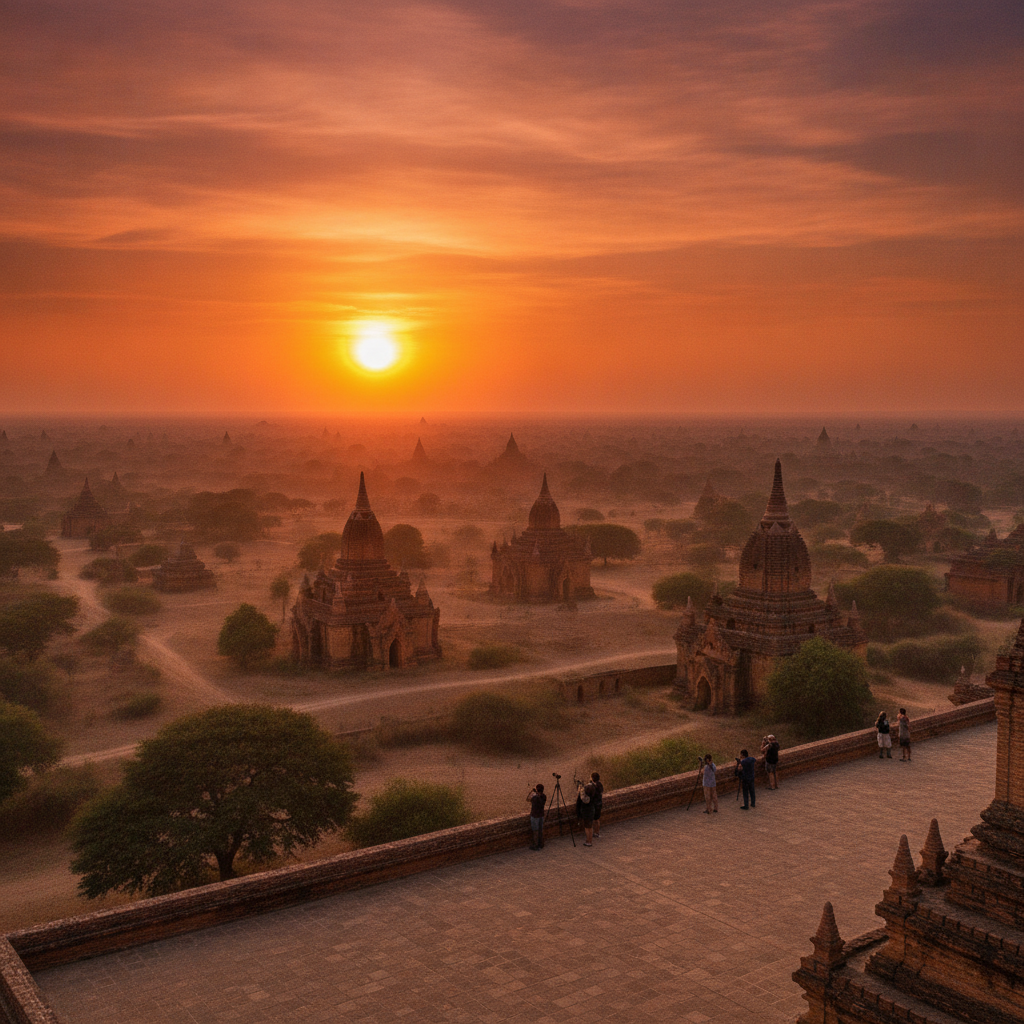
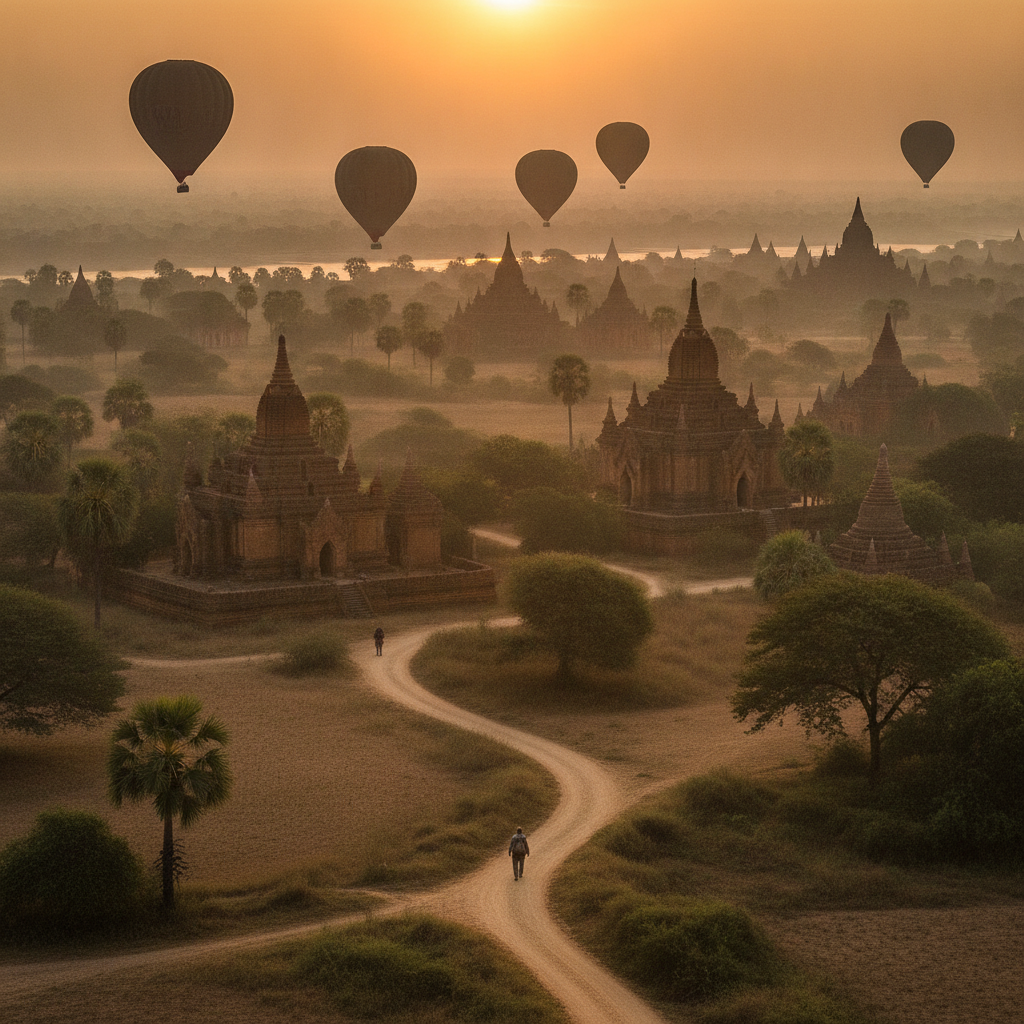
Watch sunrise at Bagan — the ancient plain of Bagan in central Myanmar contains over 2,000 surviving Buddhist temples, pagodas, and stupas from the 9th to 13th centuries, and the sunrise over this density of ancient monuments rising from the Ayeyarwady River plain is one of the most extraordinary natural spectacles on earth.
- 1
Shwesandaw Pagoda Sunrise
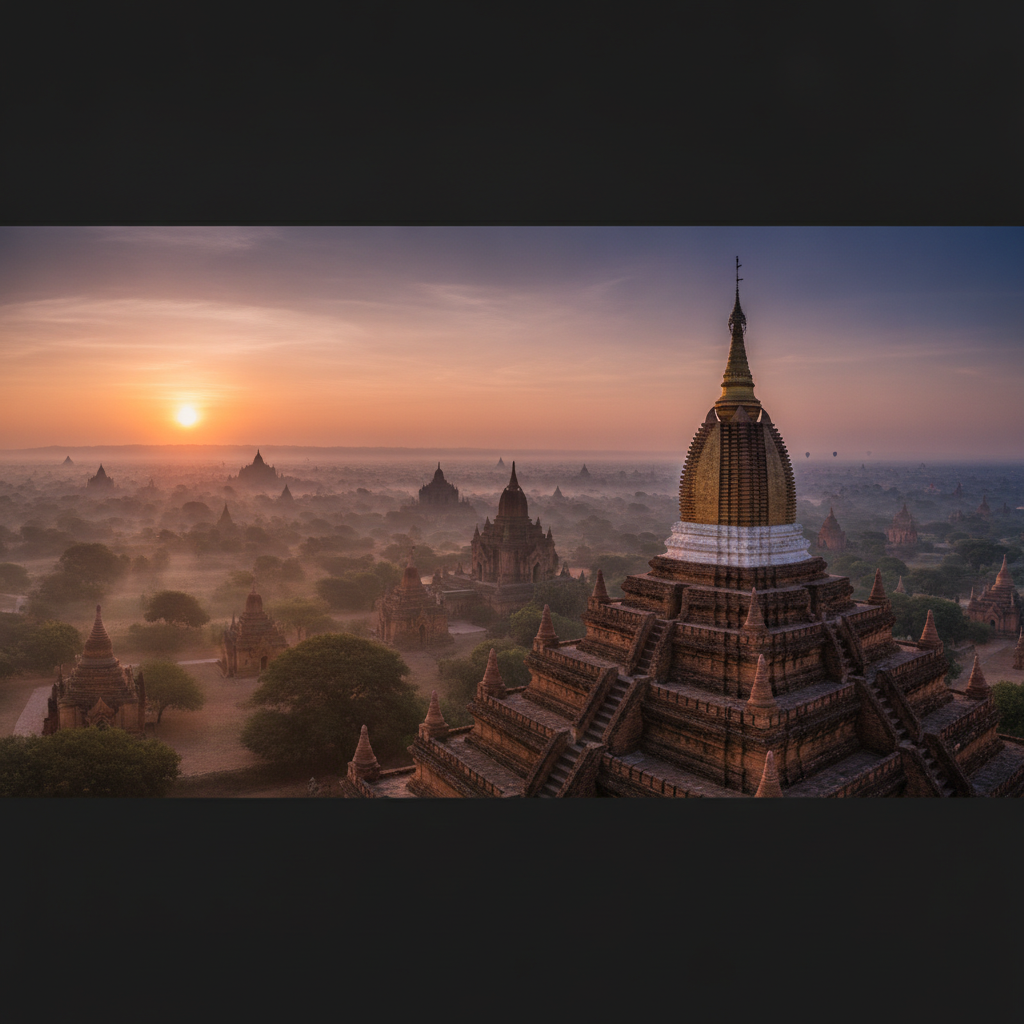
Shwesandaw Pagoda in the centre of the Bagan archaeological zone is the most famous sunrise viewpoint in Myanmar — the five-tiered cylindrical pagoda (built by King Anawrahta in 1057 CE to commemorate his conquest of Thaton and the acquisition of Theravada Buddhist texts from the Mon kingdom) rises 55 metres above the plain and was the traditional temple for sunrise observation until the authorities restricted climbing access to protect the fragile terracotta structure. The view from the Shwesandaw terrace at sunrise (hundreds of temple spires visible emerging from the morning mist and the Ayeyarwady River floodplain, the golden stupas catching the first light while the valley between the temples remains in shadow, and the balloon flights visible above the temple cluster) creates the most celebrated dawn panorama accessible anywhere in Southeast Asia.
- 2
Dhammayangyi Temple
Dhammayangyi Temple (the largest temple in Bagan, built by King Narathu in the 1160s and the most massive single Buddhist structure visible on the plain) is the most architecturally dramatic building accessible as a ground-level exploration — the temple's massive outer wall (the largest brick mass in Bagan, the outer ambulatory walkway running around the full perimeter providing the most impressive single interior space accessible in the archaeological zone), the distinctive double-row of arched windows on the exterior face, and the legendary story of King Narathu (the king who had his father and brother murdered to take the throne, then built the most massive temple in Bagan as expiation for his crimes) make it the most historically compelling single structure accessible on the plain. The inner passageways of Dhammayangyi (dark, sealed, and inaccessible in the innermost chambers due to a construction anomaly or deliberate sealing attributed to the king's assassination before completion) are the most atmospheric interior spaces accessible in Bagan.
- 3
Ananda Temple
Ananda Temple (built by King Kyanzittha around 1105 CE and considered the masterpiece of Mon architectural style in Bagan) is the most beautifully proportioned single temple accessible in the archaeological zone — the white-painted temple (repainted at each major festival, its gleaming surface contrasting with the terracotta of the older unrestored temples around it) with its distinctive Sikhara-style tower rising from the Greek cross floor plan creates the most immediately recognisable silhouette on the Bagan skyline. The temple's four standing Buddha images (each 9.5 metres tall, representing the four Buddhas of the current cosmic cycle, housed in the four axial shrines of the cross-plan interior) and the continuous corridor of glazed terracotta plaques (the Jataka tales illustrated in the green glazed tiles around the outer ambulatory) make Ananda the most iconographically complete single temple experience accessible in Bagan.
- 4
Hot Air Balloon Bagan
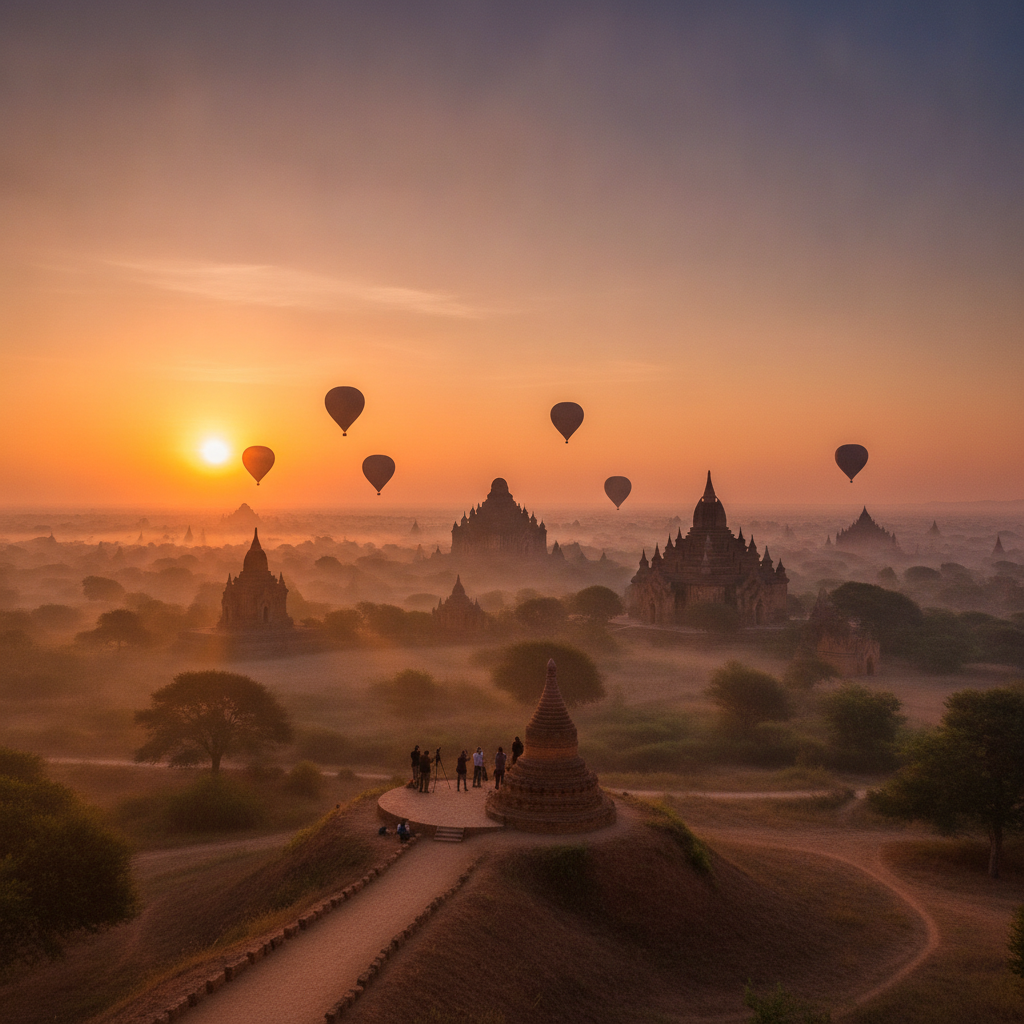
The hot air balloon flights over Bagan (departing from the balloon launch field near the archaeological zone in the pre-dawn and ascending over the temple plain as the sunrise illuminates the first ancient monuments from below) provide the most extraordinary aerial perspective accessible at any archaeological site in the world — the view from 300 metres above the Bagan plain (the 2,000+ temples visible simultaneously, the Ayeyarwady River gleaming in the background, and the morning mist filling the spaces between the monuments) is the most visually overwhelming single landscape experience accessible anywhere in Southeast Asia. The balloon flight's passage between the major temple clusters (the flight path carrying passengers above both the Old Bagan concentrated zone and the more dispersed temples of the Nyaung-U and Minnanthu areas) provides the most comprehensive spatial overview of the full Bagan archaeological zone.
- 5
Sulamani Temple
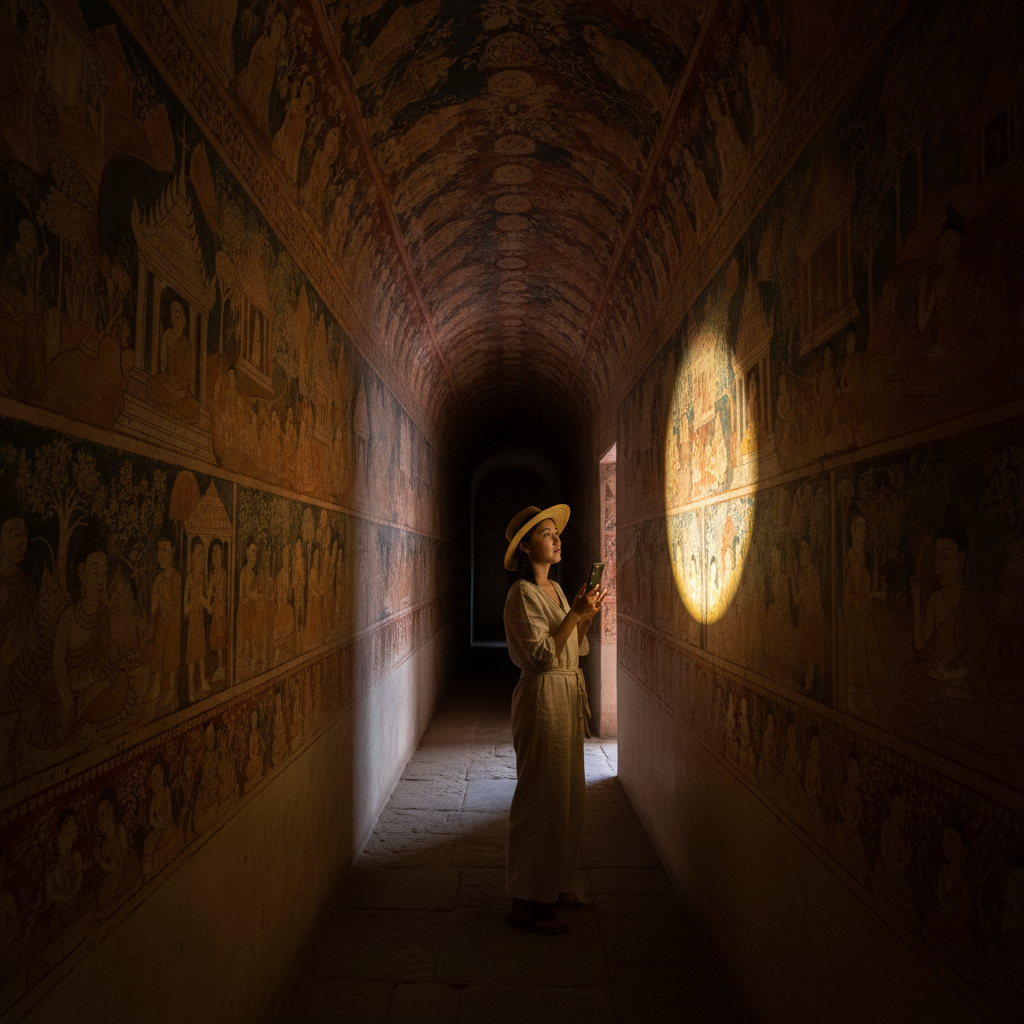
Sulamani Temple ('Crowning Jewel', built by King Narapatisithu in 1183 CE) is the most elegantly proportioned of the Bagan temples accessible to visitors — the two-storey temple (the lower storey's arched windows and the upper storey's smaller replica of the main structure creating a harmonious proportional relationship) is the most frequently cited example of the mature Bagan architectural style that developed in the late 12th century. The temple's frescoes (the original 12th-century paintings visible in the inner corridors, including the finest surviving examples of Bagan period mural painting in the upper storey) are the most historically significant paintings accessible in the archaeological zone, predating the better-known frescoes of Southeast Asian Buddhist art in Thailand and Cambodia by several centuries.
- 6
Ayeyarwady River View
The Ayeyarwady River (Irrawaddy) bank at Bagan (the western edge of the archaeological zone where the river provides the backdrop for the most atmospheric temple photographs — the sunset view of the temples with the river behind them, the river boat traffic visible on the water, and the Sagaing Hills visible across the river in the distant north) provides the most complete geographical context for understanding the Bagan civilisation — the city's position on the Ayeyarwady (the main navigation corridor connecting the Tibetan plateau to the Andaman Sea, providing the trade route that brought the wealth that financed the temple building programme of the Bagan kings) is the most directly visible expression of the geographical logic of the capital's location. The river bank sunset (the sun descending behind the hills on the river's western bank, the temples silhouetted against the orange sky, and the river reflecting the coloured light) is the most photographed single moment in the Bagan experience.
Walk this route with audio
Stories play automatically as you reach each stop — no tapping needed.