Bagan Pagoda Art & Fresco Walk
Study Bagan's Buddhist art — the interior frescoes, the terracotta plaques, the sculpted stucco, and the painted murals of the Bagan temples constitute the most significant surviving corpus of early Buddhist art in mainland Southeast Asia, spanning three centuries of artistic development from the 11th to 13th centuries.
- 1
Kyanzittha Umin Cave Temple
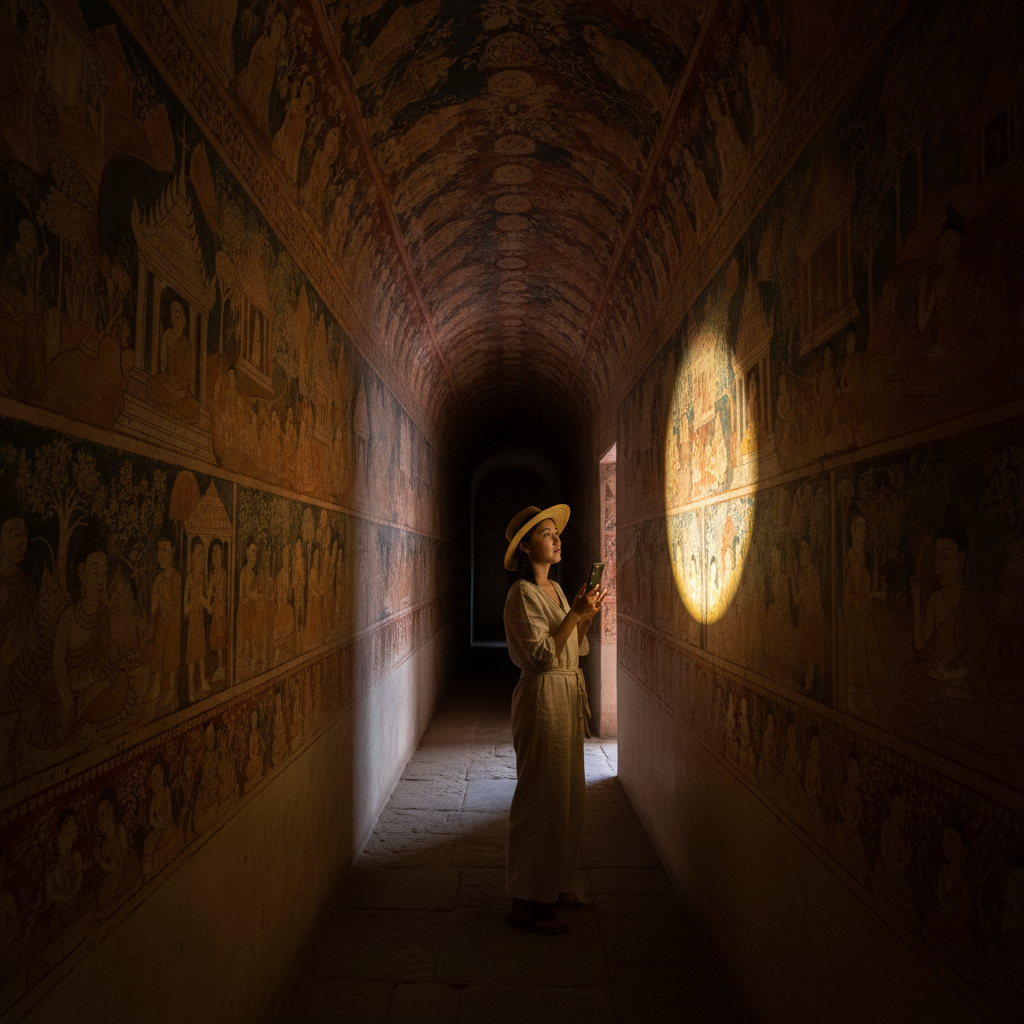
Kyanzittha Umin (Kyanzittha's Cave, built in the early 12th century) is the most atmospherically unique temple interior accessible in Bagan — the temple's long underground corridor (carved into the rock rather than built above ground, with the corridor's series of arched niches housing the various Buddha images and the Jataka narrative paintings in the characteristic early Bagan style) provides the most dramatic contrast with the open-air exterior of the other Bagan temples. The corridor's paintings (the original 12th-century murals in relatively good preservation, including the portraits identified as Mongol soldiers — the depictions of non-Burmese soldiers that are the most direct evidence of the Mongol invasion of Bagan in 1287 CE visible in the archaeological record) are the most historically specific artworks accessible in the Bagan zone.
- 2
Gubyaukgyi Temple Frescoes
Gubyaukgyi temple (My-in-ka-ba, built in the early 12th century by Prince Rajakumar, son of King Kyanzittha) is the most important single site for the study of early Bagan Buddhist painting — the temple's interior frescoes (the Jataka tales painted in the continuous narrative bands around the corridor walls) are the most complete surviving example of the Mon-Pyu synthesis art style of the early Bagan period. The painting's distinctive colour palette (the muted earth tones of the mineral pigments used in the 12th-century preparation — the terracotta red, the ochre yellow, and the blue-black made from manganese) and the narrative organisation of the Jataka tales (the 550 birth stories of the Buddha arranged in the sequential bands that the worshipper follows in circumambulation of the inner corridor) create the most accessible introduction to the Bagan fresco tradition available in the archaeological zone.
- 3
Thatbyinnyu Temple Height
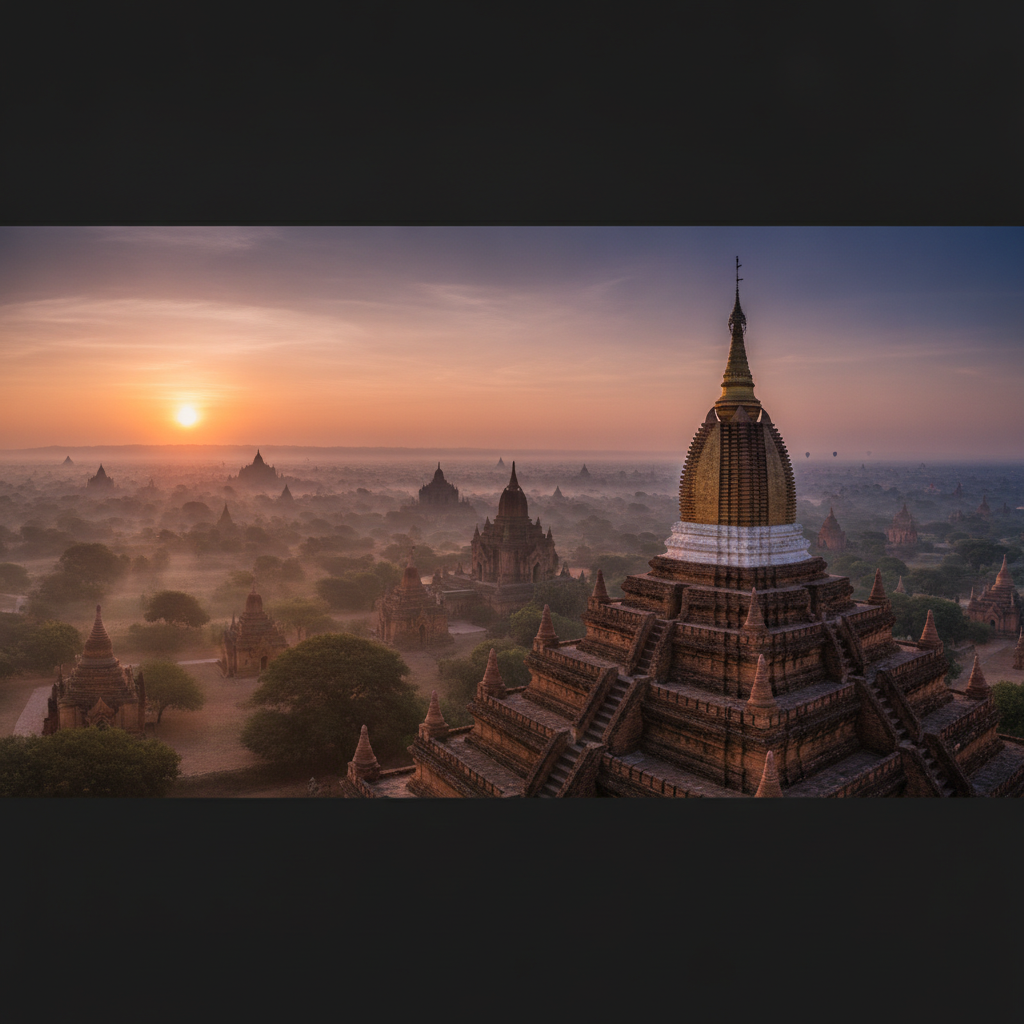
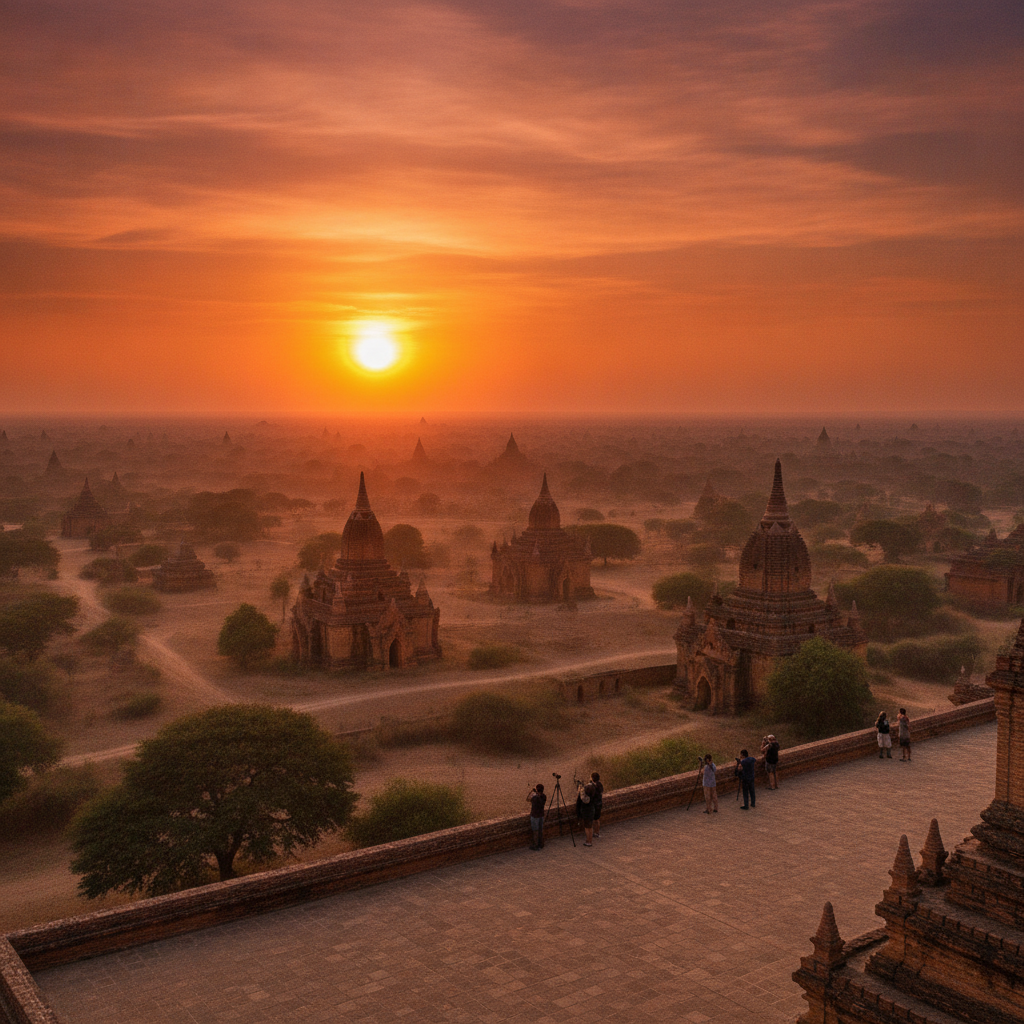
Thatbyinnyu Temple (built by King Alaungsithu in the mid-12th century and the tallest temple in Bagan at 61 metres) is the most vertically dramatic single temple accessible in the archaeological zone — the two-storey structure (the ground level housing the main sanctuary and the upper level accessible by internal staircase housing a smaller shrine at height) represents the most technically ambitious single structure of the Bagan building programme. The temple's visual significance in the Bagan skyline (the tallest tower visible from the surrounding plain in all directions) makes Thatbyinnyu the primary reference point for orientation in the archaeological zone, and its visibility from the major viewpoints (the Shwesandaw sunset view includes Thatbyinnyu in the foreground) makes it the temple most frequently included in the panoramic photographs of the Bagan plain.
- 4
Bagan Archaeological Museum
The Bagan Archaeological Museum (in the Old Bagan area, housing the most important collection of artefacts from the archaeological zone that are no longer kept in the temples) provides the most systematic survey of the Bagan artistic tradition accessible in a single indoor location — the museum's collection (the original sandstone inscriptions that document the Bagan kings' donations of land and labour to the temple building programme, the bronze Buddha images removed from the temples for preservation, and the examples of the Bagan period lacquerware, terracotta votive tablets, and architectural elements) is the most academically comprehensive single-site survey of the Bagan civilisation's material culture. The Myazedi stone inscription (the quadrilingual stone pillar documenting the same text in Pyu, Mon, Burmese, and Pali, representing the most important single document of the linguistic history of early Burma) is the most significant single object accessible in the museum collection.
- 5
Stucco Temple Decoration
The decorative stucco work visible on the exterior surfaces of the older Bagan temples (the carved plaster ornamentation applied to the temple towers, the pediment decoration over the doorways, and the figure sculpture in the niches of the temple walls) represents the most three-dimensional artistic medium accessible in the Bagan zone — the stucco tradition (the use of the lime plaster mixed with the organic binders of the tamarind seed and the sticky rice to create the fast-setting but durable decorative surface applied to the brick structure) has been heavily eroded by the centuries of monsoon rain and the restoration interventions of the colonial and post-independence periods, but the finest surviving examples (visible on the Dhammayangyi exterior and on several of the smaller secondary temples in the Old Bagan cluster) document a quality of sculptural work comparable to the finest available in the contemporary Indian artistic tradition from which the Bagan sculptors drew their inspiration.
- 6
Nan Paya Temple
Nan Paya Temple (in the My-in-ka-ba village area, traditionally identified as the palace or prison of the Mon king Manuha captured by Anawrahta in 1057 CE) is the most historically evocative of the smaller Bagan temples accessible on the cycling circuit — the temple's interior stone screen (the carved stone perforated panel in the sanctum, with the four-faced Brahma figure carved in the stone that provides the light filtering through the screen as the most dramatically lit interior space in Bagan) and the tradition connecting the building to the captured Mon king create the most narrative-rich temple experience accessible in the village area. The Nan Paya stone construction (unlike the majority of Bagan temples which use brick, Nan Paya uses sandstone for the interior elements) is the most unusual building material accessible in the archaeological zone.
Walk this route with audio
Stories play automatically as you reach each stop — no tapping needed.