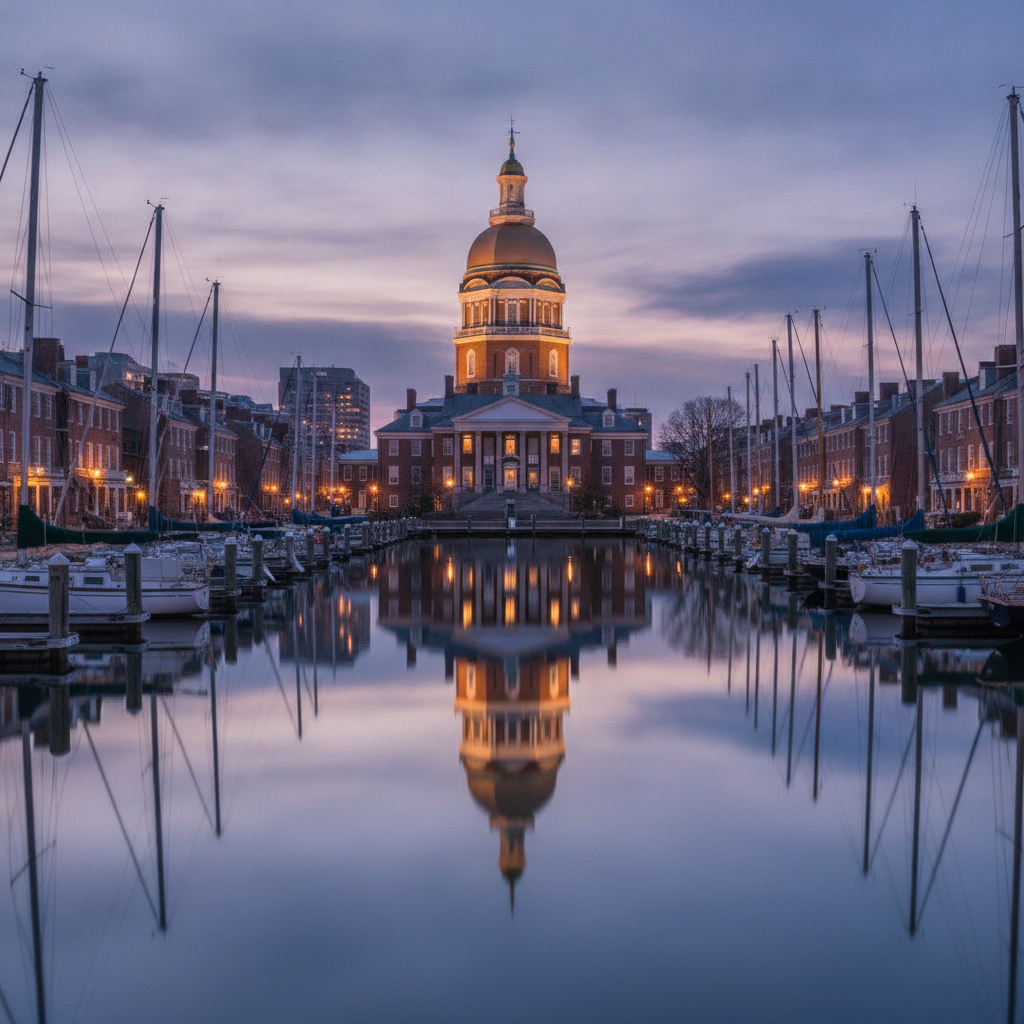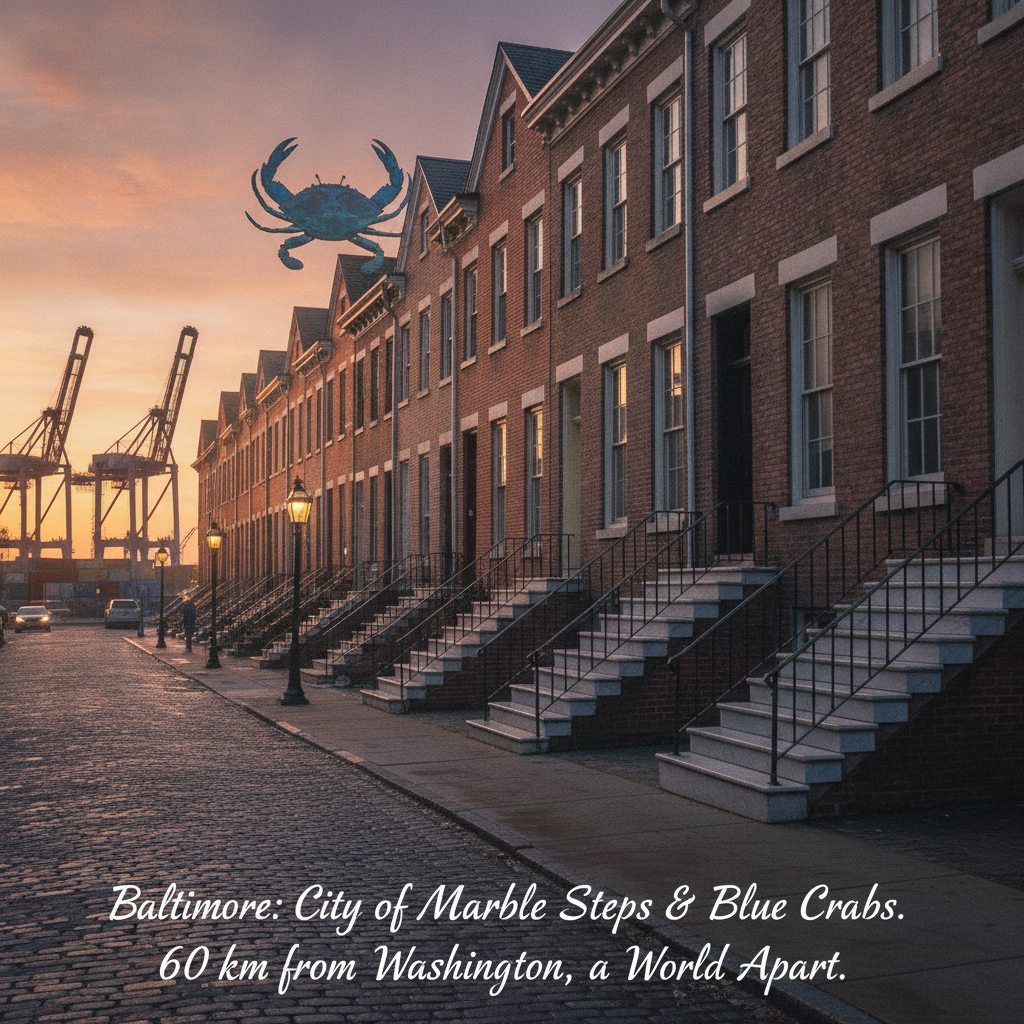
Baltimore R4: Rowhouse culture (70,000 brick rowhouses, white marble Cockeysville stoop scrubbing Saturday tradition, Bolton Hill Patterson Park William Patterson Jerome Bonaparte, Johns Hopkins Hospital 1889 modern surgery nursing), Baltimore music (Cab Calloway Hi-De-Ho, Billie Holiday raised in Baltimore Pigtown, Eubie Blake ragtime, Frank Zappa born 1940, 8x10 Club Federal Hill), Port of Baltimore (largest US auto import port, Baltimore Clipper slave trade, Key Bridge collapse March 26 2024 Dali container ship 6 workers killed largest recovery operation US), Civil rights (Thurgood Marshall 32 Supreme Court cases 29 wins Brown v Board 1954 first Black Justice 1967, Frederick Douglass HS Calloway Holiday Marshall, Morgan State HBCU 1867), Baltimore in film (John Waters Pink Flamingos Hairspray Serial Mom, The Wire filmed on location, Barry Levinson Diner 1982 Rain Man 1988, Sleepless in Seattle), Practical (median home USD 180-200K vs DC USD 600K, MARC train to DC 40min, Acela to NYC 2.5hr, BWI Southwest hub Key Bridge replacement USD 60M 2028)
Baltimore R4: rowhouse culture (70,000 brick rowhouses largest concentration US, Cockeysville marble stoops scrubbed Saturday tradition 150 years, Patterson Park pagoda 1890 William Patterson Napoleon brother-in-law, Johns Hopkins Hospital 1889 antisepsis nursing residency), music (Cab Calloway Frederick Douglass HS Hi-De-Ho, Billie Holiday raised Baltimore Pigtown most influential jazz vocalist, Eubie Blake ragtime performed until 99, Frank Zappa born Baltimore December 21 1940, 8x10 Federal Hill indie venue), Port of Baltimore (largest US auto import 750,000 vehicles annually, Baltimore Clipper slave trade West Africa post-1808, Key Bridge collapse March 26 2024 Dali container ship 6 workers killed largest US bridge recovery), civil rights (Thurgood Marshall 32 SCOTUS cases 29 wins, Brown v Board 1954 unanimous, first Black Supreme Court Justice 1967, Frederick Douglass HS produced Calloway Holiday Marshall, Morgan State 1867), film (John Waters Hairspray 1988 Broadway 2002, The Wire filmed on actual Baltimore streets, Barry Levinson Diner 1982 Rain Man 1988 Oscar Best Picture, Sleepless in Seattle), practical (median home USD 180-200K vs DC USD 600K, MARC 40min to DC, Acela NYC 2.5hr, BWI MARC 15min, Key Bridge replacement USD 60M expected 2028).
- 1
Baltimore's Rowhouse Culture and Architecture
Baltimore rowhouse architecture: Baltimore has the largest concentration of 19th-century brick rowhouses of any city in the United States, with approximately 70,000 rowhouses (sometimes called shotgun houses in the Baltimore vernacular) covering the residential landscape of the city. The Baltimore rowhouse typology: the classic Baltimore rowhouse (a 2-3 story brick townhouse built flush to the sidewalk with a marble front step) is distinguished by the white marble front stoop — the stoops are made from the marble quarried in the Cockeysville area of Baltimore County, making Baltimore the largest consumer of Cockeysville marble in the world, and the stoops are traditionally scrubbed clean by residents on Saturday mornings (the marble stoop scrubbing tradition has been a Baltimore social and cultural ritual for over 150 years). The Baltimore rowhouse neighborhoods: the finest rowhouse neighborhoods in Baltimore include Bolton Hill (the Victorian townhouse neighborhood built 1860-1880, the model for the ideal Baltimore residential neighborhood), Reservoir Hill (the historic African American upper-middle-class neighborhood), and Hampden (the working-class rowhouse neighborhood on the northern edge of the city). The Patterson Park neighborhood (east of Fells Point, centered on Patterson Park): the park was donated to Baltimore by William Patterson (the father-in-law of Jerome Bonaparte, Napoleon's youngest brother, who married Elizabeth Patterson of Baltimore in 1803 — the Bonapartes attempted to annul the marriage, which became an international cause celebre) and his Greek Revival Chinese pagoda (built 1890) is the most photographed structure in Patterson Park. Johns Hopkins Hospital (at 600 N Wolfe Street, East Baltimore): the most influential hospital in American medical history, opened 1889, where modern surgical antisepsis, nursing education, and resident physician training programs were established.
- 2
Baltimore Music Scene - From Jazz to Charmed City Sounds
Baltimore music heritage: Baltimore has produced a remarkable concentration of musical talent across multiple genres, reflecting its position between the African American musical cultures of Washington DC and the mid-Atlantic region. Cab Calloway (born December 25, 1907, Rochester, New York; raised in Baltimore): the jazz bandleader and showman (Hi-De-Ho) who grew up in Baltimore and attended Frederick Douglass High School (the historically Black high school in West Baltimore that produced an extraordinary concentration of musical talent, including Cab Calloway, Billie Holiday, and Thurgood Marshall). Billie Holiday (born Eleanora Fagan, April 7, 1915, Philadelphia; raised in Baltimore from infancy): the most influential jazz and blues vocalist in the history of American music, whose childhood in Baltimore (in the African American community of Pigtown and the brothels of the Falls Road area) profoundly shaped her artistic voice. The Billie Holiday statue (at the corner of Pennsylvania Avenue and Lafayette Avenue, Upton neighborhood): the bronze sculpture of Holiday singing into a microphone, installed 1985, in the heart of the neighborhood where she performed as a teenager. Eubie Blake (born Baltimore 1887): the ragtime and jazz pianist and composer who performed until age 99 and remains one of the most important figures in the history of American popular music. Frank Zappa (born December 21, 1940, Baltimore): the most iconoclastic rock and experimental music composer of his era, raised in the Baltimore suburbs before his family moved to California. The 8x10 Club (at 10 E Cross Street, Federal Hill): the most important live music venue in Baltimore for indie and alternative music, hosting national touring acts in an intimate 500-person capacity.
- 3
Baltimore Harbor and the Port of Baltimore
The Port of Baltimore (the deep-water port complex on the Patapsco River and Chesapeake Bay): the largest automobile import port in the United States and one of the most important cargo ports on the East Coast, with approximately 9.3 million tons of general cargo and 750,000 vehicles processed annually. Baltimore's maritime history: Baltimore was one of the four great colonial American ports (along with Boston, New York, and Philadelphia), specializing in the tobacco trade with Britain and the re-export of Caribbean sugar and coffee to Europe. The Baltimore clipper ships: from the 1790s to the 1840s, Baltimore's shipyards in Fells Point produced the Baltimore Clipper — the sleek, fast schooner design that made Baltimore the center of American privateer and coastal trade shipping, and which was also the vessel of choice for the illegal slave trade after 1808 (the speed of the Baltimore Clipper allowed slavers to evade British Royal Navy anti-slave-trade patrols on the coast of West Africa). Key Bridge collapse (March 26, 2024): the Francis Scott Key Bridge (completed 1977), spanning the Patapsco River mouth near Fort McHenry, collapsed when the container ship Dali (operated by Maersk, registered in Singapore) struck one of the bridge support columns after losing power and propulsion, killing 6 construction workers who were filling potholes on the bridge deck at 1:28 AM. The collapse temporarily closed the Port of Baltimore (the busiest single auto port in the United States), causing significant economic disruption, and triggered the largest bridge recovery operation in US history.
- 4
The National Great Blacks in Wax and Civil Rights Heritage
Baltimore civil rights heritage: Baltimore was one of the most significant battlegrounds of the American civil rights movement in the Upper South, with a long history of both formal and informal racial segregation despite Maryland being a border state (never formally a Confederate state, though deeply divided during the Civil War). Thurgood Marshall (born July 2, 1908, Baltimore; died January 24, 1993): the Baltimore lawyer who argued 32 cases before the United States Supreme Court (winning 29, the most successful Supreme Court record of any lawyer in American history), most importantly Brown v. Board of Education (1954, the unanimous Supreme Court decision that declared racial segregation in public schools unconstitutional, overturning the Plessy v. Ferguson separate but equal doctrine of 1896). Marshall attended Frederick Douglass High School in Baltimore (the historically Black high school whose alumni include Cab Calloway, Billie Holiday, and Thurgood Marshall) and was denied admission to the University of Maryland Law School because of his race (he later won a case forcing the University of Maryland to admit Black students). Thurgood Marshall was appointed the first African American Justice of the United States Supreme Court by President Lyndon Johnson in 1967. The Thurgood Marshall statue (at Lawyers Mall, State Circle, Annapolis, Maryland): the bronze statue of Marshall in front of the Maryland State House where he practiced law. The Morgan State University (at 1700 E Cold Spring Lane, Baltimore, founded 1867 as the Centenary Biblical Institute): the most important Historically Black University in Maryland, consistently ranked among the top HBCUs in the United States, with a strong engineering and architecture program.
- 5
Baltimore in Film and Television
Baltimore in pop culture: Baltimore has been the setting for an extraordinary number of important American film and television productions, reflecting its dramatic geography (the row houses, the harbor, the industrial infrastructure, and the urban neighborhoods), its complex social dynamics, and the presence of a significant filmmaking community. John Waters and Baltimore film: John Waters made all of his films in Baltimore, using the city's working-class neighborhoods, drag culture, and civic quirks as the raw material for his art. The most important Waters films set in Baltimore: Pink Flamingos (1972, filmed in Towson and the surrounding suburbs), Hairspray (1988, set in 1962 Baltimore during the civil rights era, capturing the integration of a TV dance show, remade as a Broadway musical in 2002 and again as a film musical in 2007), and Serial Mom (1994, filmed in Lutherville). The Wire locations: the Wire was filmed almost entirely on location in Baltimore, using the actual streets, row houses, and public housing of East and West Baltimore, with the police headquarters scenes filmed at the actual Baltimore Police Department headquarters. Films set in Baltimore: Sleepless in Seattle (1993, the famous meeting at the top of the Empire State Building is set up in Baltimore), The Manchurian Candidate (1962), and Twelve Monkeys (1995, directed by Terry Gilliam). Barry Levinson (born April 6, 1942, Baltimore): the Baltimore-born director of Diner (1982, set in 1959 Baltimore and considered one of the defining American coming-of-age films), Tin Men (1987, set in Baltimore), Avalon (1990, the immigrant Baltimore story), and Rain Man (1988, Academy Award Best Picture 1988).
- 6
Baltimore Practical Guide - Cost of Living and Transportation
Baltimore practical extended guide: Baltimore offers one of the best combinations of urban culture and affordability of any major city on the US East Coast, with cultural institutions of world class (the Walters Art Museum, the Baltimore Museum of Art, the B&O Railroad Museum), a vibrant food scene (blue crabs, pit beef, Lexington Market), and proximity to Washington DC (60 km, 40 minutes by MARC train) at dramatically lower costs. Baltimore housing: median home prices in Baltimore city are approximately USD 180,000-200,000 (compared to USD 600,000+ in Washington DC and USD 700,000+ in Boston), making Baltimore one of the most affordable major coastal US cities. The MARC Penn Line (the Maryland Area Regional Commuter train): runs from Baltimore Penn Station to Washington Union Station in approximately 40 minutes, with trains every 30-60 minutes during peak hours, making Baltimore a practical residential base for Washington DC workers who cannot afford DC housing prices. The Amtrak Acela and Northeast Regional at Baltimore Penn Station: direct connections to Philadelphia (45 minutes by Acela), New York Penn Station (2.5 hours by Acela), and Washington DC (35 minutes by Acela). Baltimore-Washington International Airport (BWI): 16 km south of downtown Baltimore, the most convenient airport for both Baltimore and southern DC suburbs, with the MARC rail connection to Baltimore Penn Station (15 minutes) and Washington Union Station (40 minutes from BWI Airport Station). The Francis Scott Key Bridge replacement: following the March 2024 collapse, the US government committed USD 60 million for the replacement bridge planning, expected to be completed by 2028.
Walk this route with audio
Stories play automatically as you reach each stop — no tapping needed.
More in baltimore
Baltimore: Pope of Trash Homeland, Free Double Warhol Museum and the Freeway That Never Got Built
Baltimore: Largest Matisse Collection in the World, Poe Toaster Cognac and the 1782 Crab Market
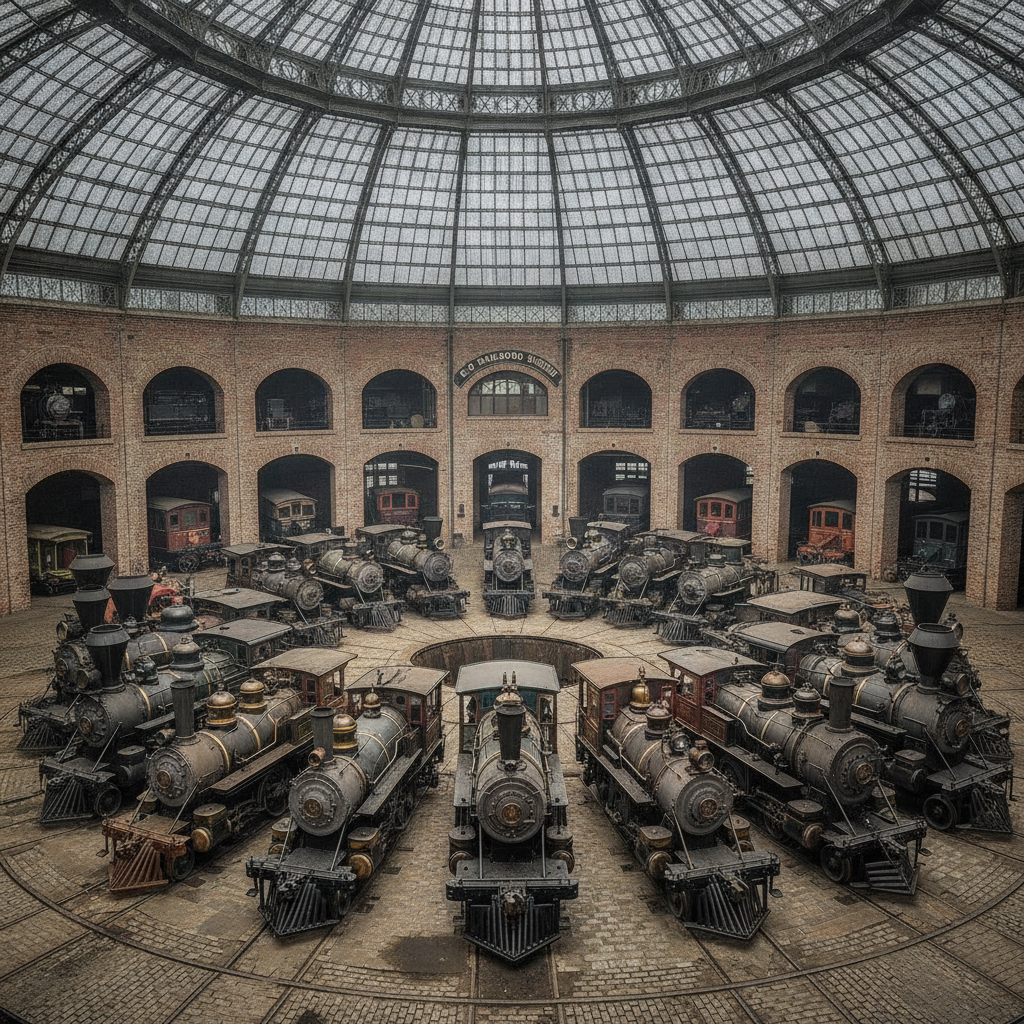
Baltimore R3-R4: B&O Railroad Museum (1827 first common-carrier US railroad, 1884 roundhouse 22-sided largest early railroad collection, Tom Thumb 1830 replica, Lincoln Baltimore Plot 1861), Space Telescope Science Institute (Hubble 1990 James Webb 2022, Applied Physics Lab GPS TIROS-1 New Horizons Pluto 2015), H.L. Mencken (Baltimore Sun 1906-1948 greatest American journalist, The American Language 1919 never out of print, John Waters Pope of Trash Hairspray 1988), African American heritage (MICA oldest degree-granting art college 1826, Great Blacks in Wax Museum, Reginald Lewis first Black billionaire USD 985M buyout 1987, Marin Alsop first woman major US orchestra music director), Chesapeake Bay (largest US estuary 320km, 348 fish species ecological decline restoration USD 6B, Assateague wild ponies 300 years), Practical (BWI Southwest hub MARC train to DC 40min, Preakness Stakes Pimlico May second oldest US track 1870, blue crab season July-September, Artscape largest free Maryland arts festival July)
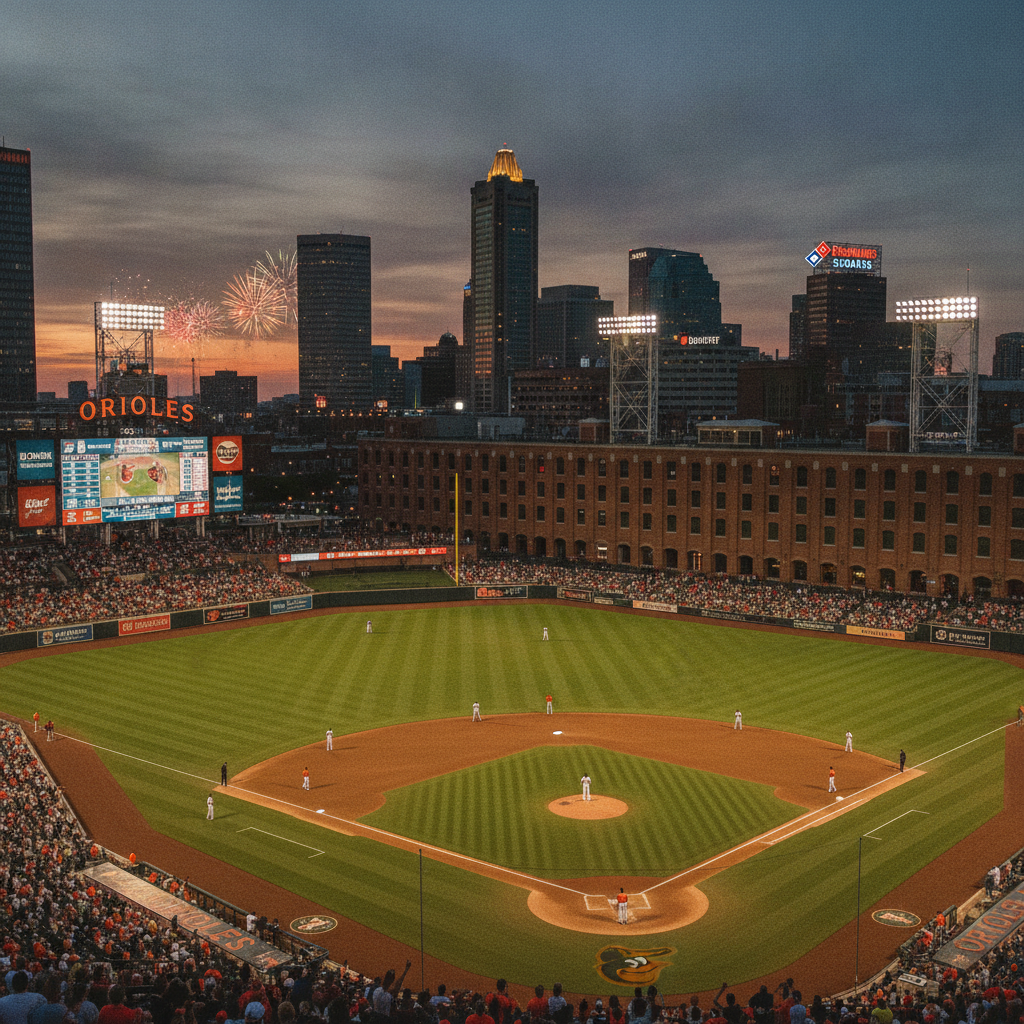
Baltimore: The Ballpark That Changed Baseball, Frederick Douglass Escapes in a Sailor Suit and the First Catholic Cathedral in the US
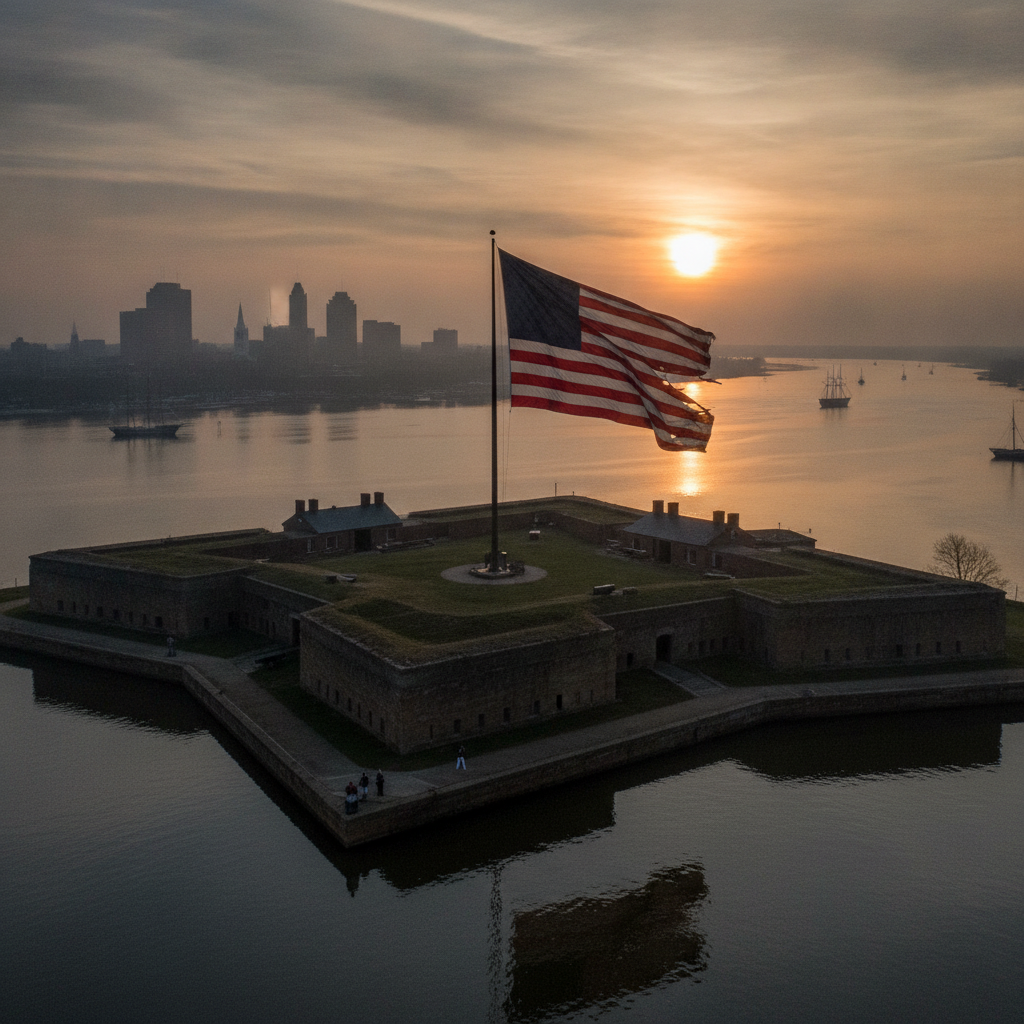
Baltimore: Inner Harbor (National Aquarium, USS Constellation last sail warship, USS Taney Pearl Harbor survivor, American Visionary Art Museum), Fort McHenry (September 13-14 1814 25hr British bombardment, Francis Scott Key aboard British ship writes Star-Spangled Banner, 30x42ft Pickersgill flag now Smithsonian), Chesapeake Bay blue crabs (Old Bay Seasoning Gustav Brunn 1939, Maryland crab cake purist lumped meat, LP Steamers, Faidley Seafood Lexington Market 1782), Edgar Allan Poe (died Baltimore October 7 1849 mysterious circumstances, Westminster Hall grave, Poe Toaster 70 years roses cognac, Baltimore Ravens named after The Raven 1845), The Wire (greatest US TV drama David Simon Ed Burns, Bethlehem Steel Sparrows Point 35,000 workers closed 2012, 2015 Freddie Gray uprising), Practical (Johns Hopkins first US research university 1876, Flexner Report reformed US medical education, Fells Point Federal Hill Canton Mount Vernon, MARC train to DC, BWI airport)