Bukittinggi Jam Gadang & Old Town Walk
Walk Bukittinggi's historic centre around the iconic Jam Gadang clock tower — the cool highland city at 930m in the Minangkabau heartland of West Sumatra was a Dutch colonial hill station and is now the cultural capital of the Minang people, with traditional markets, colonial buildings, and the dramatic Sianok Canyon at its edge.
- 1
Jam Gadang Clock Tower
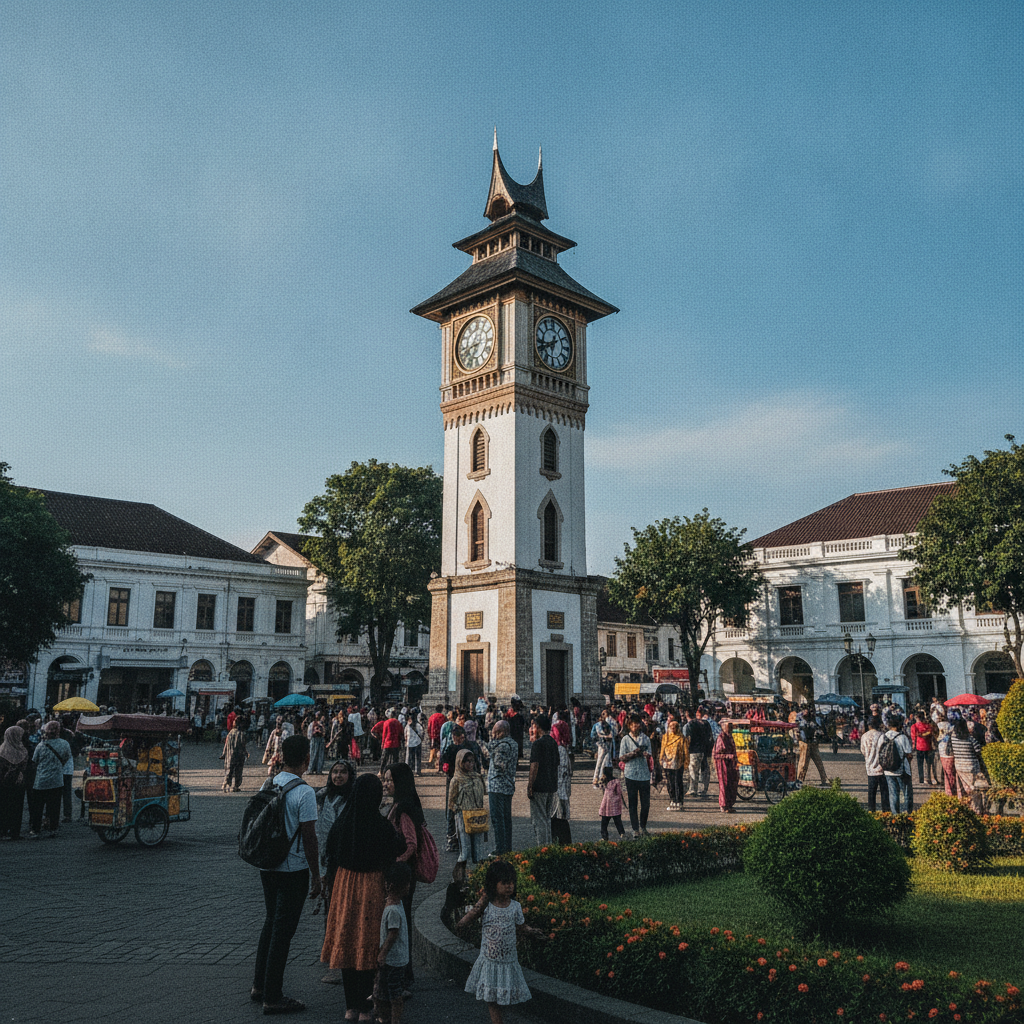
Jam Gadang (Big Clock) is Bukittinggi's most iconic landmark — the colonial clock tower built in 1926 as a gift from the Dutch Queen to the local regent has a distinctive architecture that has been modified three times: first with a round top (Dutch era), then a Japanese pagoda top (Japanese occupation), and finally the curved Minangkabau roof (post-independence) that it wears today. The clock tower standing in the city square surrounded by market activity has become the symbol of Bukittinggi and the point from which the city's commercial life radiates.
- 2
Pasar Atas Upper Market
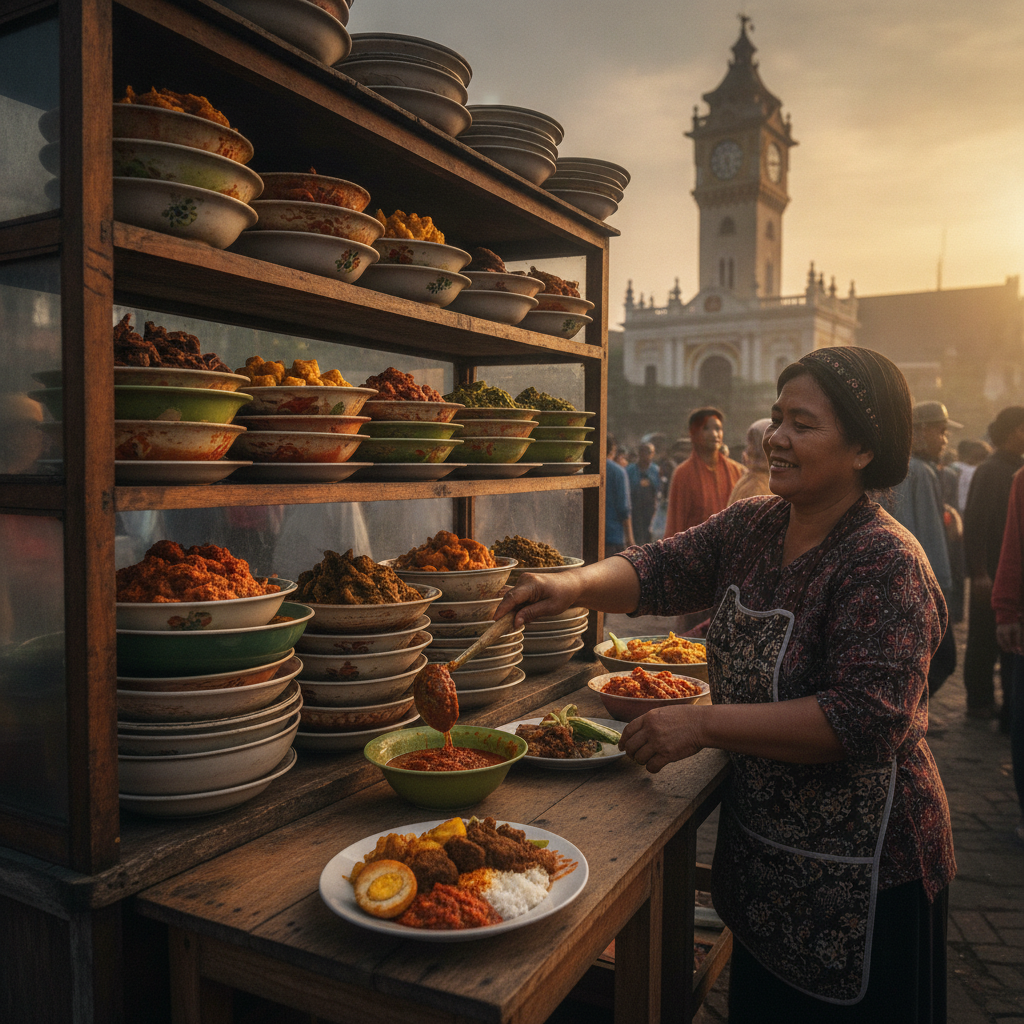
Pasar Atas (Upper Market) adjacent to the Jam Gadang is the commercial heart of the Minangkabau highland economy — the market selling Minang textiles (songket woven silk and cotton), spices, fresh produce from the highland farms, and the full range of Minangkabau food products operates continuously as the most important market town in the West Sumatra interior. The Minangkabau merchant tradition, which has made Minang traders (known as perantau — those who go abroad) the most commercially successful ethnic group in Indonesia, is most visible and most concentrated in the Pasar Atas environment.
- 3
Pasar Bawah Lower Market
Pasar Bawah (Lower Market) connected to Pasar Atas by stairs descending the hill is the older and more traditional market level — the lower market with its covered stalls selling household goods, agricultural tools, and the bulk food commodities that supply the surrounding agricultural communities maintains the function of a regional market serving the Minangkabau villages of the Agam and Lima Puluh Kota regencies. The two-level market structure reflects Bukittinggi's topography and the social distinction between the different types of commerce conducted at each level.
- 4
Fort de Kock Dutch Fortress
Fort de Kock, the Dutch colonial fortress built in 1825 during the Padri War, overlooks Bukittinggi from its hilltop position — the fortress constructed to control the Minangkabau territory during the three-decade conflict between the Dutch colonial forces and the Padri Islamic reformist movement has been converted into a public park with a small zoo, but the fort's surviving structures and its commanding position above the city document the military history of Dutch colonial expansion into the West Sumatra highlands.
- 5
Taman Panorama Park
Taman Panorama on the edge of the Sianok Canyon provides the most dramatic view in Bukittinggi — the park at the canyon rim looks down into the deep gorge carved by the Sianok River through the volcanic tuff, with the canyon walls dropping nearly 100 metres and the river visible as a silver thread far below. The Japanese-dug tunnel system (Lobang Jepang) runs beneath the park, and the view from the canyon rim across toward the distant volcanoes of the Minangkabau highlands frames Bukittinggi within its extraordinary volcanic landscape.
- 6
Minangkabau Cultural Houses
The traditional Minangkabau rumah gadang (great house) with its distinctive upswept curved roof resembling buffalo horns (the name Minangkabau means 'victorious buffalo') can be seen in the areas around Bukittinggi's city centre — the communal longhouse structure belonging to a matrilineal clan (suku) and housing multiple generations of women from the same maternal line represents the most physically distinctive expression of the matrilineal social system that makes the Minangkabau the world's largest matrilineal society.
Walk this route with audio
Stories play automatically as you reach each stop — no tapping needed.
More in Bukittinggi
Bukittinggi Surrounding Villages & Batusangkar Walk

Bukittinggi Merapi & Singgalang Volcano Walk
Bukittinggi Dutch Colonial & Padri War History Walk