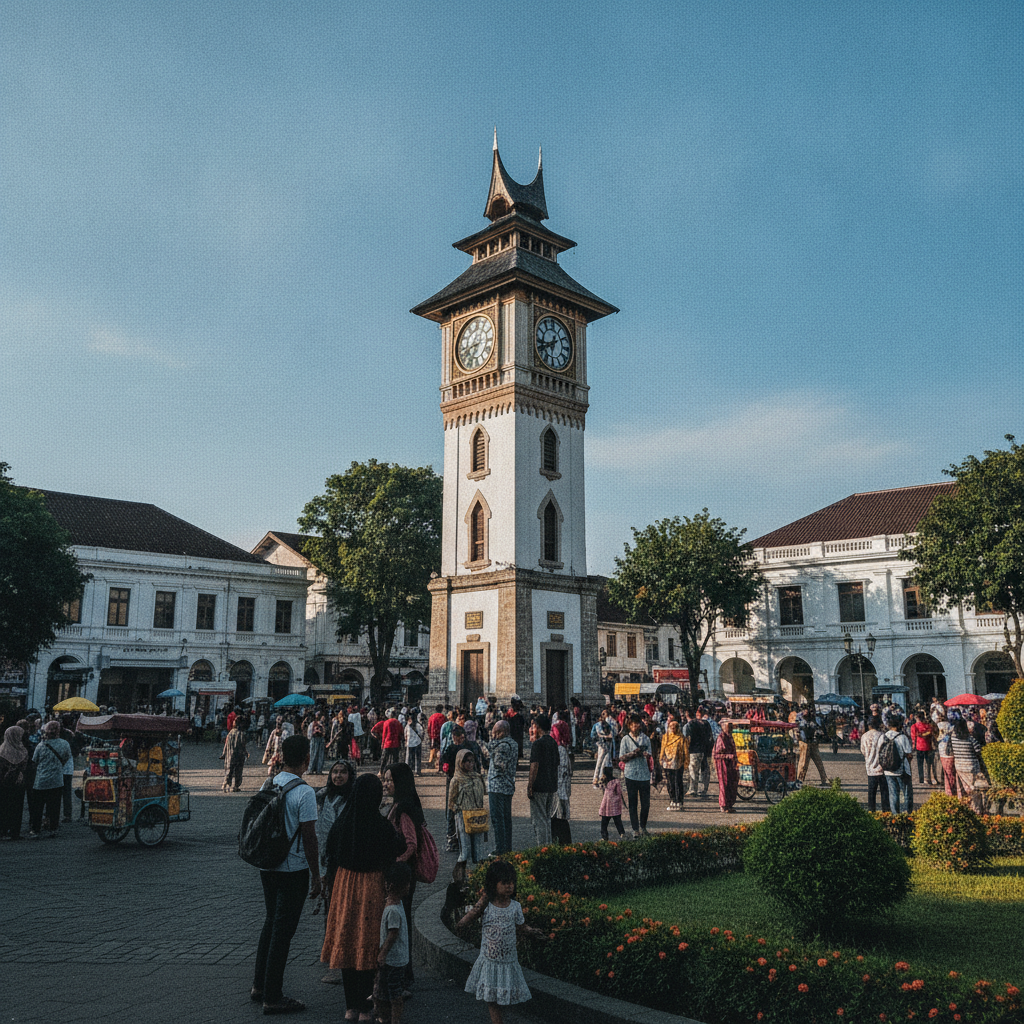
Bukittinggi Minangkabau Cultural Heritage Walk
Immerse in Minangkabau culture — the world's largest matrilineal society has its cultural heartland in the Bukittinggi region, with the distinctive rumah gadang architecture, songket weaving, randai performing arts, and the Islamic cultural synthesis that defines Minang identity.
- 1
Minangkabau Museum Fort de Kock
The museum within the Fort de Kock complex documents the history and culture of the Minangkabau people — the collection of traditional weapons, ceremonial objects, royal regalia, and historical photographs provides the cultural context for understanding the Minangkabau as both the world's largest matrilineal society and one of the most commercially successful and educationally accomplished ethnic groups in Indonesia. The Minangkabau cultural philosophy encoded in the saying 'adat basandi syarak, syarak basandi Kitabullah' (custom founded on Islamic law, Islamic law founded on the Quran) represents the synthesis of pre-Islamic matrilineal custom and Islamic practice that defines Minang identity.
- 2
Rumah Gadang Traditional House
The rumah gadang (great house) is the most distinctive architectural form in Sumatra — the large communal dwelling with its dramatically curved roof whose ends sweep upward in points resembling buffalo horns, its carved and painted wooden facade, and its interior organised as a single large space divided into sleeping alcoves for the women of the clan represents the architectural expression of Minangkabau matrilineal society. The house belongs to the women of the clan and passes through the female line; men sleep in the mosque or guest house and return to visit their wives and children.
- 3
Songket Weaving Atelier
Minangkabau songket weaving is one of Indonesia's most prestigious textile traditions — the supplementary weft technique using gold and silver thread on silk or cotton grounds produces the rich, lustrous textiles used in Minangkabau ceremonial dress and as gifts at adat ceremonies. The songket workshops in Bukittinggi and the surrounding villages of Pandai Sikek (the primary songket production centre) demonstrate a craft tradition in which the geometric patterns (each with specific names and associations) are memorised and executed without written patterns by weavers who have learned the technique from their mothers and grandmothers.
- 4
Randai Traditional Performance
Randai is the Minangkabau performing arts form combining storytelling, martial arts (silek), music, and theatre — the circular performance in which actors move through dance-like silek martial arts movements between dramatic scenes telling stories from Minangkabau legendary history provides one of the most complete traditional performing arts forms in Sumatra. The randai tradition encoded in the kaba (narrative tradition) stories of hero figures like Anggun Nan Tongga and Cindua Mato transmits Minangkabau historical memory and cultural values through entertainment performance.
- 5
Silek Minangkabau Martial Arts
Silek (also known as pencak silat in its wider Indonesian form) is the Minangkabau martial art that forms the basis of the randai performance — the fighting system characterised by low stances, circular footwork, and the use of the opponent's force against them is taught in the surau (prayer houses) and village training halls of West Sumatra communities throughout Indonesia and to the Minang diaspora worldwide. The martial art is simultaneously a self-defence system, a spiritual practice, and a cultural performance, and its practice in Bukittinggi's training halls is the most direct continuation of a tradition that predates Islamic conversion.
- 6
Minang Diaspora Culture
The Minangkabau rantau tradition — the expectation that young men will leave their home region to seek education and commercial success before returning with resources and reputation — has created the most geographically dispersed ethnic community in Indonesia. Minang traders operate throughout Indonesia and across Southeast Asia, the padang restaurant chain that serves Minang food is found in every Indonesian city, and Minang intellectuals have occupied leading positions in Indonesian public life disproportionate to the community's size. Walking the streets of Bukittinggi, the origin point of this diaspora, provides the cultural context for understanding this remarkable outward movement.
Walk this route with audio
Stories play automatically as you reach each stop — no tapping needed.
More in Bukittinggi
Bukittinggi Surrounding Villages & Batusangkar Walk
Bukittinggi Merapi & Singgalang Volcano Walk
Bukittinggi Dutch Colonial & Padri War History Walk
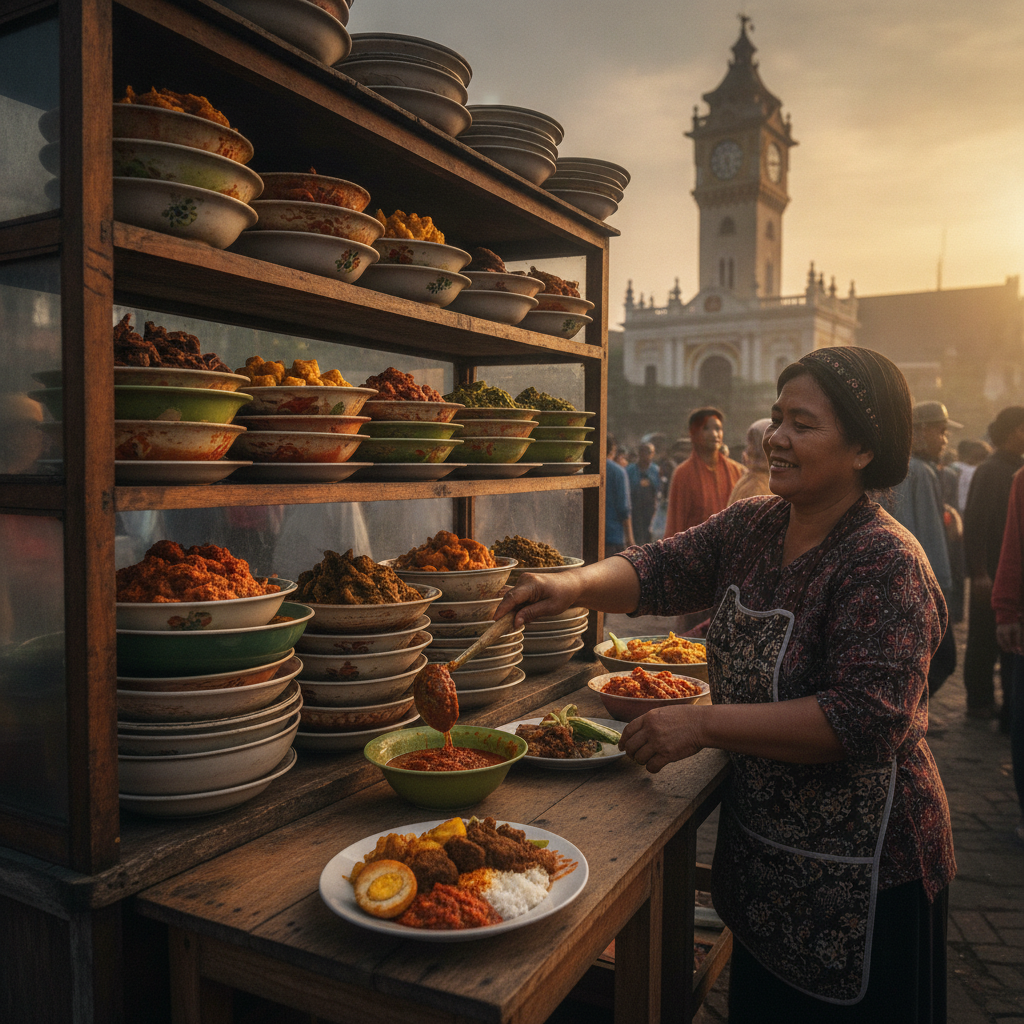
Bukittinggi Minang Food & Padang Cuisine Walk
Bukittinggi Market Day & Highland Commerce Walk