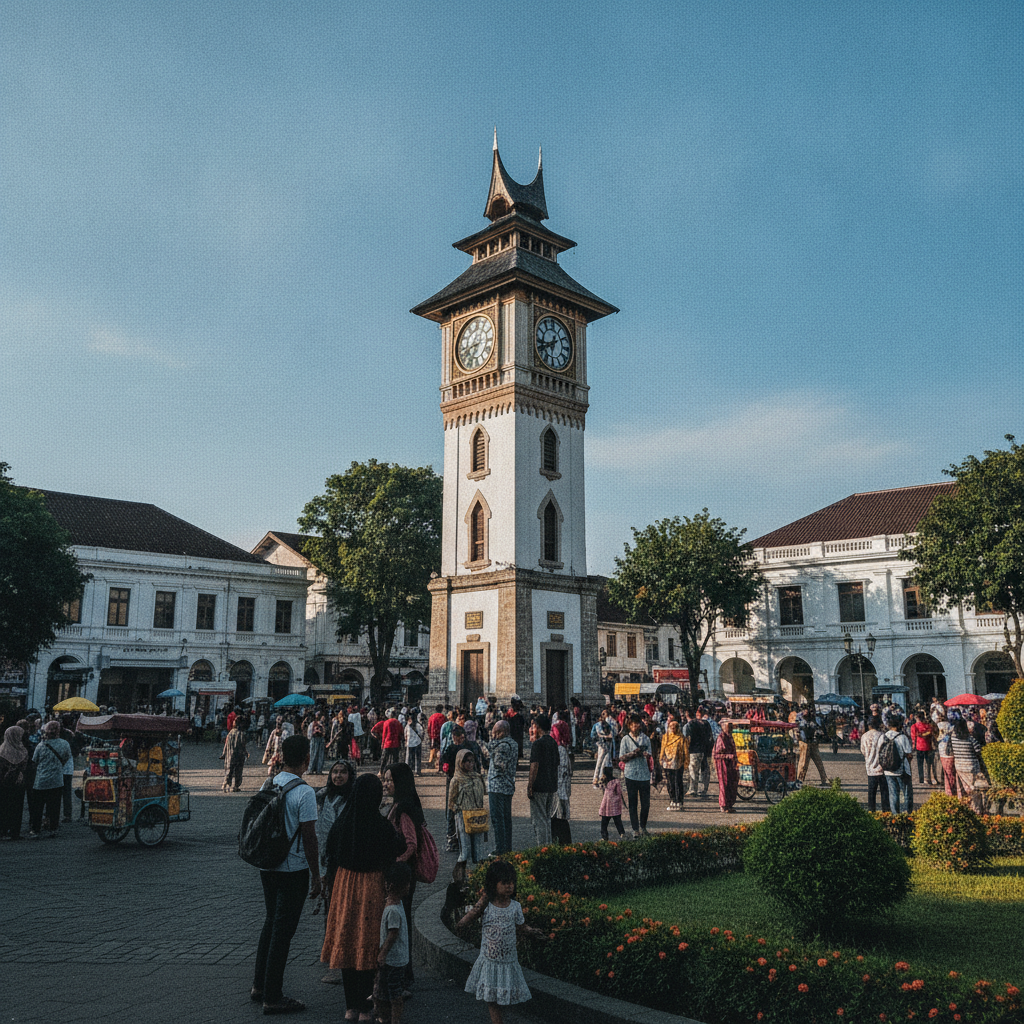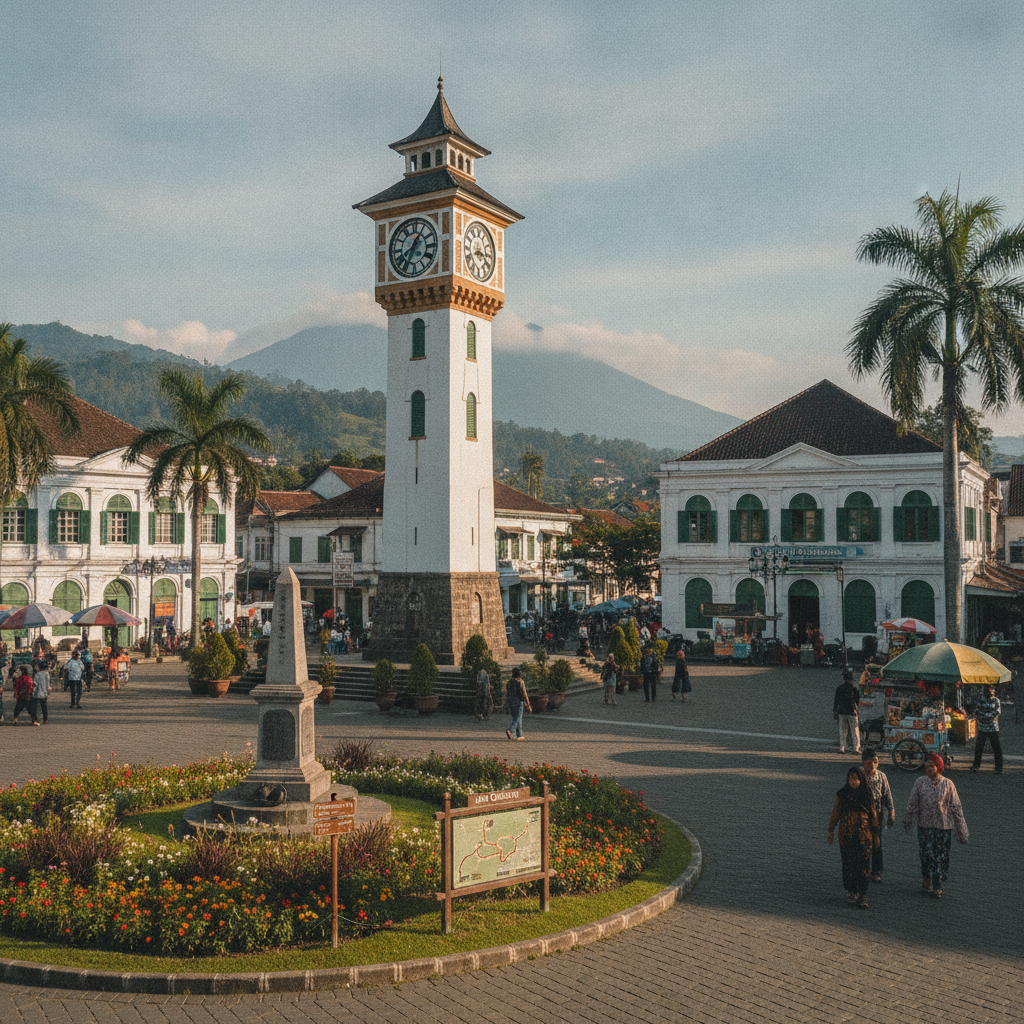
Bukittinggi Dutch Colonial & Padri War History Walk
Explore Bukittinggi's colonial history — the city was central to the Padri War (1803-1837), one of the most significant conflicts in colonial Sumatra, pitting Dutch colonial forces against Islamic reformists (Padris) and involving the Minangkabau aristocracy in a complex struggle that determined the character of West Sumatra's religious and political culture for the next two centuries.
- 1
Fort de Kock Historical Context
Fort de Kock was built in 1825 during the Padri War by Dutch forces under General de Kock — the fortress that served as the main Dutch military base in the West Sumatra highlands during the three-decade conflict documents the colonial military response to the Padri Islamic reform movement that had already been fighting to impose a stricter Islamic order on Minangkabau society before the Dutch arrived. The complex triangular conflict between the Dutch, the Padri reformists, and the Minangkabau aristocracy (who initially invited Dutch assistance against the Padris before finding themselves also under colonial control) is one of the most complicated episodes in Dutch colonial history.
- 2
Padri War Memorial Sites
The Padri War memorial sites around Bukittinggi commemorate both the Islamic reformist resistance and the Minangkabau figures who participated in the conflict — the war that lasted 34 years (1803-1837) and consumed enormous Dutch military resources represents the most significant armed resistance to Dutch colonial expansion in Sumatra, and the Padri leader Tuanku Imam Bonjol, who resisted Dutch forces for decades before his capture in 1837, is honoured as an Indonesian national hero whose legacy continues to influence West Sumatran Islamic political culture.
- 3
Japanese Occupation Sites
Bukittinggi served as the capital of the Japanese military administration for Sumatra during the 1942-1945 occupation — the Japanese chose Bukittinggi's cool highland climate and central location for their Sumatran headquarters, and the Lobang Jepang tunnel system excavated by forced labour during this period represents the most visible legacy of the occupation period. The experience of Japanese occupation, which combined initial welcome (as liberators from Dutch colonialism) with growing exploitation and suffering, permanently shaped Minangkabau political consciousness and contributed to the determination for independence that followed in 1945.
- 4
Emergency Republic of Indonesia Capital
During the Dutch military aggressions of 1948-1949, Bukittinggi briefly served as the emergency capital of the Republic of Indonesia when the Dutch captured Yogyakarta and held President Sukarno prisoner — the period when the highland Minangkabau city became the seat of the Indonesian government in its most precarious moment is a point of pride for West Sumatra and illustrates the city's strategic importance in the independence struggle. The government buildings and the residences of the republican leaders who governed from Bukittinggi during this crisis period are commemorated as heritage sites.
- 5
PRRI Rebellion History
The PRRI (Revolutionary Government of the Republic of Indonesia) rebellion of 1958-1961 was centered in West Sumatra and used Bukittinggi as one of its bases — the regional revolt against Sukarno's centralising government and the dominance of Java reflected deep Minangkabau frustration with the political marginalisation of the outer islands in independent Indonesia. The rebellion, which was eventually suppressed by the Indonesian army, left lasting scars on West Sumatran society and contributed to the political caution that has characterised Minangkabau engagement with national politics since the 1960s.
- 6
Post-Independence Bukittinggi
Contemporary Bukittinggi reflects the complex trajectory of a Minangkabau city that has been shaped by colonial conflict, Islamic reform, independence struggle, and regional revolt — the city that today markets itself as a highland tourist destination with its clock tower and canyon views contains the layers of this complex history in its physical fabric, its religious character (Bukittinggi is more conservative Islamic than coastal Padang), and the political culture of a community that has maintained a distinctive identity through four centuries of external pressure and transformation.
Walk this route with audio
Stories play automatically as you reach each stop — no tapping needed.
More in Bukittinggi
Bukittinggi Surrounding Villages & Batusangkar Walk

Bukittinggi Merapi & Singgalang Volcano Walk
Bukittinggi Minang Food & Padang Cuisine Walk
Bukittinggi Market Day & Highland Commerce Walk