Kanchanaburi Bridge on the River Kwai Walk
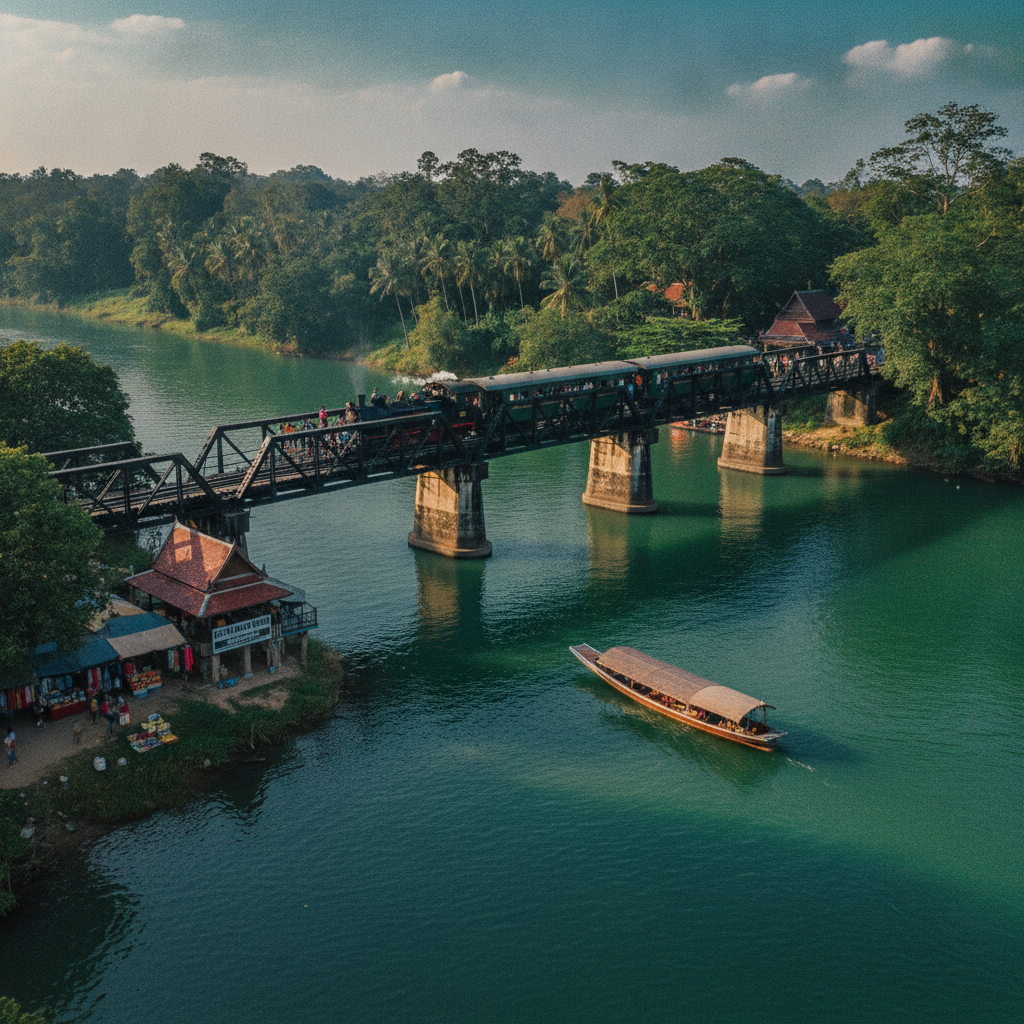
Walk the Bridge on the River Kwai — the steel railway bridge over the Mae Klong River (known outside Thailand as the River Kwai) was built by Allied prisoners of war under Japanese command in 1943 and is the most visited WWII memorial site in Southeast Asia.
- 1
Bridge on the River Kwai
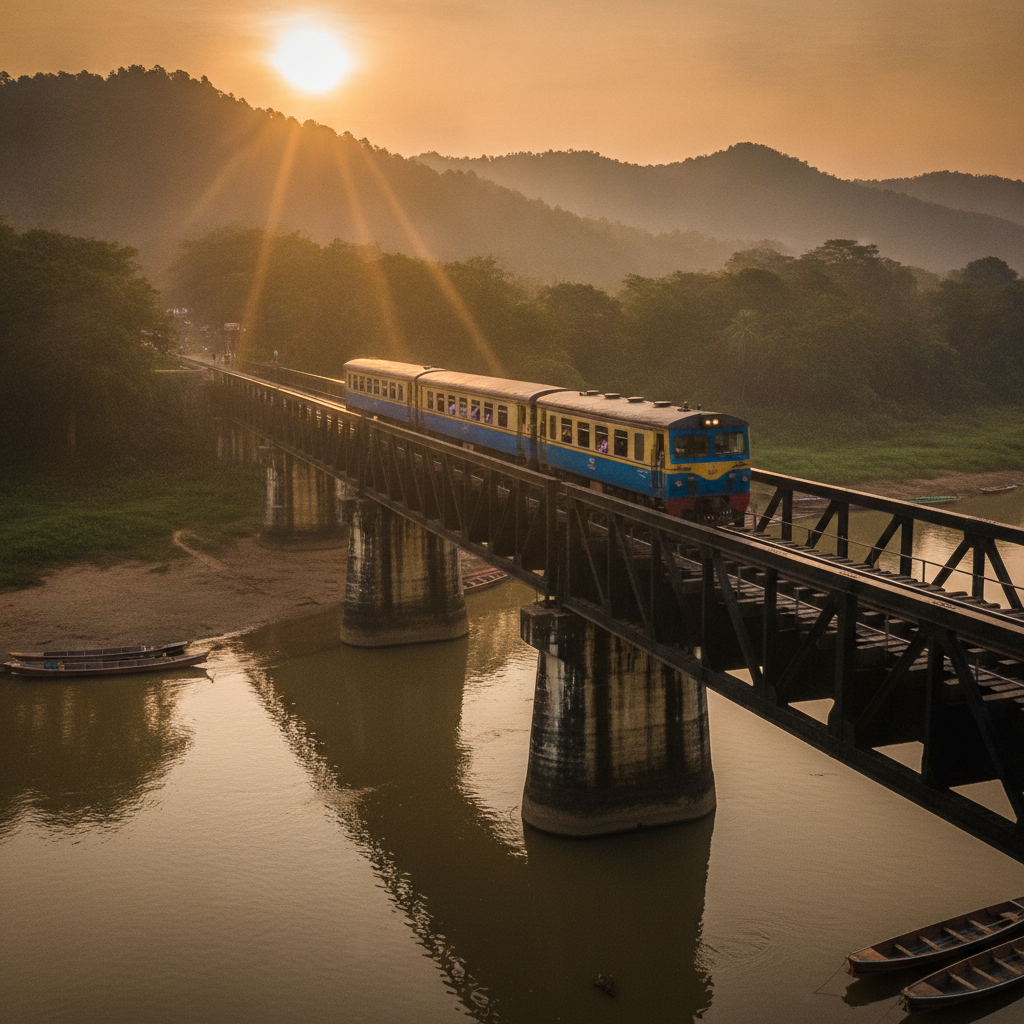
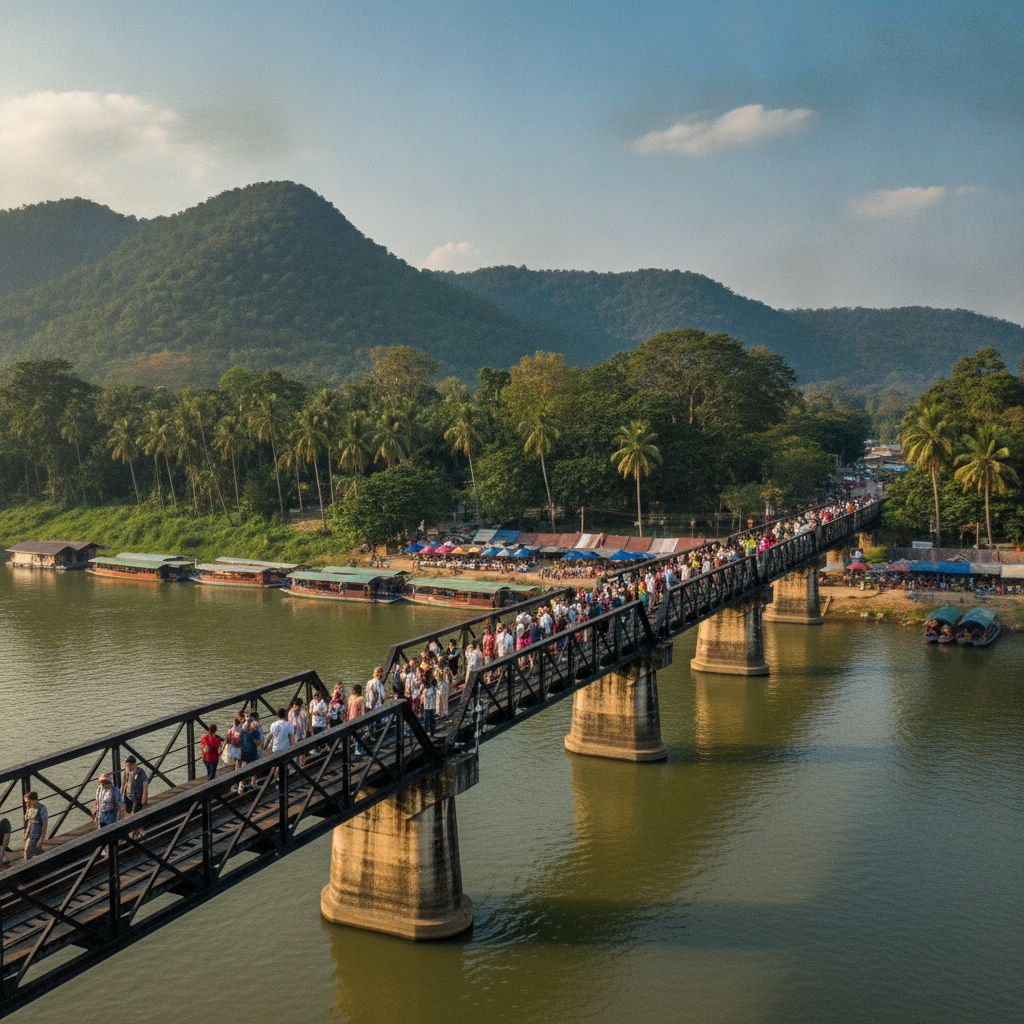
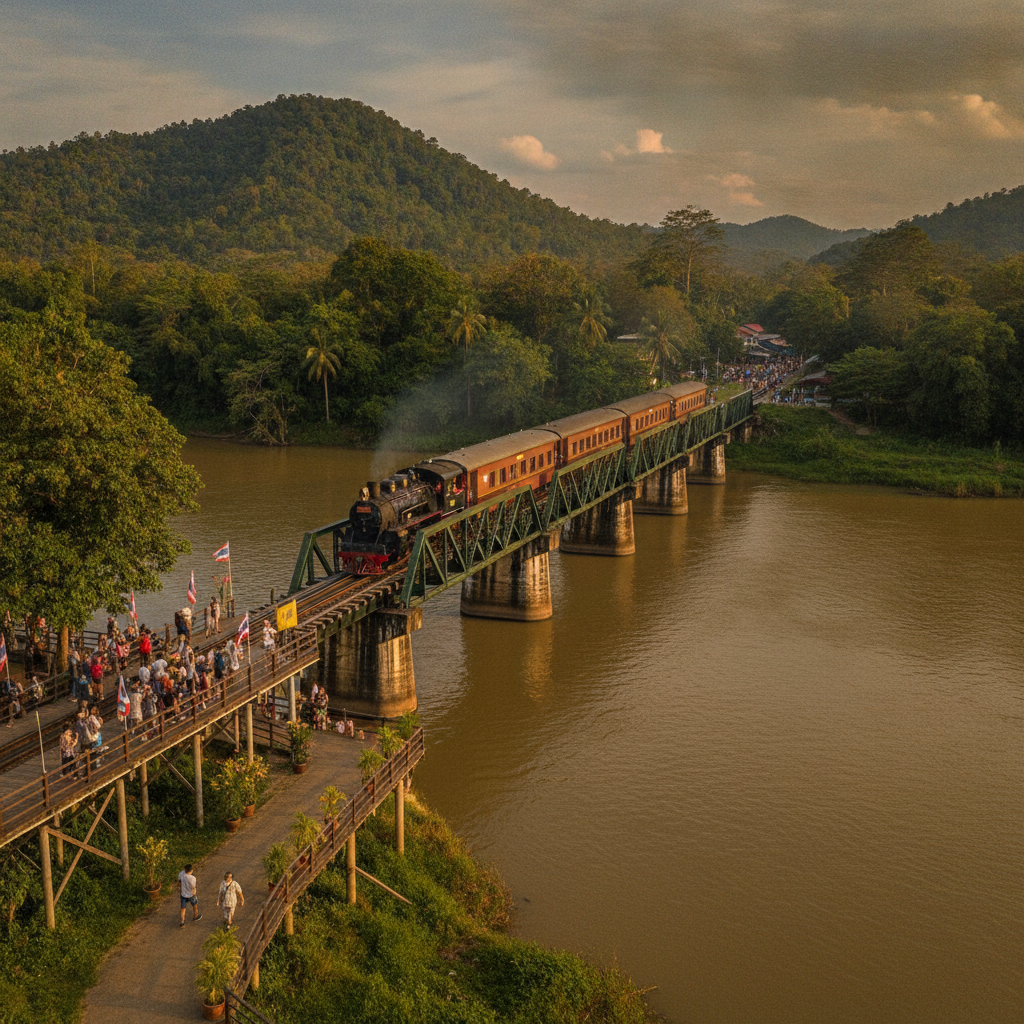
The Bridge on the River Kwai (Saphan Mae Klong) is the most internationally famous structure in Thailand outside of Bangkok — the steel-and-concrete railway bridge constructed by Allied prisoners of war under the Japanese military administration during 1942-1943 as part of the Thailand-Burma Death Railway was the subject of Pierre Boulle's 1952 novel and David Lean's 1957 Academy Award-winning film that made the bridge's name known worldwide. The current bridge (the original wooden bridge was replaced by the steel structure still standing, and the two round-span sections visible at the centre of the bridge are replacements for the original spans destroyed by Allied bombing in 1945) is open to pedestrians and to the Death Railway trains that still cross it several times daily, creating the unique experience of walking across a WWII war memorial on an active railway line over the river.
- 2
Death Railway Museum
The Thailand-Burma Railway Centre (TBRC) near the Bridge is the most comprehensive museum dedicated to the Death Railway and its prisoner of war workforce — the museum's detailed documentation of the railway's construction (the 415km line from Nong Pladuk to Thanbyuzayat in Burma, built by 60,000 Allied prisoners of war and 200,000 Asian forced labourers in 16 months under conditions that killed approximately 12,000 POWs and 80,000 Asian workers) provides the historical context for understanding the bridge and the railway's significance. The museum's individual personal histories of the prisoners (drawn from diaries, letters, and post-war testimony), the engineering documentation of the construction methods, and the medical records of the diseases (cholera, dysentery, malaria, and beriberi) that constituted the primary killers on the railway make it the most complete single-site documentation of this aspect of the Second World War's Pacific theatre.
- 3
Allied War Cemetery
The Kanchanaburi Allied War Cemetery (Don Rak War Cemetery) in the town centre is the most visited WWII war cemetery in Southeast Asia — the rows of simple white grave markers (6,982 graves of the Allied prisoners of war who died on the Death Railway, mostly British, Dutch, and Australian) arranged in the immaculate garden setting maintained by the Commonwealth War Graves Commission create the most directly emotional encounter with the human cost of the railway's construction. The grave markers' inscriptions (the personal dedications added by the families of the dead, the regimental badges, and the birth and death dates that reveal the youth of many of the prisoners — the average age at death was 25) provide the most individualised memorial encounter with the historical tragedy accessible at any WWII site in Thailand.
- 4
River Kwai Train Journey
The Death Railway train service between Kanchanaburi station and Nam Tok station (the current terminus, 77km of the original line that has been maintained as a heritage route) provides the most direct encounter with the wartime railway infrastructure — the journey crosses the Bridge on the River Kwai (the passengers walking between the railway cars using the pedestrian walkways), passes through the Wang Pho viaduct (the wooden trestle bridge over the river gorge that was one of the most difficult engineering achievements of the railway construction, built by prisoners who cut timber in the surrounding forest and drove the piles by hand), and follows the river valley through the landscape in which the construction tragedy took place. The train's regular service (departing Kanchanaburi three times daily) allows the heritage journey to be completed in either direction.
- 5
Hellfire Pass Memorial
Hellfire Pass (Konyu Cutting) 80km north of Kanchanaburi town is the most dramatic single engineering site on the Death Railway — the rock cutting hacked through the solid granite mountain by prisoners working 24-hour shifts by torchlight (the shadows of the working men visible against the rock face at night giving the pass its name) required three months of brutal labour to complete a 500-metre cutting through solid rock. The memorial at Hellfire Pass (managed by the Australian Department of Veterans' Affairs, reflecting the large proportion of Australian POWs who worked and died at this site) includes a museum, the preserved cutting itself (accessible by walking through the original excavation), and a memorial wall with the names of the prisoners who died at the site.
- 6
River Kwai Sunset Cruise
The sunset cruise on the Mae Klong River from the Bridge area provides the most atmospheric evening encounter with the Kanchanaburi river environment — the long-tail boats departing from the riverside pier carry passengers upstream past the floating restaurants and the resort bungalows on the river, then under the bridge itself (the experience of passing beneath the Bridge from the river level providing the most viscerally direct connection with the structure's scale and its historical significance) and continuing to the river's wider section before the sunset. The river environment at sunset (the green hills visible above the river banks, the current fishing activity, and the floating market operations visible from the water) creates the most peaceful version of the Kanchanaburi experience available.
Walk this route with audio
Stories play automatically as you reach each stop — no tapping needed.