Kanchanaburi National Parks & Wildlife Walk
Explore the Kanchanaburi wilderness — the province has the largest remaining area of forested land in central and western Thailand, with three major national parks (Erawan, Sai Yok, and Thong Pha Phum) protecting the most significant wildlife habitats accessible from a central Thailand tourist base.
- 1
Thong Pha Phum National Park
Thong Pha Phum National Park in the northern Kanchanaburi province is the most biodiverse protected area accessible from the provincial tourist base — the park's forested mountain terrain (part of the Tenasserim Range) protects habitats for the Indochinese tiger, the Asian elephant, the gaur (the wild ancestor of the domestic ox), the clouded leopard, and the Malayan tapir — the highest concentration of large mammal species accessible in central Thailand. The park's wildlife camera trap monitoring programme has documented the continued presence of tigers in the park's most remote sections, making Thong Pha Phum one of the few places in Thailand where wild tiger presence is confirmed.
- 2
Khao Laem Reservoir
The Khao Laem Reservoir (Vajiralongkorn Dam) north of Kanchanaburi town is the largest reservoir in western Thailand — the artificial lake created by the damming of the Kwai Noi River in 1984 (submerging the original town of Sangkhlaburi and several villages in its 370 square kilometre reservoir area) has become a significant landscape feature that provides the most dramatic freshwater scenery accessible in the province. The reservoir's surrounding forested hills (the national park boundaries protecting the watershed), the floating raft house communities on the lake, and the submerged temple visible during the dry season low-water period create the most distinctive landscape available in western Thailand.
- 3
Wildlife Sanctuary Corridor
The forest corridor connecting the Thai national parks with the protected areas of the Myanmar Tenasserim Range is one of the most significant wildlife conservation landscapes in Southeast Asia — the Tenasserim-Southern Myanmar biodiversity hotspot (encompassing the Kanchanaburi province forests and the adjacent Myanmar protected areas) is considered the largest remaining intact forest in the Thai-Myanmar border region, with the potential to support viable populations of the large mammal species that require extensive home ranges. The wildlife conservation work conducted by the wildlife sanctuaries in the Kanchanaburi province (the camera trapping, the patrol programmes preventing poaching, and the elephant-human conflict management) represents some of the most important protected area management in Thailand.
- 4
River Float Trip Kwai Noi
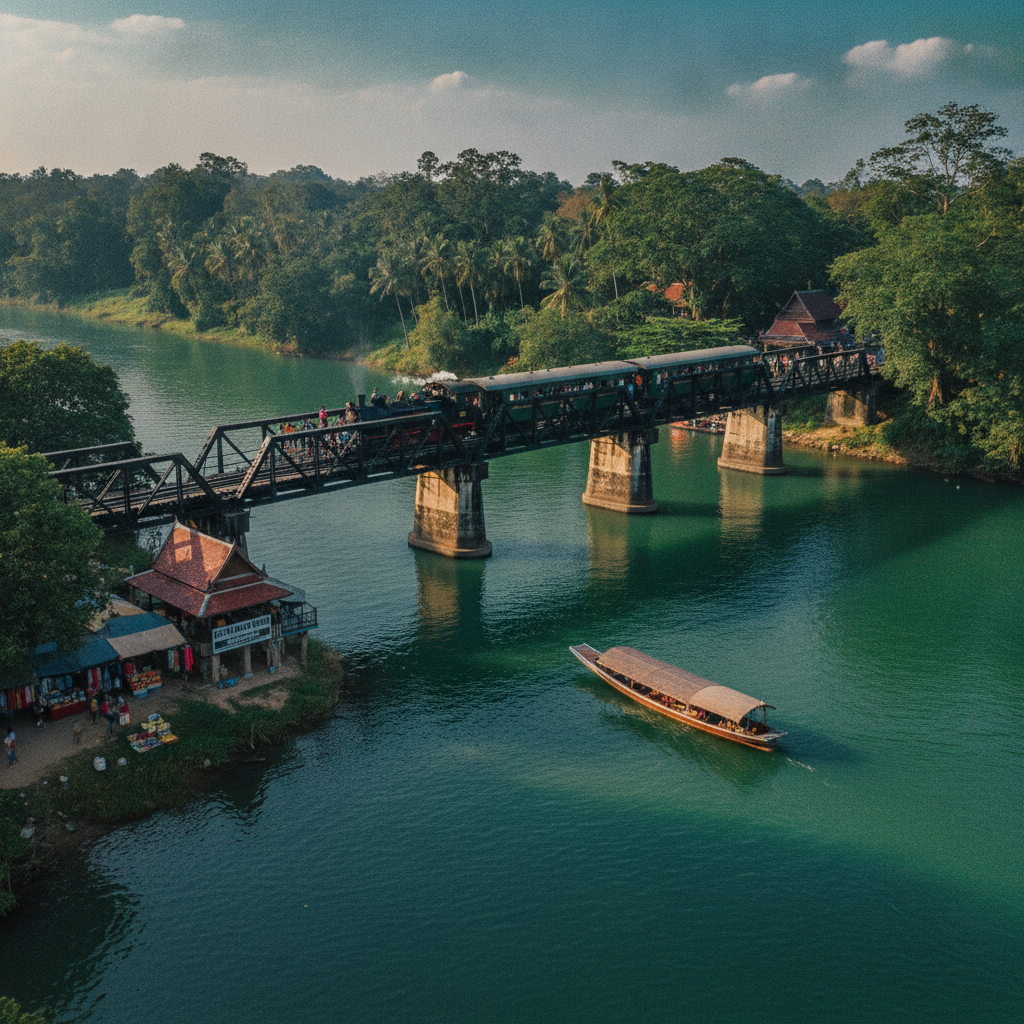
The bamboo raft float down the Kwai Noi River from the Sai Yok area toward the lower valley is the most immersive natural environment activity accessible from the Kanchanaburi tourist base — the slow river journey by bamboo raft (the traditional raft propelled by bamboo poles in the shallow sections and guided by the current in the deeper pools) passes through the forested river valley where the railway construction took place, with the river itself providing the most historically resonant perspective on the landscape. The bamboo raft float typically takes 2-3 hours and passes through the landscape of river beach, limestone cliff, and forest-covered hillside that characterises the Kwai Noi valley above the dam.
- 5
Elephant Conservation Hill Tribe
The Karen and Lawa communities in the Kanchanaburi hill areas maintain the traditional elephant mahout culture that has sustained the relationship between humans and working elephants in the western Thailand forests for generations — the community-based elephant programmes (operating in the Karen villages where the mahout tradition is maintained as an economic and cultural heritage) provide the most ethically managed elephant encounter accessible from Kanchanaburi, with the emphasis on the traditional mahout-elephant relationship rather than tourist performances. The elephant programmes in these communities represent the conservation value of the traditional Karen forest culture for maintaining the behaviour and welfare knowledge that sustains the captive elephant population.
- 6
Sunrise at Erawan Lake
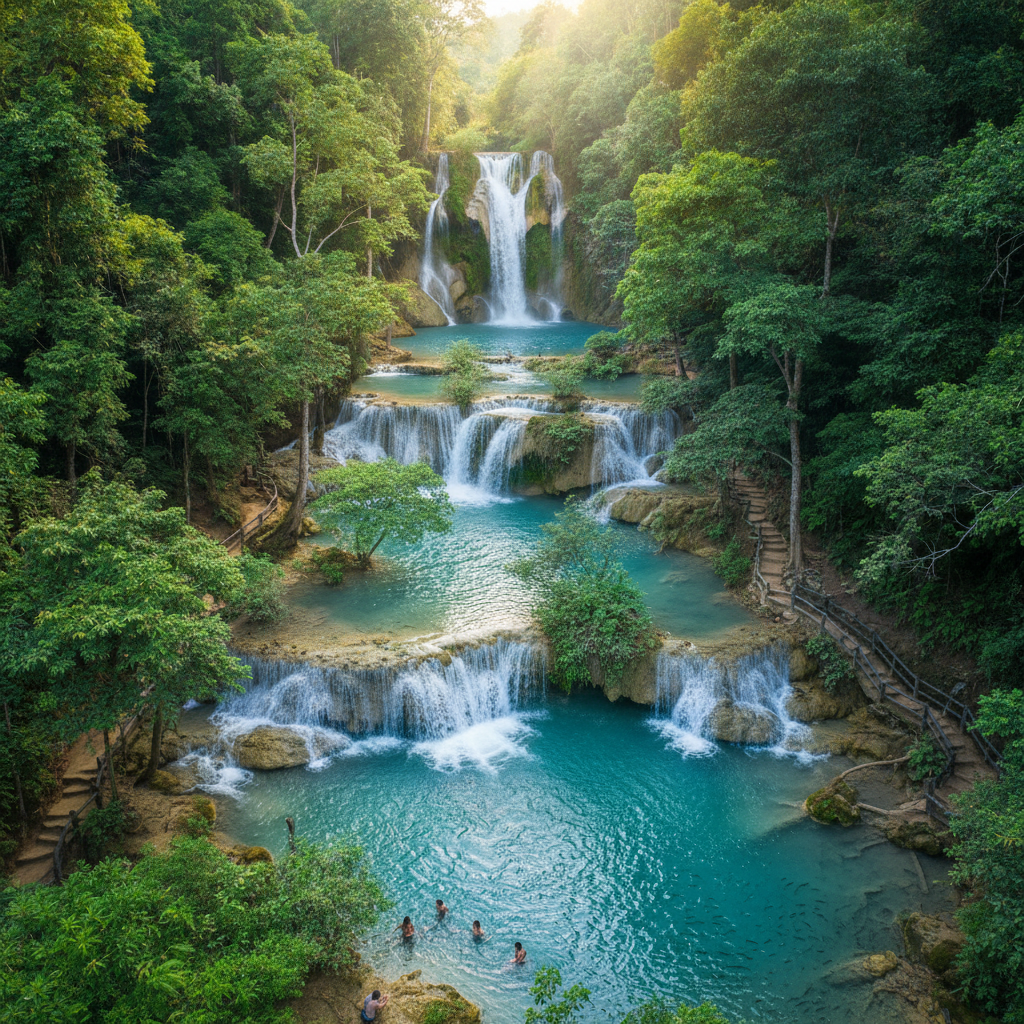
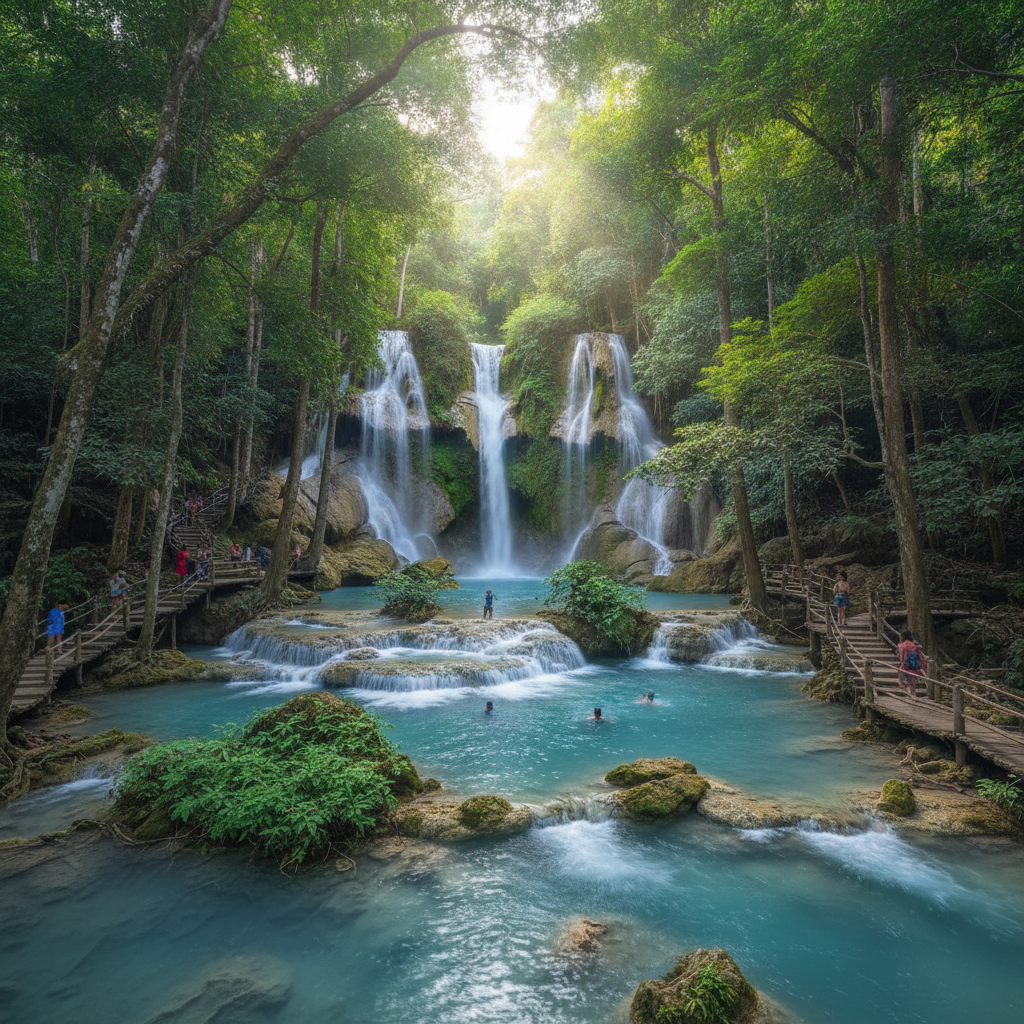
The Erawan National Park at sunrise (arriving before the 8am opening time is not possible, but the early morning visit in the first hour after opening provides the least crowded experience of the waterfall) provides the most complete natural environment encounter accessible within the Kanchanaburi day-trip range from Bangkok — the forest sounds of the early morning (the gibbons' territorial calling, the hornbill's wingbeat, and the varied bird community of the limestone forest), the mist visible in the valley below the park's entrance road, and the first light reaching the turquoise pools before the midday crowds arrive create the most peaceful version of the Erawan experience available.
Walk this route with audio
Stories play automatically as you reach each stop — no tapping needed.