Kanchanaburi River Town & Market Walk
Explore the town of Kanchanaburi — beyond the WWII memorials, the provincial town has a distinctive character as a river market town at the confluence of the Kwai Noi and Kwai Yai rivers, with floating restaurants, traditional markets, and the Thai domestic tourist culture of the western Thailand gateway.
- 1
Mae Klong River Promenade
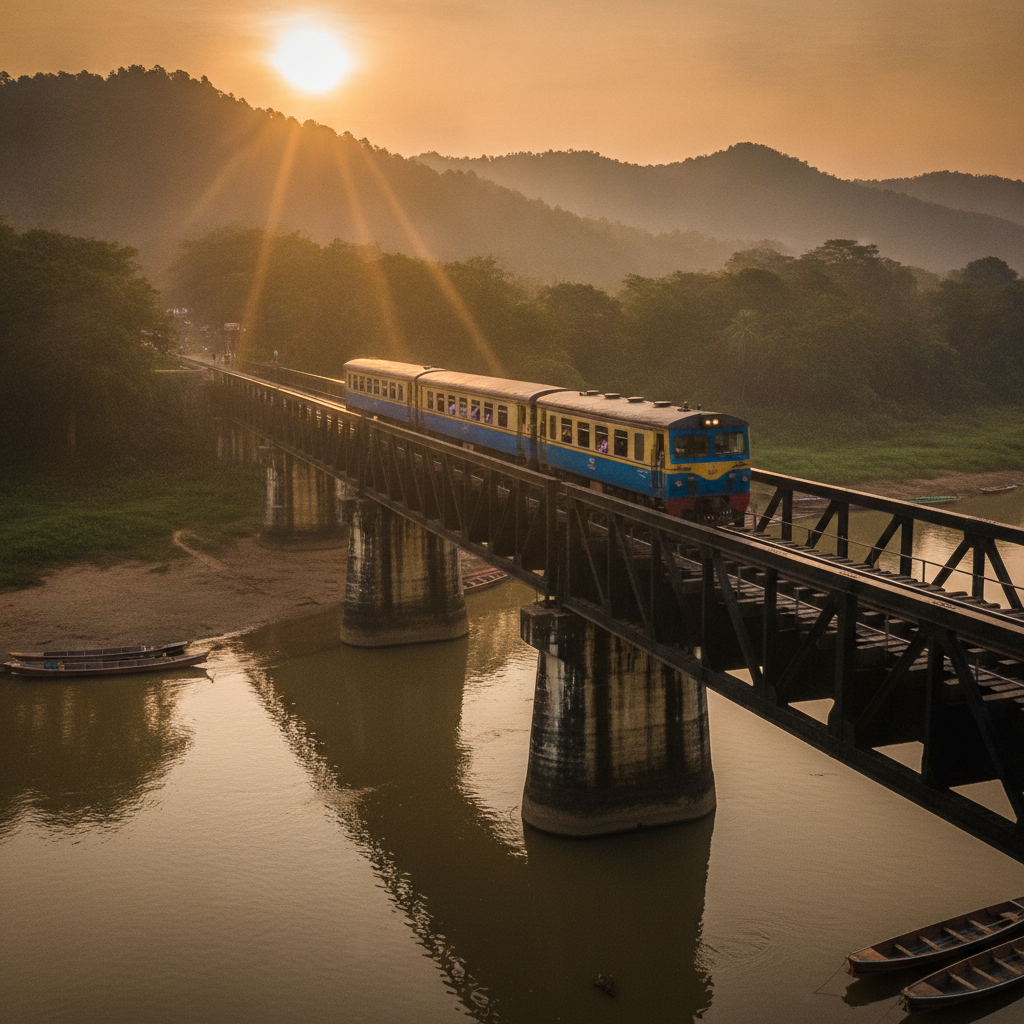
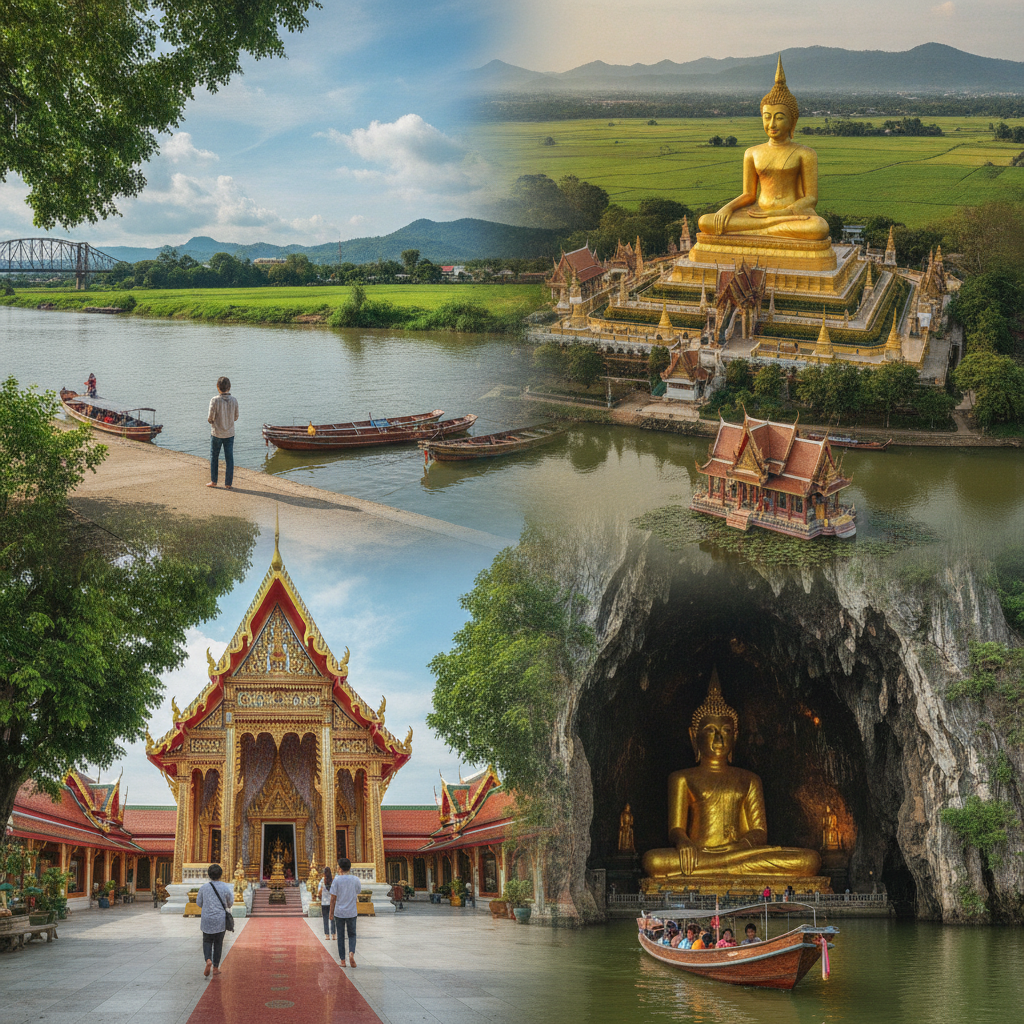
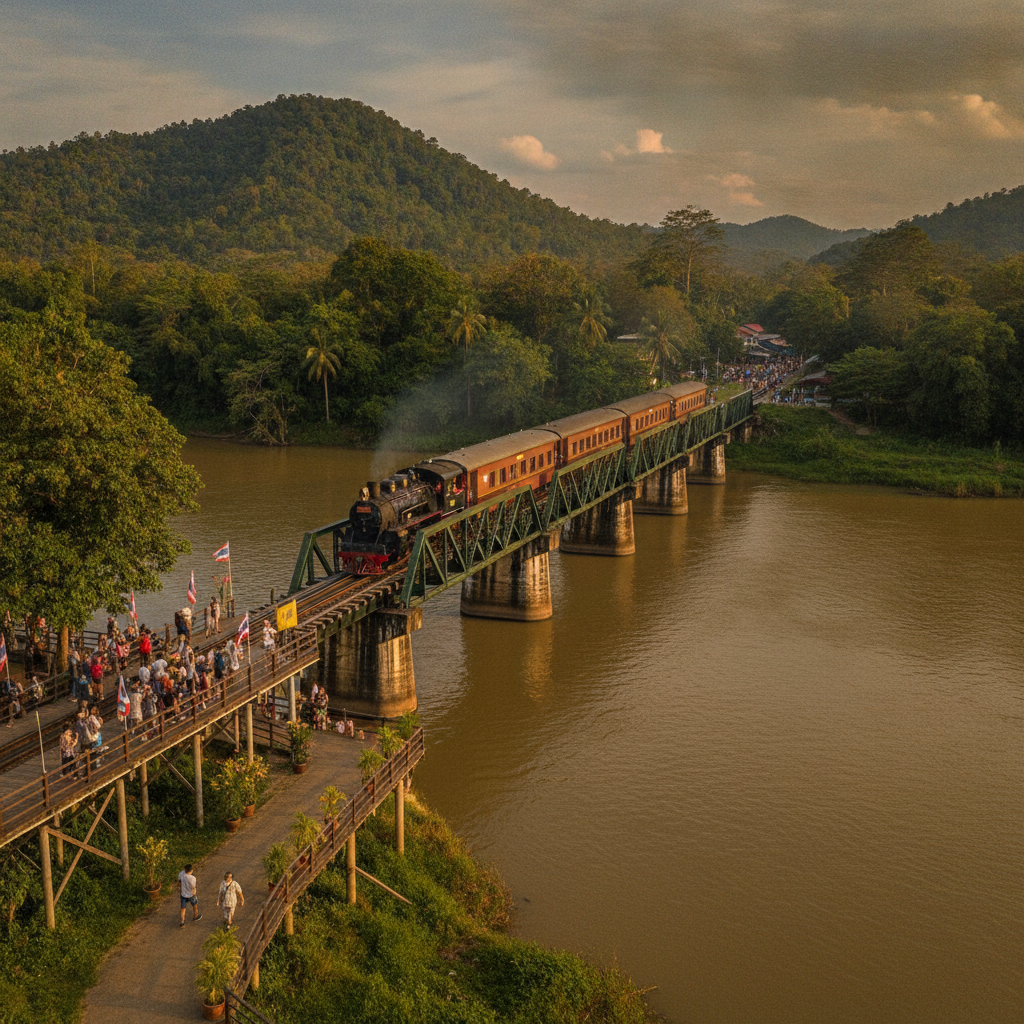
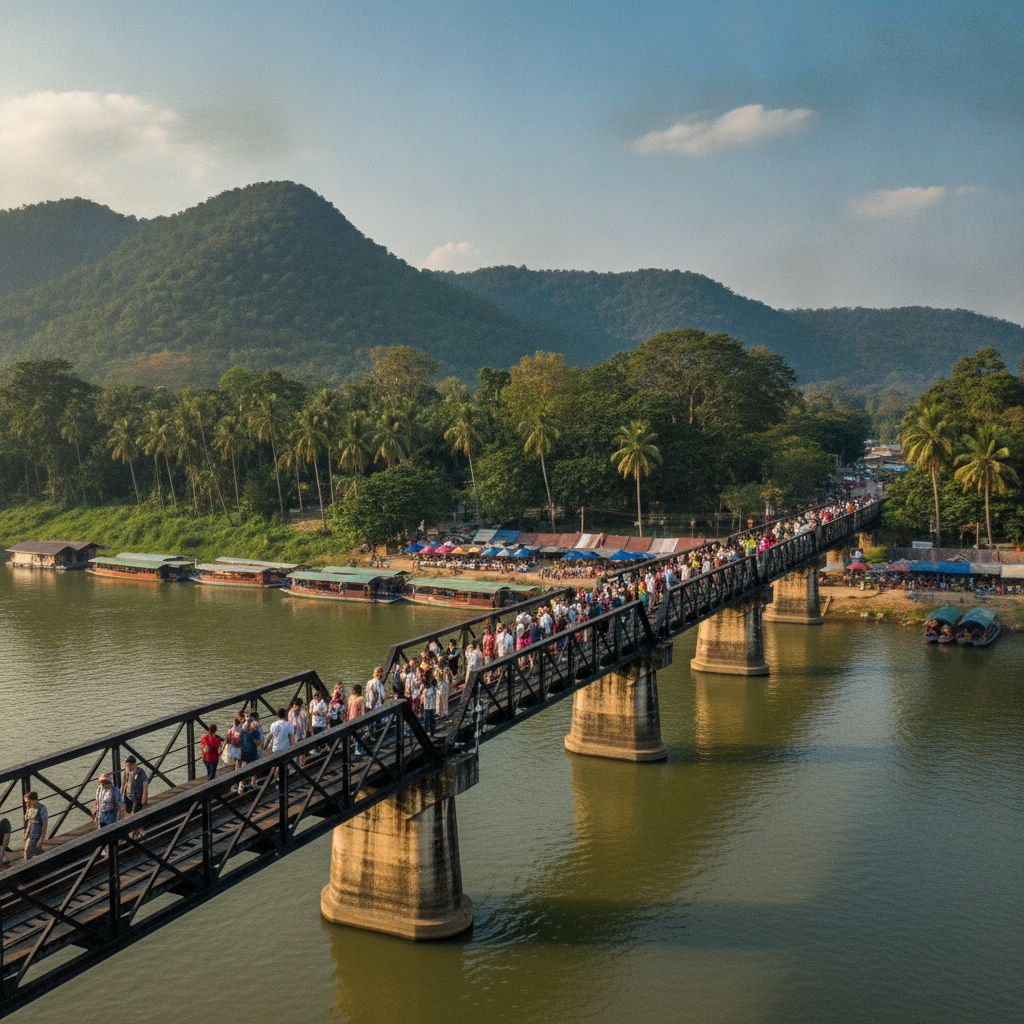
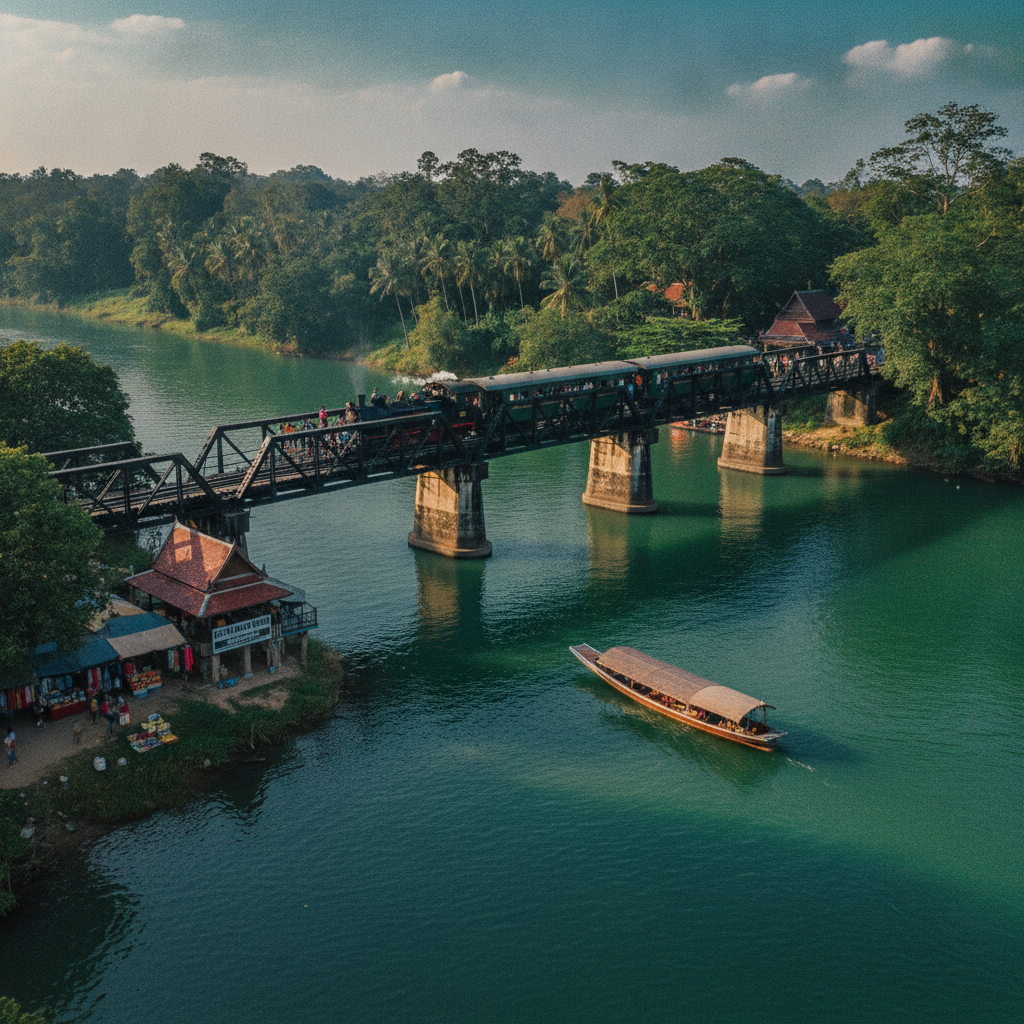
The riverside promenade along the Mae Klong (the confluence of the Kwai Noi and Kwai Yai rivers creating the wider Mae Klong that flows to the Gulf of Thailand) provides the most atmospheric approach to the Bridge area on foot — the riverside walk (past the floating restaurants moored at the bank, the long-tail boat taxis crossing the river, and the memorial and museum signage pointing toward the major WWII sites) creates an orientation to the town's geography that places the Bridge in its river context. The river at Kanchanaburi is at its most active in the early morning (the fishing boats, the market supply boats, and the tourist boat traffic creating a constant movement on the water that is the most animated public space in the town).
- 2
Kanchanaburi Morning Market
The Kanchanaburi morning market (operating from 4am in the covered market near the town centre) is the most authentically provincial Thai market accessible from the WWII tourist circuit — the market serves the town's residential community and the agricultural communities of the surrounding province with fresh produce, the prepared food vendors' khanom jeen and khao tom breakfast, and the western Thailand food specialties (the Mon-influenced curry preparations, the river fish from the Mae Klong system, and the forest produce from the national parks) that distinguish the Kanchanaburi food culture from the central Bangkok-influenced Thai cuisine. The market's early opening time (4-9am) means that the most authentic version requires an early start from the riverside guesthouses.
- 3
Floating Restaurants River
The floating restaurant operations moored along the Mae Klong River bank and on the river itself (the traditional form of river restaurant where the dining room is literally on a floating platform connected to the shore by a gangway) are the most atmospheric dining environments in Kanchanaburi — the evening meal at a floating restaurant (the river visible on all sides, the breeze from the water cooling the outdoor seating, and the lights of the opposite bank reflecting in the current) is the most distinctively Kanchanaburi dining experience available. The floating restaurants typically serve fresh river fish (the Mae Klong River's pla kapong (barramundi) and pla chon (snakehead) prepared in the central Thai manner) alongside the standard Thai menu.
- 4
Kanchanaburi Night Market
The evening market in Kanchanaburi town (operating from 5pm along the riverside road) provides the most accessible evening food and social experience in the town — the market's food stalls (the grilled river fish, the pad thai, the mango sticky rice, and the various Thai snacks accessible at street-food prices), the clothing and souvenir vendors, and the Thai domestic tourist families who use the market as the evening social gathering point create an atmosphere that is more relaxed and more genuinely Thai than the tourist-oriented riverside area. The night market is the best single location for observing the Thai domestic tourism culture of Kanchanaburi, where the provincial town serves as the gateway to the western Thailand national parks.
- 5
Sangkhlaburi Lake Town
Sangkhlaburi 220km northwest of Kanchanaburi town is the most remote and most culturally diverse destination accessible from the provincial capital — the town at the edge of the Khao Laem Reservoir (formed by the damming of the Kwai Noi River) has a large Mon refugee community, a significant Karen population, and the submerged temple (the original Wat Sam Prasob, partially visible above the reservoir surface in the dry season) that has become the most photographed image of the Kanchanaburi province lake landscape. The Sangkhlaburi area's ethnic diversity (Thai, Mon, Karen, and the transient Burmese day-workers crossing from Myanmar) creates the most multi-ethnic cultural encounter accessible in western Thailand.
- 6
Lak Mueang City Pillar
The Kanchanaburi City Pillar Shrine (Lak Mueang) in the old town centre is the spiritual foundation of the provincial capital — the city pillar (the sacred wooden post that according to Thai animist belief anchors the protective spirit of the city) is housed in a small shrine that is the focus of the local community's protective rituals and the individual merit-making activities of the residents. The city pillar shrine's active devotional culture (the devotees making offerings of flowers, incense, and the cloth wrapping of the pillar itself) provides the most direct encounter with the animist religious foundation beneath the Buddhist identity of the Thai provincial town, and the contrast with the WWII memorial culture of the surrounding area makes the city pillar one of the most distinctive juxtapositions of cultural layers accessible in any Thai town.
Walk this route with audio
Stories play automatically as you reach each stop — no tapping needed.