Kanchanaburi WWII History & Memorial Walk
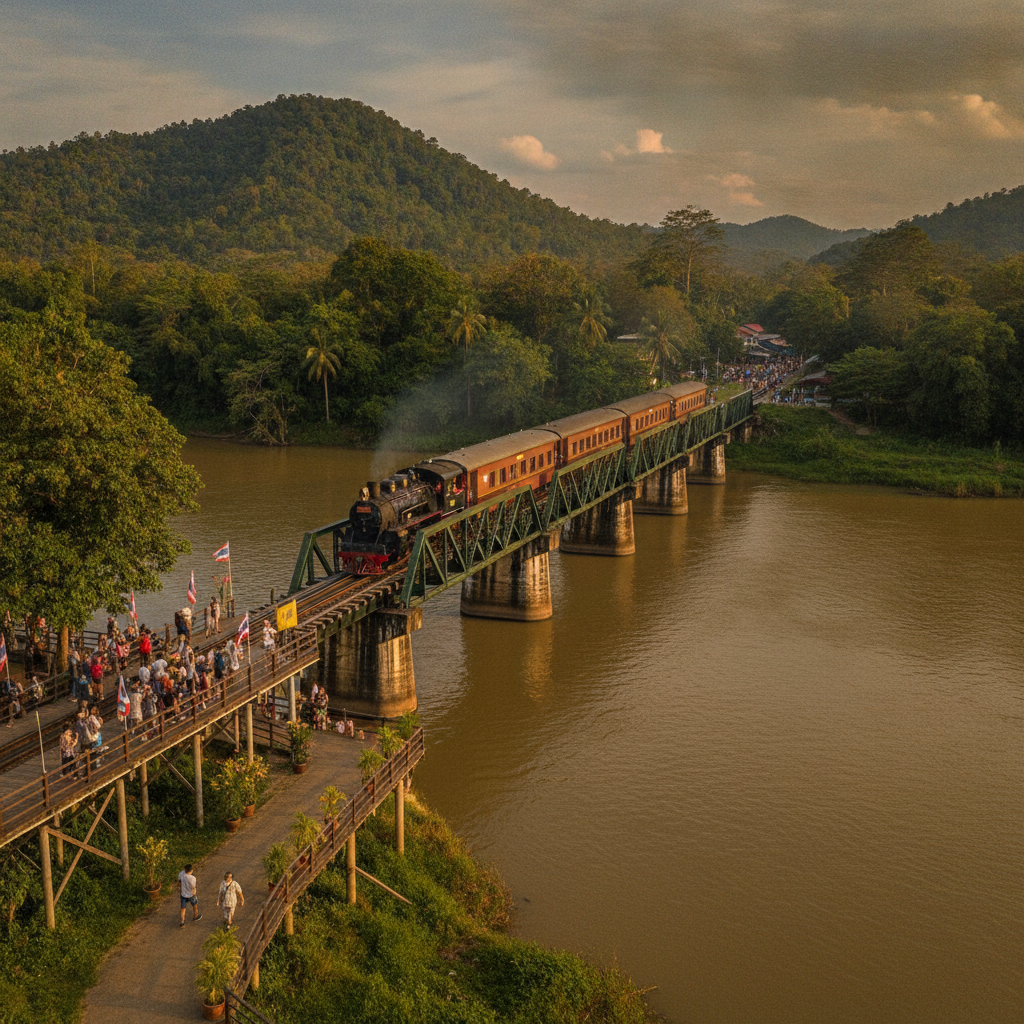
Follow the WWII trail in Kanchanaburi — the province was the site of the most intensive prisoner of war construction project of the Second World War, and the memorials, museums, cemeteries, and preserved railway infrastructure create the most comprehensive WWII history trail accessible in Southeast Asia.
- 1
JEATH War Museum
The JEATH War Museum (Japan, England, Australia, Thailand, Holland — the nationalities involved in the Death Railway project) is the original WWII museum in Kanchanaburi, established in 1977 before the more comprehensive Thailand-Burma Railway Centre opened — the museum's collection of prisoner artwork, the personal belongings of the POWs, the Japanese military equipment, and the reconstructed prisoner of war hut (the bamboo and atap-roofed barracks in which the prisoners lived and slept on wooden platforms) provide the most directly physical encounter with the material conditions of the POW experience. The museum's position adjacent to the Wat Chaichumphon temple creates an unusual juxtaposition of the Buddhist religious culture and the WWII memorial, reflecting the Thai community's integration of the wartime history into the contemporary landscape.
- 2
Chung Kai Allied Cemetery
The Chung Kai Allied War Cemetery on the opposite bank of the Mae Klong River from the main town (accessible by ferry from the town's riverside pier) is the smaller and quieter of the two Kanchanaburi Allied war cemeteries — the 1,740 graves maintained in the same immaculate standard as the larger Don Rak cemetery provide a more intimate memorial encounter than the more visited town-centre site. The cemetery's riverside position (the original location of the Chung Kai prisoner of war hospital camp where many of the casualties interred here were treated before their deaths) and the mature trees providing shade create the most contemplative environment for personal memorial reflection accessible at any Kanchanaburi WWII site.
- 3
Death Railway Route Map
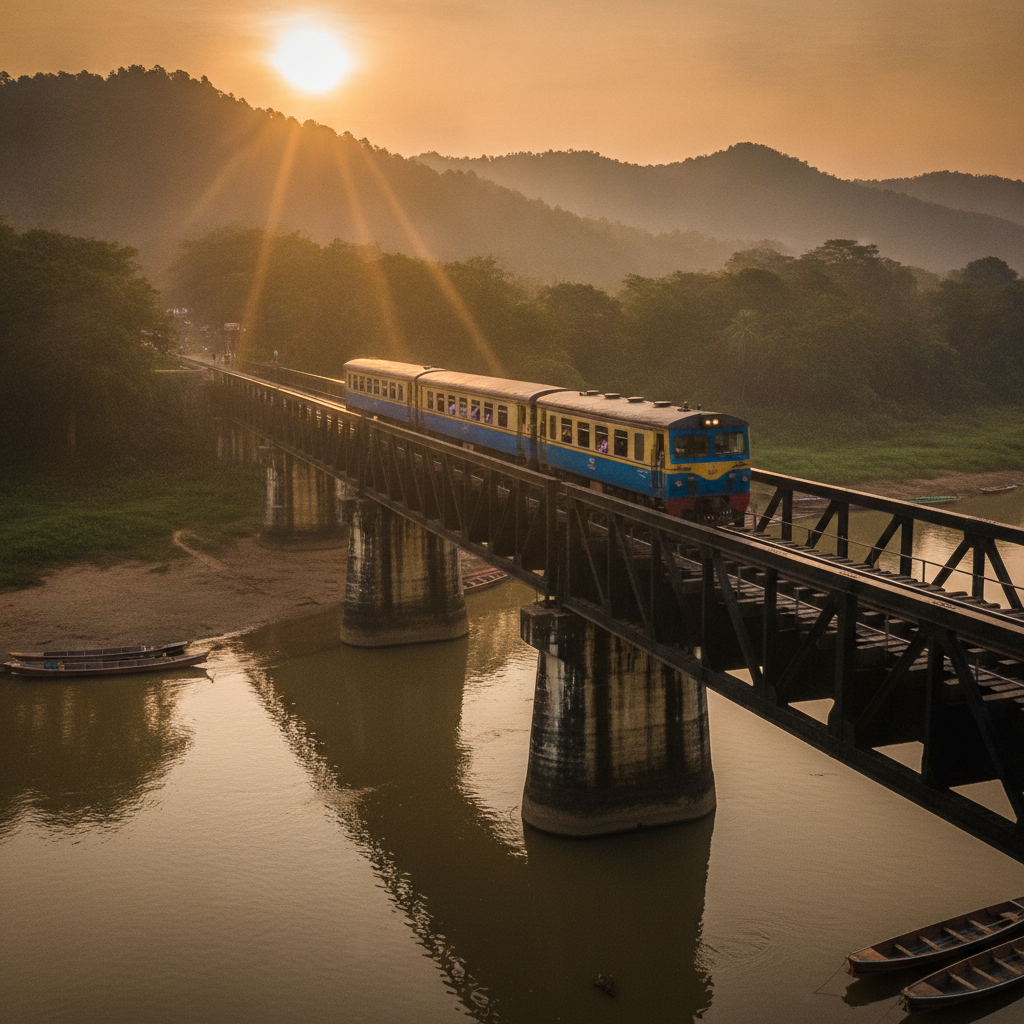
The historical geography of the Death Railway (the 415km route from Nong Pladuk near Bangkok to Thanbyuzayat in Burma, passing through the Three Pagodas Pass on the Thai-Myanmar border) is most accessible through the interpretive displays at the Thailand-Burma Railway Centre museum — the detailed maps showing the route, the camp locations (over 130 camps along the route), the construction chronology, and the mortality statistics at each section of the railway provide the most comprehensive single-location overview of the project's geographic scale. The railway's route through the Tenasserim Hills (following the river valleys and requiring the most difficult engineering work at the mountain crossings) is visible in the topographic context provided by the viewpoints accessible from Hellfire Pass and the upper Kwai Noi valley.
- 4
Saphan Mon Bridge
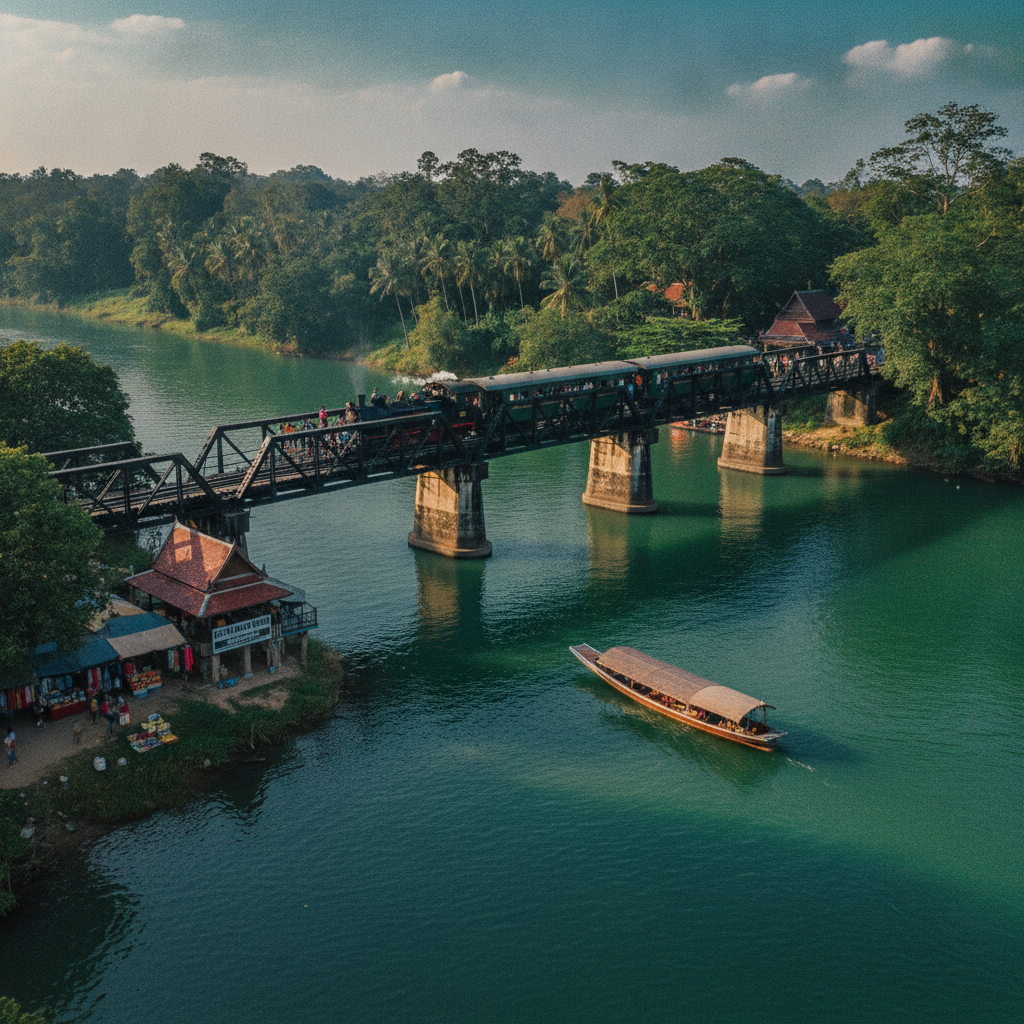
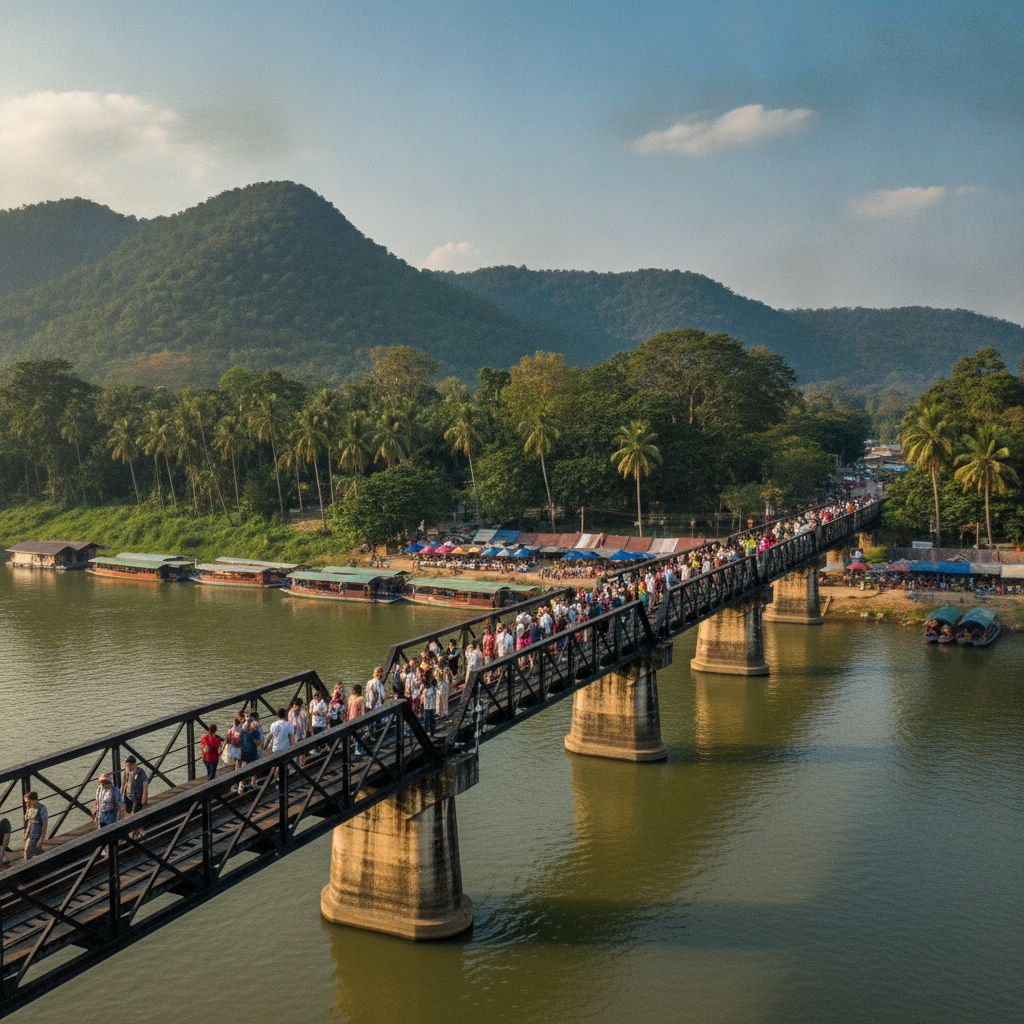
The Saphan Mon (Mon Bridge) across the Mae Klong River near the town centre is not a WWII structure but provides access to the Thai Mon community whose village on the river's western bank is the most accessible encounter with the Mon people (the Austroasiatic ethnic group of Myanmar and western Thailand) near Kanchanaburi — the Mon community's distinctive architectural style (the wooden houses on stilts), their Buddhist temples (with the Mon-style architectural elements distinguishable from the Thai central plain style), and their food (the Mon curries and the fermented fish preparations of the Mon kitchen) provide an ethnic minority cultural encounter that complements the WWII historical itinerary.
- 5
Prisoner of War Art Collection
The prisoner of war artwork preserved at the Thailand-Burma Railway Centre and in the collections documented in the museum's archives is the most historically significant visual record of the Death Railway experience produced by its participants — the drawings and watercolours made by the prisoners using whatever materials were available (the margins of notebooks, scraps of paper, and improvised pigments) document the camp conditions, the construction work, the diseases, and the daily experience of the prisoners in a visual record that survived because the artists concealed their work from the Japanese guards. The artworks of prisoners including Ronald Searle (later famous as the creator of St Trinian's school cartoons) and Jack Chalker are the most significant cultural legacy of the prisoner of war experience on the Death Railway.
- 6
Three Pagodas Pass Border
The Three Pagodas Pass (Sam Phra Chedi) at the Thai-Myanmar border, accessible from Kanchanaburi by a 3-hour drive on the route that follows the historical Death Railway line through the Kwai Noi valley, is the geographical terminus of the Death Railway route — the pass at 1,400 metres elevation where three small Burmese-style stupas mark the border was the strategic objective of the entire railway project, providing an overland supply route to the Japanese forces in Burma that bypassed the Allied naval blockade of the Malacca Strait. The pass's current status as an open border crossing (the Three Pagodas Pass market operates with Thai-Myanmar cross-border trade) creates an unexpected contemporary vitality at the geographical endpoint of the WWII tragedy.
Walk this route with audio
Stories play automatically as you reach each stop — no tapping needed.