Kanchanaburi Temples & Spiritual Sites Walk
Explore Kanchanaburi's spiritual landscape — beyond the WWII memorials, the province has its own Buddhist temple culture, the ancient Mon religious heritage, and the supernatural folk traditions associated with the area's long history of military conflict and natural power.
- 1
Wat Tham Khao Pun Cave Temple
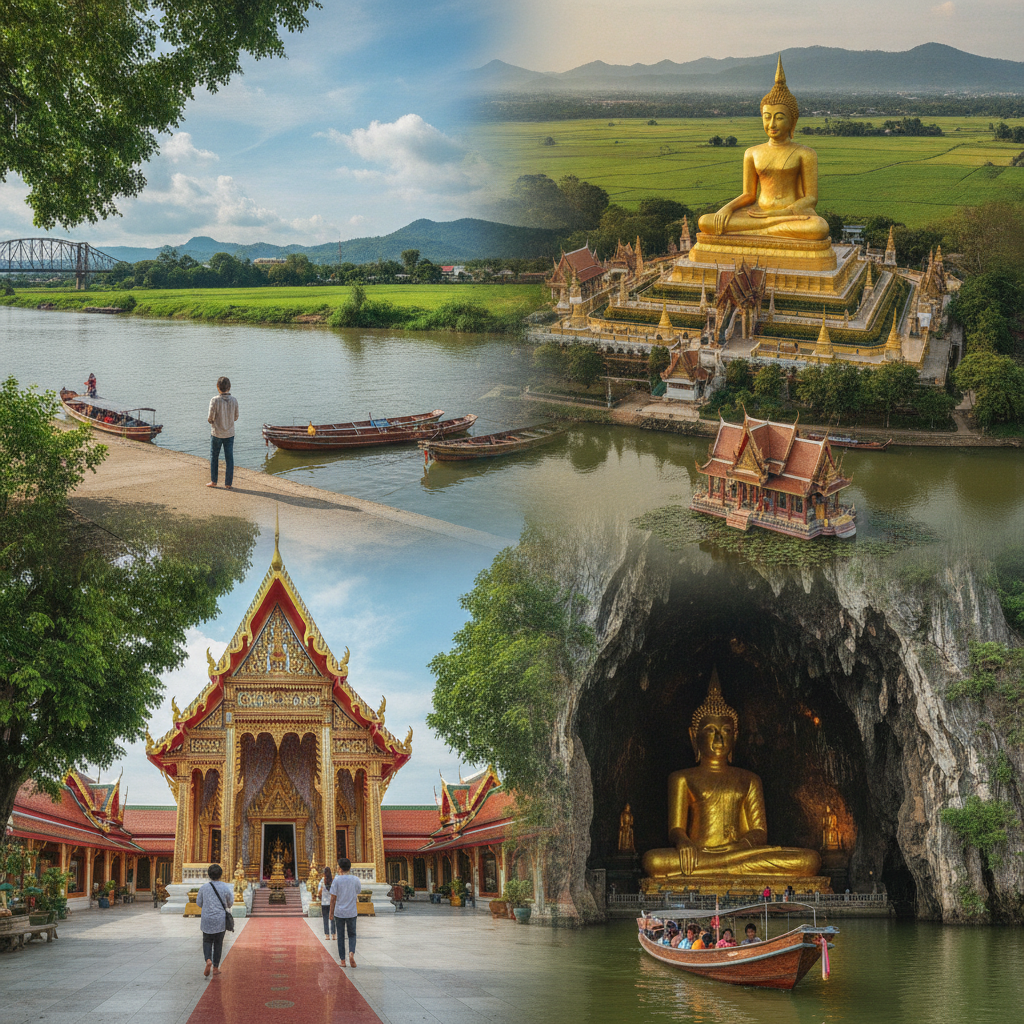
Wat Tham Khao Pun is a cave temple on the western bank of the Mae Klong River accessible by the river crossing ferry — the cave system beneath the limestone hill houses a series of Buddhist shrine chambers with Buddha images in the cave recesses, the stalactite and stalagmite formations incorporated into the religious iconography of the shrine, and the passage through the cave system connecting the main shrine hall to the upper hillside emergence point. The cave temple's combination of natural geological formation and Buddhist religious use creates the most atmospheric spiritual encounter accessible near the town centre, and the ferry crossing required to reach the temple provides an additional dimension of separation from the urban environment.
- 2
Wat Chaichumphon
Wat Chaichumphon (also known as Wat Tai) adjacent to the JEATH War Museum is an active Buddhist temple that provides the most direct juxtaposition of the wartime historical site and the contemporary Thai Buddhist religious community — the monks' quarters, the ordination hall, and the daily temple activities (the morning alms giving, the prayer sessions, and the merit-making activities of the devotees) continue within 50 metres of the WWII museum exhibits. The temple's spirit houses (which include offerings made specifically for the spirits of those who died on the Death Railway, reflecting the Thai spiritual understanding of the unresolved deaths of the prisoners) create the most personal expression of the Thai community's integration of the WWII tragedy into their ongoing religious practice.
- 3
Mon Buddhism Temple
The Mon Buddhist temples in the Mon village communities near Kanchanaburi town (particularly in the Ban Wan area on the river's western bank) maintain the distinctive Mon religious art tradition — the Mon-style Buddha images (with the characteristic oval face and the flame-topped cranial protrusion that influenced the Sukhothai artistic tradition), the Mon temple architecture (with the multi-tiered roof line and the specific decorative elements of the Mon artistic vocabulary), and the Mon-language liturgical texts used in the temple ceremonies document the Mon Buddhist heritage that predates the Thai religious tradition in the western Thailand region. The Mon community's preservation of their distinct religious identity within the Thai Buddhist mainstream is the most accessible encounter with the ethnic minority Buddhist traditions of the Kanchanaburi province.
- 4
Bridge Area Spirit Houses
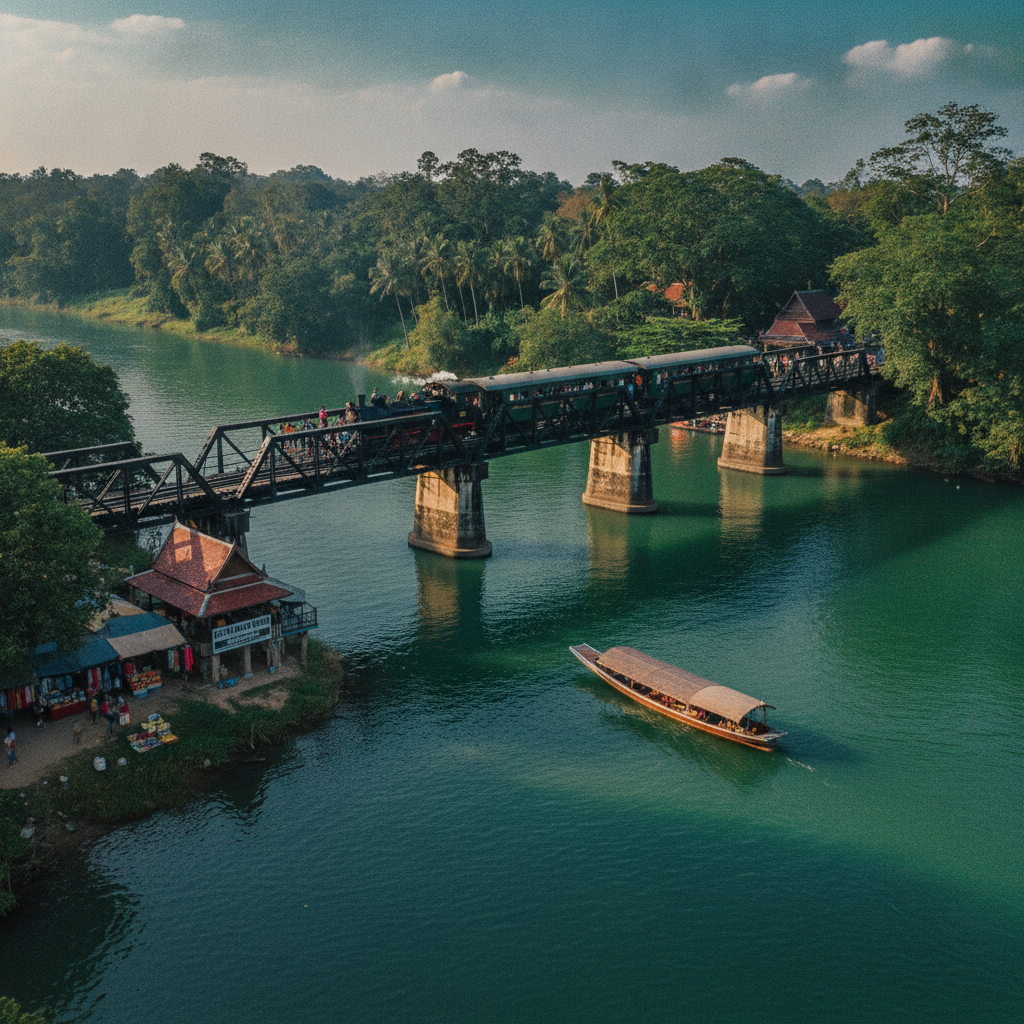
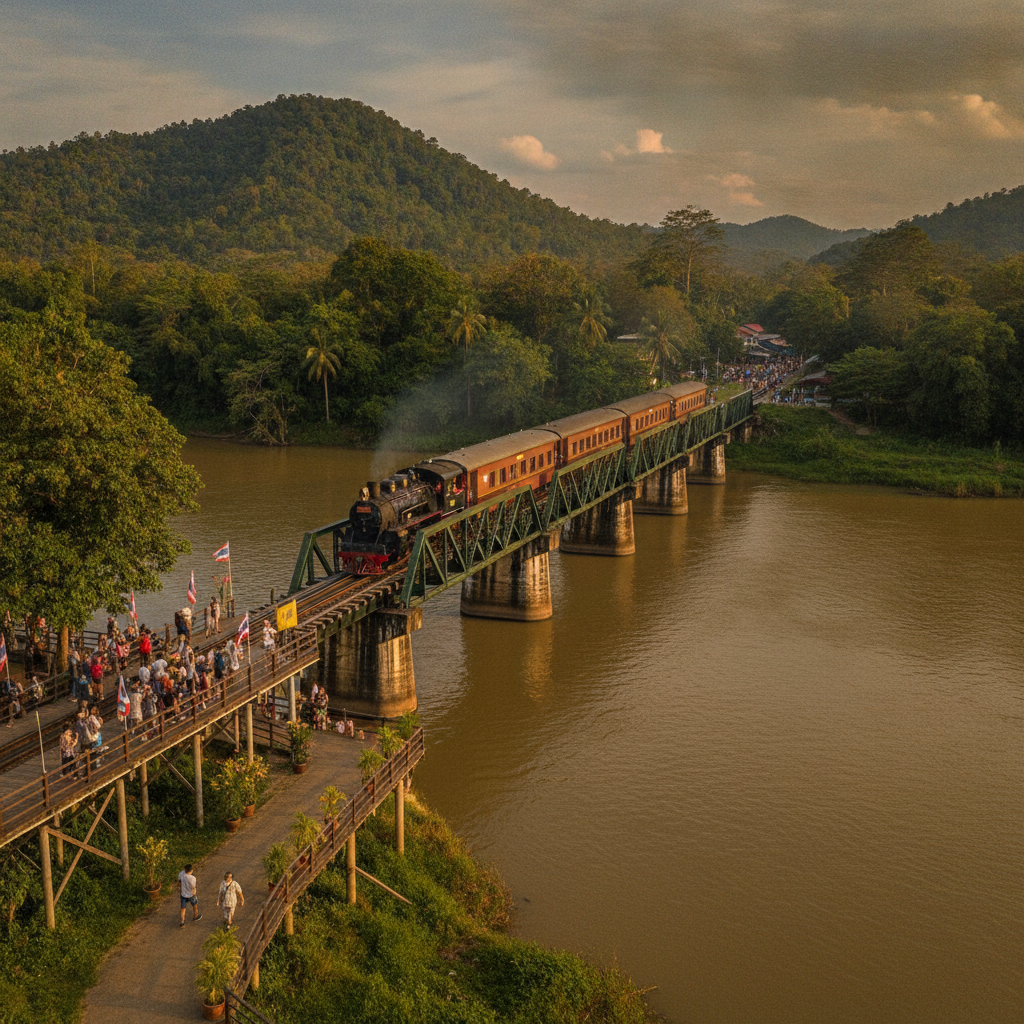
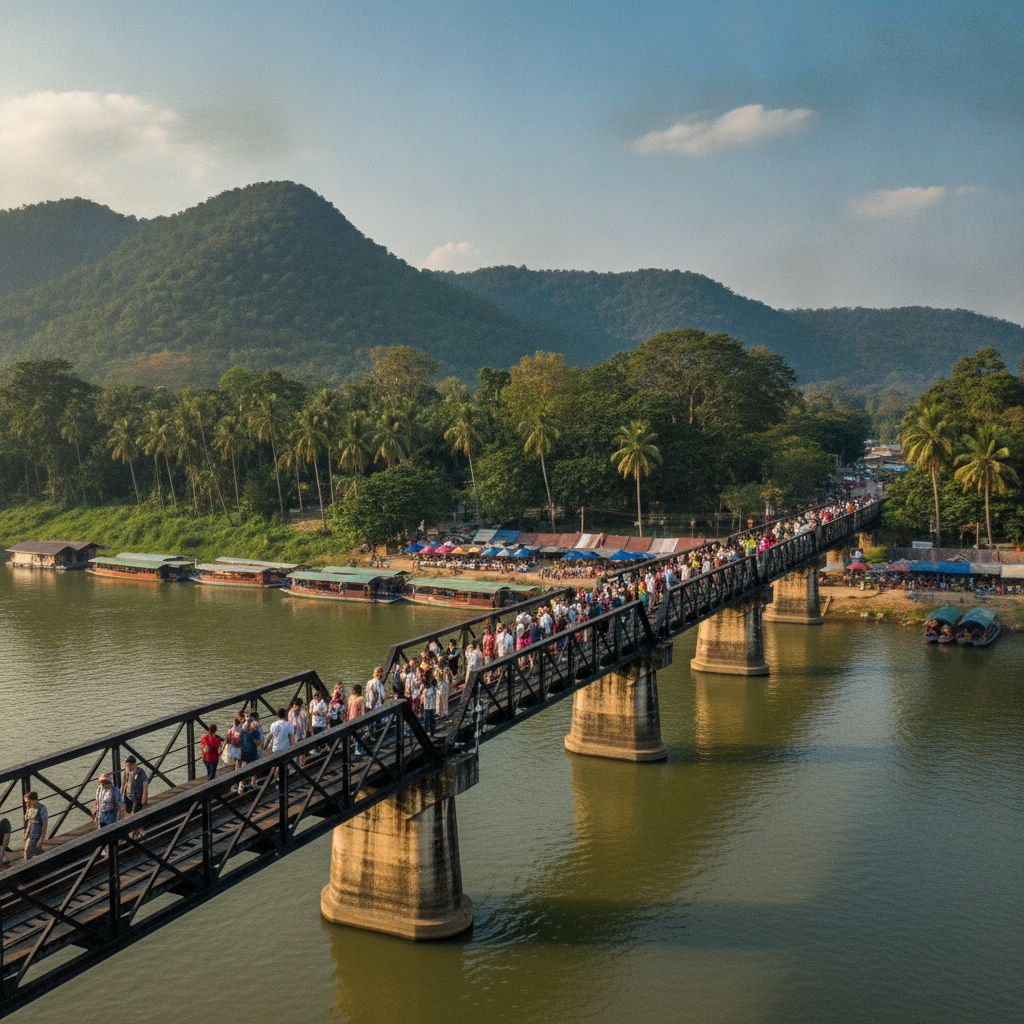
The spirit houses (san phra phum) at the Bridge on the River Kwai and throughout the Kanchanaburi wartime landscape represent the Thai folk religious response to the mass deaths of the WWII construction — the belief that the spirits of those who die violently or away from home are not at peace creates the spiritual landscape of offering shrines and memorial ceremonies that the Thai community maintains for the unquiet ghosts of the foreign prisoners. The Bridge area's spirit houses (including some specifically maintained for the spirits of the Allied POWs, a cross-cultural extension of the Thai animist belief system to non-Buddhist foreign dead) are the most accessible expression of the spiritual dimension of the historical trauma's continuing presence in the Kanchanaburi consciousness.
- 5
Brahmanist Shrine Chedi
The ancient Dvaravati period chedi (stupa) remains visible in the Kanchanaburi area (the province has several early Buddhist sites dating to the Dvaravati kingdom that preceded the Khmer and Thai polities in the region) document the pre-Thai religious history of the Mae Klong valley — the Dvaravati period (6th-11th centuries CE) was a Mon Buddhist kingdom whose architecture and iconography represents the earliest layer of the Buddhist tradition in mainland Southeast Asia, predating the Khmer architectural influence visible at Ayutthaya. The Dvaravati archaeological remains accessible in the Kanchanaburi area provide the deepest historical time depth available in the province's archaeological landscape.
- 6
Candle Festival Ceremony
The annual candle procession (Thian Phansa) at the beginning of Buddhist Lent (Khao Phansa, typically in July) at the Kanchanaburi temples creates the most spectacular religious ceremony accessible in the province — the elaborately carved and decorated wax candles paraded on floats through the town streets before being donated to the temples for use during the three-month Lent period are the most visually impressive expressions of the Thai Buddhist religious craftsmanship tradition accessible in the province. The candle festival is celebrated at its most elaborate in the Ubon Ratchathani province (in the northeast), but the Kanchanaburi version is the most accessible example of this specifically Thai Buddhist festival tradition within the reach of the western Thailand tourist circuit.
Walk this route with audio
Stories play automatically as you reach each stop — no tapping needed.