Catalhoyuk: The 9,000-Year-Old Neolithic Settlement, the Mother Goddess Figurines, the Wall Paintings, the Rooftop City Plan, the Ian Hodder Excavation, and the UNESCO World Heritage Designation
The Catalhoyuk route covers the Neolithic settlement founded around 7500 BC as one of the world first large human settlements, the famous seated goddess figurines, the wall paintings with the oldest known landscape representation, the unusual rooftop entry city plan, the Cambridge archaeologist Ian Hodder re-excavation, and the 2012 UNESCO inscription.
- 1
Catalhoyuk: The 9,000-Year-Old Settlement
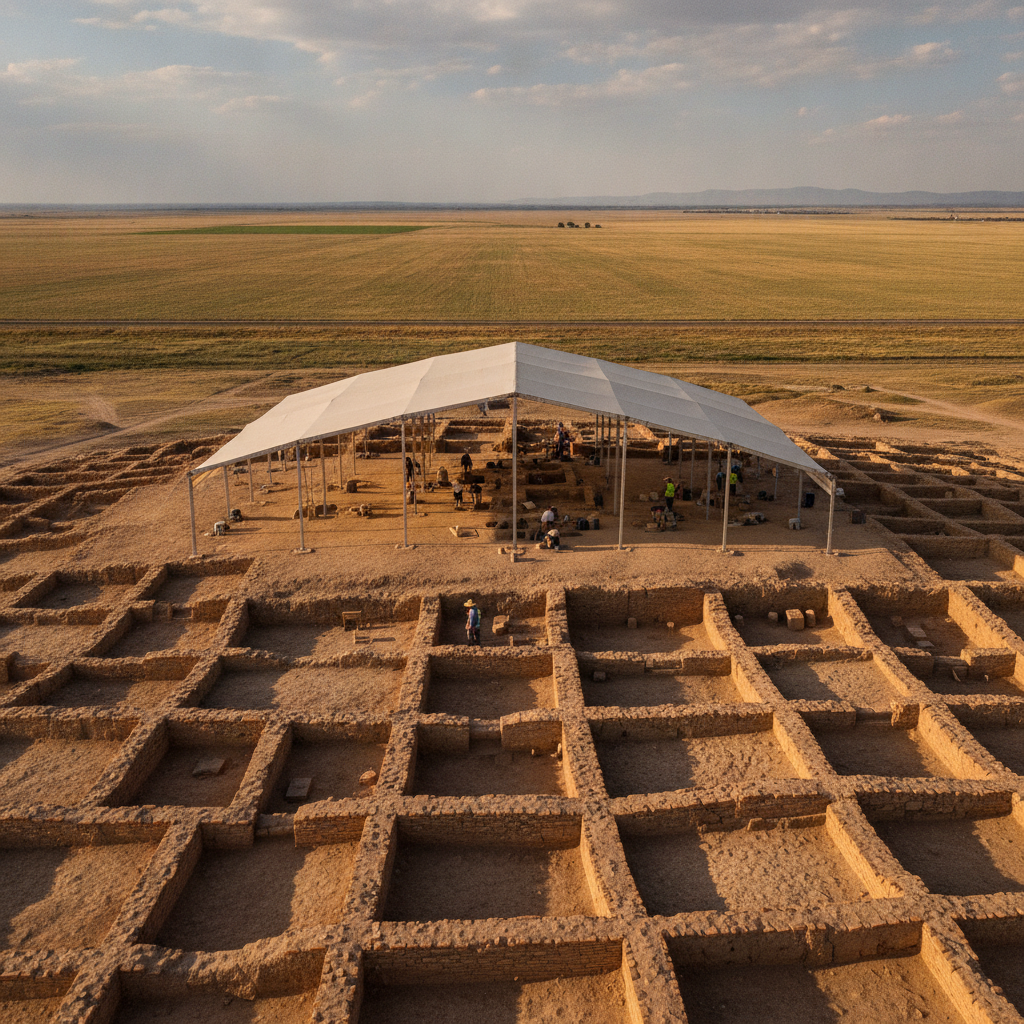
Catalhoyuk, the Neolithic settlement on the Konya plain 52 kilometers south of Konya city founded around 7500 BC and continuously occupied until approximately 5700 BC, was one of the world largest Neolithic settlements with up to 8,000 inhabitants at its peak, making it the most densely populated single Neolithic site yet discovered anywhere in the world. The settlement was excavated first by James Mellaart in the 1960s whose spectacular discoveries of wall paintings and goddess figurines made Catalhoyuk the most famous archaeological site in Turkey before the Mellaart controversy over forged documents suspended the excavation. UNESCO inscribed the site in 2012 as one of the earliest examples of a complex human settlement.
- 2
The Rooftop City: The Unusual Urban Plan
The most architecturally distinctive feature of Catalhoyuk is the complete absence of streets: the mud-brick houses were built directly against each other without lanes or alleys between them, and the inhabitants entered and exited their houses through holes in the flat rooftops by ladder, living above the houses on the continuous rooftop plaza. The rooftop city plan of Catalhoyuk is the most unusual single urban layout in archaeological history and the clearest evidence that the concepts of street, facade, and public space that organize every other large human settlement were not universal features of early urban life but inventions that required time to develop.
- 3
Mother Goddess Figurines: The Catalhoyuk Icon
The seated goddess figurines found at Catalhoyuk by James Mellaart in the 1960s - the most famous showing a large woman seated on a throne flanked by two leopards, now in the Museum of Anatolian Civilizations in Ankara - became the most celebrated single Neolithic sculpture in the world and the central artifact in the scholarly debate about prehistoric goddess religion and matriarchal societies. The Catalhoyuk figures prompted the feminist archaeologist Marija Gimbutas to develop the influential but contested Old European Goddess theory. The Ian Hodder re-excavation has found that the figurines were deposited in rubbish contexts suggesting a less ceremonial function than Mellaart supposed.
- 4
Catalhoyuk Wall Paintings: The First Landscape
The wall paintings of Catalhoyuk discovered by Mellaart include what he identified as the oldest known landscape painting in the world - a schematic representation of a settlement with a double-peaked mountain above it, interpreted by Mellaart as the erupting Hasan Dagi volcano visible from the Konya plain. If the volcanic interpretation is correct, this 8,000-year-old painting is the oldest representation of a volcanic eruption and the oldest topographic landscape image in the history of art. The Catalhoyuk wall paintings also include the first known hunting scenes and the most elaborate single decorative program in any Neolithic building.
- 5
Ian Hodder: The Cambridge Re-Excavation
The Catalhoyuk Research Project led by Cambridge archaeologist Ian Hodder since 1993 has applied the most theoretically sophisticated single archaeological methodology in Turkey, using the reflexive method that treats the excavation process itself as data and involving local community members and school children alongside the international research team. The Hodder excavation has produced the most comprehensive single dataset on Neolithic domestic life in the world including the seasonal occupation patterns, the kinship networks determined from skeletal DNA analysis, and the food remains that document the diet and the agricultural practices of the Catalhoyuk community.
- 6
Catalhoyuk Visit: The Site Museum and the Dig Experience
The Catalhoyuk visitor experience includes the well-designed on-site museum with replica house interiors, the buried reproduction of a Catalhoyuk house that visitors can enter to experience the original rooftop-entry-only spatial plan, and the observation walkways over the active and the stabilized excavation areas where the mud-brick house platforms, the central hearths, and the burial platforms under the sleeping platforms are visible. The July and August field season allows visitors to observe the international excavation team at work in the most accessible single active major archaeological excavation in Turkey.
Walk this route with audio
Stories play automatically as you reach each stop — no tapping needed.
More in Konya
Beysehir Day Trip: The Esrefoglu Wooden Mosque, Beysehir Lake Ecology, the Sugla Wetland Bird Sanctuary, Takkeli Mountain, and the Anatolian Plateau Landscape
Rumi: Life and Philosophy, the Masnavi Spiritual Poem, the Transformative Meeting with Shams of Tabriz, the Mevlevi Order Founding, and the Global Legacy of the Most Translated Poet
Konya Essential: Mevlana Museum and the Tomb of Rumi, the Sema Whirling Ceremony, the Karatay Medrese, Ince Minareli Medrese, the Aladdin Mosque, and the Seljuk Architectural Heritage
Konya Practical: Transport from Ankara and Istanbul, the Conservative City Navigation, the Best Accommodation Options, the Konya Circuit Timing, the Cappadocia Connection, and the Departure Summary
Konya Cuisine: Etli Ekmek Meat Flatbread, Firin Kebab, Sac Kavurma, the Mevlana Sugar Festival, the Konya Bazaar Food Culture, and the Conservative City Eating Tradition