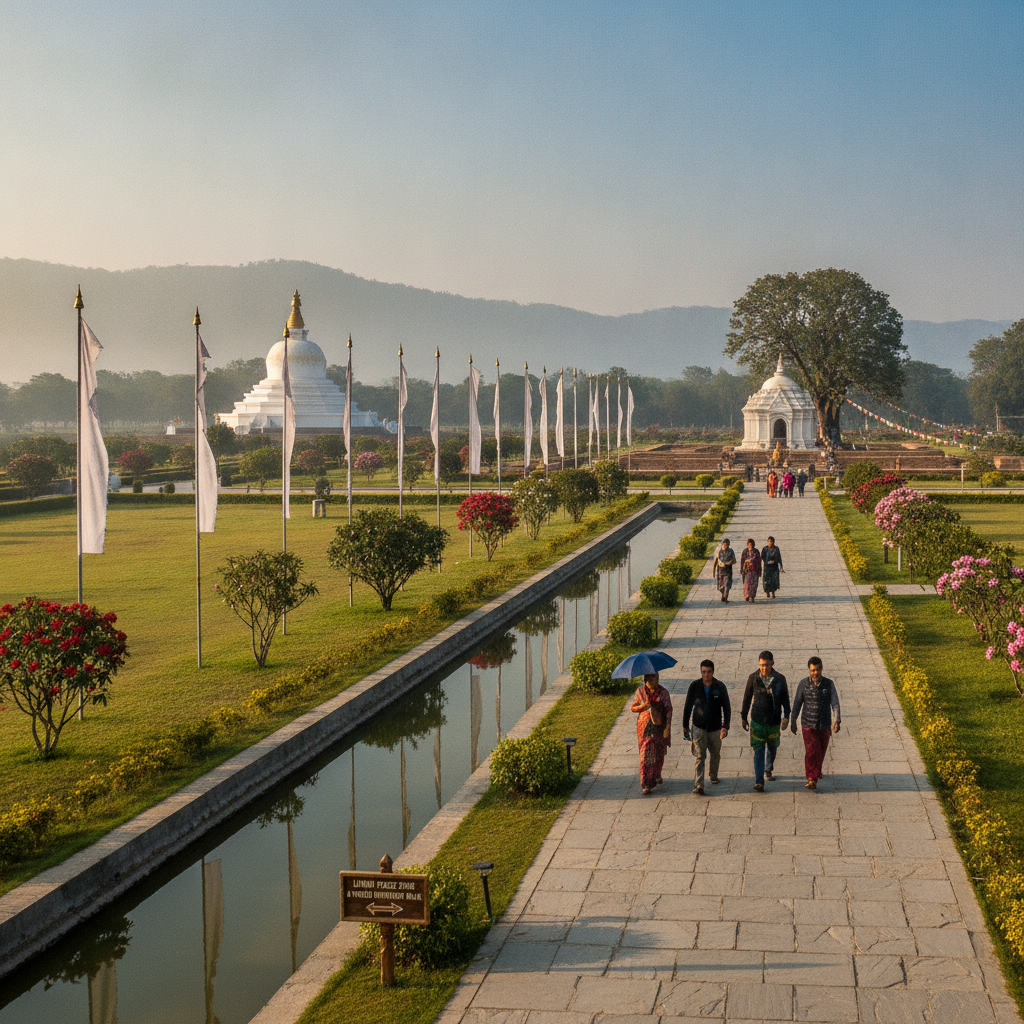
Lumbini Ancient Ruins & Heritage Walk
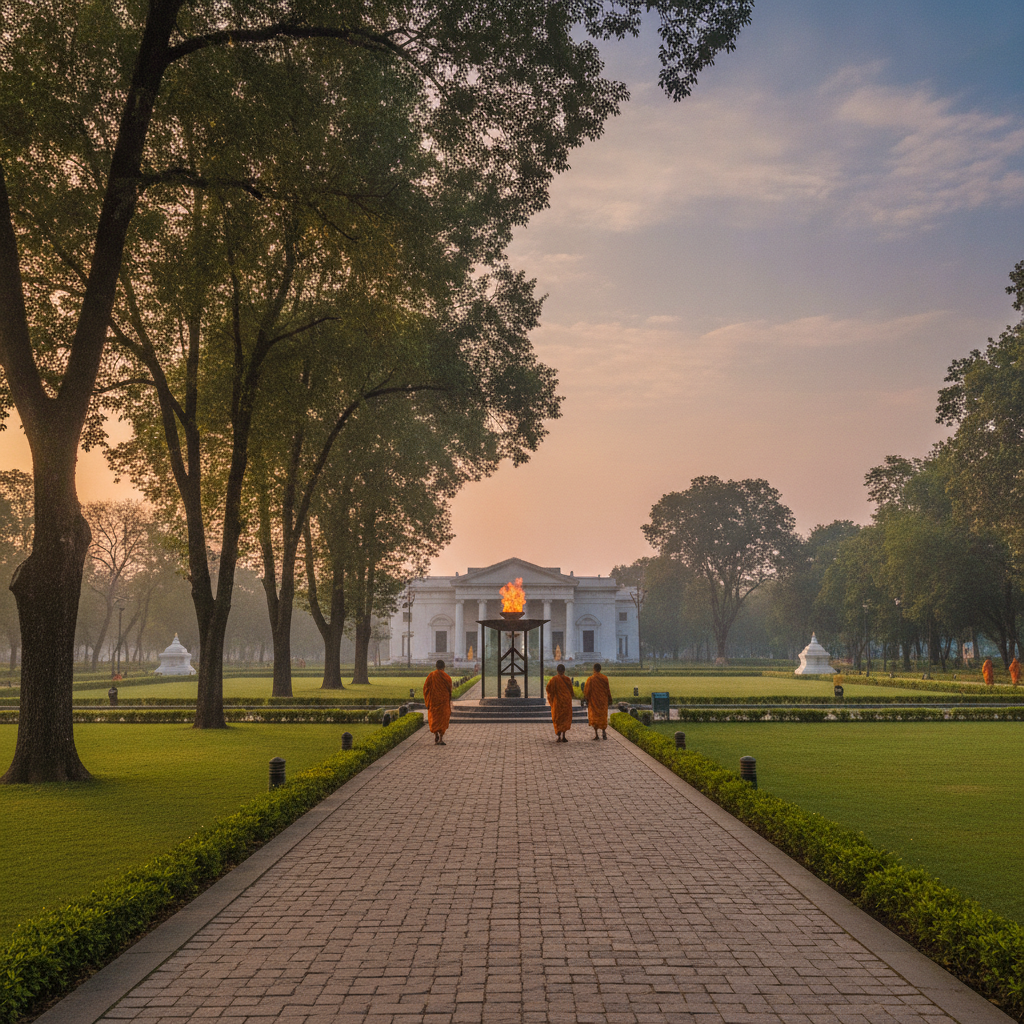
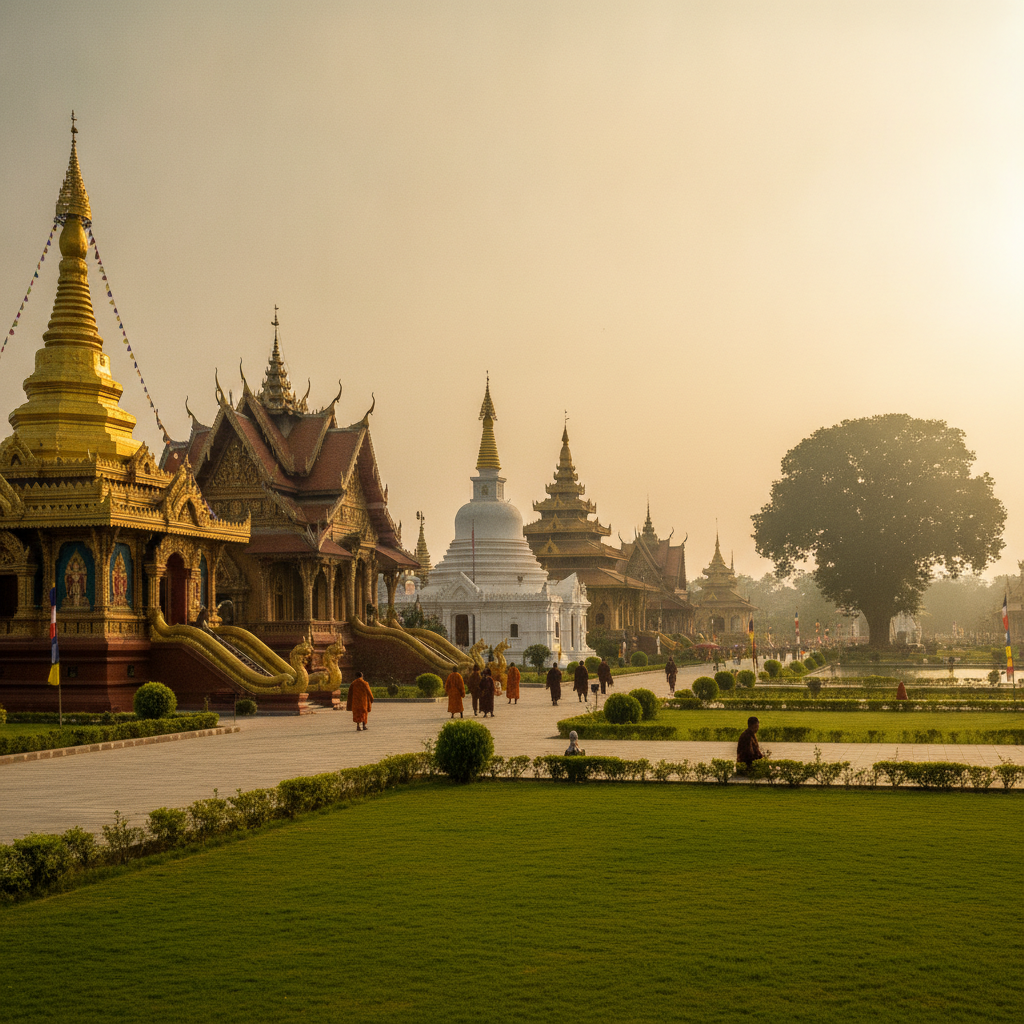
Read 2,500 years of history at Lumbini — the archaeological record preserved at Lumbini spans from the pre-Buddhist Vedic period through the Mauryan, Kushan, and medieval Malla periods, with the ruins of the successive monastery complexes and the devotional objects left by pilgrims across the millennia creating the most temporally deep single Buddhist heritage site accessible.
- 1
Ancient Monastery Ruins
The ancient monastery ruins in the Lumbini Sacred Garden (the exposed brick remains of the successive monastic establishments that surrounded the birthplace from the 3rd century BCE through the medieval period, the archaeological sections revealing the floor levels, the votive stupa mounds, and the terracotta drain systems of the different construction phases) are the most historically layered single archaeological site accessible in Nepal — the ruins' specific historical sequence (the earliest strata dating to the Mauryan period when Ashoka's pilgrimage established the first formal monastic complex, the later Kushan period expansion visible in the different brick size and the more elaborate spatial organisation, and the medieval reconstruction visible in the uppermost exposed stratum) creates the most completely Buddhist-architectural-history-surveying single archaeological site accessible in South Asia. The ruins' specific finds (the terracotta votive plaques, the copper coins from successive dynasties, and the personal devotional objects of the pilgrims — all visible in the on-site interpretive display — providing the most directly human-scale single connection to the two-and-a-half millennia of continuous pilgrimage activity that the Lumbini Sacred Garden has witnessed) make the ancient monastery ruins the most personally touching single historical encounter accessible at the Lumbini site.
- 2
Kapilavastu Museum
The Lumbini Museum adjacent to the Sacred Garden (the archaeological repository housing the excavated finds from the Lumbini site and the surrounding Kapilavastu kingdom that was the Buddha's childhood home, the most completely Buddhist-archaeology-specific single museum collection accessible in Nepal) is the most directly historically evidence-presenting single building accessible at the Lumbini pilgrimage destination — the museum's collections (the terracotta sculptures, the stone column fragments, the ancient coins, and the personal devotional objects recovered from the Lumbini excavations, all displayed with the stratigraphic context that places each object in its specific historical moment from the Mauryan through the Gupta periods) and the museum's interpretive function (the mapping of the Kapilavastu kingdom's extent, the visualisation of the ancient pilgrimage route between Lumbini and the Buddha's family palace site, and the timeline of the known historical pilgrimages to the birthplace from Ashoka through Faxian and Xuanzang to the modern revival) create the most historically comprehensive single Buddhist heritage resource accessible in Nepal. The museum's photographic archive (the historical photographs of the site before the UNESCO conservation programme began, showing the jungle-covered mounds that concealed the ruins before the systematic excavation, and the most dramatically before-and-after single documentation of a Nepal heritage recovery accessible in the country) is the most directly conservation-success-demonstrating single display accessible at the Lumbini heritage complex.
- 3
Tilaurakot Kapilavastu
Tilaurakot (the archaeological site 27km west of Lumbini identified as the ancient Kapilavastu — the palace complex of King Suddhodana where the young Siddhartha Gautama lived before his renunciation, the most directly biographical single Buddhist site accessible in Nepal outside the birthplace itself) is the most personally narrative-connected single archaeological destination accessible from the Lumbini pilgrimage base — the Tilaurakot ruins (the excavated palace walls, the ancient city gate through which the young Siddhartha departed on his great renunciation night, and the archaeological museum displaying the personal objects recovered from the palace compound) and the site's biographical significance (the location where the future Buddha spent the first 29 years of his life in the privilege of the royal household, where he encountered the old man, the sick man, the corpse, and the renunciant that motivated his departure, and through whose east gate the most historically consequential single human departure accessible in the Buddhist world's founding narrative occurred) create the most completely story-locating single excursion accessible from the Lumbini base. The journey from Lumbini to Tilaurakot (the 27km approach through the Nepal Terai landscape that is essentially the same agricultural plain crossed by the biographical accounts of the prince's departure) provides the most directly pilgrimage-journeying single experience accessible between the two most important biographical Buddhist sites in Nepal.
- 4
Niglihawa Ashoka Pillar
The Niglihawa Ashoka Pillar (the second Ashokan pillar accessible in the Lumbini region, located at the site commemorated by Ashoka as the birthplace of Konakamana Buddha — one of the historical Buddhas who preceded Gautama in the Buddhist cosmological tradition) is the most directly Ashokan single monument accessible near the Lumbini pilgrimage circuit — the pillar's inscription (recording Ashoka's enlargement of the Konakamana stupa — the only surviving example of the Emperor's records of his stupa building programme accessible in this region) and the pillar's archaeological context (the remains of the ancient stupa mound visible adjacent to the pillar, the site's excavation revealing the same successive construction phases as the Lumbini Sacred Garden) create the most completely Mauryan-pilgrimage-circuit-recovering single visit accessible from the Lumbini base. The Niglihawa site's remote character (the pillar located in a rural field setting rather than the managed heritage complex of Lumbini, the approach through the Nepal countryside and the site visible with no other tourist infrastructure) provides the most authentically archaeological single pillar encounter accessible in the region, the contrast with the managed Lumbini experience revealing the most directly unmediated single ancient monument accessible in the Nepal Buddhist heritage circuit.
- 5
Gotihawa Archaeological Site
The Gotihawa archaeological site (the location 6km from Lumbini where an Ashokan pillar base and the fragmentary remains of the pillar shaft itself are the only surviving evidence of the site Ashoka commemorated as the birthplace of Krakucchanda Buddha — another of the ancient predecessors of Gautama in the Buddhist canonical list of the seven Buddhas) is the most archaeologically fragmentary and most historically evocative single site accessible on the Lumbini pilgrimage circuit — the Gotihawa pillar's condition (only the base section remaining above ground, the shaft broken and partially buried, presenting the most directly damaged single Ashokan monument accessible in the region) and the site's rural setting (the broken pillar base in the midst of the agricultural landscape, with no interpretive signage and only the basic fencing indicating the significance of the location) create the most contemplatively direct single encounter with the ancient past accessible in the Lumbini area. The site's minimal infrastructure (the contrast with the extensively developed Lumbini Sacred Garden revealing the conservation challenges facing the minor Buddhist sites of the Nepal Terai) provides the most directly conservation-challenge-demonstrating single ancient site visit accessible in the Lumbini pilgrimage circuit.
- 6
Lumbini Cultural Museum
The Lumbini Cultural Museum in the Monastic Zone (the museum dedicated to the living cultural heritage of Lumbini and the surrounding region — the traditional Tharu culture of the Terai lowland, the festival traditions of the Nepal Buddhist communities, and the pilgrimage history of the site from the ancient accounts through the colonial rediscovery to the UNESCO World Heritage designation) is the most broadly contextualising single cultural institution accessible in the Lumbini complex — the museum's Tharu section (the documentation of the indigenous Tharu community's traditional relationship with the Lumbini site and the surrounding Terai landscape, the most directly community-history-specific single display accessible in the Lumbini cultural infrastructure) and the pilgrimage history section (the accounts of the Chinese pilgrims Faxian (399 CE) and Xuanzang (637 CE) whose written records preserved the knowledge of Lumbini's exact location through the centuries when the site was overgrown and forgotten, the archaeological rediscovery by Alois Führer in 1896, and the subsequent excavation and development programme creating the most completely documented single heritage recovery story accessible in Nepal) create the most historically comprehensive single cultural museum visit available at the Lumbini heritage destination.
Walk this route with audio
Stories play automatically as you reach each stop — no tapping needed.