Lumbini Sunrise & Terai Nature Walk
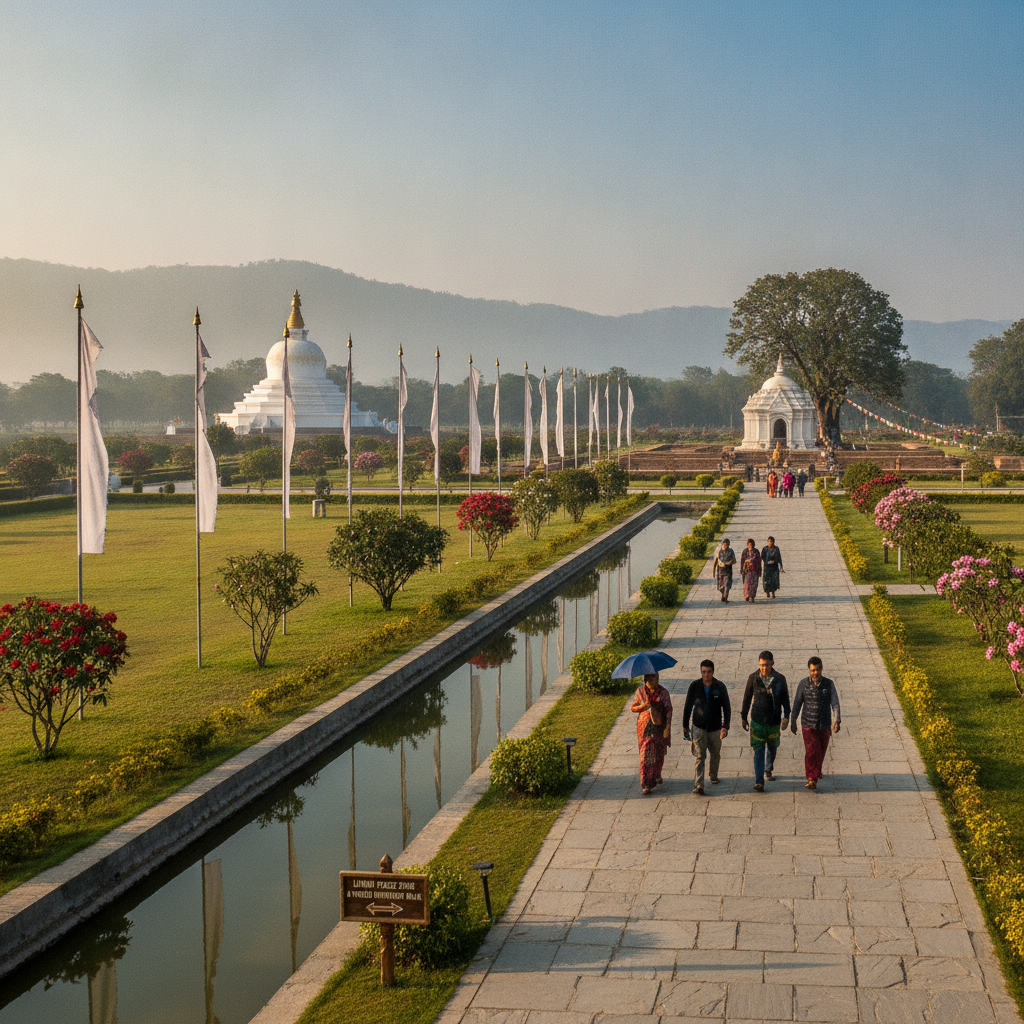
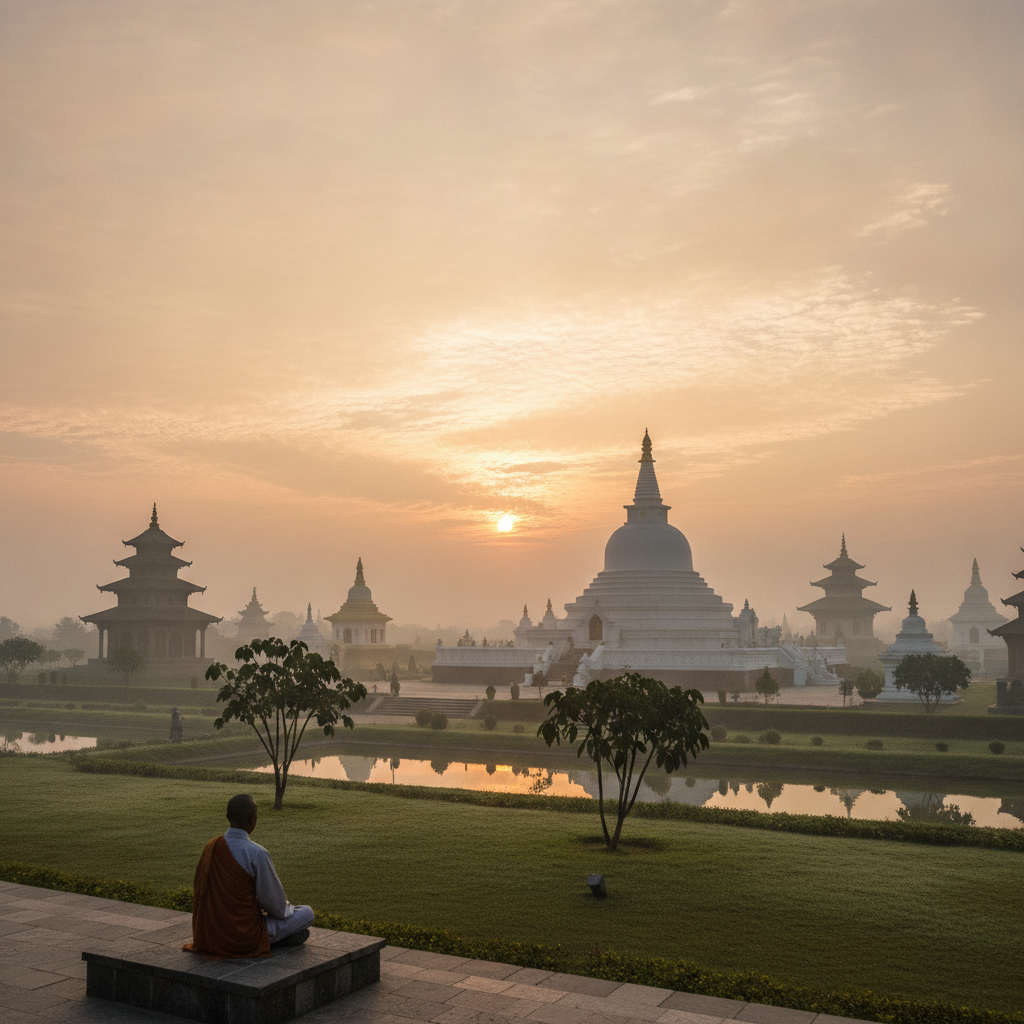
Discover Lumbini's natural side — the wetlands, the sal forest fragments, and the bird-rich canal system of the Lumbini zone support a remarkable natural diversity adjacent to the sacred site, and the sunrise over the Himalayan foothills visible from the Lumbini Peace Park creates the most spiritually framed single natural morning accessible in Nepal.
- 1
Himalayan Sunrise View
The Himalayan sunrise view from the Lumbini Peace Park (the moment on clear winter mornings when the snow peaks of the Dhaulagiri and the Annapurna massifs are visible above the flat Terai horizon 100km to the north, the white peaks catching the first sunlight above the Lumbini landscape) is the most spiritually contextualising single natural view accessible in the Nepal lowland — the view's specific meaning at Lumbini (the Himalayan peaks visible from the birthplace of the historical Buddha, the mountains that were the visual backdrop to the young Siddhartha's childhood at Kapilavastu and whose landscape formed the closest-to-sacred single natural environment in the Indian subcontinent's spiritual geography) and the sunrise's quality at the Terai elevation (the flat landscape allowing the unobstructed eastern horizon view across which the sun rises before any geographical feature interrupts the disc's emergence, creating the most geometrically complete single sunrise accessible in Nepal's lowland zone) create the most completely symbolically and naturally combined single morning experience accessible at the Lumbini destination. The Himalayan view's seasonal availability (the clearest visibility from October through February when the monsoon haze has cleared and the winter air is the most transparently atmospheric accessible in Nepal's lowland, the peaks appearing as the most dramatically sized single geological feature visible from any heritage site in Nepal) makes the Lumbini winter sunrise the most sought-after single natural event accessible at the Buddhist pilgrimage destination.
- 2
Canal Bird Survey
The canal bird survey in the Lumbini Monastic Zone (the systematic birdwatching walk along the canal network that irrigates the monastic gardens, the water surface and the bankside vegetation supporting a remarkably diverse bird community that contrasts with the managed religious landscape of the monastery buildings and the pilgrimage paths) is the most unexpectedly wildlife-productive single walk accessible in the Lumbini complex — the canal bird community (the pied kingfisher hovering above the canal water, the oriental darter perched with its wings spread on the canal bank tree above the water, and the various heron and egret species visible at the canal edge providing the most continuously bird-active single wildlife corridor accessible in the Lumbini heritage zone) and the canal's migrant species (the winter passage waders and the summer breeding kingfishers and the bee-eaters that use the Lumbini canal system as a rest and feeding stop on the Terai migration route creating the most seasonally variable single birdwatching encounter accessible at the Buddhist heritage site) create the most biodiversity-revealing single natural walk accessible at the Lumbini religious destination. The contrast between the ornate monastery architecture and the adjacent natural bird activity (the kingfisher visible from the Thai monastery's garden wall, the cormorant perched on the canal bank beside the Korean monastery's entrance gate) is the most directly nature-and-culture-integrating single observation accessible at the Lumbini monastic zone.
- 3
Sal Forest Fragment
The sal forest fragment at the northern edge of the Lumbini development zone (the remaining woodland of the Shorea robusta sal forest that once covered the entire Terai lowland before the agricultural conversion, preserved as a small nature reserve area adjacent to the Monastic Zone and providing the most directly historically analogous single natural environment to the forest landscape that surrounded the ancient Kapilavastu kingdom) is the most historically resonant single natural habitat accessible in the Lumbini area — the sal forest's specific significance at Lumbini (the same forest type in which Queen Maya Devi rested on her journey to her maternal home and gave birth to the future Buddha in the shade of the sal trees — the Shorea robusta therefore the most biographically significant single tree species accessible in the Buddhist world) and the fragment's ecological character (the tall straight sal trunks creating the most cathedral-like single woodland interior accessible in the Nepal Terai, the understory species visible in the filtered light below the sal canopy providing the most directly ancient-Terai-landscape-experiencing single nature walk accessible near the Lumbini sacred site) create the most history-and-nature-combining single walk available in the Lumbini zone.
- 4
Wetland Morning Walk
The wetland morning walk at the Lumbini zone's southern edge (the path along the seasonal and permanent wetlands that form at the edge of the Lumbini development zone, the shallow pools and the reed beds hosting the most waterbird-diverse single natural area accessible within the Lumbini heritage landscape) is the most wildlife-encounter-productive single morning walk accessible outside the monastery zone — the wetland's bird community (the painted stork and the Asian openbill visible at the most accessible single large wading bird concentration in the Lumbini area, the open-billed stork's characteristic crooked bill visible at close range as the birds probe the water for their mollusc prey — the most directly bill-adaptation-demonstrating single bird feeding behaviour accessible in Nepal's lowland) and the wetland's amphibian community (the morning frog chorus audible from the reed beds as the temperature rises, the most acoustically abundant single natural sound accessible in the Lumbini landscape at the transition between the night's coolness and the day's warmth) create the most completely ecological single natural morning accessible in the Lumbini pilgrimage zone.
- 5
Peace Garden Meditation
The Peace Garden meditation at Lumbini (the formal garden area within the heritage zone designed specifically for the outdoor sitting and walking meditation practice, the garden's design incorporating the most contemplatively appropriate single landscape elements accessible in Nepal — the still water, the shade trees, and the uninterrupted sight lines across the garden's open lawn areas) is the most architecturally meditation-purpose-designed single outdoor space accessible in Nepal — the garden's specific features for meditation (the absence of vehicle noise from the car-free heritage zone, the absence of commercial activity within the garden boundary, and the presence of the other practitioners sitting or walking in the same garden creating the most naturally community-supported single outdoor meditation space accessible in the country) and the garden's sacred context (the proximity to the Maya Devi Temple visible at the garden's northern edge, the most spiritually charged single visual available during the garden meditation practice) create the most completely supported single outdoor meditation experience accessible at any Nepal destination. The garden's seasonal character (the lotus flowers visible in the adjacent pond during the July-September flowering season providing the most directly Buddhist-symbolism-laden single natural visual accessible during the peak pilgrimage season meditation practice) makes the Lumbini Peace Garden the most symbolically complete single meditation environment accessible in Nepal.
- 6
Terai Sunset Walk
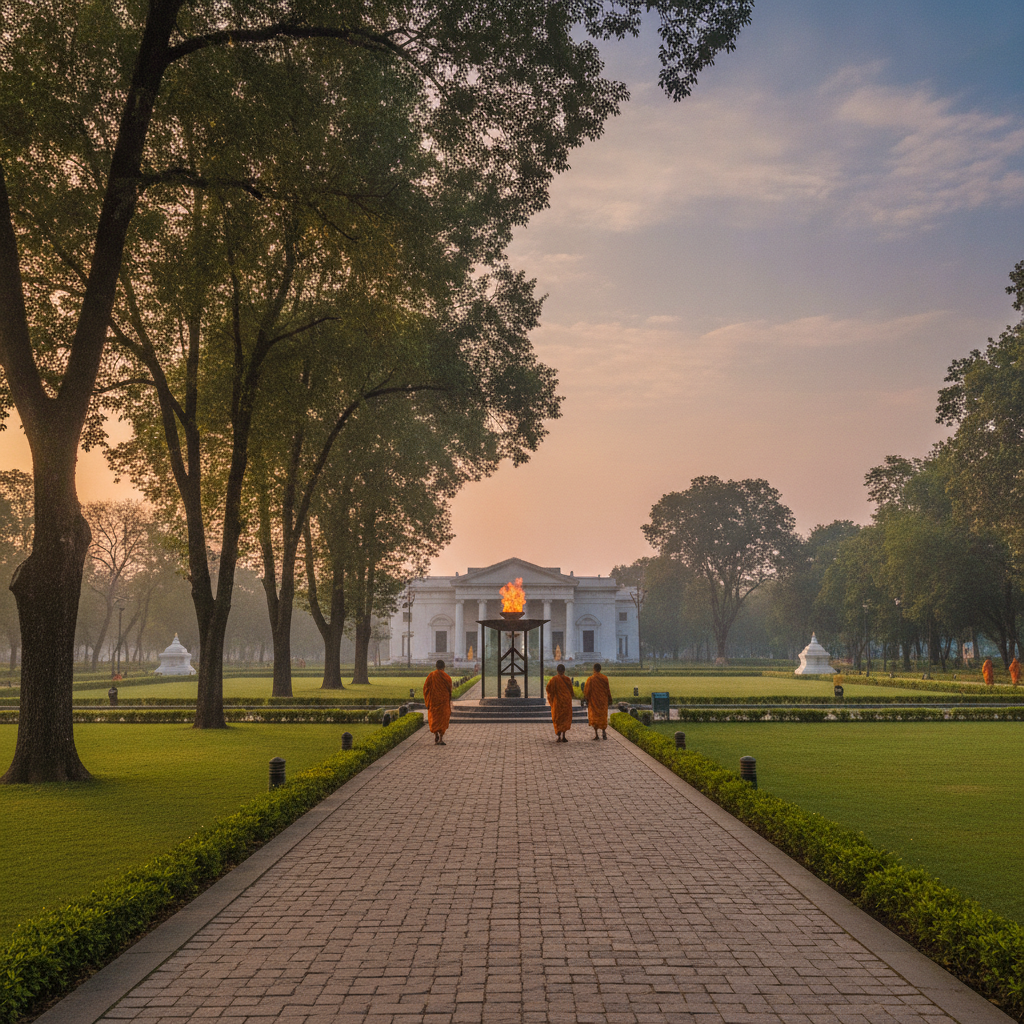
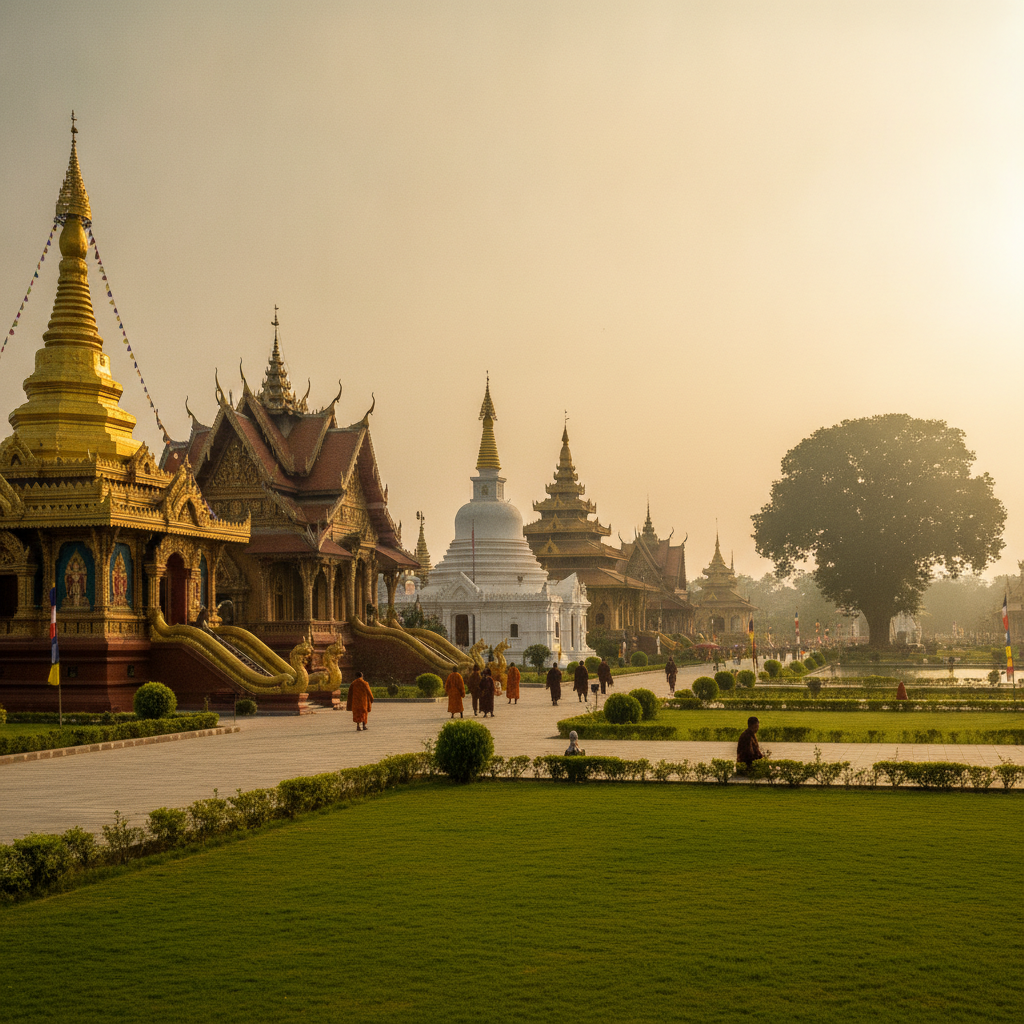
The Terai sunset walk at Lumbini (the evening stroll through the Lumbini heritage landscape as the sun descends over the flat western horizon of the Nepal Terai, the sky's colour progression visible without obstruction across the entire 180-degree western arc and the Himalayan peaks catching the last light in the distant north) is the most panoramically complete single sunset accessible at any Nepal heritage destination — the Terai sunset's specific quality (the unobstructed western horizon of the flat lowland allowing the full arc of the sunset colour, from the first oranges above the horizon through the deepening reds to the purples of the last light visible without the mountain or the forest interruption that limits the sunset view at Nepal's highland destinations) and the Lumbini landscape at sunset (the white stupa of the World Peace Pagoda catching the last direct sunlight, the golden spire of the Thai temple visible in the warm light, and the pilgrims visible on the evening circumambulation path around the Maya Devi Temple in the silhouetting twilight) create the most spiritually and naturally combined single sunset experience accessible in Nepal. The birds audible at the Lumbini sunset (the evening roost gathering of the mynas, the first nightjars beginning their churring call, and the pond herons flying to their roost trees in the deepening dusk) complete the most completely natural single evening soundscape accessible at the Nepal Buddhist heritage destination.
Walk this route with audio
Stories play automatically as you reach each stop — no tapping needed.