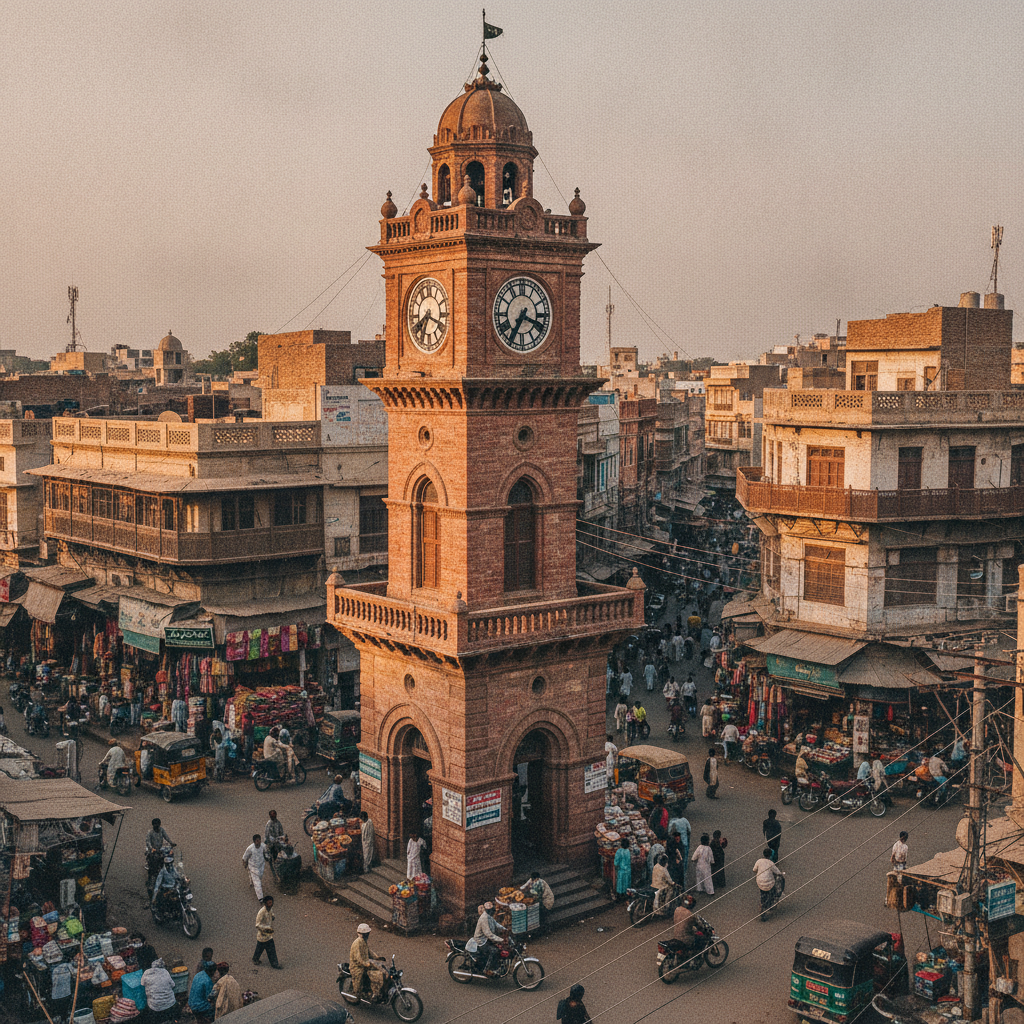
Multan Traditional Crafts Blue Pottery and Camel Skin
Discover Multan's extraordinary craft traditions — the blue glazed pottery that has decorated the city's Sufi shrines for centuries, the camel-skin lamp shades whose painted surfaces glow amber when lit, the embroidered soozi work done by women in the old city lanes, and the block-printed ajrak fabrics that make Multan one of Pakistan's great craft cities.
- 1
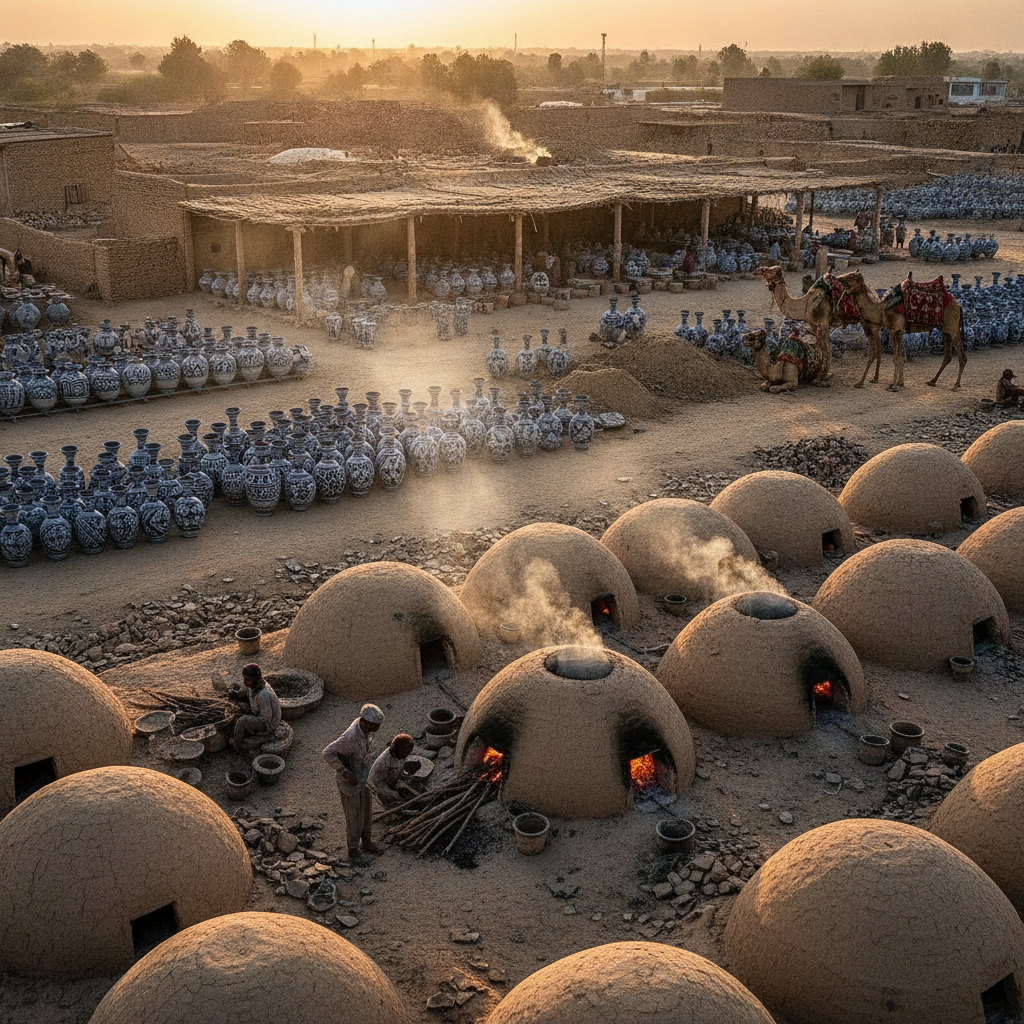
Blue Pottery Factory District
The pottery manufacturing area on the outskirts of the old city where the blue-on-white tiles and vessels are produced — the kilns firing the characteristic glaze of cobalt blue decoration on white slip ground, the craft family workshops maintaining production techniques passed from father to son over generations.
- 2
Camel Skin Craft Workshops
The workshops producing Multan's signature camel skin lacquerware — the stretched camel hide painted with intricate floral patterns and figures, the finished lamps glowing with warm amber light when illuminated, the craft entirely specific to Multan and its tradition of using the by-products of the desert economy.
- 3
Soozi Embroidery Cooperative
A women's embroidery cooperative producing the fine needlework of Multan — the dense floral and geometric patterns worked in silk thread on dark velvet, the embroidery tradition done by women in the old city that combines Persian influence with local Punjabi design sensibility.
- 4
Khussa Shoe Workshop
A traditional khussa (pointed leather slipper) workshop where the embroidered shoes of Multan are made — the colored thread embroidery covering the entire upper in peacock, floral, or geometric patterns, the shoes made to order on traditional lasts by craftsmen who have been making footwear for the shrine visitors for centuries.
- 5
Craft Bazaar Old City
The concentrated craft bazaar in the old city where all Multan's traditional crafts are sold together — the blue pottery stacked in shops alongside camel skin lamps, embroidered cloth, and the dried fruits and spices that have been traded in this market since Multan was a stop on the trans-Asian caravan routes.
- 6
Heritage Craft Museum
The small museum documenting Multan's craft heritage — the historical examples of blue pottery, embroidery, and metalwork showing the evolution of these crafts over centuries and the cultural connections to Persian, Central Asian, and indigenous Punjabi design traditions that combined in Multan's distinctive aesthetic.
Walk this route with audio
Stories play automatically as you reach each stop — no tapping needed.
More in multan
Multan Sufi Music and Qawwali Nights
Multan Extreme Heat and Summer Desert Experience
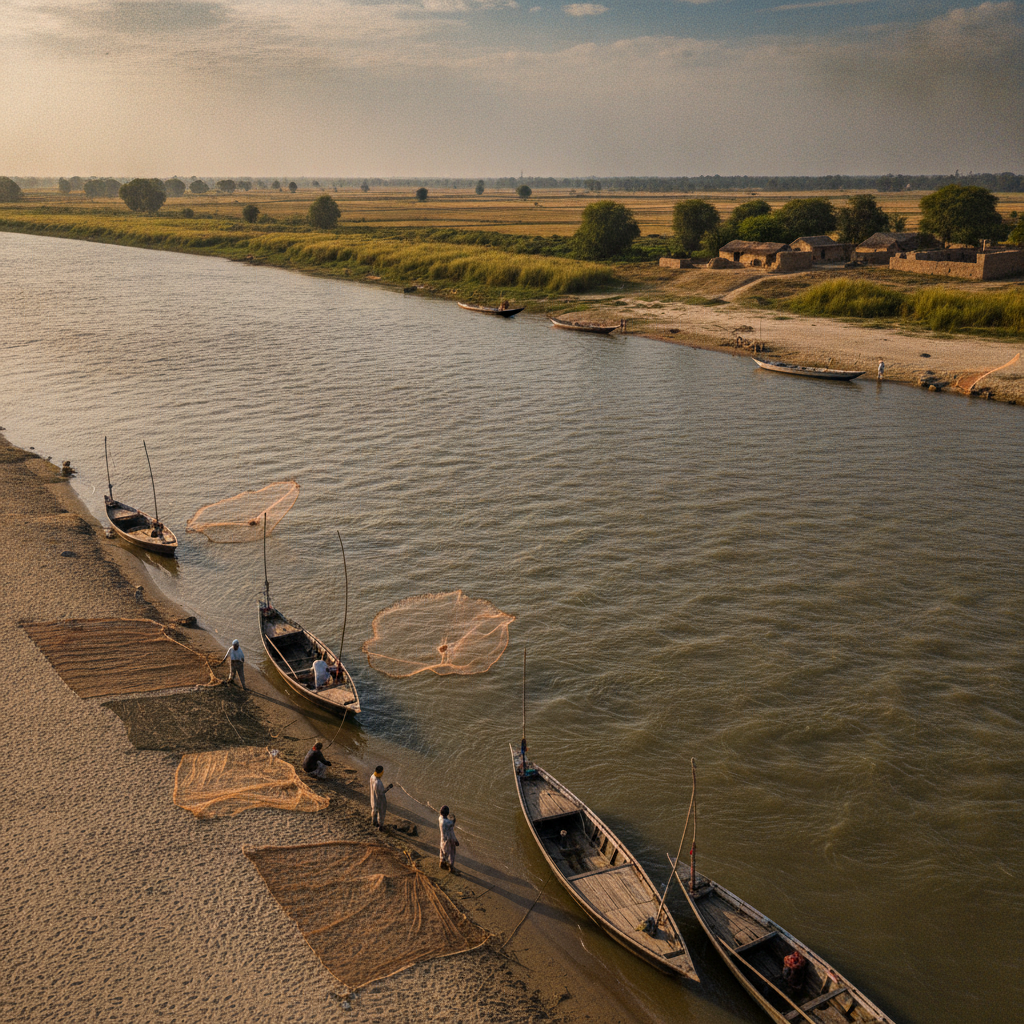
Multan Chenab River and Punjab Riverine Landscape
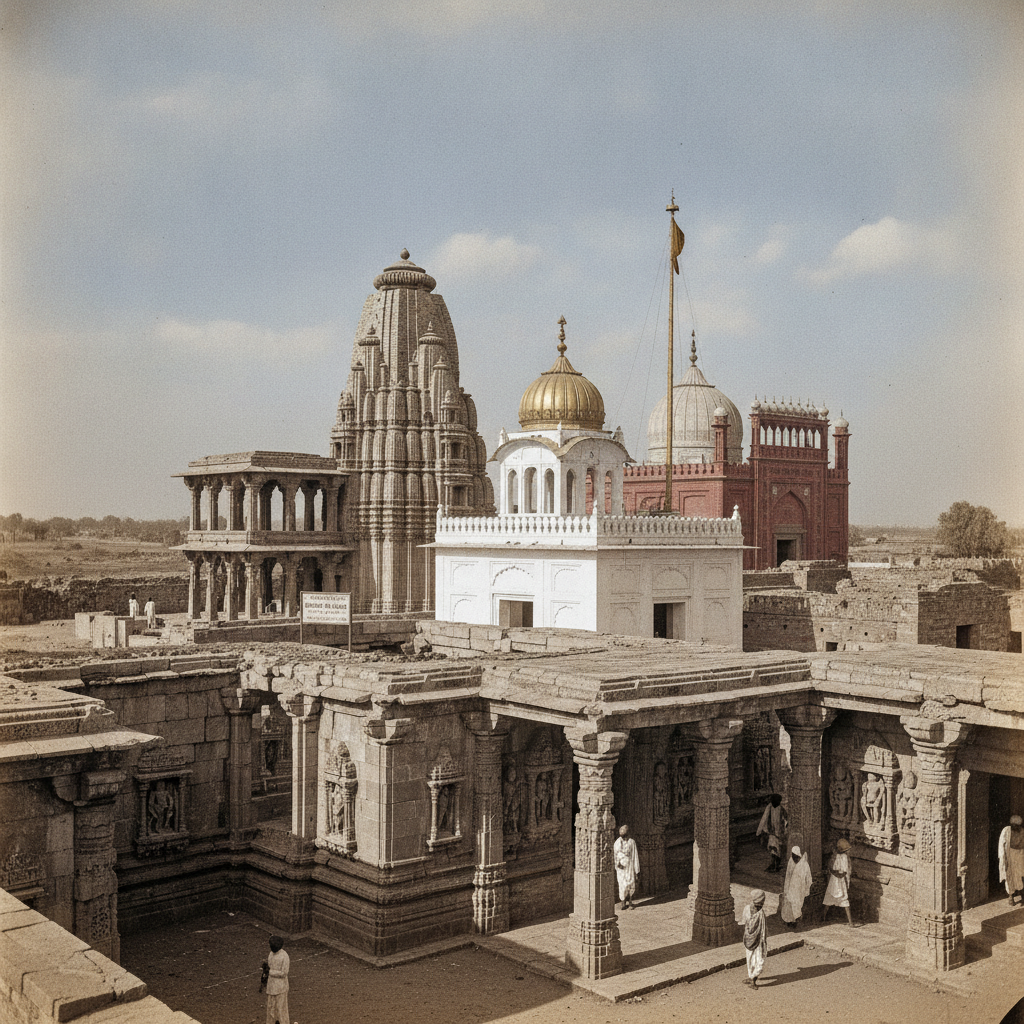
Multan Pre-Partition Hindu and Sikh Heritage