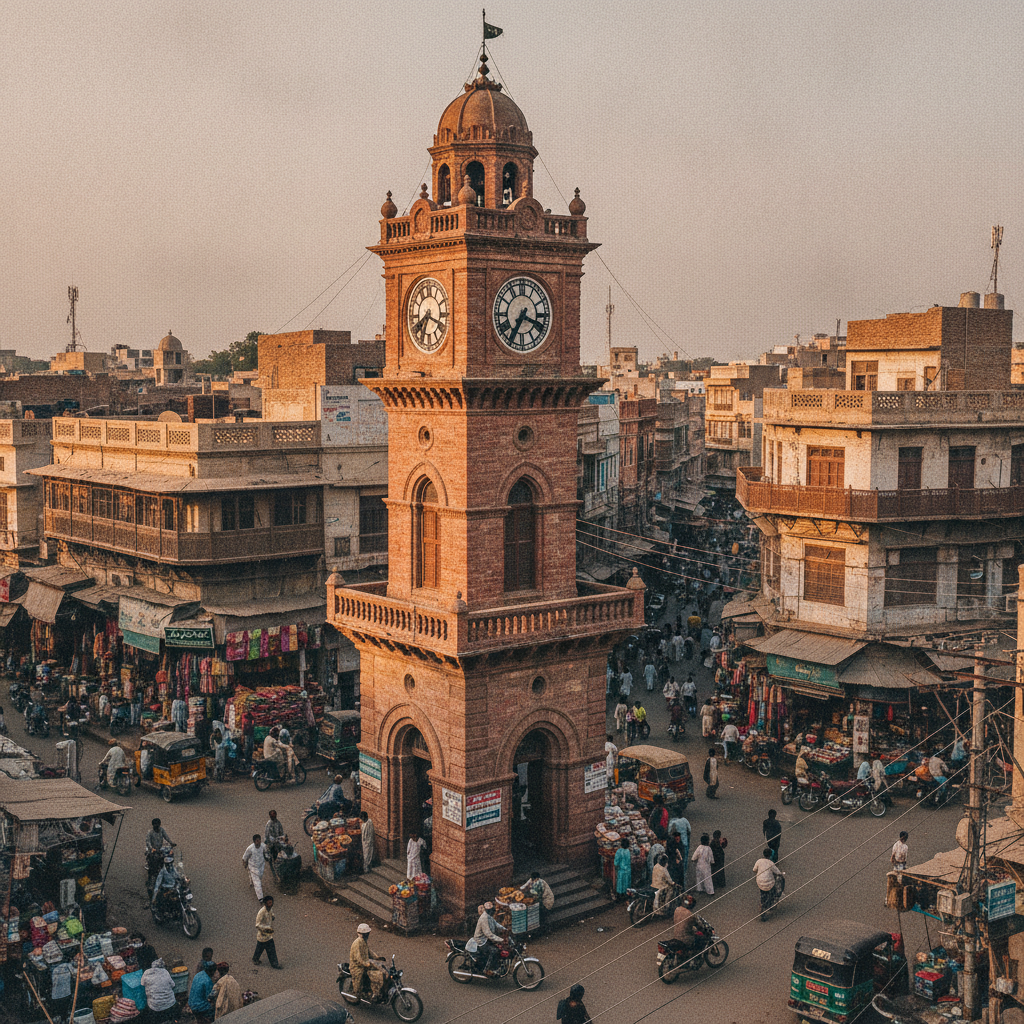
Multan City of Saints Sufi Shrines Walk
Walk Multan's Sufi shrine circuit — the city called Madinat ul Auliya (City of Saints) for the extraordinary concentration of Sufi shrines within its walls, where the tombs of Bahauddin Zakariya, Shah Rukn-e-Alam, and Shamsuddin Sabzwari have drawn pilgrims for 700 years and where the blue-tile architecture of the Tughluq and Lodi periods survives in remarkable condition.
- 1
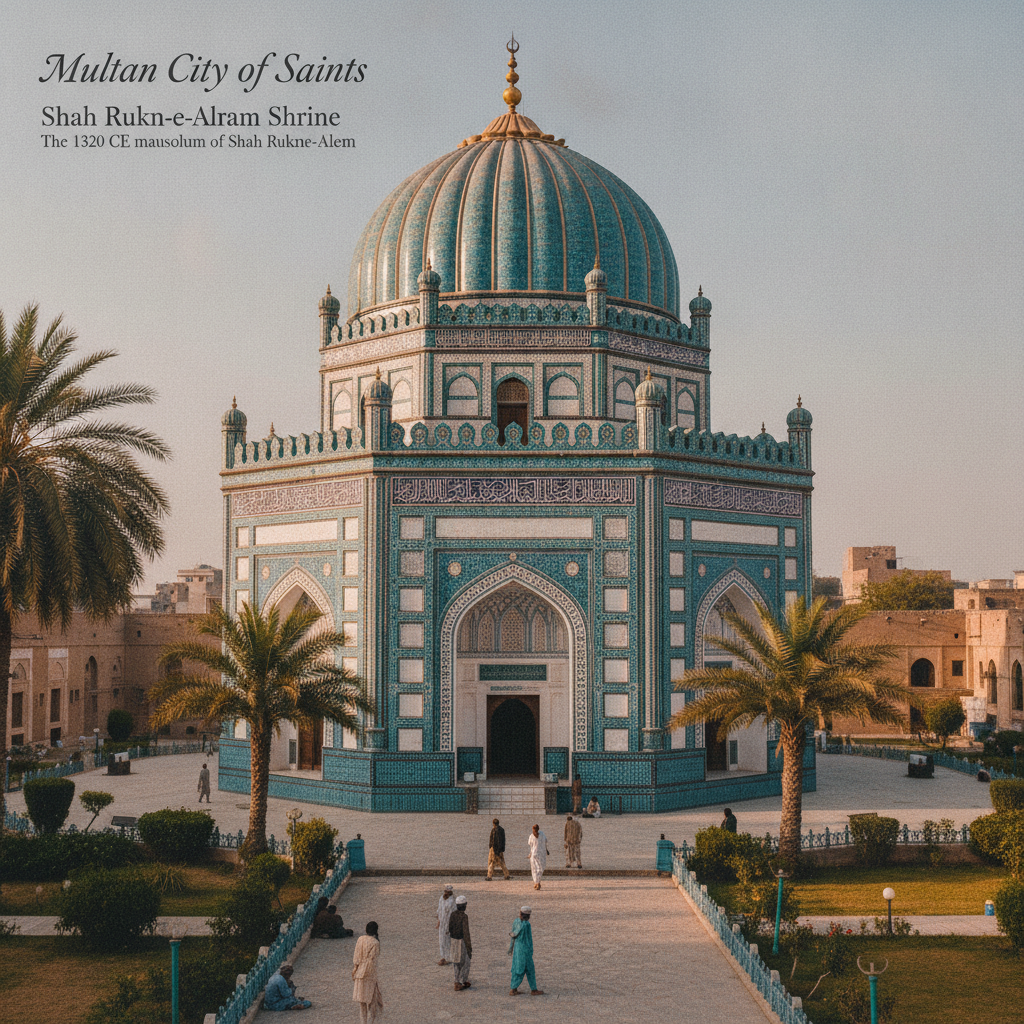
Shah Rukn-e-Alam Shrine
The 1320 CE mausoleum of Shah Rukn-e-Alam — the most architecturally spectacular Sufi shrine in Pakistan, its multi-tiered octagonal drum of blue and white glazed tile rising to a ribbed dome, the structure built by the Tughluq governor and considered one of the finest examples of Tughluq architecture anywhere.
- 2
Bahauddin Zakariya Shrine
The shrine of the 13th-century Sufi master who founded the Suhrawardi order in South Asia — the complex adjacent to Shah Rukn-e-Alam (who was Zakariya's grandson), the two shrines together forming the spiritual heart of Multan and the reason for the city's title as City of Saints.
- 3
Shamsuddin Sabzwari Shrine
The shrine believed to contain the remains of Shams-i-Tabrizi, the Sufi master whose relationship with Rumi transformed Islamic mystical poetry — if authentic, one of the most significant Sufi sites in the world, the tile work of the shrine dome reflecting the same blue-and-gold aesthetic as the other Multan shrines.
- 4
Old City Fort Walls
The remains of the ancient fort walls enclosing Multan's old city — the fortification that protected one of South Asia's oldest continuously inhabited cities, the walls attacked by Alexander the Great in 326 BCE when he was seriously wounded storming the citadel.
- 5
Multan Blue Pottery Workshop
A traditional blue pottery workshop producing the distinctive blue-on-white glazed ceramics that are Multan's most celebrated craft — the pottery tradition that has decorated the city's shrines for centuries, the craftspeople using the same mineral-based blue glaze derived from cobalt and copper oxide.
- 6
Daulat Gate Old City Entry
The historic gateway into Multan's old city — the traditional entry point to the dense lanes of the historic urban fabric where the shrines, bazaars, and residential neighborhoods of one of Pakistan's most ancient cities are compressed within the old fortification boundary.
Walk this route with audio
Stories play automatically as you reach each stop — no tapping needed.
More in multan
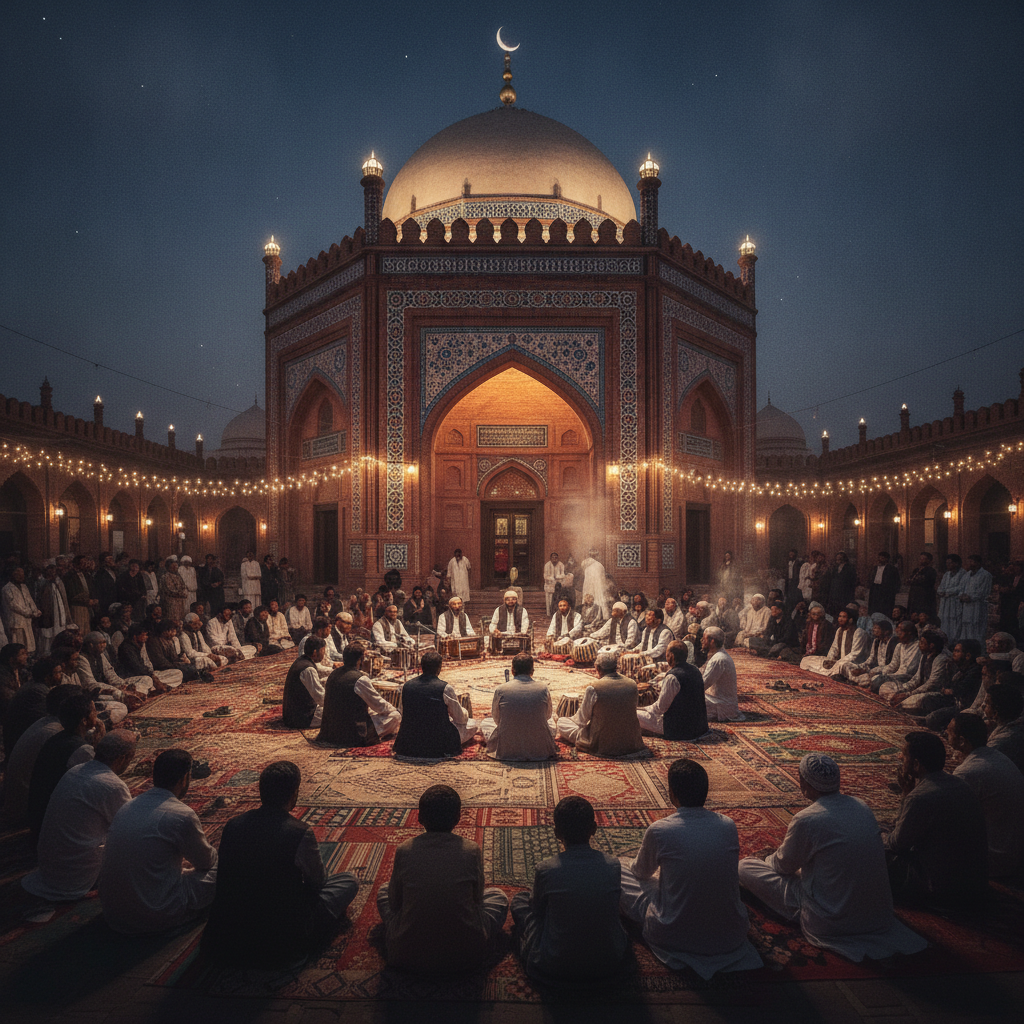
Multan Sufi Music and Qawwali Nights
Multan Extreme Heat and Summer Desert Experience
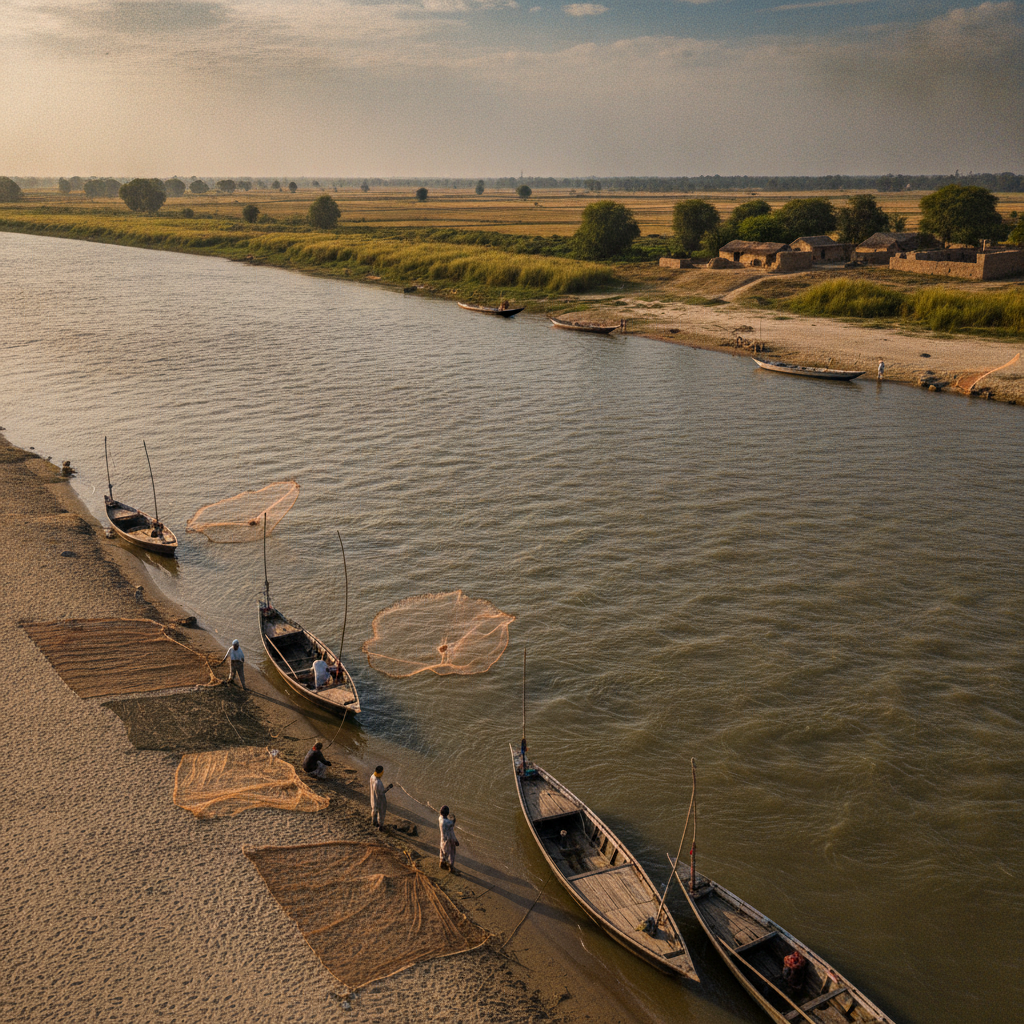
Multan Chenab River and Punjab Riverine Landscape
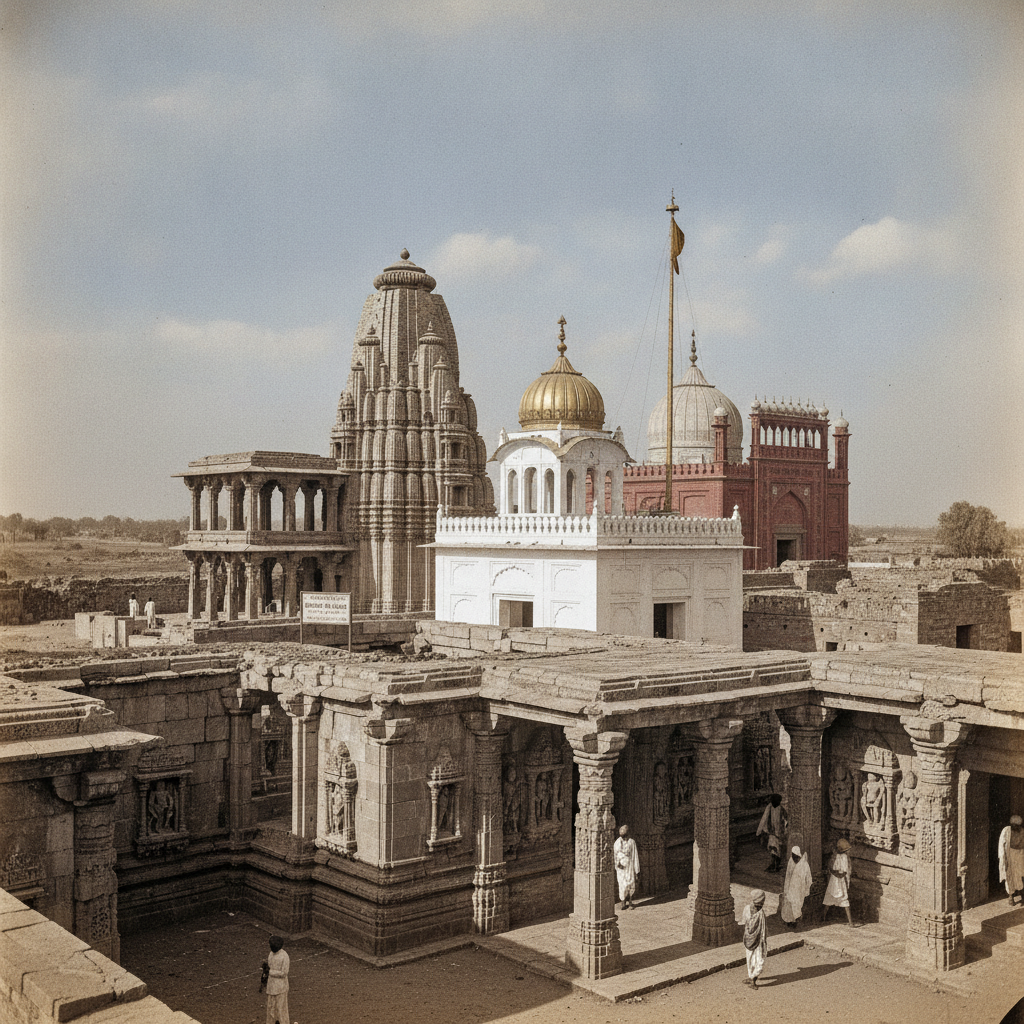
Multan Pre-Partition Hindu and Sikh Heritage