Samarkand
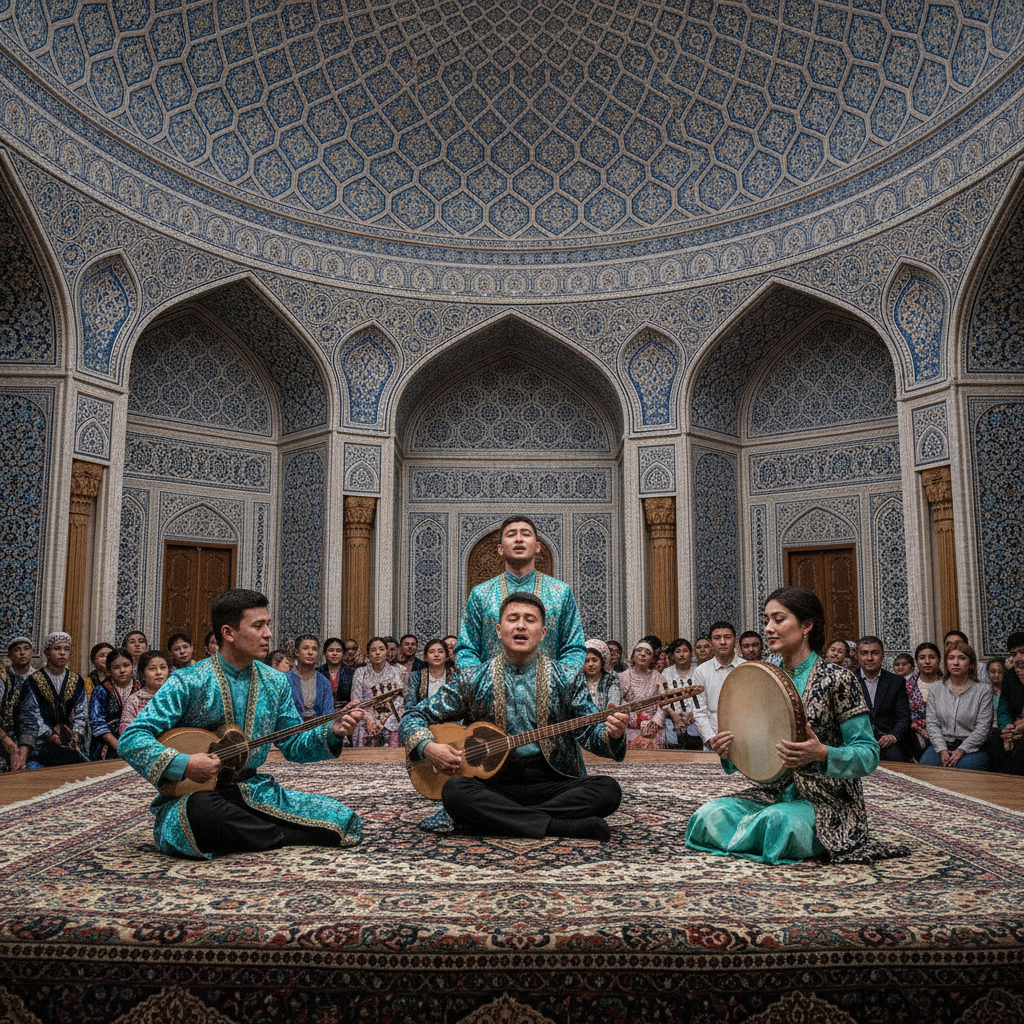
The Six Maqams of Shashmaqam Each Running 3-4 Hours, the 1% Copper Oxide Concentration That Gives Timurid Turquoise Its Exact Shade & the Complete 2-Day Samarkand Experience Achievable for USD 35
The Shashmaqam six-maqam system with each complete maqam lasting 3-4 hours inscribed on UNESCO Intangible Heritage in 2008 for both Uzbekistan and Tajikistan; 1-3% copper oxide concentration producing the exact turquoise of the Registan tilework; recent Soviet restoration tiles distinguishable by brighter saturation from the 600-year oxidation fading; Ibn Sina visiting Samarkand circa 1002-1005 CE during his journey to Gurganj, his Canon of Medicine dominating European medical education for 500 years; the Urgut Sunday bazaar selling suzani at 30-50% below Samarkand prices; and the complete 2-day Samarkand experience for USD 35-45 total.
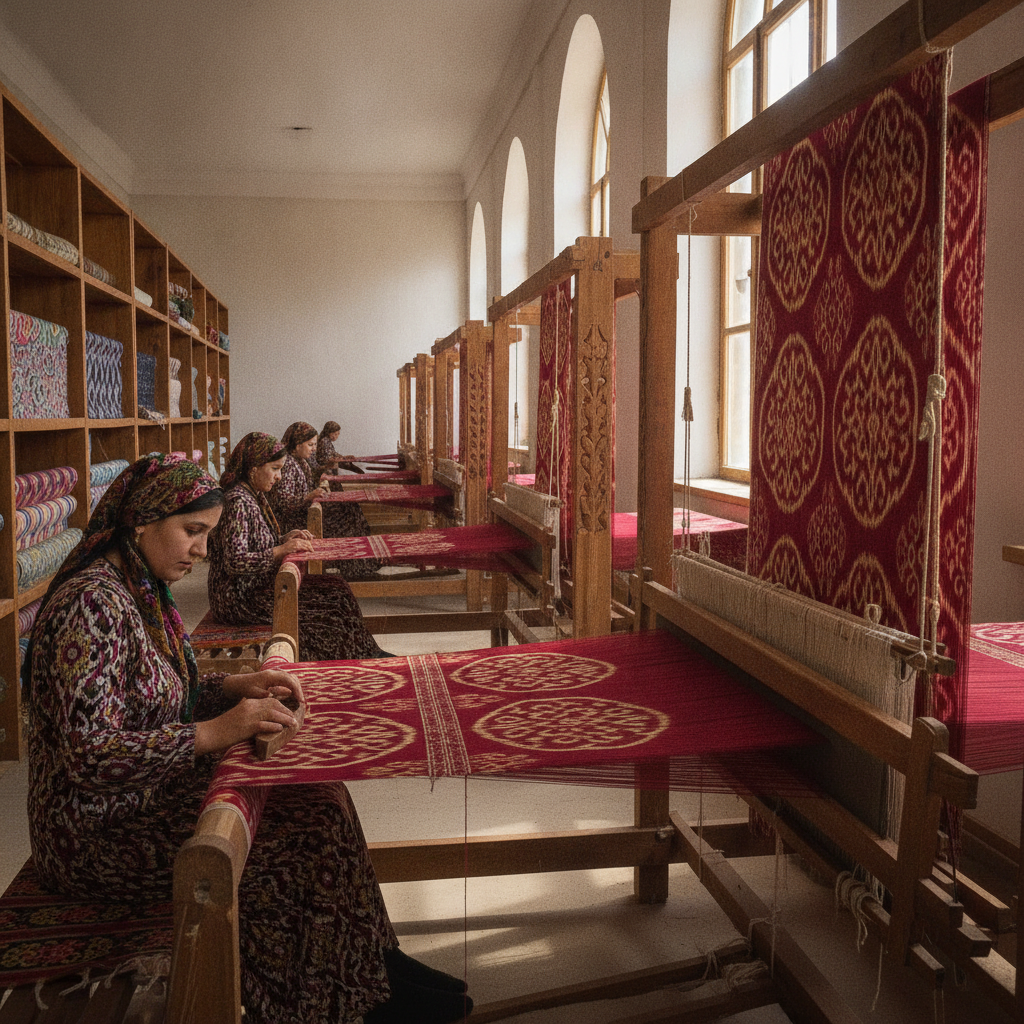
The 1220 Mongol Sack That Killed 475,000 People and Reduced Samarkand from 500,000 to 25,000 Inhabitants, the Paisley Pattern That Traveled from Central Asian Ikat via Kashmir to a Scottish Town & the Tileworkers of Isfahan Deported to Build Timurid Samarkand
The Mongol sack of 1220 reducing Samarkand from 500,000 to 25,000 inhabitants; the boteh teardrop motif traveling from Central Asian abr ikat via Persian trade to Kashmir to Paisley Scotland where it became the paisley pattern; Timurid tileworkers deported from Isfahan using three distinct techniques — mosaic faience, cuerda seca, and underglaze cobalt painting; the Bukharan Jewish Bakhsh plov with herbs and eggs as the Shabbat variant that entered mainstream Uzbek cuisine; the Meros Paper Mill hands-on experience for children at USD 5; and Bukhara beating Samarkand on architectural authenticity while Samarkand wins on transport access.
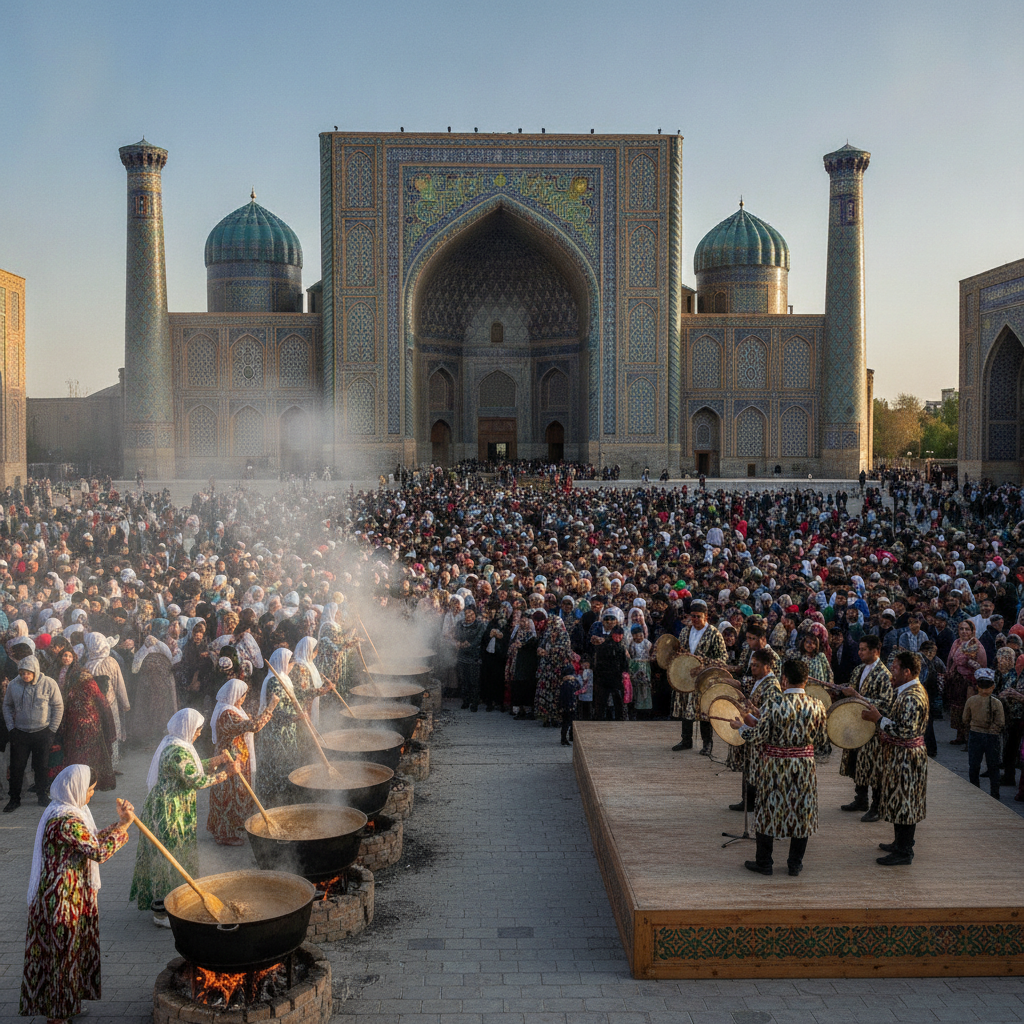
The 313 CE Sogdian Letters Found in a Dunhuang Watchtower as the World's Oldest Dated Paper Documents, the 2022 SCO Summit With Putin Xi and Modi at the New Samarkand Congress Center & Navruz Sumalak Cooked for 24 Hours in Communal Cauldrons
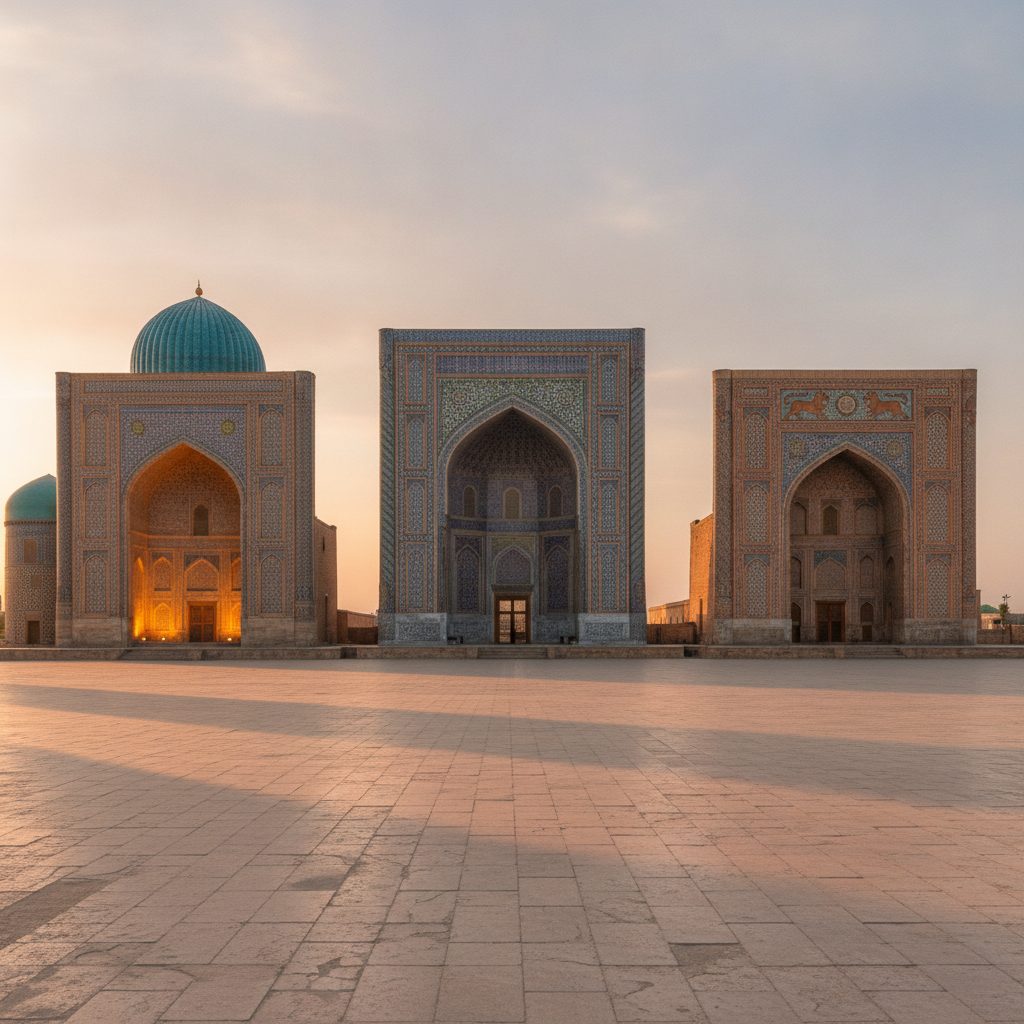
The Ancient Letters (313-314 CE Sogdian merchant correspondence found near Dunhuang in 1907) as the world's oldest dated paper documents; the September 2022 SCO summit at Samarkand attended by Putin, Xi Jinping, and Modi; Navruz sumalak cooked communally for 24 hours by neighborhood women with the cooking ritual more important than the eating; Muhammad Shaybani defeating Babur twice at Samarkand (1500-1501) forcing his withdrawal to India where he founded the Mughal dynasty; the Panjikent murals showing Rustam epic scenes 300 years before Ferdowsi compiled the Shahnameh; and the Registan blue-hour 20-minute window when the turquoise tiles match the sky.
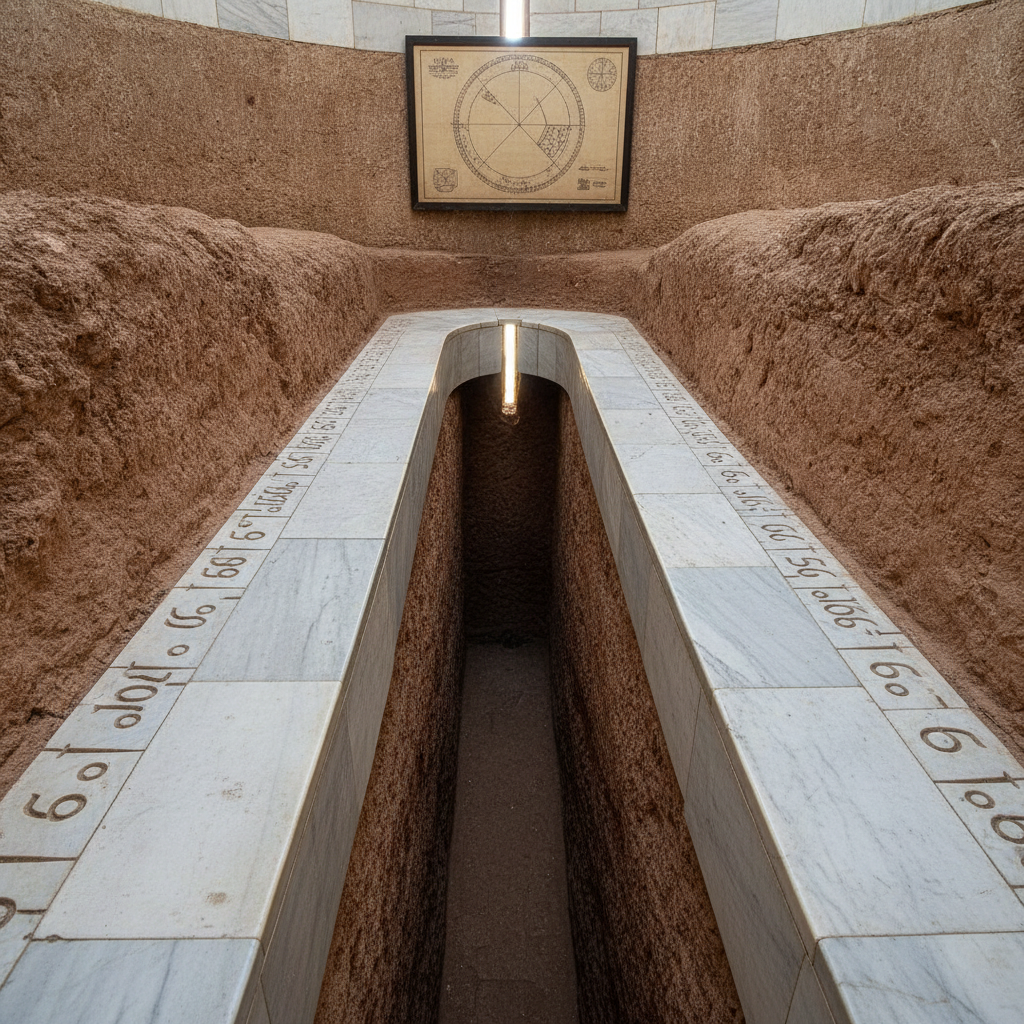
The Chinese Papermakers Captured at the 751 CE Battle of Talas Who Taught the Arab World to Make Paper, Ulugbek's Star Catalog Accurate to 58 Seconds in a Year & the Soviet Decision That Gave Tajik-Majority Samarkand to Uzbekistan
The 751 CE Battle of Talas where captured Chinese papermakers transmitted papermaking to the Arab world via Samarkand; Ulugbek's 1437 star catalog measuring the sidereal year to within 58 seconds of the modern value; the 1924 Soviet border decision assigning Tajik-speaking Samarkand to the Uzbek SSR; the Ak-Saray Palace portal arch at 65m — the tallest arch in pre-modern Islamic architecture; the Sogdian merchants who carried the word for grape (bdagw) to China where it became putao (葡萄); and the Samarkand non at 50-60cm as the largest bread variety in Uzbekistan.
The Curse of Tamerlane's Tomb Opened Two Days Before the German Invasion, the 64-Ribbed Melon-Dome That Became the Template for the Taj Mahal & the 7th-Century Mural Showing Korean Ambassadors Bringing Gifts to a Sogdian King
The Gur-e-Amir tomb opened by Soviet archaeologists on June 20, 1941 — Germany invaded two days later; the 64-ribbed turquoise dome exported to India as the Mughal mausoleum template leading to the Taj Mahal; the Afrosiyab Palace mural (650-700 CE) showing the first visual record of Korean-Central Asian diplomatic contact; the Shah-i-Zinda legend of Qutham ibn Abbas still living underground since 676 CE; Timur's 95 Indian elephants carrying materials for the world's largest mosque; and the Samarkand Card covering all 4 major sites for USD 15.
Alexander the Great Killed His Best Friend Cleitus in a Drunken Rage at a Feast in Marakanda in 328 BCE & the Zarafshan Valley Irrigation Canals Still Running After 2,500 Years
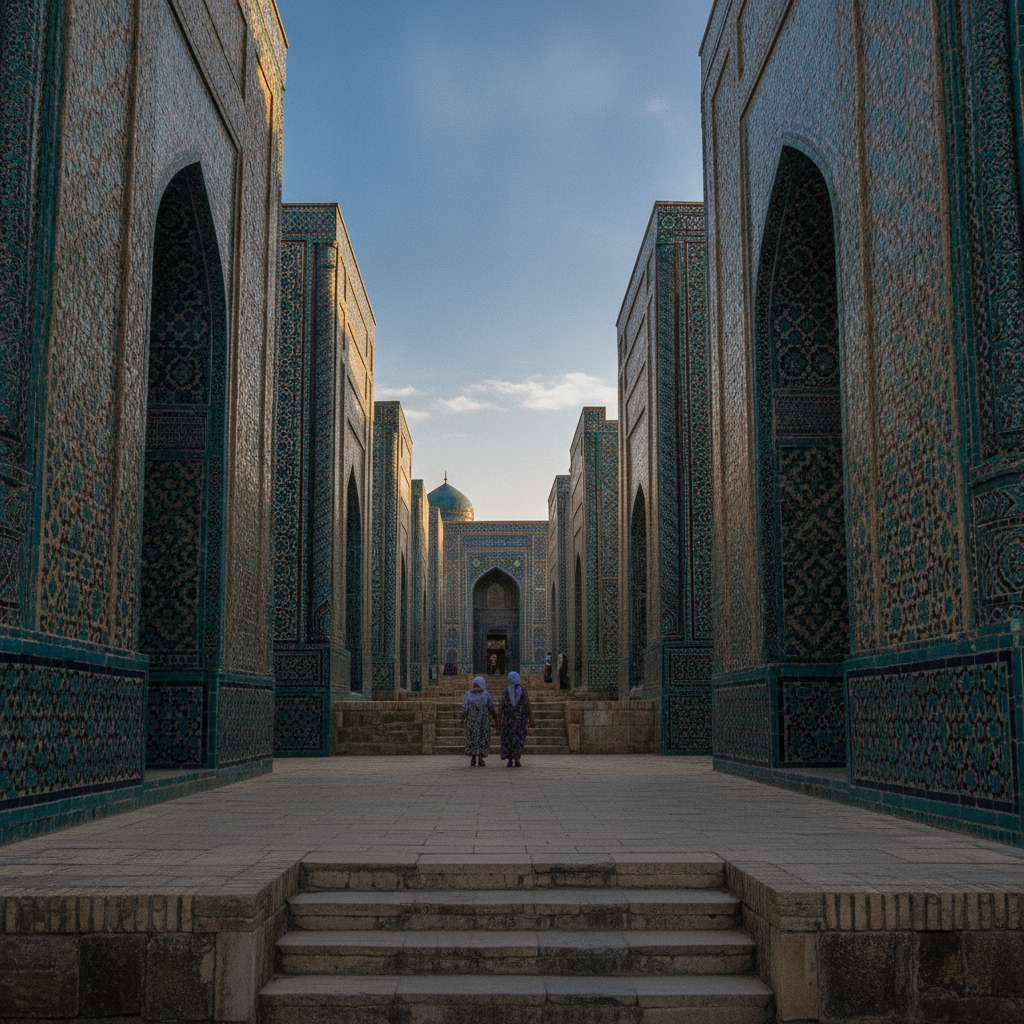
Alexander killing Cleitus the Black with a sarissa at a Marakanda feast in 328 BCE after Cleitus mocked his divine pretensions; the Zarafshan Valley ariq irrigation canals running continuously for 2,500 years since the Achaemenid period; the Samarkand suzani multiple-embroiderer panel assembly technique that explains slight color variation in antique pieces; the Devzira rice from Fergana that absorbs more oil without going mushy; James Elroy Flecker's 1913 Golden Road to Samarkand speech; and the blue-hour 20-minute window when the Registan sky matches the turquoise tile glaze.