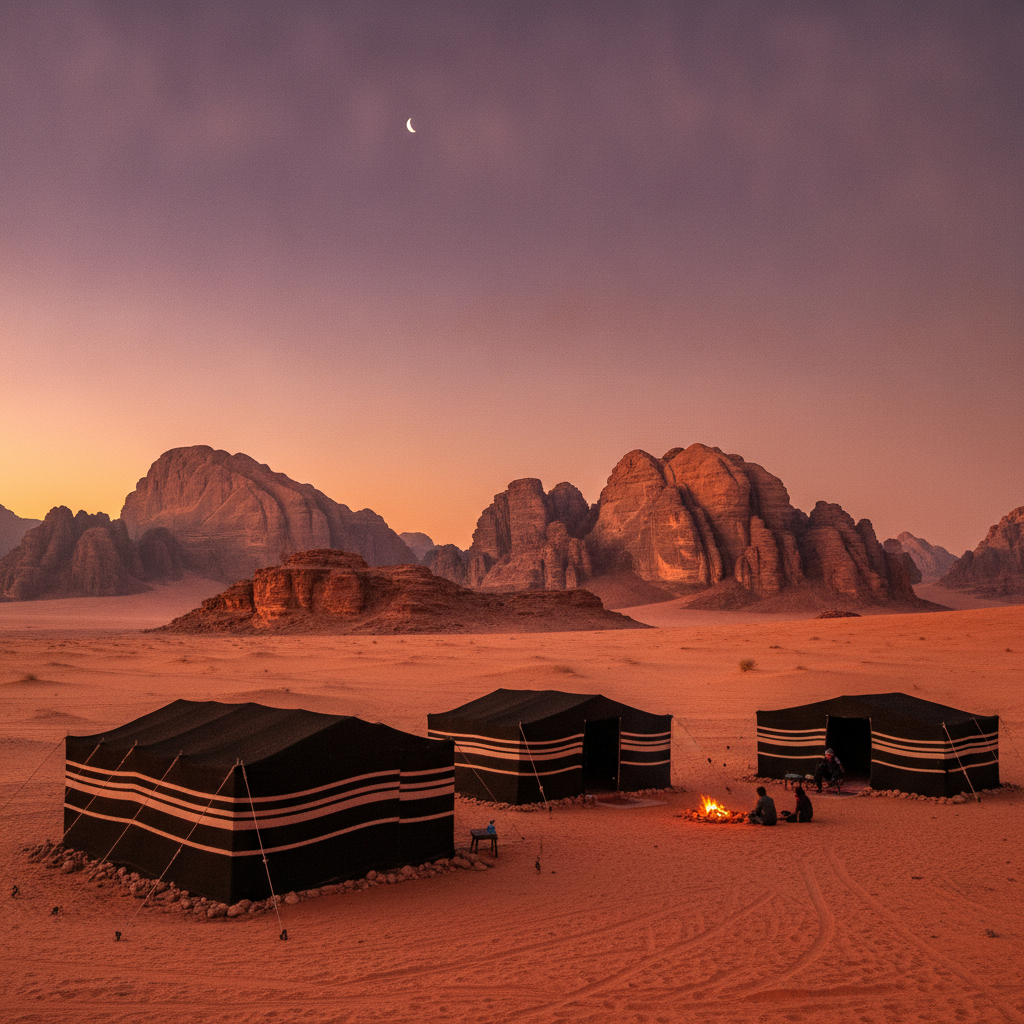


Petra Day Trips: Little Petra Free, Wadi Rum's Martian Landscape & Dana Canyon Trek
Extend Petra into Jordan's full southern landscape—Little Petra's painted Nabataean ceiling free to enter with almost no visitors, the Bedouin tribe who lived in the carved tombs until the 1980s, Wadi Rum's rose-red desert filmed for The Martian and Dune Part Two, the Dana Biosphere's 3-day canyon trek through four bio-zones, and Aqaba's northernmost coral reefs on the Red Sea.

Petra Essential: The Siq Canyon, the Treasury Al-Khazneh, the Street of Facades, the High Place of Sacrifice, the Monastery Ad-Deir, and the Nabataean Capital
The Petra essential circuit covers the Siq as the most dramatically narrow single canyon entrance to an ancient city, the Treasury as the most photographed single monument in the Middle East, the Street of Facades, the High Place of Sacrifice, the Monastery as the largest single Nabataean monument, and the full Nabataean capital experience.

Petra's Jordan: The King's Highway, Byzantine Mosaics & the Grand Canyon of Wadi Mujib
Drive the world's oldest road from Amman to Petra—the King's Highway passes Madaba's 2.3-million-tessera Byzantine mosaic map of Jerusalem, the Crusader fortress of Karak that Saladin besieged in 1183, and the Wadi Mujib canyon where you wade and swim through a slot narrower than 2 metres, ending with Jordan's national dish mansaf eaten communally by hand.

Petra Deep Dive: Only 15% Excavated, the Nabataean Water System & Indiana Jones
Understand Petra beyond the postcard—a 2016 satellite survey found a massive unrecorded structure still buried beneath the unexcavated 85% of the city, the gravity-fed terracotta pipe system that brought water 8 km through the Siq to sustain 30,000 people in a desert, the Indiana Jones and the Last Crusade Treasury scene that launched a tourism boom, and 3-day backcountry treks to Aaron's Mountain with Bedouin guides.

Petra Geology: The Rose-Red Sandstone Colors, the Nabataean Water Engineering, the Desert Ecology, and the Natural Environment
The Petra geology route covers the rose-red sandstone as the most dramatically colored single ancient building material in the world, the Nabataean water engineering as the most sophisticated single ancient desert water management, the desert ecology, and the Petra natural environment.

Petra Bedouin: The Bdul Tribe, the Cave Dwelling Heritage, the Desert Hospitality Tradition, and the Bedouin Cultural Identity
The Petra Bedouin route covers the Bdul tribe as the most historically connected single Bedouin community to the Petra heritage, the cave dwelling heritage, the desert hospitality tradition, and the Bedouin cultural identity in contemporary Jordan.

Petra Food: The Mansaf National Dish, the Zarb Underground Barbecue, the Bedouin Mezze, and the Wadi Musa Restaurant Scene
The Petra food route covers the mansaf as the most ceremonially important single Jordanian dish, the zarb Bedouin underground barbecue, the Bedouin mezze spread, and the Wadi Musa restaurant circuit.

Petra's Secrets: Pre-Dawn Treasury, the Hidden Wadi Muthlim Entrance & Byzantine Mosaics
Go beyond the standard Petra visit—arrive at 5:30 am to reach the Treasury plaza alone as first light strikes the rose-red facade, enter via the alternative Wadi Muthlim slot canyon that almost no visitors use, read the Nabataean building process in the unfinished tomb carved top-to-bottom without scaffolding, and find the Byzantine church with extraordinary mosaic floors and a papyri archive burned in 600 AD.

Petra History: The Nabataean Civilization, the Incense Road Trade Network, the Spice Merchant Economy, the Roman Annexation, and the Byzantine-Islamic Petra
The Petra history route covers the Nabataean civilization as the most commercially sophisticated single ancient Arab kingdom, the Incense Road trade network, the Roman annexation in 106 AD, the Byzantine Christian period, and the post-Islamic Petra.

Petra Surroundings: Little Petra Siq Barid, Beidha Neolithic Village, the Coloured Canyon, the Snake Monument, and the Petra Archaeological Park
The Petra surroundings route covers Little Petra (Siq al-Barid) as the most completely Nabataean single small canyon site, the Beidha Neolithic village as one of the oldest settlements on earth, the Coloured Canyon, the Snake Monument, and the full Petra Archaeological Park.

Petra Essentials: The Siq, the Treasury & the 800-Step Climb to the Monastery
Walk the world's most dramatic archaeological approach—the Siq's 1.2 km slot canyon narrowing to 3 metres before the Treasury's Hellenistic facade explodes into view, 40 tomb façades carved into a single cliff face, the Roman colonnaded street of a city that once held 30,000 people, the 50-metre Monastery reached by 800 carved stone steps, and the magical Petra by Night with 1,500 candles.

Petra Hiking: The Back Route to the Monastery, Wadi Muthlim Canyon, the High Place Circuit, the Snake Canyon Trail, and the Multi-Day Petra Trekking
The Petra hiking route covers the back route to the Monastery as the most scenic single Petra approach, the Wadi Muthlim flash flood canyon, the High Place of Sacrifice circuit, the Snake Canyon trail, and the multi-day Petra to Wadi Rum trekking.

Petra Practical: The Wadi Musa Town, the Accommodation Choice, the JETT Bus from Amman, the Optimal Visit Timing, and the Jordan Circuit
The Petra practical route covers the Wadi Musa town as the Petra visitor base, the accommodation spectrum from budget to luxury, the JETT bus from Amman, the optimal spring and autumn timing, and the Jordan essential circuit.

Petra Practical Guide: Jordan Pass, Best Light for Photography & the Physical Reality
Plan Petra properly—the Jordan Pass (€60 online) cuts expensive entry fees and visa costs, arrive at 6 am before tour groups, the Treasury's best light is 9–11 am east-facing morning sun, two full days are needed for Monastery and High Place routes, the 10 km round trip with 400m ascent in 35°C heat, and the Nabataean civilisation that built a city of 30,000 in a desert canyon.