Kanchanaburi Cycling & Countryside Walk
Cycle the Kanchanaburi countryside — the flat agricultural plains around the town and the river valley roads provide excellent cycling terrain that connects the WWII sites, the temples, and the rural communities of western Thailand.
- 1
Town Centre Bicycle Rental
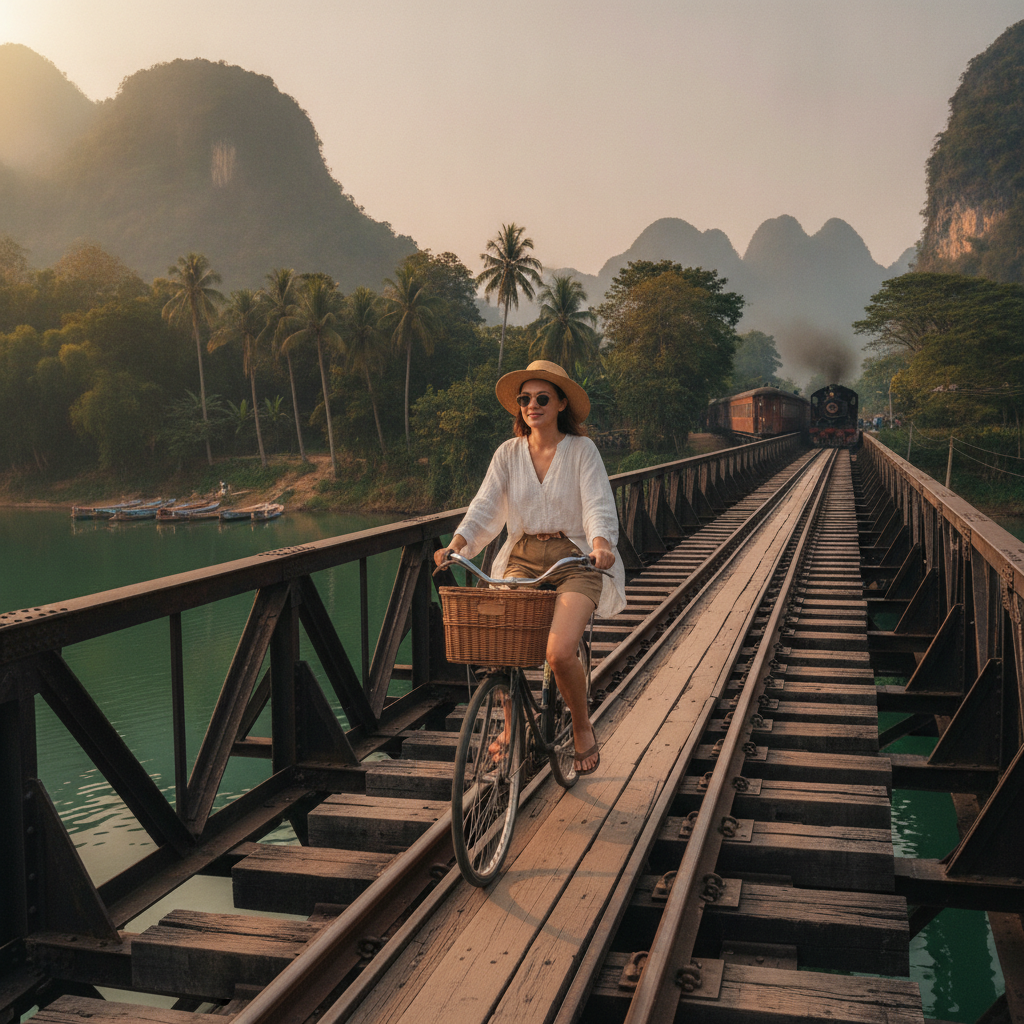
The bicycle rental operations near the Bridge area and on the main Saengchuto Road provide the most flexible and most environmentally appropriate transport option for the Kanchanaburi tourist circuit — the flat terrain of the town and the river valley between the main sites makes cycling genuinely practical for the full WWII circuit (Bridge, museums, cemeteries) accessible within the town area, and the larger surrounding countryside (the roads through the agricultural land to the north and west of the town) provides the most scenic cycling available within easy distance of the tourist accommodation area. The guesthouses on Maenam Kwai Road (the main guesthouse strip on the river road) typically offer bicycle rental alongside their accommodation services.
- 2
Sugar Cane Plantation Road
The road west of Kanchanaburi through the sugar cane plantations (the sugarcane processing factory visible from the main road is one of the major industrial employers of the province) provides the most distinctive cycling terrain accessible from the town — the flat plantation road (unlike the hilly forest roads of the national parks) passes through the agricultural landscape of the Mae Klong valley floor, with the sugar cane fields extending to the horizon and the tractors visible at harvest time (October-December). The cycling route connects to the cassava (tapioca) plantations that are the second major agricultural product of the province and provide the economic foundation of the farming communities between the town and the national parks.
- 3
Village Market Circuit
The cycling circuit through the agricultural villages south of the main town (following the river road south past the Chung Kai cemetery and continuing through the village communities on the river's western bank) provides the most authentic encounter with the daily life of the Kanchanaburi rural community — the village temples, the rice fields, the orchards of the river terrace (the banana, the papaya, and the seasonal tropical fruits grown on the river's elevated banks), and the community activities visible from the road on weekday mornings create a rural Thailand cycling experience that is completely different from the urban tourist environment of the town centre. The route can be extended to the Chung Kai cemetery (accessible by the river ferry or by cycling the road bridge) for a complete circuit combining the rural landscape and the WWII memorial.
- 4
Death Railway Track Walk
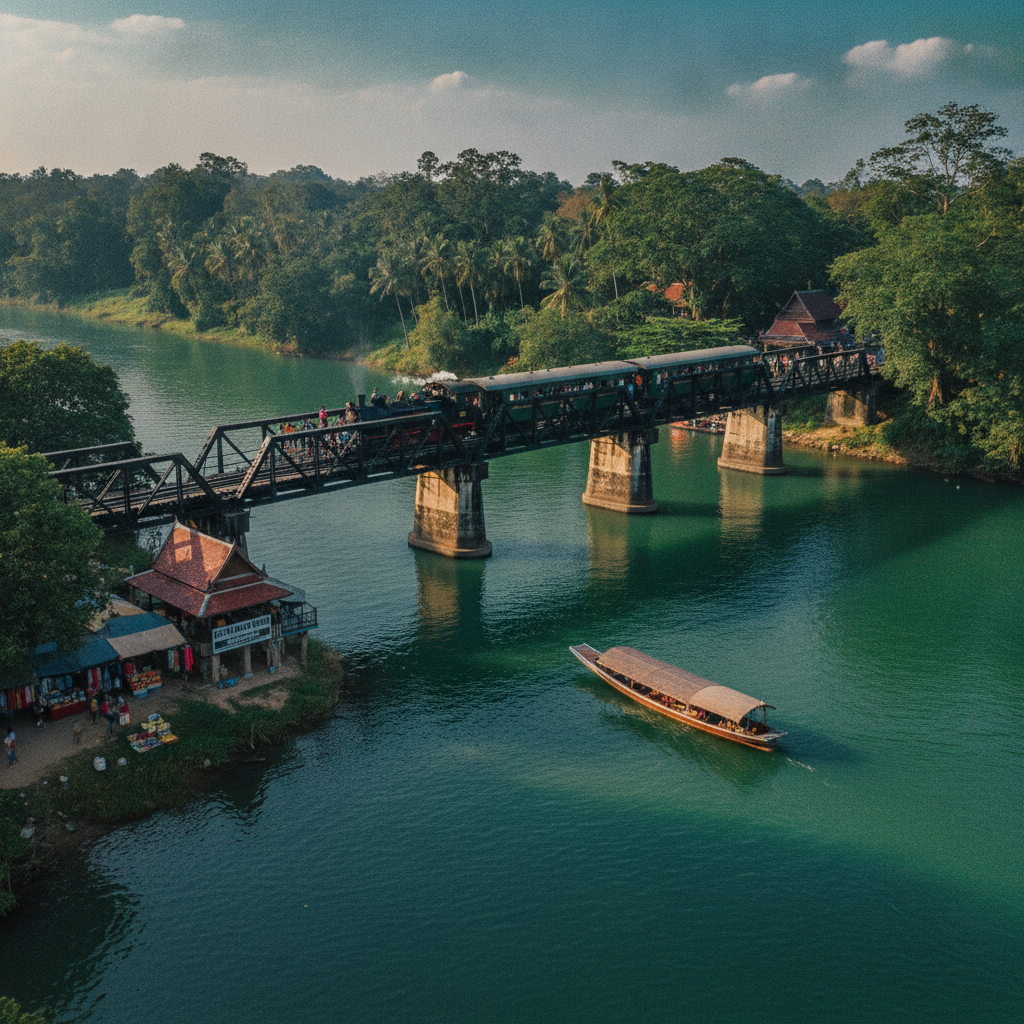
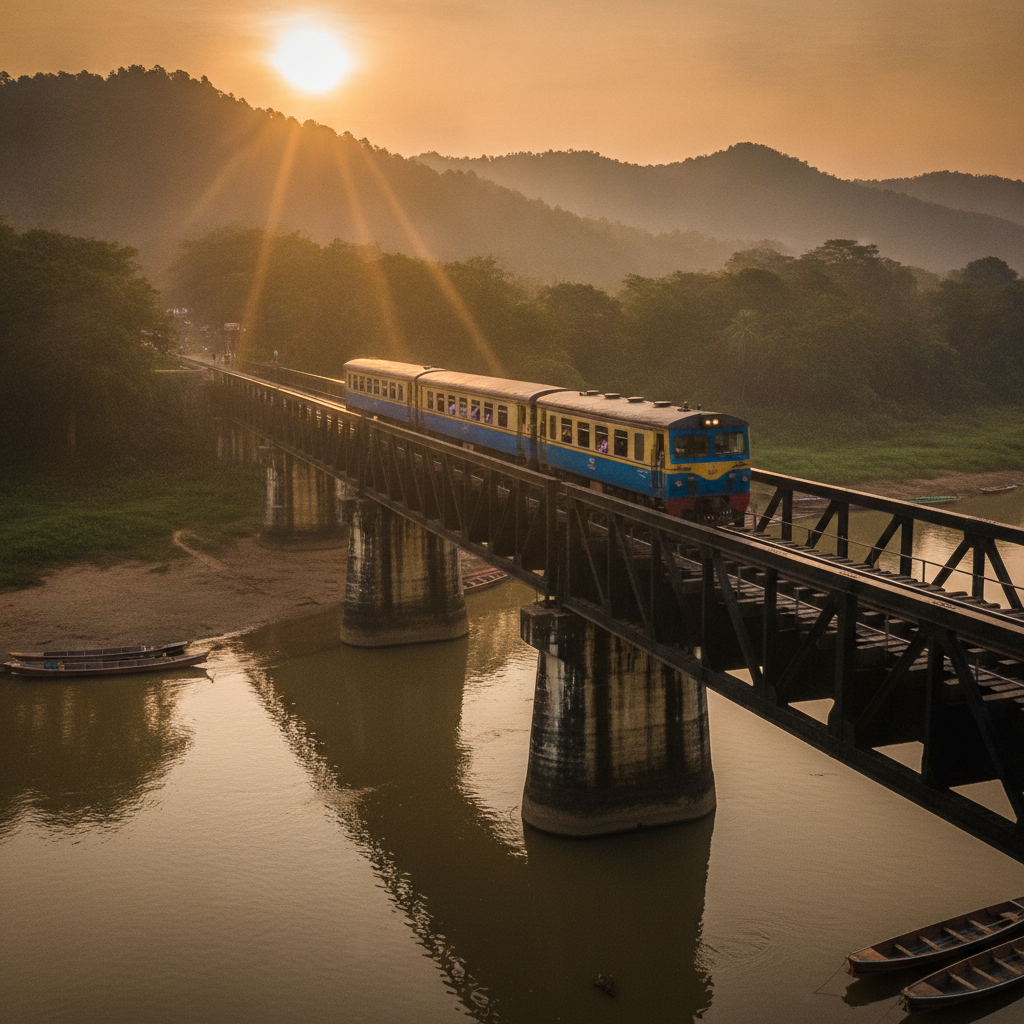
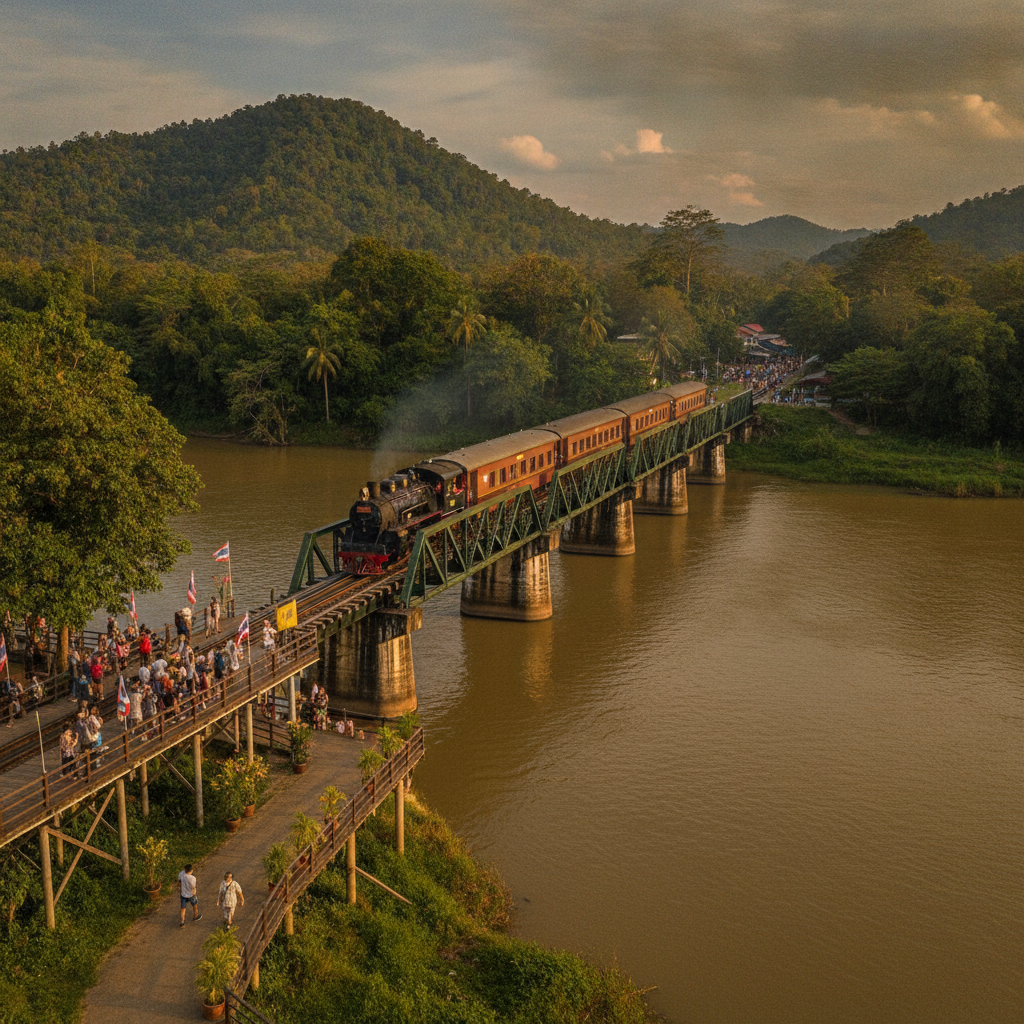
The sections of the original Death Railway track visible along the route between Kanchanaburi station and Nam Tok (the current terminus where the maintained line ends and the historical track continues into the forest) can be explored on foot or by bicycle at the sections where the track is not in active use — the wooden sleepers (some original, some replaced over the decades), the steel rails, and the original gradient and alignment of the line through the river valley landscape create the most direct physical contact with the historical railway infrastructure available outside of the preserved memorial sections at Hellfire Pass. The track walk between stations (where the railway follows the river bank through the forest) provides the most atmospheric encounter with the landscape through which the construction prisoners worked.
- 5
Kwai Noi Valley Road
The road following the Kwai Noi River valley from Kanchanaburi town toward the Erawan and Sai Yok national parks (Route 3199) provides the most scenic cycling in the accessible Kanchanaburi province area — the road passes through the transition from the agricultural plain to the forested foothills of the Tenasserim Hills, with the river visible alongside the road through the forested sections and the limestone karst outcrops appearing above the tree line as the road climbs into the national park boundaries. The valley road is used by the Death Railway trains (which run alongside the road for several kilometres before diverging to follow the more direct railway alignment), creating the occasional encounter with the passing heritage train as a highlight of the cycling route.
- 6
River Crossing by Bamboo Raft
The bamboo raft river crossing at the traditional crossing points used by the agricultural communities on the Mae Klong's western bank (where the raft ferry service operates as an alternative to the road bridge for the communities without vehicle access) provides the most authentic and most environmentally appropriate transport encounter accessible in the Kanchanaburi countryside — the crossing on the bamboo raft (propelled by the ferry operator's long bamboo pole and guided by the current) takes less than 5 minutes but provides a direct experience of the river transport tradition that has connected the communities on both banks for generations. The raft crossing is accessible only to those who know its location (typically pointed out by the guesthouse operators who organise cycling itineraries incorporating the traditional river crossings).
Walk this route with audio
Stories play automatically as you reach each stop — no tapping needed.