Lake Toba Toba Batak Culture & Tradition Walk
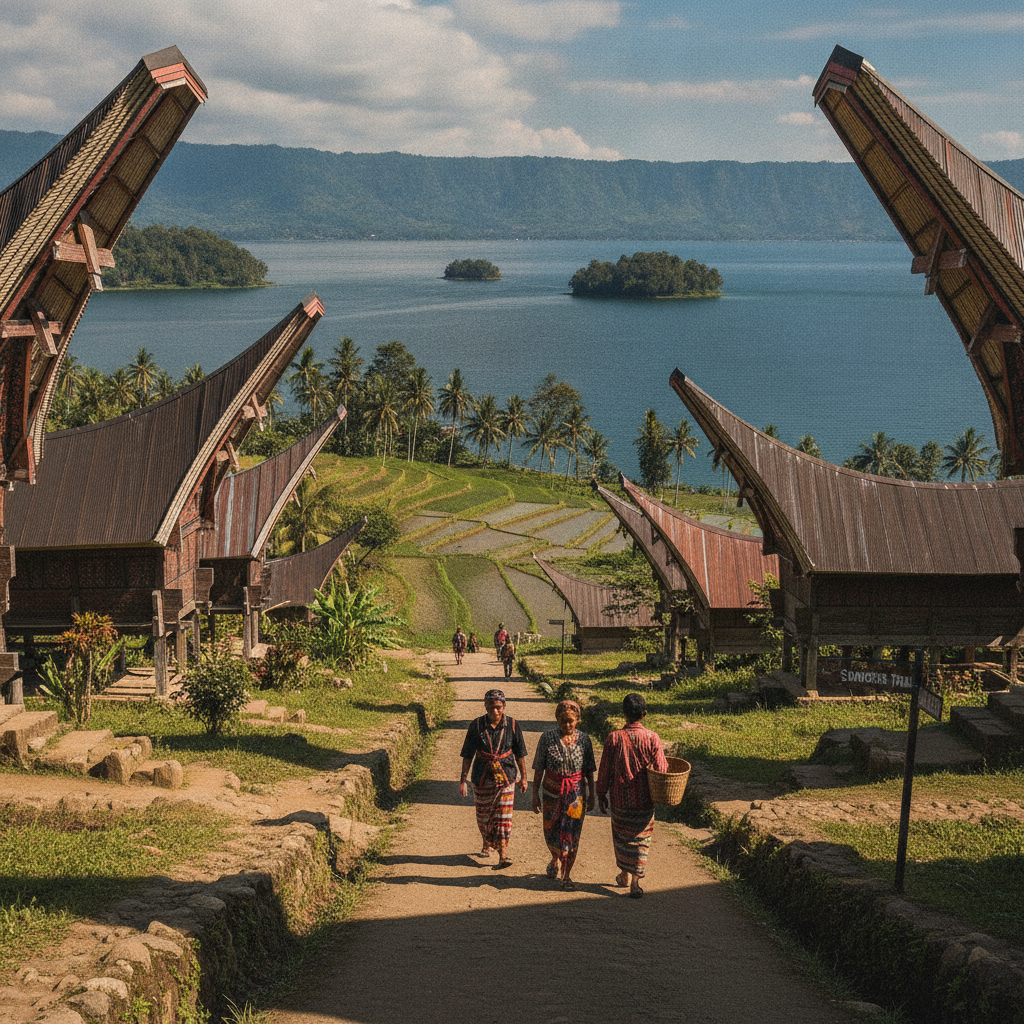
Immerse in Toba Batak culture — the Toba Batak people of the Lake Toba highlands have one of the richest cultural traditions in Southeast Asia, encompassing the ulos textile art, the gondang musical tradition, the marga clan system, and the elaborate adat ceremonies that govern birth, marriage, and death.
- 1
Ulos Weaving Workshop
Ulos weaving is the central art form of Toba Batak culture — the handwoven cotton textiles that carry symbolic meaning encoded in their patterns, colours, and the occasions for which they are woven represent a textile language understood throughout Batak society. The different ulos types (ragidup, ragi hotang, sibolang) are appropriate for specific ceremonies and social situations, and the women who weave them on back-strap looms in the traditional manner maintain a craft that is simultaneously a cultural institution and an economic activity, with Samosir Island weavers supplying both the ceremonial market and the tourist craft market.
- 2
Gondang Music Performance
The gondang sabangunan ensemble — the ceremonial musical ensemble of the Toba Batak consisting of taganing drums, gordang bass drums, sarune wind instrument, and ogung gongs — is used in all major Batak ceremonies to summon the spirits of ancestors and the divine. The music, which UNESCO has recognised as an Intangible Cultural Heritage, is played at funerals, weddings, and religious ceremonies, and its sound carries specific meaning for Batak listeners in terms of which spirits are being addressed and what is being requested of them.
- 3
Marga Clan System Explanation
The marga (clan) system is the organisational foundation of Batak society — every Batak person belongs to a patrilineal clan whose name they carry as a surname, and the marga system determines marriage rules (people of the same marga cannot marry), social obligations, and the elaborate network of reciprocal relationships between clans that governs ceremonies. The approximately 60 Batak margas trace their origin to legendary ancestors, and the genealogical knowledge of how clans relate to each other is a form of social literacy essential for participating in Batak ceremonial life.
- 4
Adat Ceremony Observation
Batak adat (customary law) ceremonies are among the most elaborate in Indonesia — the wedding ceremonies (paulak une) and especially the funeral ceremonies (saur matua for elders who have seen all their children marry) can last multiple days and involve the presentation of ulos textiles, the sacrifice of pigs and cattle, the feasting of hundreds of guests, and the performance of traditional music and dance in a structured sequence of events governed by customary protocol. Visitors to Lake Toba who encounter these ceremonies are witnessing one of Southeast Asia's most complete living ceremonial cultures.
- 5
Parmalim Indigenous Religion Site
Parmalim is the indigenous Batak religion that predates Christian missionary conversion — the monotheistic faith centred on the creator god Mulajadi Na Bolon with its specific calendar of ceremonies, its sacred sites at Baktiraja near the lake shore, and its community of several thousand practitioners who have maintained the pre-Christian Batak religious tradition despite missionary pressure for 150 years. The Parmalim community represents the continuation of a religious practice that provides an alternative to understanding Batak culture only through its 19th-century Christian transformation.
- 6
Batak Christianity Heritage
The Toba Batak are among Indonesia's most thoroughly Christianised communities — the German Lutheran missionaries of the Rheinische Missionsgesellschaft, led by Ludwig Ingwer Nommensen from 1863, converted the majority of the Toba Batak population over 40 years, creating what is now the Huria Kristen Batak Protestan (HKBP), the largest Protestant church in Asia with over 5 million members. The fusion of Lutheran Christianity with Batak adat has created a unique religious culture where the gondang music accompanies Christian worship and the church congregation is organised along marga clan lines.
Walk this route with audio
Stories play automatically as you reach each stop — no tapping needed.