Mandalay
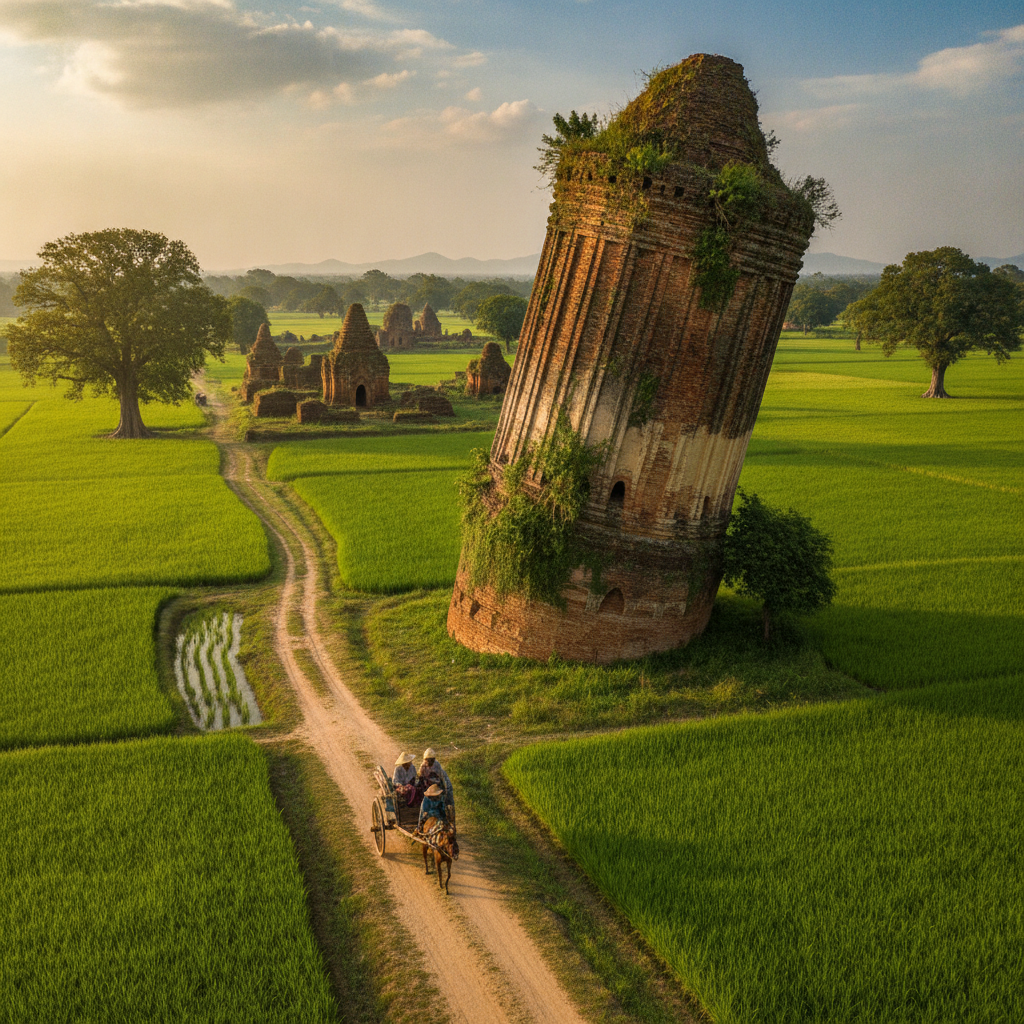
Mandalay's Soul: Anyein Comedy That Satirised Military Censors, Inwa's Rice-Field Ghost Capital & the Downstream River
The final Mandalay layers—Zegyo Market's morning street food where Shan chickpea tofu salad meets South Indian paratha with dhal from the 84th Street breakfast stalls, Mandalay's role as the literary heart of the Konbaung dynasty whose court chronicles are the primary pre-colonial history source, the Dry Zone agricultural plain's sesame and groundnut farmers disrupted by Sagaing Region conflict since 2021, the anyein clown tradition that encoded political satire in comedy through every censorship era, Inwa's leaning tower and monastery ruins in rice paddies reached only by horse cart from a 5-minute ferry (Burma's capital for 500 years, now agricultural landscape), and leaving by the Ayeyarwady that passes Yandabo where the First Anglo-Burmese War ended in 1826 en route to Bagan.
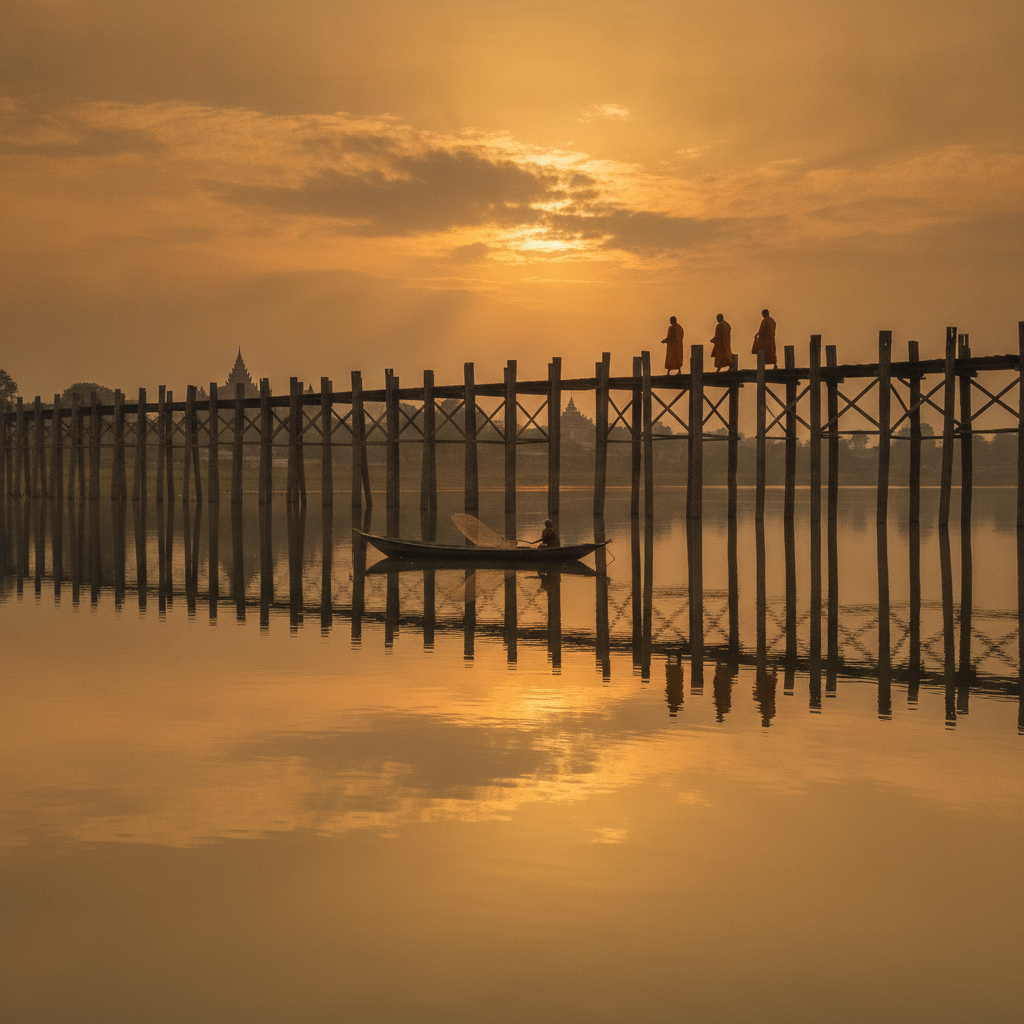
Mandalay Endures: U Bein's Teak Silhouette, Thingyan's Water War & a City's Thousand-Year Continuity Under Pressure
Mandalay's permanence—U Bein's 1,086 teak posts (salvaged from Inwa's abandoned capital in 1849, now progressively concrete as the original decays, the tourist boat operators who know exactly where the sun sets at each season), the Burma Road alignment followed by today's China-Myanmar Economic Corridor trucking corridor through Muse, the Newar merchant community's Hindu temple near Zegyo Market from the Kathmandu-Burma trade network, April's Thingyan water festival where Mandalay's 66th Street hoses achieve the kind of social permission that circumspect Burmese society permits only in this one annual window, the 03:00 vegetable market and the jade stone evaluation before dawn, and the gold leaf workshops that have beaten gold onto Buddha images through every political era the city has survived.
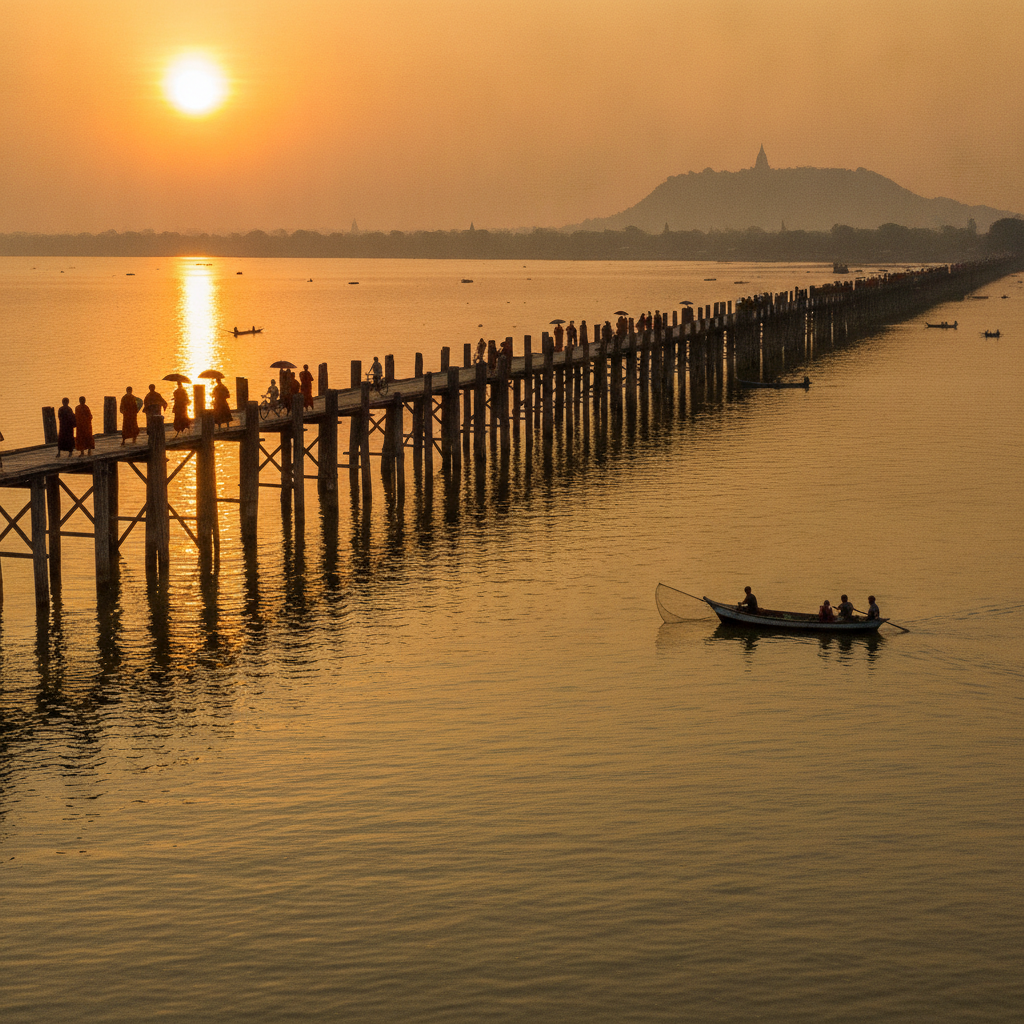
Mandalay: 729 Marble Slabs of the Buddhist Canon, Gold Leaf Beaten on 36th Street & the Last Royal Palace
Myanmar's cultural capital—Mandalay Palace's cosmologically centred compound (the royal throne room at the exact centre of a 2 km-square moat, the original teak buildings burned by Japan and Britain in 1945 and rebuilt in military-era concrete), Mandalay Hill's 1,700 covered steps to panoramic views of the Ayeyarwady and Sagaing's 500-stupa skyline, Kuthodaw's 729 white miniature pagodas each housing one marble slab of the entire Pali canon (the world's largest book, completed by 2,400 monks in 6 months), the Mahamuni Buddha's gold-layer-fattened torso from centuries of male devotee leaf-application, 36th Street's gold leaf beaters working deer hide and bamboo paper, and U Bein's 1.2 km of teak planks at sunset.
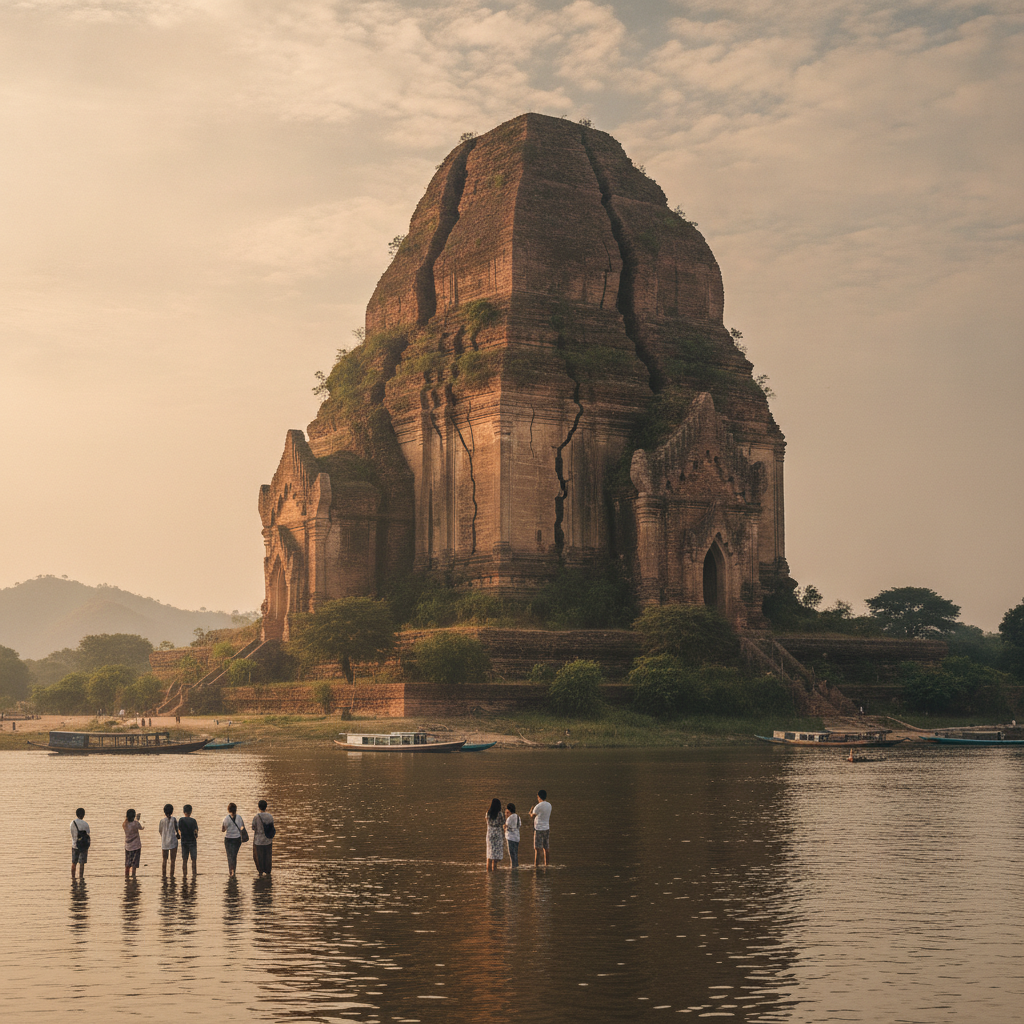
Mandalay's Radius: Mingun's Unfinished 50-Metre Pagoda, the Ayeyarwady Slow Boat South & a 20-Lane Empty Capital
Around Mandalay—the Mingun river ferry to the world's largest incomplete pagoda (50 of 152 planned metres, the king died before completion, the 1838 earthquake cracked what remained) and the 90-tonne Mingun Bell that has never been rung for the pagoda it was cast for, the yama zatpwe marionette tradition down to a handful of Mandalay families whose 60-string puppets performed Ramayana for Konbaung kings, the 17-hour government ferry south to Bagan or the Belmond's heritage cruise vessels with excursions to riverside monasteries, 86th Street's jade dealers trading Hpakant jadeite in a $2–8 billion annual market involving military licenses and Kachin armed groups, Naypyidaw's 20-lane empty highways and replica-pagoda parking lots built in secret as the world's most surreal authoritarian capital, and the Sagaing Region's village burnings since 2021.
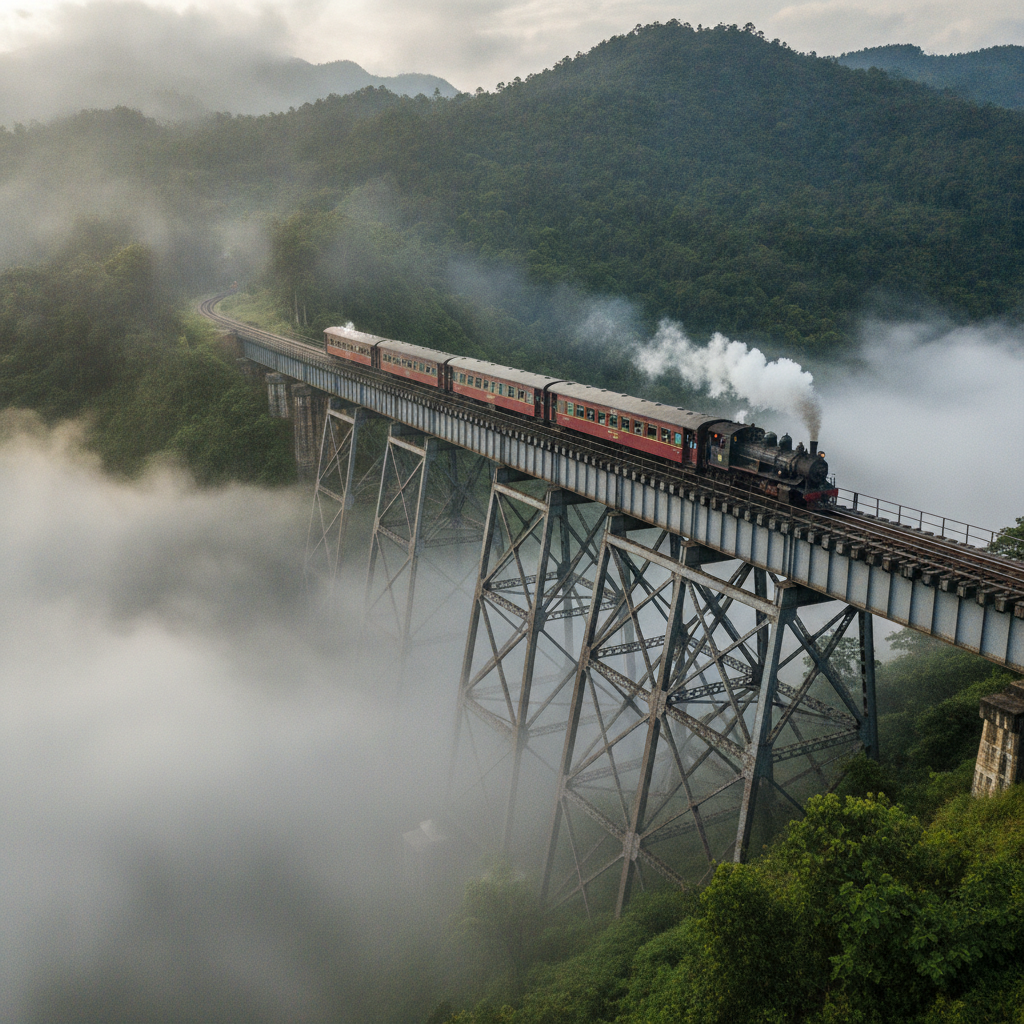
Mandalay's Range: Pyin Oo Lwin's Hill Station Strawberries, Gokteik Viaduct's 102-Metre Drop & Monk Breakfast Ethics
Mandalay beyond the palace—Pyin Oo Lwin's 1070-metre colonial bungalows and horse carriages and strawberry season (the British administration's summer escape from 42°C plains heat), Amarapura's luntaya achiek silk weavers using 30 simultaneous shuttles for the wave-pattern that takes days to set up on a treadle loom, the Shwenandaw Monastery's every-surface lacquer carving as the only 19th-century palace teak building that survived 1945 (moved by King Thibaw before the burning), Mahagandayon Monastery's 1,000-monk dawn breakfast increasingly surrounded by photographers (the ethical question of treating a private community meal as a spectacle), Kyal Sin the 19-year-old shot in the head March 3 2021 whose T-shirt reading 'Everything will be OK' became the coup resistance's most shared image, and the Gokteik Viaduct crossed at 5 mph on a century-old steel trestle.